
Sleep Spindles as Biomarker for Early Detection of Neurodegenerative Disorders
- Summary
- Abstract
- Description
- Claims
- Application Information
AI Technical Summary
Benefits of technology
Problems solved by technology
Method used
Image

Examples
example 1
1 ABSTRACT
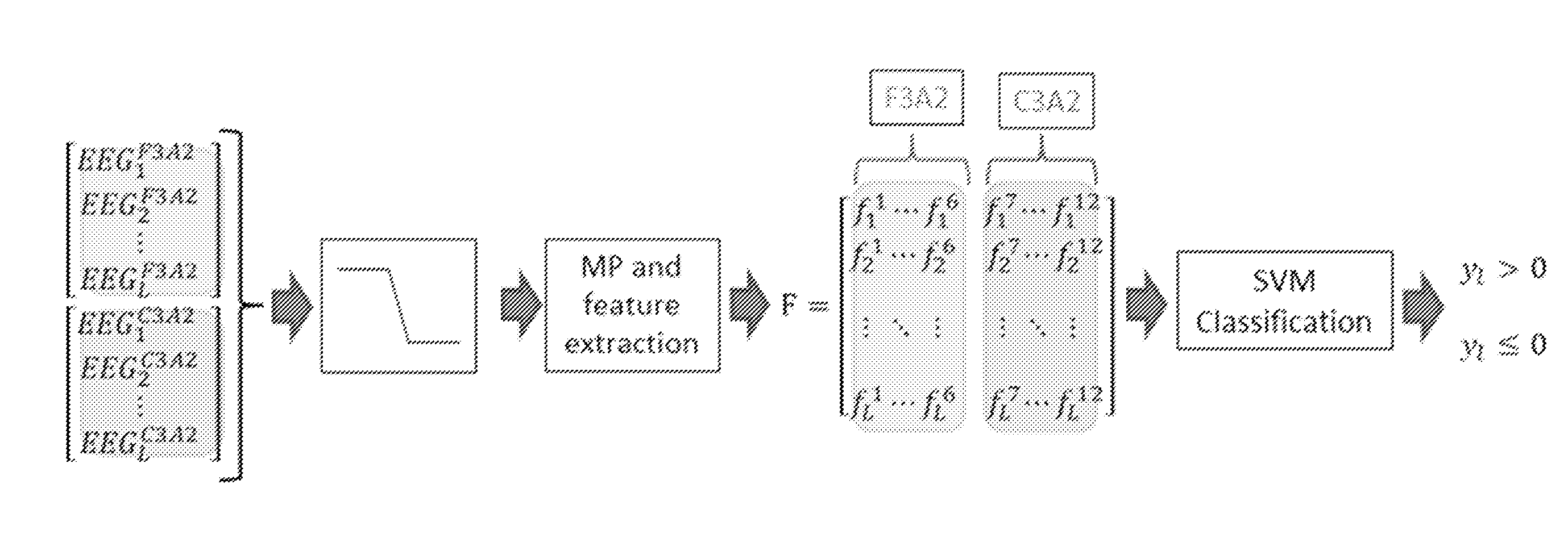
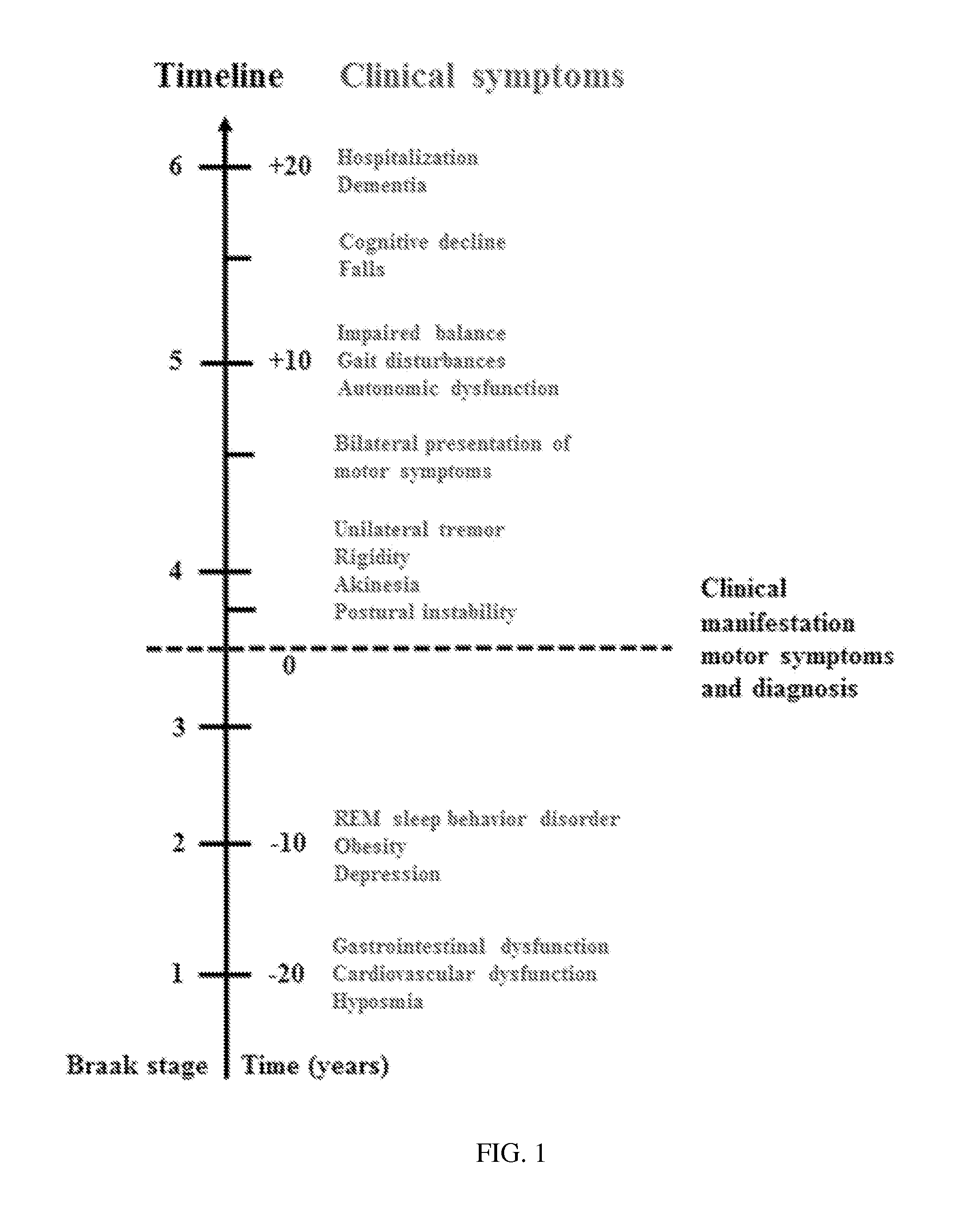
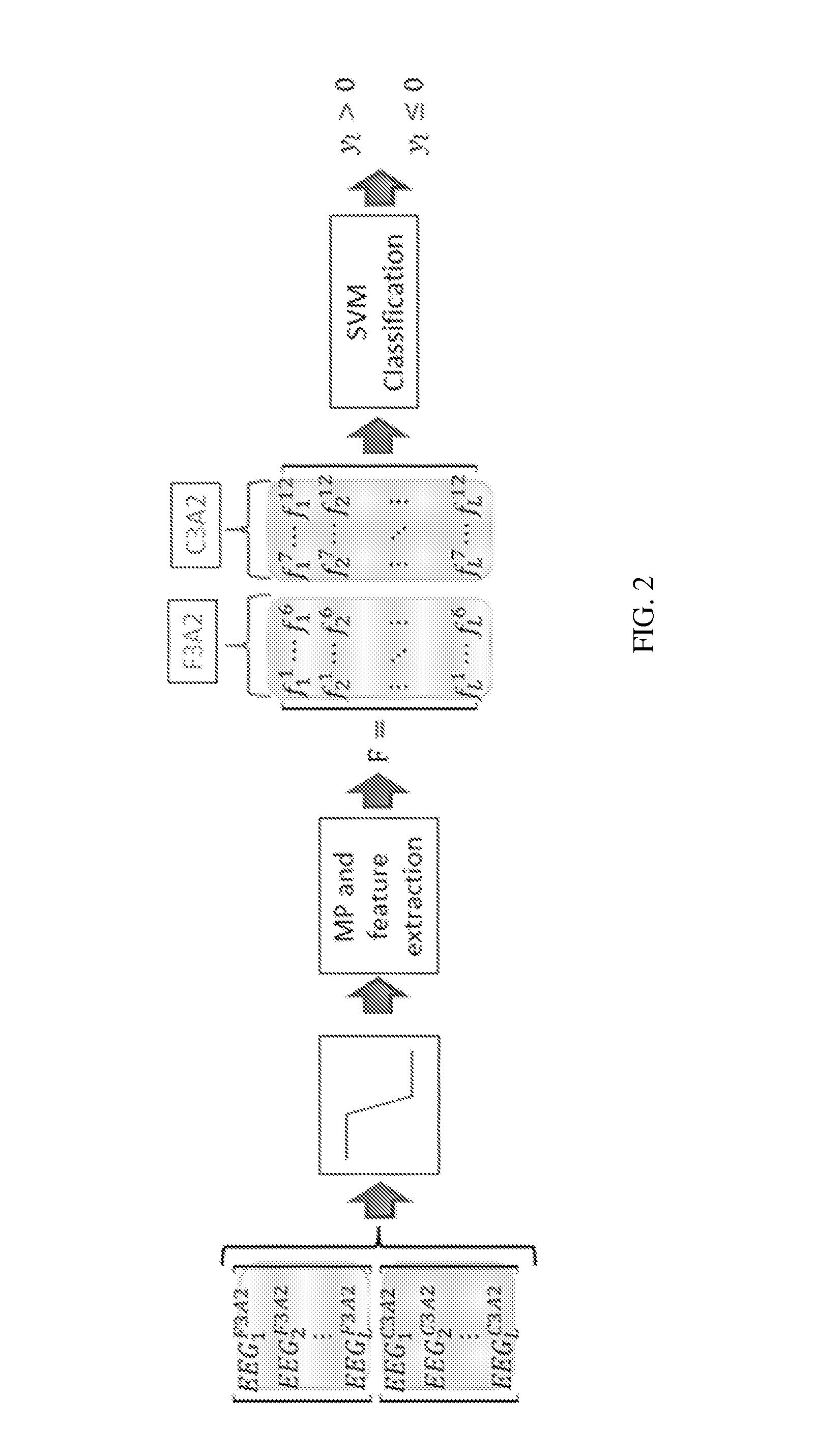
[0137]Objective: To determine whether sleep spindles (SS) are potentially a biomarker for Parkinson's disease (PD). Methods: Fifteen PD patients with REM sleep behavior disorder (PD+RBD), 15 PD patients without RBD (PD-RBD), 15 idiopathic RBD (iRBD) patients and 15 age-matched controls underwent polysomnography (PSG). SS were scored in an extract of data from control subjects. An automatic SS detector using a Matching Pursuit (MP) algorithm and a Support Vector Machine (SVM) was developed and applied to the PSG recordings. The SS densities in N1, N2, N3, all NREM combined and REM sleep were obtained and evaluated across the groups. Results: The SS detector achieved a sensitivity of 84.7% and a specificity of 84.5%. At a significance level of α=1%, the iRBD and PD+RBD patients had a significantly lower SS density than the control group in N2, N3 and all NREM stages combined. At a significance level of α=5%, PD-RBD had a significantly lower SS density in N2 and all NREM stag...
PUM
 Login to View More
 Abstract
Description
Claims
Application Information
 Login to View More