
Method for manually ageing rice seeds
A technology of artificial aging and rice seeds, applied in germination equipment, etc., to achieve the effects of easy program standardization, simple technical methods, and shortened research cycle
Patent Information
- Authority / Receiving Office
- CN · China
- Patent Type
- Applications(China)
- Current Assignee / Owner
- Publication Date
- 2010-06-09
- Estimated Expiration
- Not applicable · inactive patent
Smart Images
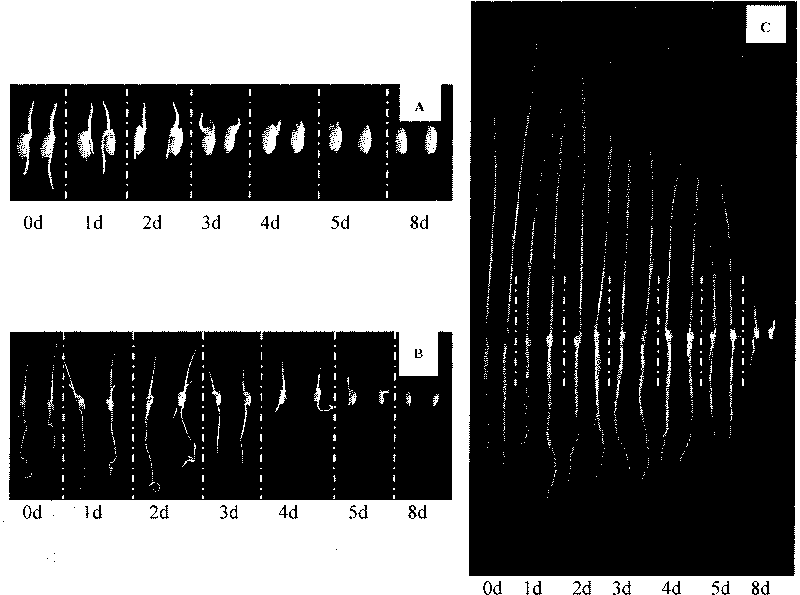
Figure 1 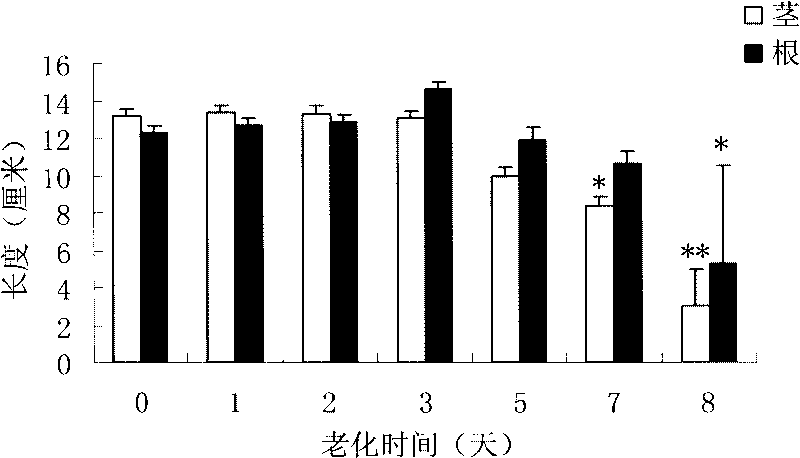
Figure 2 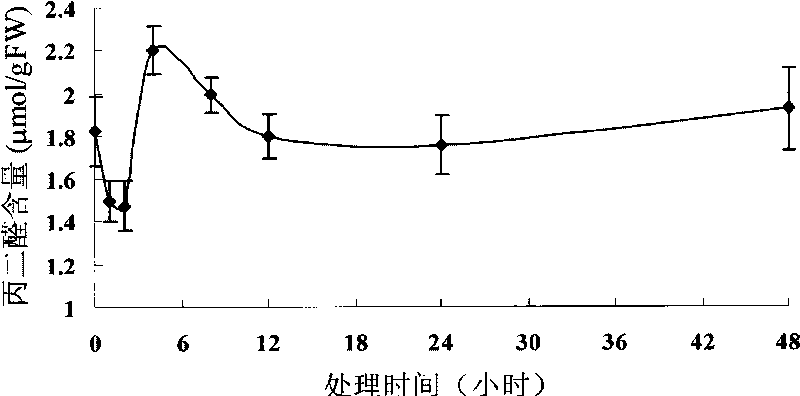
Figure 3
Abstract
Description
(1) Technical field
[0001] The invention relates to a method for artificial aging of rice seeds, belonging to the technical field of seed detection. With this method, the time for testing the storage resistance and deterioration resistance of rice seeds can be shortened. (2) Background technology
[0002] The irreversible quality decline changes after the physiological maturity of seeds are collectively referred to as "seed deterioration" or aging. Seed senescence is irreversible, inevitable, and different among populations. However, the degree of seed deterioration can be delayed and its potential performance can be improved by controlling storage and processing conditions. Seed deterioration can reduce seed quality, such as vigor, viability, storage capacity and field establishment rate, etc., resulting in inestimable economic losses. It is estimated that in the United States alone, the annual loss due to quality problems in seed sales can reach 500 million US dollars. I...
Examples
Embodiment Construction
[0020] 1. Artificial aging treatment of rice seeds
[0021] Select dried Nipponbare seeds with the same size and intact seed coat, put the seeds into a white screen window bag, and place them in an artificial climate box with pre-set conditions for processing. Pay attention to maintain the consistency of the environment in the artificial climate box, and do not interrupt the water source in the humidifier. Place them in artificial climate chambers at 45°C, 46°C, 46.5°C, and 47.5°C with 100% humidity for aging treatment, use 100 seeds for each treatment, and repeat four times. The processing time is one day, two days, three days, four days, five days, eight days, ten days, fifteen days. Observe the seed germination rate and germination potential and seedling growth after one to fifteen days of treatment. The germinated seeds of each treatment were transplanted into a hydroponic box for cultivation, and the growth status of the seedlings was observed. The newly germinated ric...