
Moving target detector utilizing time delay FRFT mode difference
A technology of moving targets and detectors, applied in the direction of utilizing re-radiation, instruments, measuring devices, etc., can solve problems such as limited applications, achieve good real-time performance, simple algorithm, and improve the effect of signal-to-clutter ratio
Patent Information
- Authority / Receiving Office
- CN · China
- Patent Type
- Applications(China)
- Current Assignee / Owner
- Publication Date
- 2010-11-10
- Estimated Expiration
- Not applicable · inactive patent
Smart Images
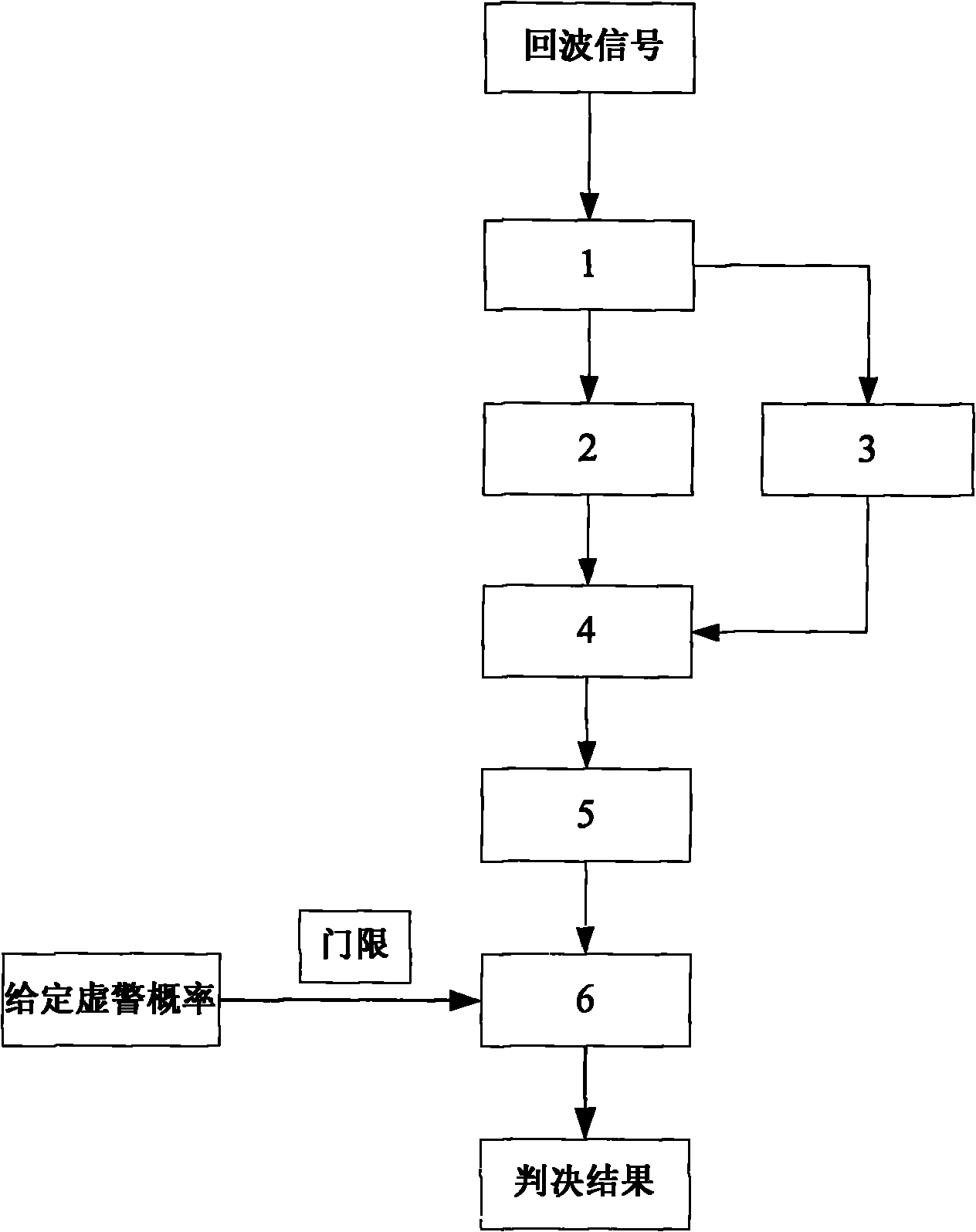
Figure 1 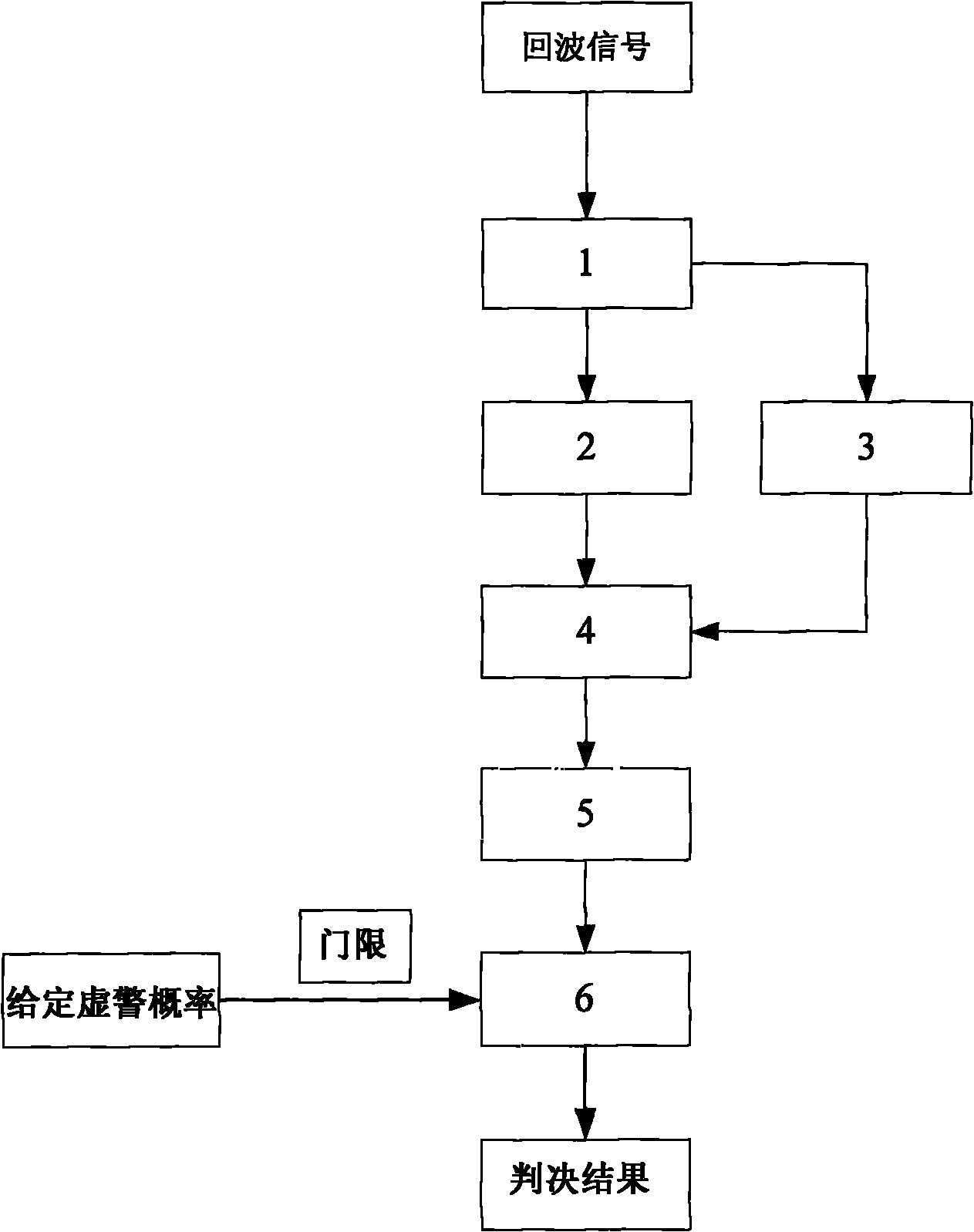
Figure 2
Abstract
Description
1. Technical field
[0001] The invention relates to a moving target detector using the time-delayed FRFT mode difference in the field of radar signal processing, which is suitable for signal processing systems of various imaging reconnaissance and early warning radars. 2. Background technology
[0002] The effective detection of moving targets has always been a hot spot. The traditional method to deal with this problem is the detection method based on the statistical model of clutter. The first problem of this kind of method is to establish the statistical model of clutter. Later, some scholars took another approach and applied fractal theory to some clutter environments such as sea clutter that satisfy fractal characteristics. Generally, the target is detected by using the feature that the fractal dimension of the target echo is lower than that of the clutter echo. With the development of modern signal processing technology, modern signal processing technology has been wid...
Examples
Embodiment Construction
[0015] The present invention will be described in further detail below in conjunction with the accompanying drawings. With reference to the accompanying drawings in the description, the specific implementation of the present invention is divided into the following steps:
[0016] (1) After the signal returned from the radar antenna is amplified and mixed, it is sent to the computing device 1 to select echo data s(n) and delay data s(n-m).
[0017] (2) The computing device 2 receives the echo data s(n) from the computing device 1, completes FRFT, and obtains its modulus |F[s(n)]|.
[0018] (3) The calculation device 3 receives the delay data s(n-m) from the calculation device 1, completes FRFT, and calculates its modulus |F[s(n-m)]|.
[0019] (4) The calculation device 4 receives the output results of the calculation devices 2 and 3, and completes the operation |F[s(n)]|-F[s(n-m)]|.
[0020] (5) The calculation device 5 receives the output data of the calculation device 4 and...