
Lighting bulb
A light bulb and housing technology, applied in the field of lighting bulbs, can solve the problems of complex overall manufacturing process, light leakage, poor visual effect, etc. Effect
Patent Information
- Authority / Receiving Office
- CN · China
- Patent Type
- Applications(China)
- Current Assignee / Owner
- Publication Date
- 2014-06-04
- Estimated Expiration
- Not applicable · inactive patent
Smart Images
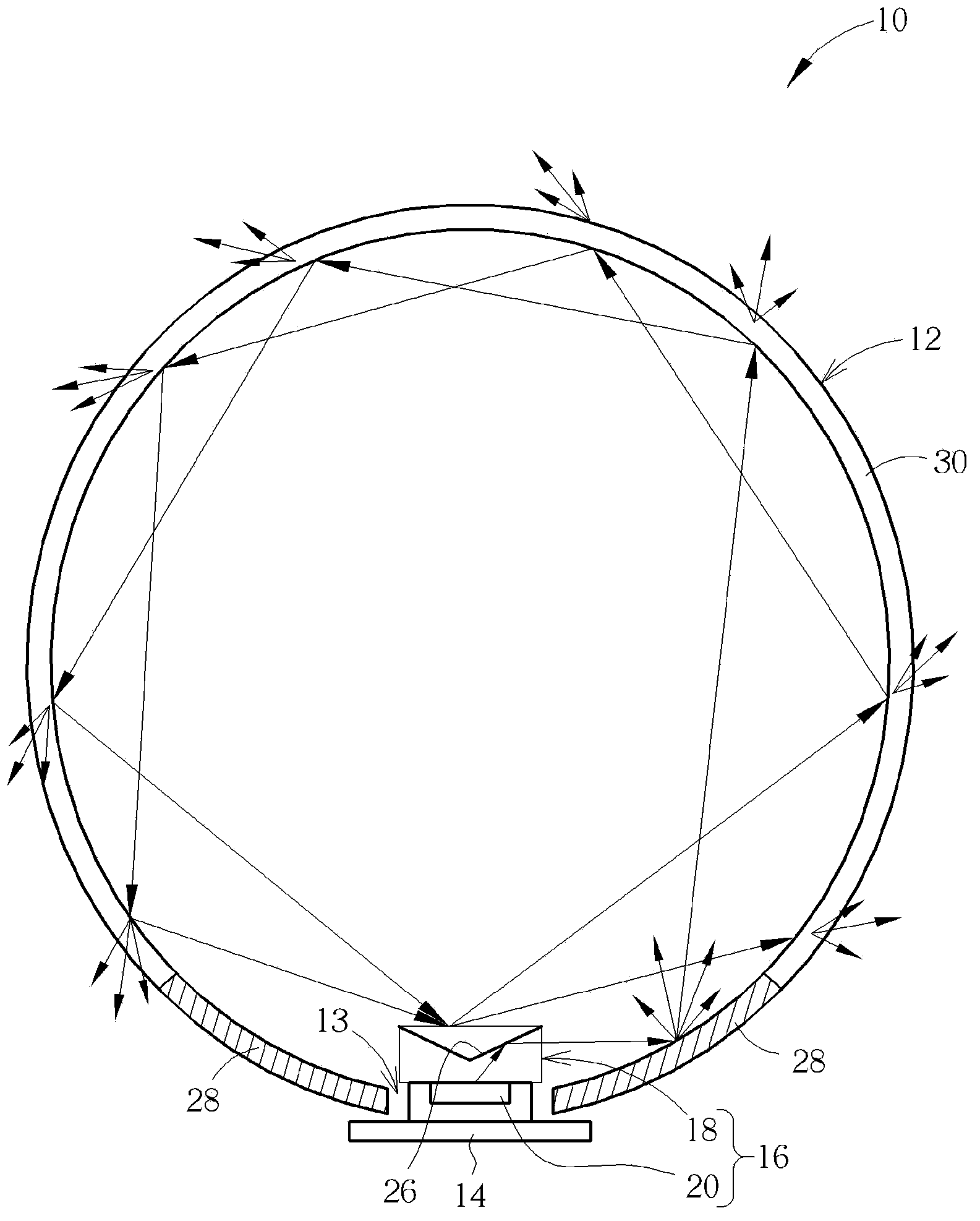
Figure 1 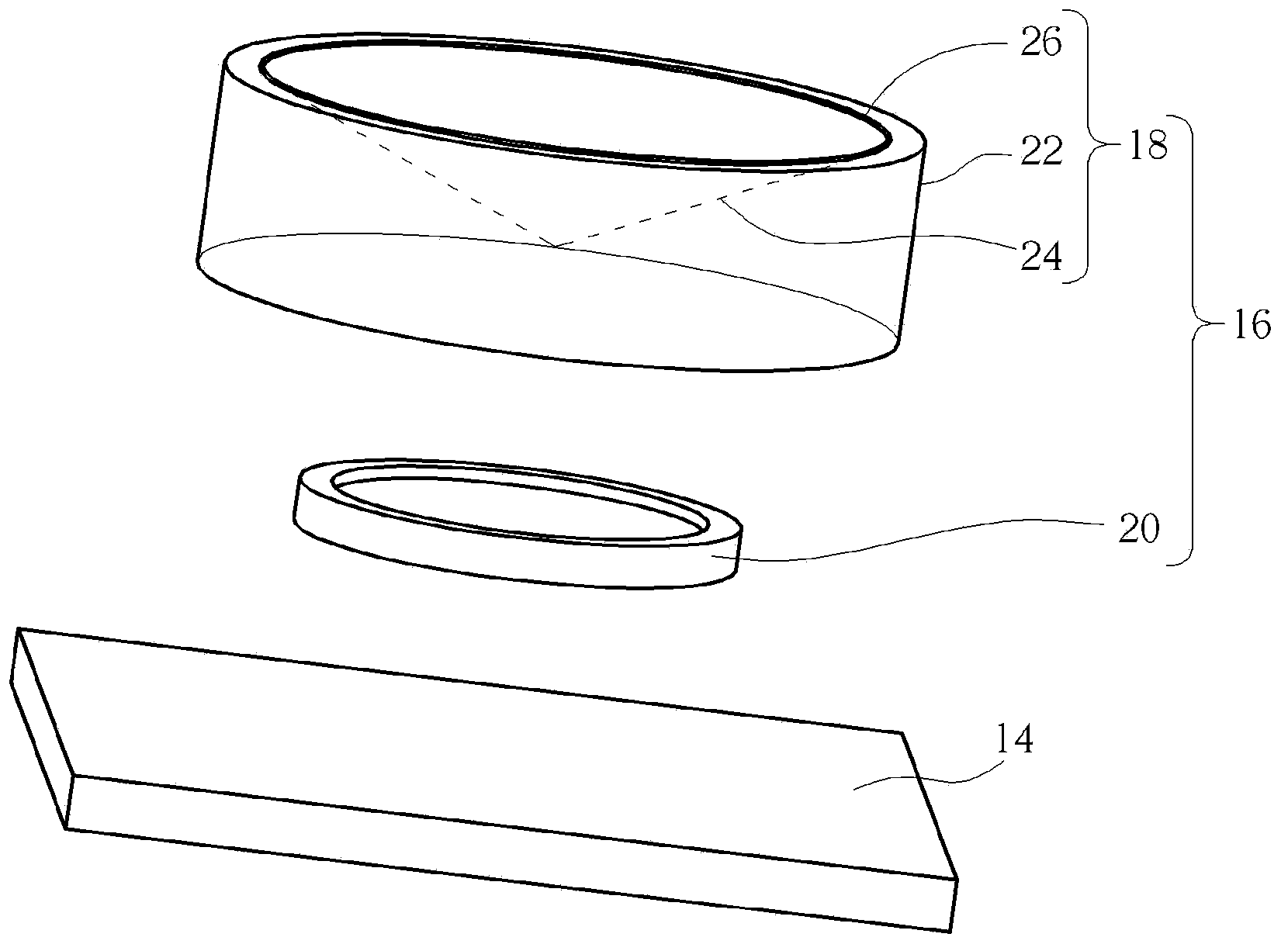
Figure 2 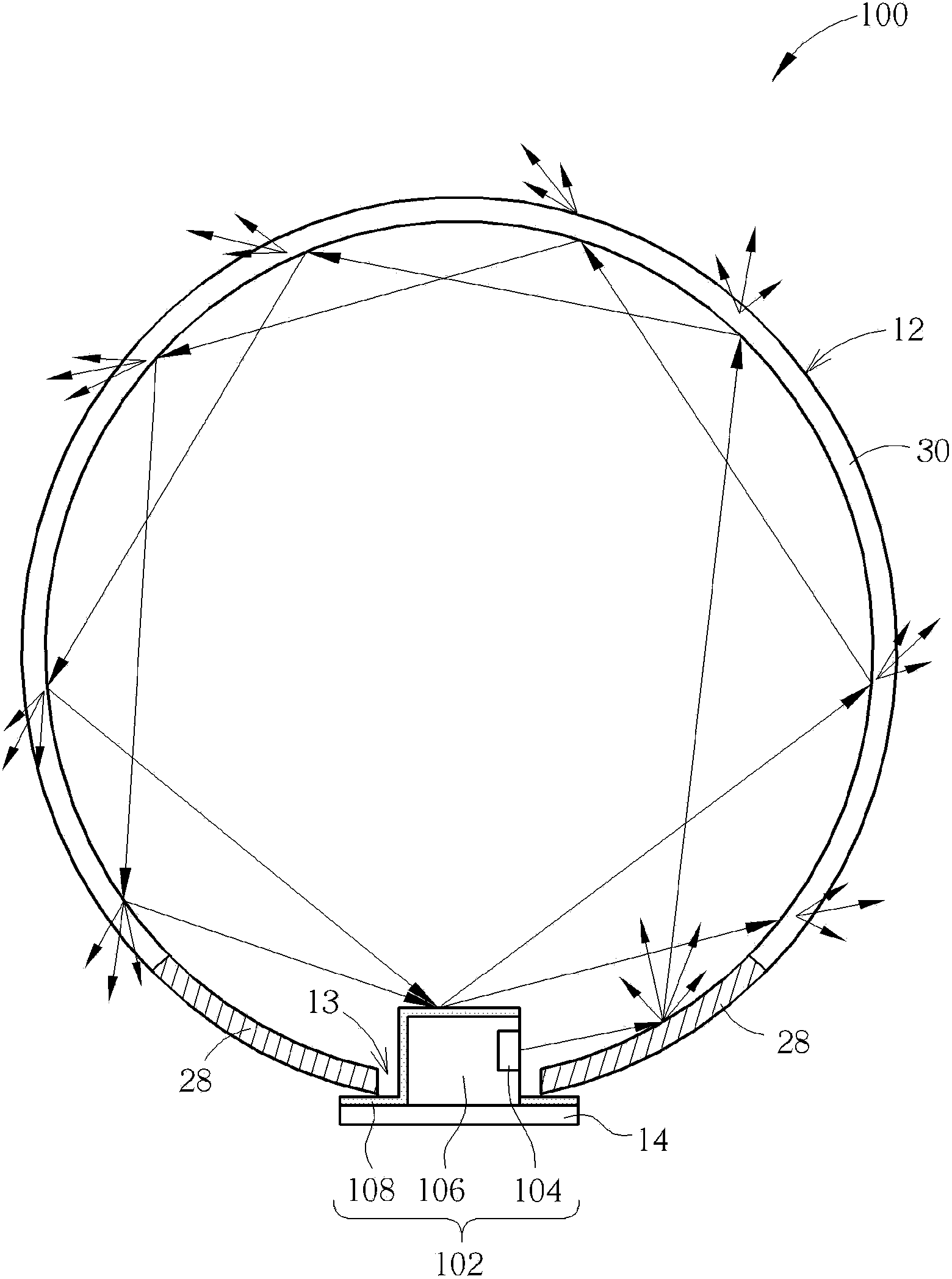
Figure 3
Abstract
Description
technical field
[0001] The present invention relates to a lighting bulb, in particular to a lighting bulb that uses a side-lighting device to emit light laterally to a light-transmitting bulb housing. Background technique
[0002] Generally, traditional lighting bulbs are incandescent bulbs that emit light by heating tungsten filaments. However, in recent years, in order to meet the needs of environmental protection and energy saving, light-emitting diodes (LEDs) are used as light sources to replace tungsten filaments. However, due to the limitation of the light-emitting angle of the light-emitting diode (about 120°), the light-emitting diode bulb usually only has an illumination angle of about 120°, which is much smaller than the illumination angle of the incandescent bulb (about 300°). Diode bulbs pose a number of limitations in lighting applications. In addition, although there have been designs in which the light-emitting diodes are directly arranged on the light bulb h...
Examples
Embodiment Construction
[0030] Please refer to figure 1 , figure 1 It is an internal schematic diagram of a lighting bulb 10 according to a first embodiment of the present invention. like figure 1 As shown, the lighting bulb 10 includes a light-transmitting bulb housing 12 , a circuit board 14 , and a lateral light-emitting device 16 . The light-transmitting bulb housing 12 has an opening 13 , and the circuit board 14 is correspondingly covered on the opening 13 to accommodate the lateral light-emitting device 16 together with the light-transmitting bulb housing 12 , wherein the light-transmitting bulb housing 12 can reflect It is composed of reflective materials with a rate greater than 90% and absorptivity less than 1%. The reflectivity here can be simply defined by the following formula.
[0031] Reflectance = 1- (absorptivity + transmittance)
[0032] In short, when light is incident on an object, the light will reflect, penetrate and absorb. Under the premise that the amount of incident ligh...