
Method for batch measurement of flatness ratio of coarse aggregate
A coarse aggregate and flat rate technology, applied in the field of batch testing of coarse aggregate flatness, can solve problems such as nonconformity and low efficiency, and achieve the effects of convenient operation, simple equipment and high efficiency
Patent Information
- Authority / Receiving Office
- CN · China
- Patent Type
- Applications(China)
- Current Assignee / Owner
- Publication Date
- 2015-12-09
- Estimated Expiration
- Not applicable · inactive patent
Smart Images
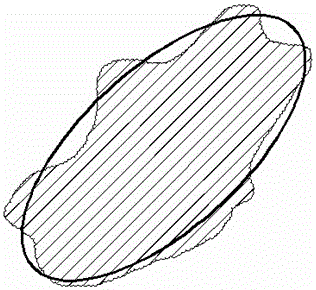
Figure 1 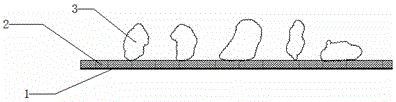
Figure 2
Abstract
Description
technical field
[0001] The invention relates to a method for batch testing the flatness of coarse aggregate. Background technique
[0002] In recent years, researchers have realized that the mesoscopic structure of asphalt mixture has a great influence on its macroscopic mechanical properties. Scholars began to study the relationship between the internal structure of asphalt mixture and the external macroscopic mechanical properties, and explored the microscopic mechanism of macroscopic phenomena from a new perspective. Among them, the shape characteristics of coarse aggregate are an important aspect that affects the macroscopic performance of the mixture. Coarse aggregates with obvious broken surfaces and corners and relatively uniform sizes in all directions can be embedded and squeezed to form a stable structure after rolling. If the coarse aggregate is relatively flat or slender, it is easy to break during road construction and rolling, which will have a great impact on...
Examples
Embodiment 1
[0026] Such as figure 1 , 2 As shown, a method for measuring the flatness of coarse aggregate includes the following steps:
[0027] Step 1. Select multiple coarse aggregates 3, wash off the dirt on the surface and dry them;
[0028] Step 2. Lay a piece of paper 1 on the horizontal platform, and evenly spread a layer of white plasticine 2 on the paper 1;
[0029] Step 3, evenly discharging the plurality of coarse aggregates 3 treated in step 1 on the plasticine 2, ensuring that the coarse aggregate 3 can stand on the plasticine 2 at any angle;
[0030] Step 4. Use a digital camera to take photos of aggregate 3 directly above the water platform;
[0031] Step 5, input the photograph taken in the computer software Image-Proplus6.0, calculate the ratio of the long and short axes of each coarse aggregate 3;
[0032] Step 6. Flip each aggregate 3, the angle of each flip is different, repeat steps 4 and 5 ten times;
[0033] Step 7. According to step 6, select the maximum long-...
Embodiment 2
[0036] In this embodiment, 30 coarse aggregates were selected, and the flatness rate of each aggregate was measured and the content of needle-like particles was counted.
[0037] Arrange 30 coarse aggregates in 5 rows and 6 columns, and arrange them neatly on the plasticine, with an interval of 0.5cm-1cm between the aggregates, and the aggregates cannot cross the edge of the plasticine. The specific amount of aggregate in other measurements depends on the area of the plasticine and the size of the aggregate.
[0038] Input all the photos taken into the software Image-Proplus6.0 and use the Count / Size function to calculate the ratio of the long and short axes.
[0039] In this example, the maximum flat rate of the 30 particles is 2.669, and the minimum flat rate is 1.103. Among them, 11 particles have a flat rate exceeding 2. According to the specification, it can be known that the above 30 aggregates are not needle-shaped particles.