
A minimally invasive intracranial multi-parameter detection probe
A detection probe, multi-parameter technology, used in intracranial pressure measurement, diagnostic recording/measurement, medical science, etc., can solve problems such as inability to data, evaluate treatment effects, lack of data collection and storage specifications, and achieve convenient physical isolation, The effect of simplifying the welding process
Patent Information
- Authority / Receiving Office
- CN · China
- Patent Type
- Patents(China)
- Current Assignee / Owner
- Publication Date
- 2019-02-05
Smart Images
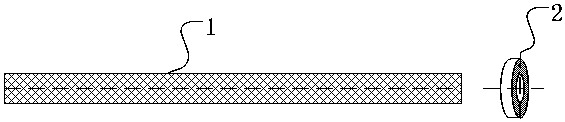
Figure 1 
Figure 2 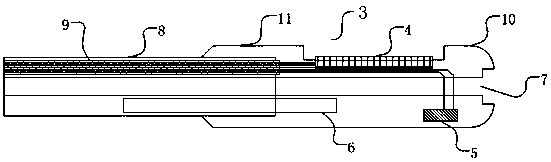
Figure 3
Abstract
Description
technical field
[0001] The invention belongs to the field of implantable medical systems, in particular to a minimally invasive intracranial multi-parameter detection probe. Background technique
[0002] 20% of traumatic brain injury (Traumatic Brain Injury, TBI) patients will have sequelae, and this group of people will experience long-term effects of sequelae in later life, which has created a lot of waste of human, material and financial resources. The causes of the injuries include falls, fights, and traffic accidents. Patients with craniocerebral injury often suffer from traumatic brain edema (Traumatic Brain Edema, TBE) or intracranial hematoma, which will increase intracranial pressure (ICP), decrease cerebral blood flow, aggravate brain injury and lead to patient death. Clinically, the main monitoring indicators of traumatic cerebral edema are ICP and CBF. Problems to be solved urgently in the diagnosis and treatment of traumatic cerebral edema include: the lack of...
Examples
Embodiment Construction
[0036] The present invention will be further described in detail according to the specific embodiments of the accompanying drawings.
[0037] Such as figure 1 and figure 2 As shown, the present invention uses dual optical fibers as the sending and receiving paths of near-infrared light. And the double optical fiber is packaged in its envelope, which is convenient for the subsequent threading process. One end of the double optical fiber and its envelope is sleeved in the annular leather plug and fixed.
[0038] Such as image 3 , which shows a side view of all components except the fiber optic module.
[0039] Such as Figure 4 As shown, the end of the optical fiber module that is not covered with the ring-shaped leather plug is inserted through the front end of the titanium alloy housing.
[0040] Such as Figure 5 As shown, the above-mentioned penetrating operation is continued until the ring-shaped leather plug is in full contact with the ring-shaped groove 7 to form...