
Examination method for rationality of variability of continuously reinforced concrete
Patent Information
- Authority / Receiving Office
- CN · China
- Current Assignee / Owner
- Publication Date
- 2016-09-07
- Estimated Expiration
- Not applicable · inactive patent
Smart Images
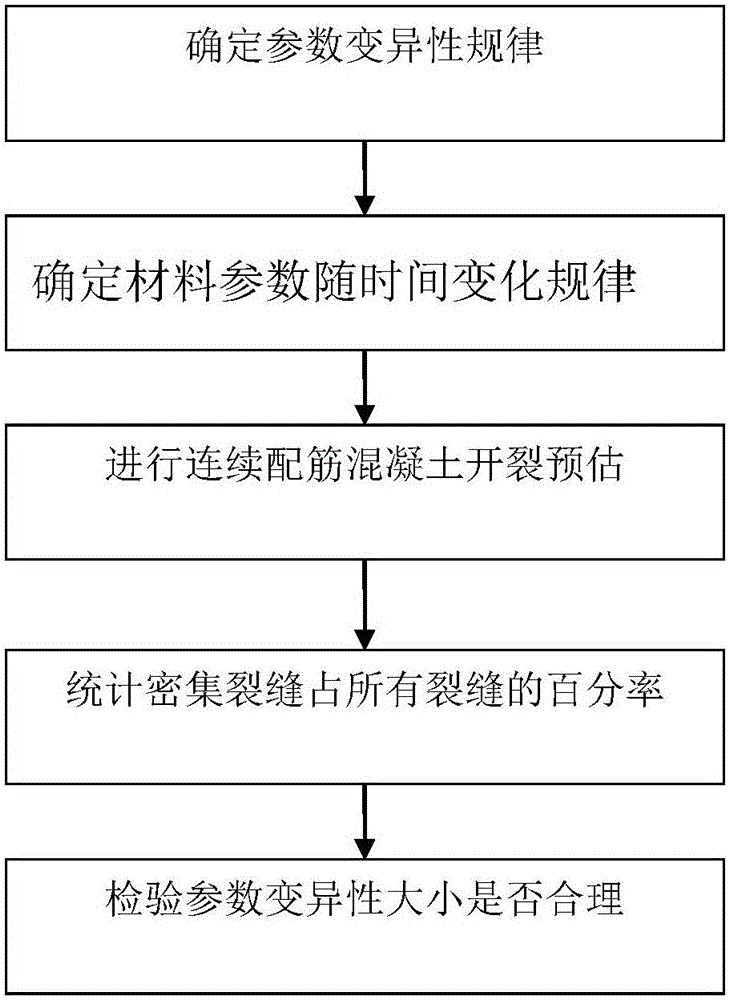
Figure 1 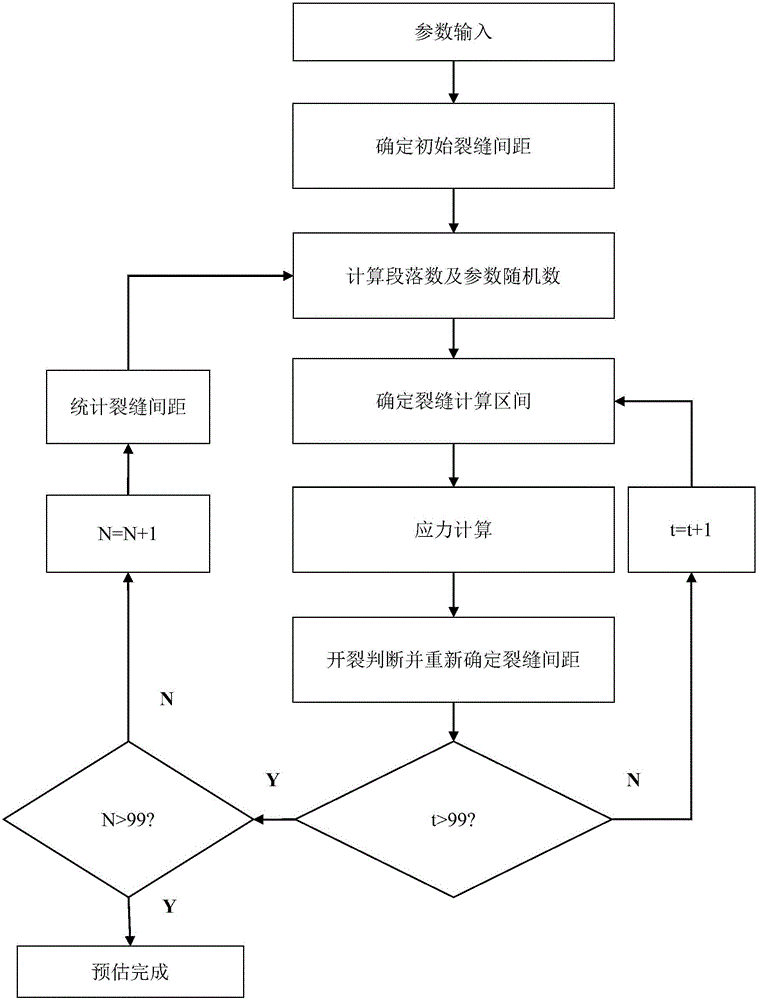
Figure 2 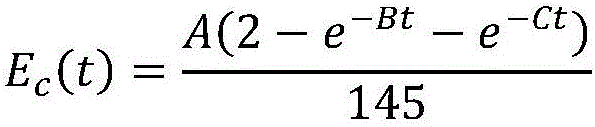
Figure 3
Abstract
Description
technical field
[0001] The invention belongs to the field of continuous-reinforced concrete pavement design, and in particular relates to a method for testing the rationality of the variability of continuously-reinforced concrete. Background technique
[0002] Continuously reinforced concrete pavement refers to the cement concrete pavement structure in which longitudinal continuous steel bars and transverse steel bars are arranged in the pavement structure, and there is no shrinkage joint. It is mostly used for high-grade pavement. Compared with ordinary concrete pavement, it has driving comfort and durability. good points.
[0003] Thrust is one of the main diseases of continuously reinforced concrete, and the area surrounded by transverse joints, longitudinal joints and the edge of the pavement is a typical thrust failure. Thrusting reduces the bearing capacity of the pavement structure, reduces the smoothness of the pavement and driving comfort, and can further develop i...
Examples
Embodiment Construction
[0051] The present invention will be further described below in conjunction with the accompanying drawings and embodiments.
[0052] see figure 1 with figure 2 , example:
[0053] First, determine the variability of parameters;
[0054] The tensile strength, elastic modulus, drying shrinkage strain, linear expansion coefficient and friction coefficient change between the surface layer and the base layer of concrete obey the normal distribution along the longitudinal direction of the road.
[0055] 2. Determine the change law of material parameters with time;
[0056] The change of concrete modulus with time is shown in formula a, the change of concrete tensile strength with time is shown in formula b, and the change of concrete dry shrinkage strain with time is shown in formula c:
[0057] E. c (t)=A(2-e -Bt -e -Ct ) / 145
[0058] [σ c ](t)=0.67A(2-e -Bt -e -Ct ) / 145
[0059] ε sh (t)=A(2-e -Bt -e -Ct )
[0060] In the formula, t is the curing time, the unit is...