
Device for testing fireproof performance of external facade of building
A test device and facade technology, which is applied in the field of building facade fire protection performance test devices, can solve the problem of inability to change the distance between side walls, the change of window size, the heat release rate of the fire source, and the inability to simulate the impact of overflow flame behavior Experiments, the inability to simulate the flame behavior test of the double wing wall, etc., to achieve the effects of easy modularization and standardized production, reasonable design, and slow speed decay
Patent Information
- Authority / Receiving Office
- CN · China
- Patent Type
- Applications(China)
- Current Assignee / Owner
- Publication Date
- 2017-05-10
Smart Images
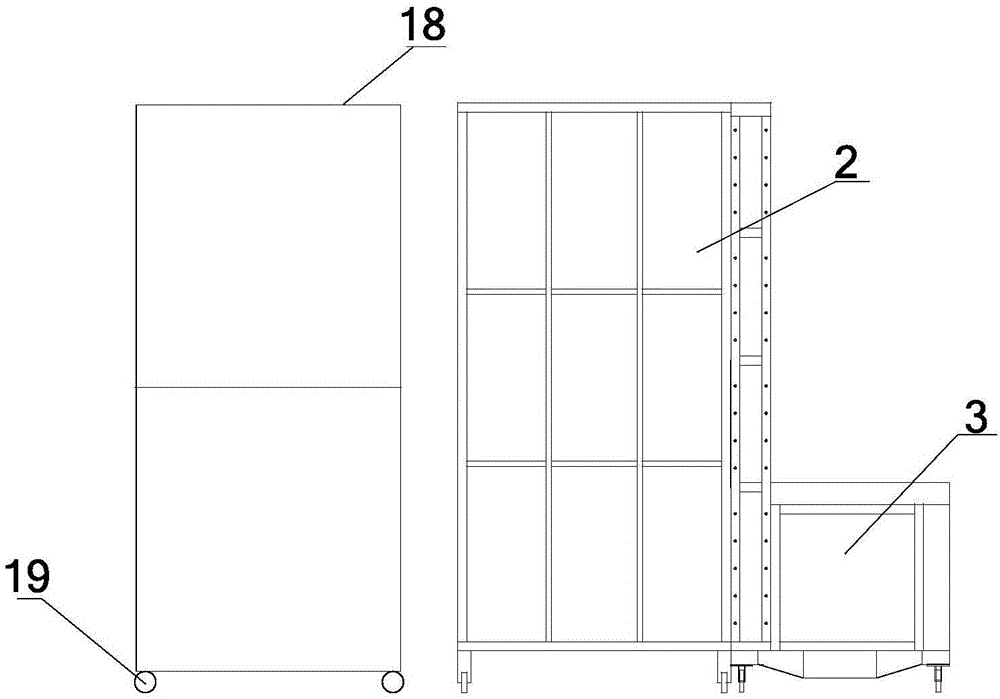
Figure 1 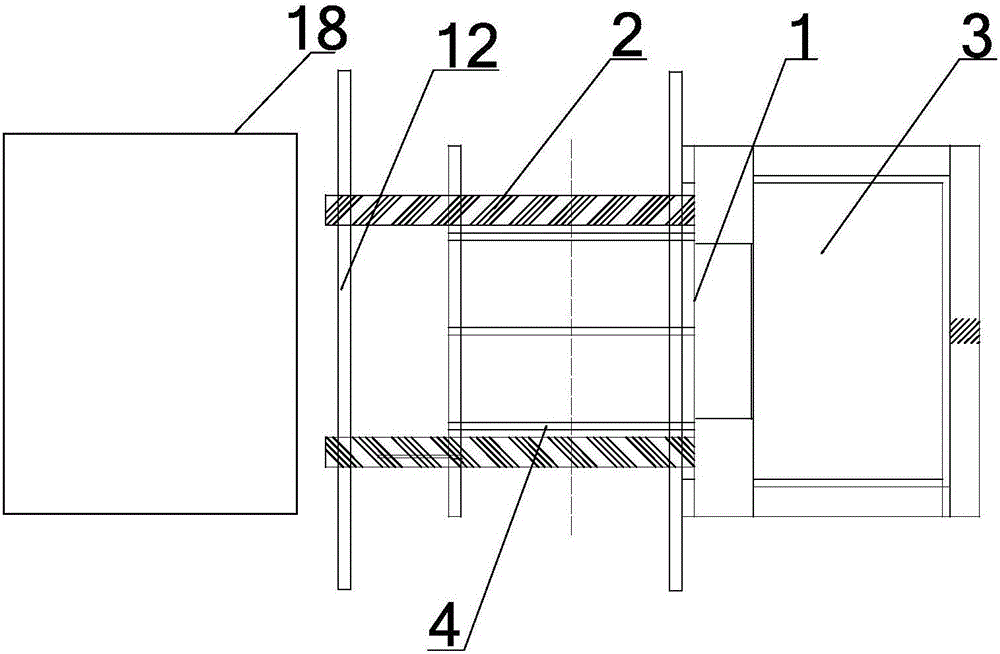
Figure 2 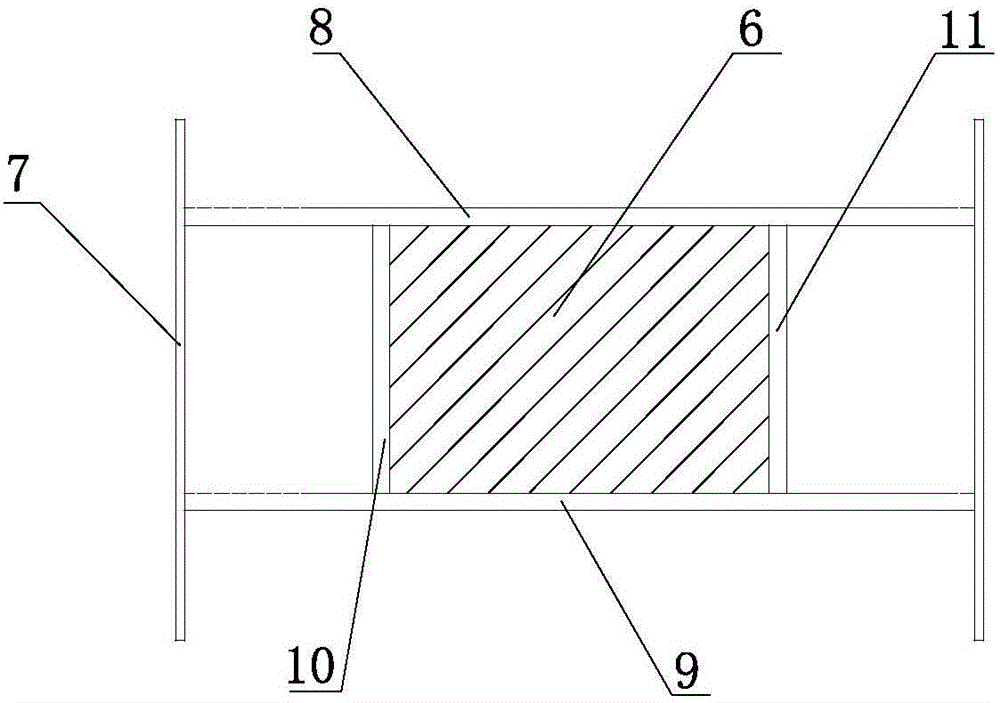
Figure 3
Abstract
Description
technical field
[0001] The invention relates to the technical field of fire protection engineering, in particular to a test device for the fire performance of building facades. Background technique
[0002] With the continuous development of my country's economy, high-rise / super high-rise buildings continue to emerge, and their fire safety issues are also increasingly valued. After a fire breaks out in a high-rise / ultra-high-rise building, the incompletely combusted components of the fuel form overflow flames through the vertical openings of the external wall such as windows, which is likely to ignite the combustible thermal insulation materials on the external wall, or cause the upper glass curtain wall to rupture, thus causing multiple accidents. Floor fire spread. Many fire accidents at home and abroad in recent years have shown that it is difficult to put out fires in high-rise buildings, and it is difficult to quickly control the fire, which can easily lead to heavy pr...
Examples
Embodiment Construction
[0033] The present invention will be further described below in conjunction with the accompanying drawings and embodiments, and the mode of the present invention includes but not limited to the following embodiments.
[0034] Such as Figure 1-6As shown, the present invention provides a kind of simulated test device related to different environmental wind speeds, different high-rise and super high-rise building facade structure form fire performance tests, which includes simulated main wall 1, simulated wing wall 2, combustion chamber 3, net Frame 5, regulating mechanism. A window 6 is opened at the lower part of the simulated main wall 1 , and the combustion chamber 3 is arranged beside the simulated main wall 1 , and an opening communicating with the window 6 is provided on it. The combustion chamber 2 is used for simulating combustion, so that a flame is generated and overflows to the simulated main wall 1 through the window 6 . Specifically, a burner assembly is provided...