
Heat treatment technology for preparing high-performance low-residual stress aluminum alloy
A residual stress and aluminum alloy technology is applied in the field of heat treatment for preparing high-performance low residual stress aluminum alloys. It can solve the problems of consuming material plastic reserve, increasing plastic deformation, and demanding material shape and size, and achieves fast heating speed and reduced heat loss. The effect of small lattice distortion and good high temperature environment
Patent Information
- Authority / Receiving Office
- CN · China
- Current Assignee / Owner
- Publication Date
- 2018-09-14
Smart Images
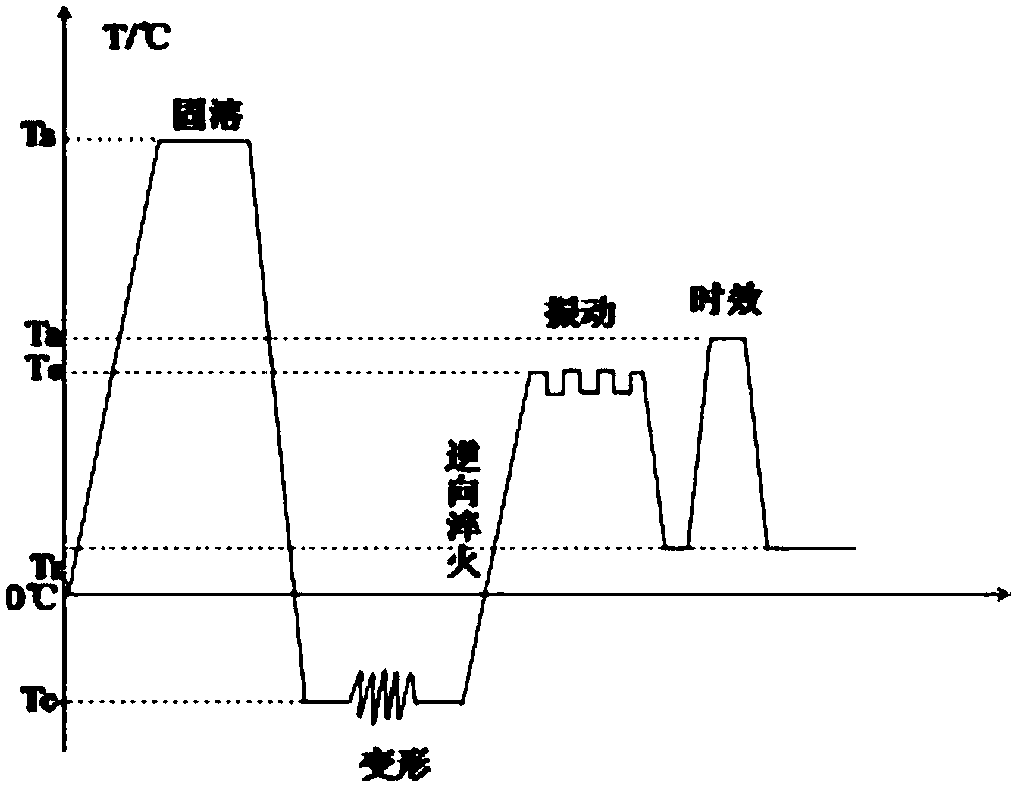
Figure 1 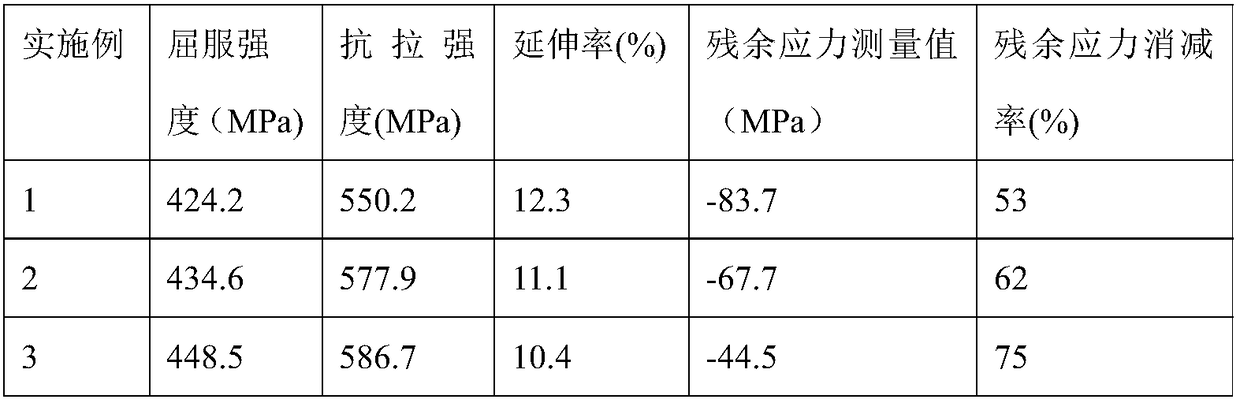
Figure 2 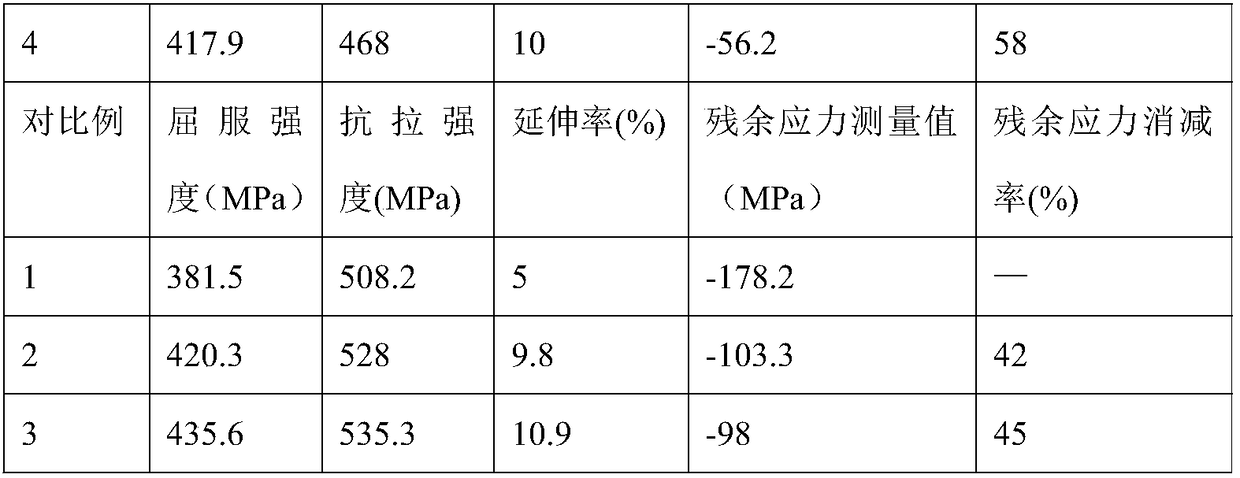
Figure 3
Abstract
Description
technical field
[0001] The invention relates to a heat treatment technology for preparing an aluminum alloy with high performance and low residual stress, which can effectively improve the strength and plasticity of the aluminum alloy and significantly reduce the residual stress; it belongs to the technical field of aluminum alloy thermomechanical treatment. technical background
[0002] As a non-ferrous metal structural material with excellent performance, aluminum alloy has been widely used in aerospace, automobile, ship and other fields. The rapid development of global social economy and science and technology has put forward higher and higher requirements for the performance of aluminum alloys, and the research on aluminum alloys has also deepened.
[0003] The application of aluminum alloys in industry is increasing year by year, but the quality of finished products is uneven. It is imperative to produce high-quality aluminum alloy materials. With the continuous progr...
Examples
Embodiment 1
[0047] A 2xxx series alloy cold-rolled plate with a sample thickness of 6 mm was used, and its alloy composition was Al-4.45Cu-1.5Mg-0.54Mn (mass fraction %). Firstly, put the sample into an air furnace with a temperature of 495°C for 1 hour; then quench the sample at a low temperature, and then perform cryogenic deformation treatment on the quenched sample, and the deformation amount is 10%; after the cryogenic deformation treatment Immediately put it in a heat medium at 150°C for 12 minutes, and at the same time use a vibrator to vibrate it. The dynamic stress provided by the vibrator is 55MPa; finally, perform aging treatment with an aging temperature of 120°C and a time of 45h. The yield strength, tensile strength, elongation, residual stress measurement value and residual stress reduction rate of the 2xxx alloy treated in this embodiment are shown in Table 1.
Embodiment 2
[0049] A 2xxx series alloy cold-rolled plate with a sample thickness of 6 mm was used, and its alloy composition was Al-4.45Cu-1.5Mg-0.54Mn (mass fraction %). Firstly, put the sample in an air furnace with a temperature of 485°C and keep it warm for 1 hour; then the sample is subjected to low-temperature quenching, and the quenched sample is subjected to cryogenic deformation treatment, and the deformation amount is 25%; after cryogenic deformation treatment Immediately put it in a heat medium at 180°C for 10 minutes, and at the same time use a vibrator to vibrate it. The dynamic stress provided by the vibrator is 75MPa; finally, perform aging treatment with an aging temperature of 170°C and a time of 16h. The yield strength, tensile strength, elongation, residual stress measurement value and residual stress reduction rate of the 2xxx alloy treated in this embodiment are shown in Table 1.
Embodiment 3
[0051] A 2xxx series alloy cold-rolled plate with a sample thickness of 6 mm was used, and its alloy composition was Al-4.45Cu-1.5Mg-0.54Mn (mass fraction %). First, put the sample in an air furnace at 500°C for 1 hour; then quench the sample at low temperature, and then perform cryogenic deformation treatment on the quenched sample, and the deformation amount is 40%; after cryogenic deformation treatment Immediately put it in a heat medium at 200°C for 8 minutes, and at the same time, use a vibrator to vibrate it. The dynamic stress provided by the vibrator is 84MPa; finally, perform aging treatment with an aging temperature of 200°C and a time of 1.5h. The yield strength, tensile strength, elongation, residual stress measurement value and residual stress reduction rate of the 2xxx alloy treated in this embodiment are shown in Table 1.