
High-strength thick-wall bottle and can die
A high-strength, bottle-can technology, applied in the direction of forming tools, manufacturing tools, metal processing equipment, etc., can solve the problems of insufficient compressive strength of the bottom of the bottle and can, thick wall of the can, easy to break the can, and wrinkling of the can. Achieve the effect of increasing stable quality, improving axial bearing force and reducing wrinkles
Patent Information
- Authority / Receiving Office
- CN · China
- Patent Type
- Applications(China)
- Current Assignee / Owner
- Publication Date
- 2019-01-04
- Estimated Expiration
- Not applicable · inactive patent
Smart Images
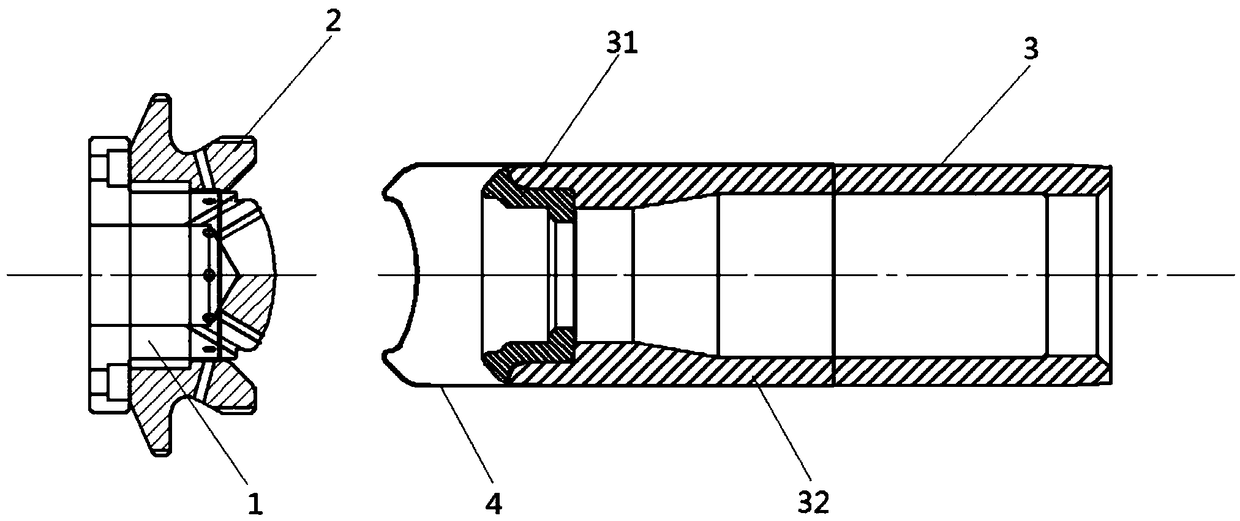
Figure 1 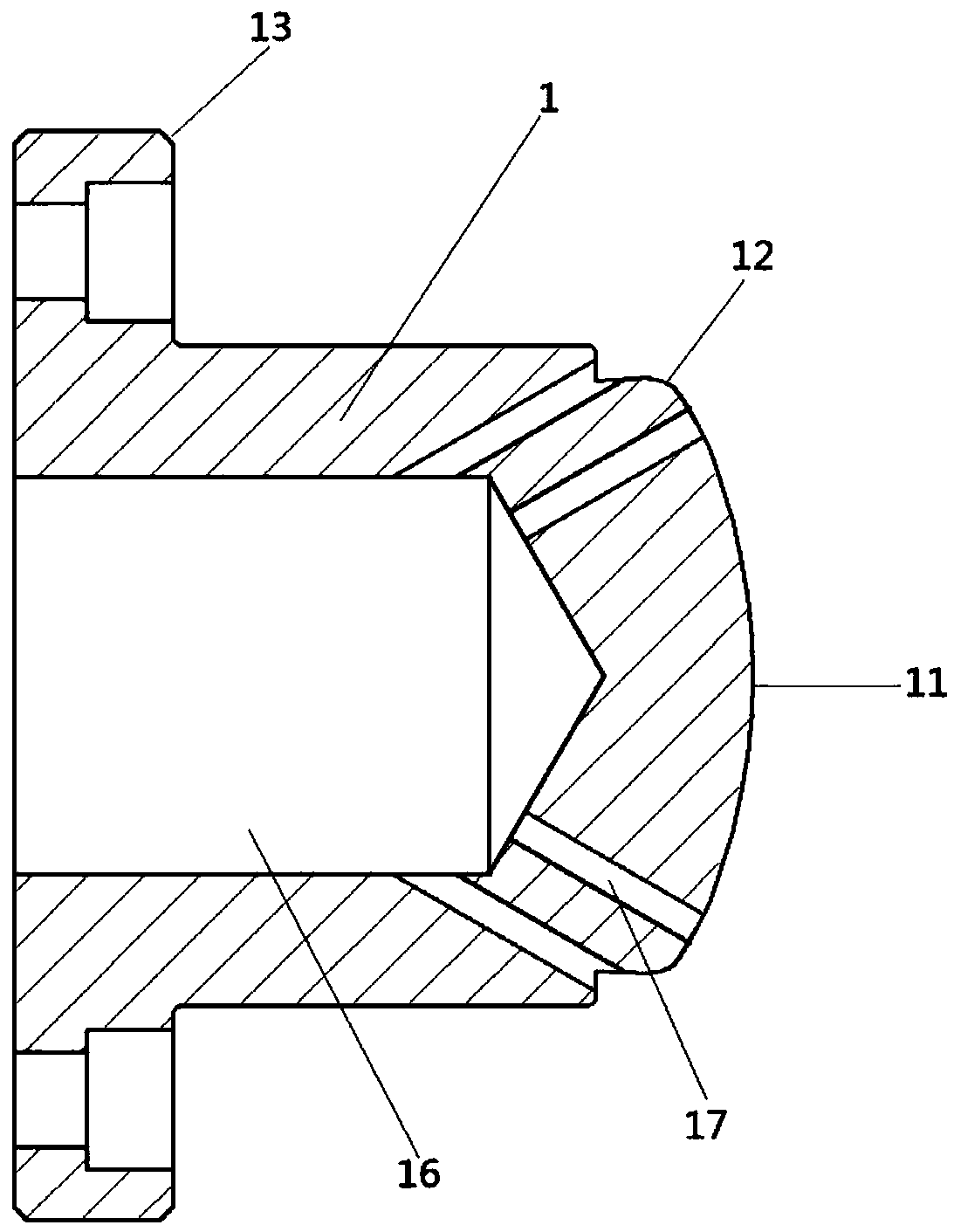
Figure 2 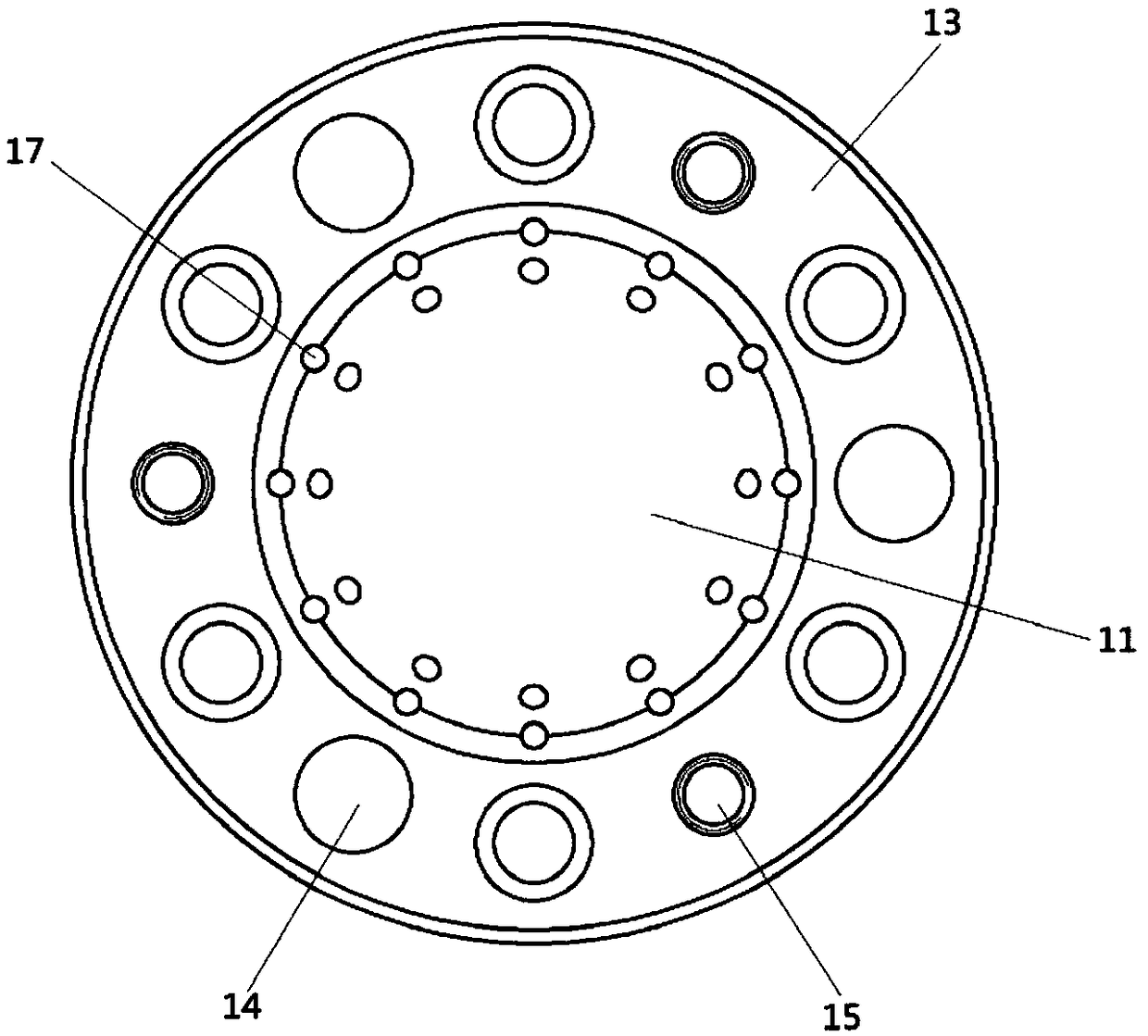
Figure 3
Abstract
Description
technical field
[0001] The invention relates to the field of stretching machine molds, in particular to a high-strength thick-walled bottle mold. Background technique
[0002] The forming of pop-top cans generally uses a stretching machine, and the forming process is formed through the sequential action of each part of the stretching machine mold (stretching punch, punching nose, inner bottom mold, outer bottom mold, re-drawing ring, ironing thin ring) , so the mold directly determines the shape of the jar.
[0003] However, in the existing molds for bottles and cans, when the material thickness is 0.270mm or more, the cans are prone to breakage due to the thin wall thickness during the stretch forming process of the cans, and the compressive strength of the bottom of the cans is not enough, and the bottom of the cans is prone to cracking. The wrinkle phenomenon has great limitations. Contents of the invention
[0004] In order to make up for the deficiencies in the prio...
Examples
Embodiment 1
[0030] Such as figure 1 As shown in -7, the present invention provides a kind of high-strength thick-walled bottle mold suitable for stretching machine, including inner bottom mold 1, outer bottom mold 2 and punch 3, wherein punch 3 includes the The nose 31 and the punch body 32 are detachable.
[0031] Such as figure 2 As shown in -3, the end of the inner bottom mold 1 facing the punch is provided with an arc-shaped convex surface 11, and the R angle of the arc-shaped convex surface 11 is between 45-46mm. Preferably, the R angle of the arc-shaped convex surface 11 is set to 45.62mm . The edge of the arc-shaped convex surface 11 and the outer wall of the inner bottom mold 1 are smoothly transitioned by an arc segment 12, and the R angle of the arc segment 12 is between 24.5-25.5mm. Preferably, the R angle of the arc segment 12 is set to 25.00mm . Such setting makes the bottom of the bottle 4 after stamping have a larger radian, and the bottom edge also transitions smoothl...