
Automatic parking path following processing method, system, vehicle and storage medium
A technology for automatic parking and processing methods, which is applied in the field of vehicles and storage media, and automatic parking path following processing, which can solve the problems of monotonous increase of the independent variable x and discontinuous curvature of arc and straight paths, so as to improve efficiency and simplify paths Effects that follow the algorithm and are easy to implement quickly
Patent Information
- Authority / Receiving Office
- CN · China
- Patent Type
- Patents(China)
- Current Assignee / Owner
- Publication Date
- 2021-08-06
Smart Images
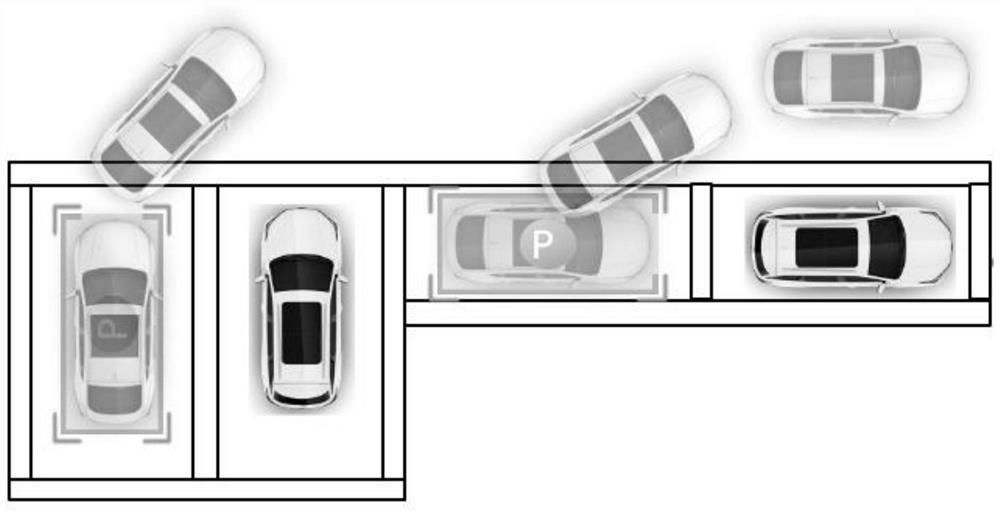
Figure 1 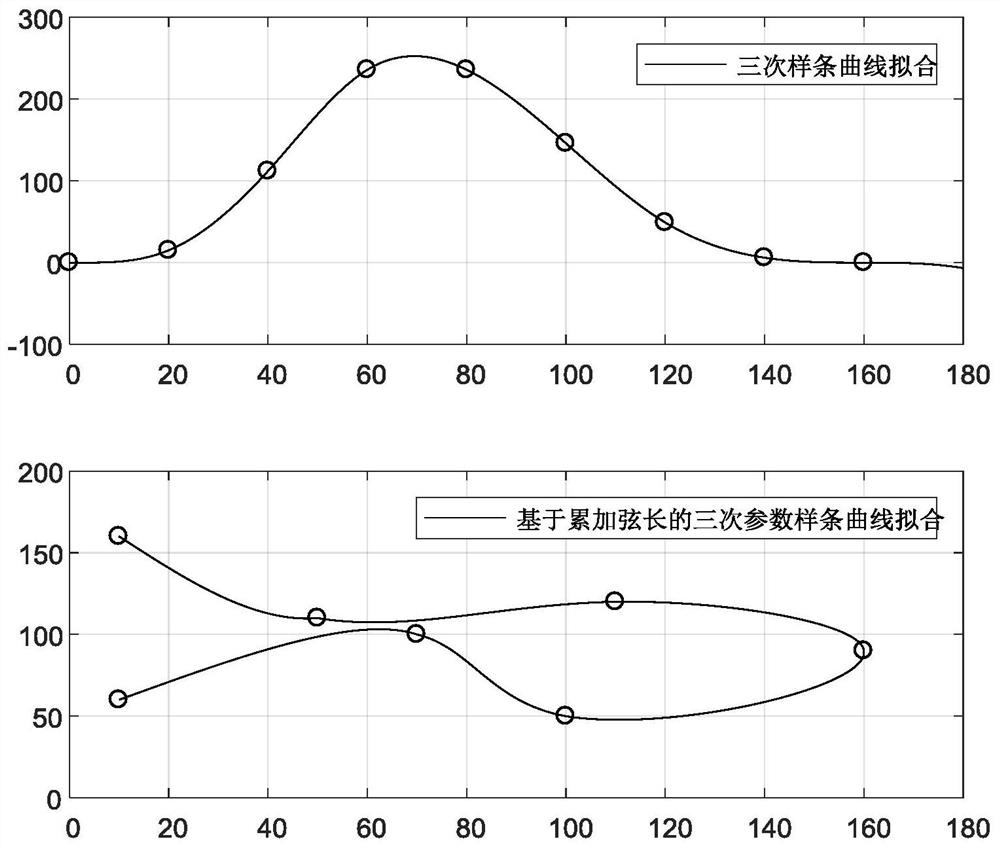
Figure 2 
Figure 3
Abstract
Description
technical field
[0001] The invention belongs to the technical field of automatic parking, and in particular relates to an automatic parking path following processing method, system, vehicle and storage medium. Background technique
[0002] In recent years, with the exponential increase in car ownership, the problem of parking difficulties has become more prominent. This issue has attracted a lot of attention from the outside world, especially major OEMs. At the current stage, OEMs have realized the mass production of fully automatic parking technology based on the fusion of imaging and ultrasound, and the market response has been good. The market prospect of fully automatic parking is promising. Deep digging technology, the basic principle of parking path planning is mainly based on the principle of arcs and straight lines for path planning to ensure that vehicles enter the warehouse, or the path planning method of B-spline curves.
[0003] At present, the arc and straight...
Examples
Embodiment Construction
[0045] The present invention will be further described below in conjunction with accompanying drawing.
[0046] In this embodiment, an automatic parking path following processing method includes the following steps:
[0047] Step 1. Based on the parking space information, plan the arc-line path required for parking, and obtain the control point P for path planning. i , i=0,1,2,...n;
[0048] Step 2, based on the cubic spline interpolation function for parametric solution, using the method of chord length accumulation; for the control point P on the plane i The coordinates (x i ,y i ), calculate the cumulative chord length at each control point;
[0049] The cumulative chord length at each control point is expressed as:
[0050] the s 0 =0
[0051]
[0052]
[0053]
[0054]
[0055] In the formula: l i Indicates the chord length of the i segment, k=i-1.
[0056] Step 3, parameterize x and y as equations of x(s) and y(s) respectively, where s i ≤s≤s i+1 ,...