
Concentric circular skin stretching closer
A technology of concentric circles and closers, applied in the direction of wound clips, etc., can solve the problems of difficult stretching of arc-shaped large wounds, and achieve the effect of improving the disadvantages of plane stretching, protecting skin tissue, and cutting less
Patent Information
- Authority / Receiving Office
- CN · China
- Patent Type
- Applications(China)
- Current Assignee / Owner
- Publication Date
- 2021-01-26
Smart Images
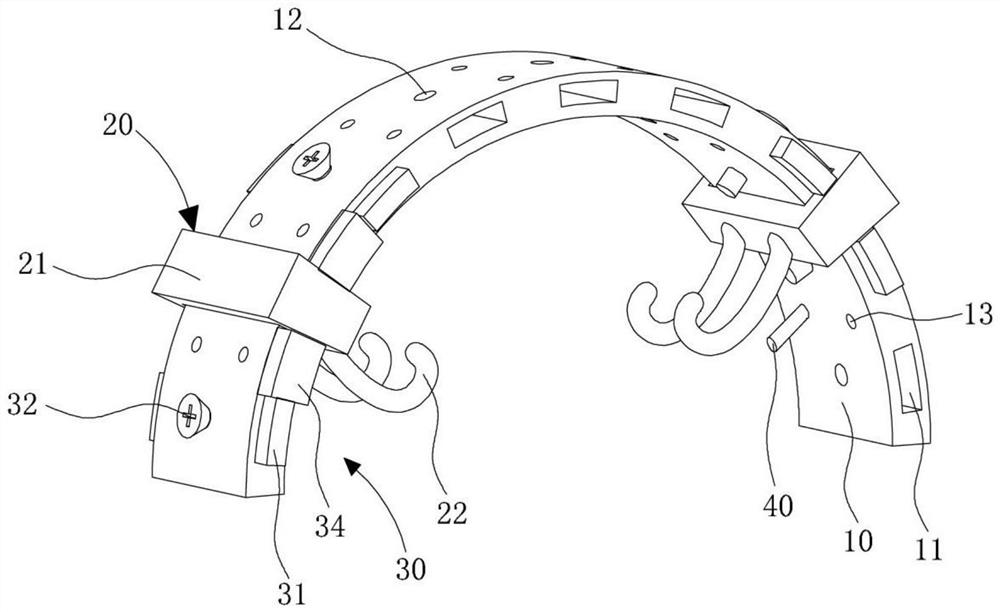
Figure 1 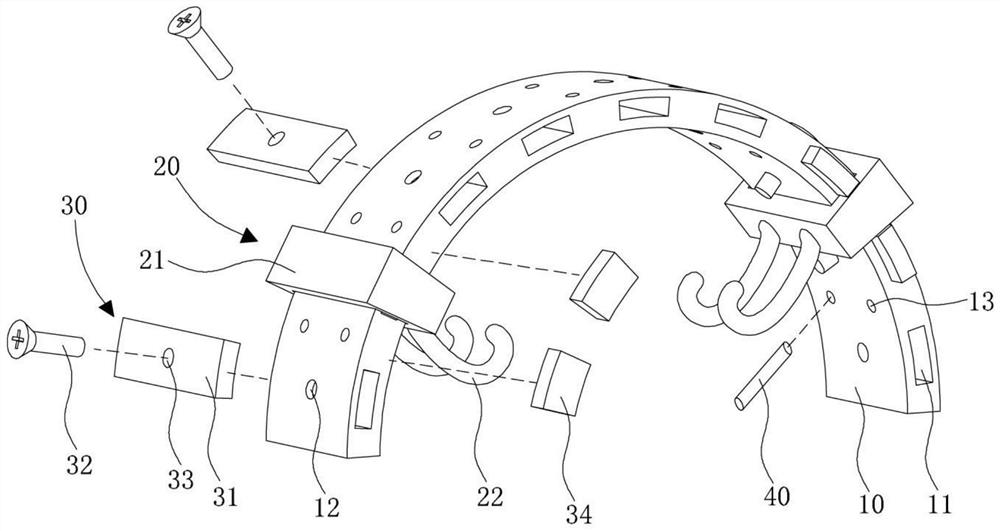
Figure 2
Abstract
Description
technical field
[0001] The invention relates to the technical field of skin stretching instruments, in particular to a concentric circular skin stretching closer. Background technique
[0002] In recent years, for large-area skin and soft tissue defects caused by trauma, in addition to traditional free skin grafting, skin flap technology, tissue engineering, skin expansion, stem cell transplantation and other technologies, skin stretching technology has gradually increased and achieved good results . The application principle of skin stretching is to use the mechanical creep properties of the skin. However, there are many limitations in skin stretching, such as limited stretching degree, unclear limit value of stretching force in each part, skin edge necrosis after excessive stretching, etc. Among them, it is more difficult to stretch the large-area wounds of the extremities, because the wounds are distributed on the cylindrical limbs, not on the same horizontal plane and ...
Examples
Embodiment Construction
[0022] Embodiments of the technical solutions of the present invention will be described in detail below in conjunction with the accompanying drawings. The following examples are only used to illustrate the technical solutions of the present invention more clearly, and therefore are only examples, rather than limiting the protection scope of the present invention.
[0023] In describing the present invention, it should be understood that the terms "center", "length", "width", "thickness", "upper", "lower", "front", "rear", "left", " The orientation or positional relationship indicated by "right", "vertical", "horizontal", "top", "bottom", "inner", "outer", etc. is based on the orientation and positional relationship shown in the drawings, and is only for the convenience of description The present invention and simplified description do not indicate or imply that the referred position or element must have a specific orientation, be constructed and operated in a specific manner,...