
Process for recycling polyamides under acidic conditions
By heating the aqueous medium under acidic conditions to carry out hydrolysis of polyamide, combined with acid catalysis and neutralization steps, efficient recovery and hydrolysis of polyamide is successfully achieved, solving the problem of environmental pollution, and the method is suitable for industrial applications.
Patent Information
- Application Number
- CN202380049544.4
- Authority / Receiving Office
- CN · China
- Patent Type
- Applications(China)
- Current Assignee / Owner
- Priority Date
- 2022-06-26
- Filing Date
- 2023-06-26
- Publication Date
- 2025-02-11
AI Technical Summary
An efficient and environmentally safe method is needed to recover monomers from polyamides and achieve high hydrolysis of the polyamide to its constitutive monomers under acidic conditions while reducing environmental pollution.
The method of heating an aqueous medium containing water, polyamide and acid is used to induce the dissolution and hydrolysis of polyamide, and the acid catalytic reaction is used to select appropriate acids to ensure efficient hydrolysis, and the diacid and diacid are recovered through subsequent neutralization steps. amine.
Highly efficient hydrolysis of polyamides is achieved, achieving a hydrolysis degree of at least 90.0%, reducing the amount of salt released in the environment, and the method is relatively mild in equipment and operation, easy to scale and industrially implement.
Smart Images

Figure BDA0005206252670000121 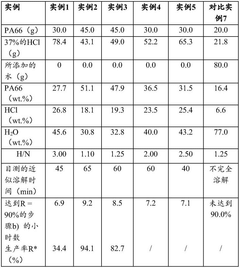
Figure BDA0005206252670000161 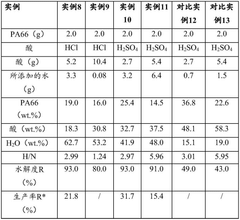
Figure BDA0005206252670000171
Abstract
Description
[0001] This application claims priority to European Patent Application No. 22315129.1 filed on June 26, 2022, the contents of which are incorporated herein by reference in their entirety for all purposes. If there are any inconsistencies between the two applications that affect the clarity of terminology or expression, reference should be made solely to the present application.
[0002] The present disclosure relates to an environmentally respectful method for recycling polyamide into its constituent monomers under acidic conditions. The method comprises depolymerizing the polyamide into its monomers and recovering them. [Background of the invention]
[0004] Plastics are cheap and durable materials that can be used to make a wide variety of products with such a wide range of applications that their production has increased dramatically over the years since their discovery. It is estimated that about 40% of these plastics are used in single-use, disposable applications (such as packaging, agricultural films, disposable consumer goods) or in short-lived products that are discarded within a year of manufacture. Due to the durability of the polymers involved, large amounts of plastics are accumulating in landfills and natural habitats around the world, causing increasing environmental problems. Even degradable and biodegradable plastics may last for decades, depending on local environmental factors (like UV light exposure levels, temperature, presence of suitable microorganisms, etc.).
[0005] One solution to reduce the environmental and economic impacts associated with the accumulation of plastics is closed-loop recycling, where plastic materials are mechanically reprocessed to make new products. For example, one of the most common closed-loop recycling is the recycling of polyethylene terephthalate (PET). PET waste is subjected to continuous processing to obtain food contact approved recycled PET, which is collected, sorted, pressed into bales, crushed, washed, cut into slices, melted and extruded into pellets and sold. This recycled PET can then be used to make fabrics or new packaging (such as bottles or blister packs, etc.) for the clothing industry.
[0006] However, plastic waste is generally collected all together, so that plastic contains a mixture of different plastics, whose composition can vary from source to source and whose proportions can vary from bag to bag. Therefore, the recycling process needs to be initially selected to sort the plastic products according to their composition, size, resin type, color, functional additives used, etc.
[0007] Another potential method for recycling plastics involves chemical recycling of monomers that allow recovery of polymers. The resulting monomers can then be used to remanufacture plastic materials (the same or other plastic materials) or to manufacture other synthetic chemicals. While such chemical and enzymatic depolymerization processes for PET have been well optimized for many years with very high yields of recycled ethylene glycol and recycled terephthalic acid, there is still a need to similarly develop an efficient and optimized process for polyamides. [Background Technology]
[0008] EP 0737666 discloses a method for depolymerizing one or more polyamides in the presence of at least one nitrogen-containing compound. The nitrogen-containing compound may be NH3, a (cyclo)aliphatic amine, a (cyclo)aliphatic diamine, a (cyclo)aliphatic polyamine, an aromatic diamine and / or an aromatic polyamine. The hydrolysis is not carried out under acidic conditions.
[0009] US 6,087,494 discloses a method for depolymerizing one or more polyamides into monomer units, the method comprising depolymerizing the one or more polyamides in the presence of at least one alkali metal compound, at least one alkaline earth metal compound or a mixture thereof at a pressure between about 0.2 and about 20 MPa and at a temperature above 150°C.
[0010] ACS Sustainable Chem. Eng. 2020, 8, 16274-16282 discloses the processing of aliphatic PAs (PA 6,6, PA 10,10, PA 11 and PA 12) into their constituent monomers by hydrolysis under microwave irradiation using hydrochloric acid as an acid catalyst. The applied temperature is above 150°C. In addition, the use of microwaves poses challenges for the industrialization of the disclosed method. There is also no precise mention of the proportion of water used in the experiment.
[0011] WO 9700846 discloses the hydrolysis of polyamides with nitric acid.
[0012] GB 1272302 discloses the hydrolysis of polyamino acids (such as polyamide 6) in the presence of alcohols under acidic conditions.
[0013] US 6,020,486 discloses the hydrolysis of polyamides with acids in the presence of alcohols. The temperatures used are above 150°C.
[0014] US 3,069,465 (D2) discloses a process for recovering adipic acid and hexamethylenediamine from PA66, comprising a step of continuously hydrolyzing the polyamide in an aqueous sulfuric acid solution of about 30% to about 70% concentration at a temperature of 75° C. to 140° C. The process comprises a neutralization step with Ca(OH)2 to release hexamethylenediamine. The proportion of polyamide (PA) in this example is only 11 wt.%, and the ratio H / N is higher than 7.0.
[0015] US 2,407,896 (D1) discloses the acidic hydrolysis of PA66 in the following ratios PA66: water: H2SO4 1:1:1 (33.3% PA; 33.3% water; 33.3% acid), and the patent is based on the use of Ca(OH)2 to release hexamethylenediamine. The patent discloses in column 3 - lines 29-34 that the process is also based on the hydrolysis and recovery of adipic acid in several steps. D1 discloses in particular in column 3 - lines 18-21 that the process can only be performed satisfactorily if adipic acid is removed several times from the hydrolysis mixture.
[0016] DE 69309709 describes the hydrolysis and oxidation of polyamides. PA6, PA66 and PA12 are mentioned as possible polyamides. The reaction is based on the dissolution of nitroso groups in the hydrolysis medium. In the process of the invention no nitroso compounds are added.
[0017] WO 2022 / 058291 discloses an improved process for the acid hydrolysis of polylaurolactam with sulfuric acid at temperatures between 125° C. and 190° C., preferably at temperatures above 160° C. The weight ratio of H 2 SO 4 / polyamide used is preferably 1:0.1 to 1:1.
[0018] [Technical issues to be resolved]
[0019] There is a need for an efficient and environmentally safe process for recovering monomers from polyamides which can achieve a high degree of hydrolysis of the polyamide into its constituent monomers. The process should also preferably release reduced amounts of salts into the environment.
[0020] The method should also be easily scalable and should be carried out under conditions that are not too harsh on the equipment used (thus also limiting corrosion of the equipment).
[0021] The method of the present invention aims to solve these technical problems.
[0022] [Brief disclosure of the invention]
[0023] The invention is disclosed in the appended claims.
[0024] The method of the invention is disclosed in one of claims 1-31.
[0025] More precise information and details are now provided below.
[0026] [General definition]
[0027] wt.% is percentage by weight.
[0028] When a numerical range is indicated, the endpoints of the range are included.
[0029] [Disclosure of the invention]
[0030] The method for recovering monomers from AABB type polyamide (PA) comprises the following steps:
[0031] -a) optionally comminuting the product (P) comprising the polyamide (PA);
[0032] -b) heating an aqueous medium comprising water, the product (P) and an acid (Ac) having at least one pKa below 0 and selected from the group consisting of nitrogen-free inorganic acids, methanesulfonic acid and a combination of two or more of these acids to induce dissolution and hydrolysis of the polyamide (PA);
[0033] -c) further processing the stream (S) recovered at the end of step b) comprising the diacid (A) and the diamine (B) in the form of a salt with the acid (Ac) in order to separate and recover the diacid (A) and the diamine (B) (Example E1) or to collect the salt formed from the diacid (A) and the diamine (B) (Example E2);
[0034] The polyamide (PA) of the AABB type is notably prepared by polycondensation of:
[0035] - at least one diacid (A) having a C3-C 18 selected from the group consisting of aliphatic diacids, isophthalic acid and terephthalic acid; and
[0036] - at least one diamine (B) selected from the group consisting of: C2-C 18 Aliphatic diamine, C4-C 18 Cycloaliphatic diamines and diamines having formula (IV):
[0037] - wherein Alk is a C1-C6 straight or branched chain alkylene;
[0038] Wherein step b) is carried out under the following conditions:
[0039] (i) The initial proportions in the aqueous medium are as follows:
[0040] - Proportion of polyamide (PA): at least 15.0 wt.%;
[0041] - water proportion: between 20.0 and 70.0 wt.%;
[0042] - the remainder is acid (Ac), provided that the proportion of acid (Ac) is at least 2.0 wt.%, preferably at least 2.5 wt.%;
[0043] These ratios are based on the total weight of polyamide (PA), water, and acid (Ac);
[0044] - means that the molar ratio (H / N) of the amount of H from the acid (Ac) to the amount of N from the amide bonds of the polyamide (PA) is between 1.1 and 7.0;
[0045] (ii) the temperature is between 80°C and 150°C;
[0046] wherein after step b), the method optionally comprises removing all or part of the unreacted acid (Ac) from the reaction mixture;
[0047] in:
[0048] - According to embodiment (E1), step c) comprises a separation sub-step c1) in which the salt of the diamine (B) from the diacid (A) is separated, and a neutralization sub-step c2) in which the salt of the diamine (B) separated from the diacid (A) is neutralized with at least one inorganic base having the formula XOH to release the diamine (B), X being Li, Na, K or a combination of two or more of these cations;
[0049] - According to embodiment (E2), step c) comprises a neutralization sub-step c2) in which the salt of the diamine (B) is neutralized with an inorganic base having the formula XOH to release the diamine (B);
[0050] And wherein the ratio a is less than or equal to 7.0, preferably less than or equal to 2.5, the ratio being defined as molar ratio = [salt of acid (Ac) and XOH released by the process] / [amide bonds of polyamide (PA)].
[0051] Product (P)
[0052] The product (P) comprises at least one polyamide (PA) of the AABB type. Polyamides of the AABB type are polyamides resulting from the polycondensation of a diacid and a diamine.
[0053] The polyamide (PA) can notably be prepared by polycondensation of:
[0054] - at least one diacid (A) having a C3-C18 selected from the group consisting of aliphatic diacids, isophthalic acid and terephthalic acid; and
[0055] - at least one diamine (B) which is present in a C2-C 18 Aliphatic diamine, C4-C 18 Alicyclic diamines and C8-C 18 The invention is selected from the group consisting of arylaliphatic diamines.
[0056] The diacid (A) may be an aliphatic diacid represented by the general formula (I) HOOC-Alk-COOH, wherein Alk is C2-C 18 Straight or branched alkylene. For example, the aliphatic diacid (A) may be adipic acid or sebacic acid.
[0057] The diamine (B) may be an aliphatic diamine represented by the general formula (II): H2N-Alk-NH2, wherein Alk is C2-C 18 Straight or branched alkylene. For example, the aliphatic diamine may be hexamethylenediamine, 2,2,4-trimethyl-1,6-hexanediamine, 2,4,4-trimethyl-1,6-hexanediamine, 1,3-diaminopentane, 1,5-diaminohexane or 1,8-diamino-nonane.
[0058] The diamine (B) may also be an alicyclic diamine. An alicyclic diamine is a diamine containing at least one alicyclic group between two NH2. The alicyclic diamine may more particularly be selected from the group consisting of isophorone diamine, norbornane diamine, 1,3-bis(aminomethyl)cyclohexane (1,3-BAC), 1,4-bis(aminomethyl)cyclohexane (1,4-BAC) and a diamine of formula (III):
[0059] wherein R1, R2, R3 and R4 are independently selected from the group consisting of H and C1-C6 alkyl, and X is C1-C 10 Alkylene. In formula (III), X is more particularly methylene. In formula (III), R1, R2, R3 and R4 are more particularly independently selected from the group consisting of H and CH3.
[0060] The cycloaliphatic diamine may more particularly be chosen in the group consisting of isophoronediamine, norbornanediamine, 1,3-BAC, 1,4-BAC, p-bis(aminocyclohexyl)-methane (PACM) and bis-(3-methyl-4-aminocyclohexyl)-methane (MACM).
[0061] The diamine (B) may be a diamine having formula (IV):
[0062] wherein Alk is a C1-C6 straight or branched alkylene group. The diamine having formula (IV) may be, for example, meta-xylylenediamine (MXDA) or para-xylylenediamine (PXDA).
[0063] The polyamide (PA) can more particularly be chosen from the group consisting of polyamide 6.6, polyamide 6.9, polyamide 6.10, polyamide 6.12, polyamide 10.10, polyamide 4.6, polyamide 4.9, polyamide 4.10, polyamide 12.12, polyamide 10.12, polyamide MXD6, polyamide MXD6 / PXD6, polyamide MXD6 / MXDI, polyamide 6T / 66, polyamide 6T / 6I / 66, PA 6T / 6I and mixtures thereof (note: MXD represents structural units with MXDA as diamine; PXD represents structural units with PXDA as diamine; I represents structural units with isophthalic acid as diacid; T represents structural units with terephthalic acid as diacid).
[0064] The polyamide (PA) may more particularly be polyamide 6.6, polyamide 6T / 66, polyamide 6.10 or MXD6.
[0065] The product (P) may also contain another polymer which is not a polyamide (PA) of the AABB type as defined above. This polymer may be blended with the polyamide (PA) and / or physically present with the polyamide (PA) in the product (P) but not blended. Preferably, the other polymer is not a polyamide.
[0066] The product (P) generally further comprises at least one polymer additive (A). The polymer additive (A) may be selected from the group consisting of fillers, colorants, dyes, pigments, lubricants, plasticizers, flame retardants, nucleating agents, thermal stabilizers, UV stabilizers, elastomers, adhesives, antioxidants and processing aids. The polymer additive (A) may more particularly be selected from the group consisting of fillers, colorants, dyes, pigments, lubricants, elastomers and thermal stabilizers.
[0067] The proportion of polyamide (PA) in product (P) is generally at least 30.0 wt.%, more particularly at least 40.0 wt.%. The proportion may be at least 50.0 wt.% or even at least 60.0 wt.%. If product (P) consists of polyamide (PA), the proportion may be 100 wt.%. However, this is rare, since the method of the present invention is intended to be applied to products of our daily life, in which polymer additives are usually present in combination with polyamide (PA). The proportion of polyamide (PA) in product (P) is generally less than 99.9 wt.%, more particularly less than 99.5 wt.%.
[0068] The number average molecular weight of polyamide (PA) is M n Generally between 500 and 50,000 g / mol, preferably between 1,000 and 35,000 g / mol, even more preferably between 2,000 g / mol and 20,000 g / mol. Mn is determined by the equation Mn=2,000,000 / [EG], where [EG] is the concentration of the end groups of the polyamide (PA) in meq / kg. Common end groups in polyamides are -NH2 and -COOH. However, those end groups may be partially or completely converted into other end groups in some processes by reacting with end-capping agents. Examples of end-capping agents are monofunctional molecules containing amines or carboxylic acids (such as acetic acid, benzoic acid, propionic acid).
[0069] Optional step a)
[0070] The product (P) to be processed can be in various forms. In fact, the product (P) can be, for example, in the form of pellets, powders, films, sheets, molded or extruded or 3D-printed parts, tubes, filaments, yarns, textiles, fabrics or any type of geometric shape.
[0071] More particularly, the product (P) may be in the form of a film comprising at least one layer comprising or made of polyamide (PA). The product (P) may more particularly be in the form of a multilayer film comprising at least one layer comprising or made of polyamide (PA). For example, the product (P) may be in the form of a multilayer film comprising a layer comprising or made of polyamide (PA), notably MXD6, between two layers comprising polyethylene terephthalate (PET).
[0072] However, it is preferred to reduce the size of the product (P) in order to reduce the time of step b).
[0073] The product (P) is therefore preferably in the form of particles. The particles of the product (P) preferably exhibit a size lower than 10.0 mm, preferably lower than 5.0 mm, even preferably lower than 3.0 mm.
[0074] Step b): The process of the invention advantageously does not comprise an additional hydrolysis step after recovery of the diacid (A).
[0075] While the process of D1 comprises a plurality of hydrolysis steps and a corresponding number of diacid removals, the process of the present invention preferably comprises a single hydrolysis step b).
[0076] In step b), the aqueous medium comprising water, the product (P) and the acid (Ac) is heated to induce dissolution and hydrolysis of the polyamide (PA). The dissolution may be total or partial.
[0077] The acid (Ac) has at least one pKa lower than 0 and is selected from the group of nitrogen-free inorganic acids, methanesulfonic acid and a combination of two or more of these acids.
[0078] The acid (Ac) may more particularly be selected from the group consisting of: HCl, HBr, H2SO4, methanesulfonic acid and combinations of two or more of these acids. All these acids exhibit at least one pKa below 0: HCl: -6.3; HBr: -8.7; H2SO4: -3 for a first acidity; methanesulfonic acid: -1.9.
[0079] The method is applicable to a combination of two of the above acids. However, for industrial management of the product stream, it is preferred to use only one acid (Ac).
[0080] The acid (Ac) is preferably HCl or H2SO4. The acid (Ac) is more preferably HCl.
[0081] HNO3 and other nitrogen-containing mineral acids are not suitable, since they tend to release NO2 and are therefore harmful to the environment. Weak acids are also avoided. Therefore, the process according to the invention does not use any mineral acids, HNO3 and other nitrogen-containing mineral acids. For the same reason, the process according to the invention therefore does not require the addition of any nitroso compounds as in DE 69309709. The liquid medium therefore preferably does not contain any nitroso compounds.
[0082] Conditions of step b)
[0083] (i) Initial ratio in aqueous medium: Step b) is carried out in an aqueous medium at the following initial ratio:
[0084] - Proportion of polyamide (PA): at least 15.0 wt.%;
[0085] - water proportion: between 20.0 and 70.0 wt.%;
[0086] - The remainder is acid (Ac), provided that the proportion of acid (Ac) is at least 2.0 wt.%, preferably at least 2.5 wt.%.
[0087] These proportions are expressed in wt. % and are based on the total weight of polyamide (PA), water and acid (Ac) in the liquid medium.
[0088] The initial proportion of polyamide (PA) in the aqueous medium is at least 15.0 wt.%. This proportion may be between 15.0 wt.% and 55.0 wt.%, preferably between 15.0 wt.% and 35.0 wt.%, preferably between 15.0 wt.% and 30.0 wt.%. This proportion is calculated by taking into account the proportion of polyamide (PA) in the product (P). The higher the proportion of polyamide (PA) in the liquid medium, the better the productivity. However, taking into account the increase in viscosity of the liquid medium over time and the need to maintain a sufficient amount of acid (Ac) to maintain appropriate depolymerization kinetics, this proportion is limited.
[0089] The proportion of water in the aqueous medium is between 20.0 wt.% and 70.0 wt.%. The proportion may be between 30.0 wt.% and 70.0 wt.% or between 35.0 wt.% and 65.0 wt.%. For the sake of clarity, it should be noted that the proportion of water used in the context of the present invention takes into account the added water and the water that may originate from the solution of the acid (Ac), unless otherwise stated.
[0090] The initial proportion of acid (Ac) corresponds to a supplement of 100 wt.%. In other words, the proportion of acid (Ac) in wt.%=100%-the proportion of PA in wt.%-the proportion of water in wt.%. The minimum proportion of acid (Ac) in the liquid medium is 2.0 wt.%, preferably at least 2.5 wt.%.
[0091] The initial proportion of acid (Ac) is generally between 2.0 wt.% and 55.0 wt.%. The proportion may be between 5.0 wt.% and 55.0 wt.%.
[0092] For the sake of clarity, it should be noted that, unless otherwise stated, the proportion of acid (Ac) in the liquid medium used in the context of the present invention is given as the proportion of pure acid. For example, a proportion of 20.0 wt.% refers to 20.0 wt.% pure HCl, regardless of the strength of the solution (e.g., 37 wt.% HCl solution). Also for the sake of clarity, if the acid (Ac) corresponds to a combination of two or more of the acids defined above, the proportion of acid (Ac) given herein corresponds to the total proportion of these acids.
[0093] The initial molar ratio (H / N) representing the amount of H from the acid (Ac) to the amount of N from the amide bonds of the polyamide (PA) is between 1.1 and 7.0. The ratio is preferably at least 2.0. The ratio may preferably be between 2.5 and 7.0.
[0094] The specific conditions of this method are now provided:
[0095] - Proportion of polyamide (PA): between 15.0 and 55.0 wt.%;
[0096] - water proportion: between 20.0 and 70.0 wt.%;
[0097] - Acid (Ac) ratio: between 10.0 and 55.0 wt.%;
[0098] -H / N is between 2.0 and 7.0.
[0099] Additional specific conditions for this method are now provided:
[0100] - Proportion of polyamide (PA): between 15.0 and 35.0 wt.%;
[0101] - water proportion: between 20.0 and 55.0 wt.%;
[0102] - Acid (Ac) ratio: between 12.0 and 50.0 wt.%;
[0103] -H / N is between 2.5 and 3.5.
[0104] Additional specific conditions for this method are now provided:
[0105] - Proportion of polyamide (PA): between 15.0 and 30.0 wt.%;
[0106] - water proportion: between 30.0 and 45.0 wt.%;
[0107] - Acid (Ac) ratio: between 12.0 and 50.0 wt.%;
[0108] -H / N is between 2.5 and 3.5.
[0109] In addition to water, product (P) and acid (Ac), the aqueous medium can also be included in an organic component selected in the group of alcohol, ketone and a combination thereof. The organic component is typically a liquid at ambient temperature. The organic component preferably comprises less than 10 carbon atoms. The alcohol can be more particularly selected in the group consisting of: methanol, ethanol, propanol, butanols and a combination thereof. The ketone can be more particularly selected in the group consisting of: acetone, propanone, butanone and a combination thereof.
[0110] Step b) is carried out batchwise, semi-continuously or continuously. It is preferably carried out batchwise to effectively control the conditions and ratios of the components in the liquid medium. In addition, batch operation also ensures easier industrial implementation of the method.
[0111] (ii) Temperature of step b):The temperature at which step b) is carried out is between 80 and 150°C, preferably between 100 and 150°C, preferably between 100 and 130°C.
[0112] The pressure in the tank at which step b) is carried out is the natural pressure generated by the heated liquid medium. The pressure in the tank is generally between 1.0 and 6.0 bar.
[0113] The duration of step b) depends on the operating conditions and the target degree of hydrolysis R. For a degree of hydrolysis R of at least 90.0%, the duration of step b) is generally between 1.0 and 72.0 hours, more particularly between 2.0 and 24.0 hours, even more particularly between 6.0 and 20.0 hours. The duration of the hydrolysis from a degree of hydrolysis R = 0% to R = 90.0% is generally between 6.0 and 10.0 hours.
[0114] According to a preferred embodiment, step b) is carried out without any microwave irradiation. This ensures an easier industrial implementation of the method.
[0115] Alpha Ratio: The process of the invention allows controlled release of the salt produced by neutralization with the base XOH, which is required to recover the diamine (B) in its free form. For example, if the acid used in step b) is HCl and the base used is NaOH, the amine salt is in the form of -NH3 + Cl - in the form of a salt, and neutralization of the salt with NaOH releases NaCl in the form of a salt.
[0116] The alpha ratio is defined as the molar ratio of acid (Ac) released by the process to salt of XOH / amide bonds in the polyamide (PA):
[0117]
[0118] The alpha ratio is calculated for the entire method. The lower alpha is, the better the method is for the environment. alpha is typically ≥ 1.0.
[0119] The method may release more than one salt. In fact, since the method of the present invention may use a combination of acids (Ac) and / or a combination of inorganic bases XOH, more than one salt may be released. For example, if the acid (Ac) is HCl and the method uses a combination of NaOH and KOH in step c), the salts released are NaCl and KCl. Similarly, if the acid (Ac) is HCl and H2SO4 and the method uses NaOH in step c), the salts released are NaCl and Na2SO4. The calculation of the α ratio takes into account all salts released by neutralization.
[0120] α is less than or equal to 7.0 (≤7.0).
[0121] According to an embodiment, it is worth noting that when the acid is a volatile acid (such as HCl, HBr or methanesulfonic acid), α is preferably less than or equal to 3.0 (≤3.0), preferably less than or equal to 2.5 (≤2.5), preferably less than or equal to 2.0 (≤2.0).
[0122] Optional removal of acid (Ac): After step b), the method optionally comprises partially or completely removing the unreacted acid (Ac) from the reaction mixture. When the acid (Ac) is volatile, the removal is easier. For example, HCl, HBr or methanesulfonic acid are acids that can be easily removed from aqueous media, notably by distillation.
[0123] The acid (Ac) may be partially or completely removed from the reaction mixture by heating and / or applying a vacuum to the reaction mixture.
[0124] This removal helps to reduce the α ratio. α can therefore be less than or equal to 2.0 (≤2.0), preferably less than or equal to 1.5 (≤1.5), preferably less than or equal to 1.4 (≤1.4), preferably less than or equal to 1.3 (≤1.3), preferably less than or equal to 1.2 (≤1.2). See Example 14.
[0125] The removed acid (Ac) can be recycled for reuse in step b) of the process. Before reuse, the removed acid (Ac) can optionally be concentrated.
[0126] The optional removal of the acid (Ac) can be carried out before substep c1) in embodiment (E1).
[0127] Degree of hydrolysis R: The degree of hydrolysis R achieved at the end of step b) is preferably at least 90.0 mol %, preferably at least 95.0 mol %. This ratio corresponds to the degree of conversion of the hydrolysis of the polyamide (PA). The degree of conversion is defined as the reduction in the amount of reactants divided by their initial amount (IUPAC definition).
[0128] The degree of hydrolysis R can be determined by analyzing samples of the reaction mixture collected over time. 1 HNMR. For example, dried samples can be detected by 1 1H NMR analysis.
[0129] Using the process of the invention, a degree of hydrolysis R of at least 90.0 mol %, or even at least 95.0 mol %, can be achieved within a duration of step b) of less than 9.0 hours, preferably less than 8.0 hours.
[0130] Productivity R*:The process of the invention makes it possible to have a high productivity. For a degree of hydrolysis R of at least 90.0%, the ratio is defined as: initial proportion of polyamide (PA) in wt.% x R (%) / (initial proportion of water in wt.% + initial proportion of acid in wt.%) x 100. The higher this ratio, the more efficient the process, since it means that for a given volume of tank used for hydrolysis, the volume of the tank can be occupied with as much product (P) as possible.
[0131] The process of the invention makes it possible to have a ratio R* of at least 20.0%, preferably at least 25.0%, preferably at least 30.0%.
[0132] Step c): In step c), the stream (S) recovered at the end of step b) and comprising the diacid (A) and the diamine (B) in the form of a salt with the acid (Ac) is further processed in order to separate and recover the diacid (A) and the diamine (B) (Example E1) or to collect the salt formed from the diacid (A) and the diamine (B) (Example E2).
[0133] It is preferred to have a stream (S) which is substantially free of solid materials present in the aqueous medium obtained at the end of step b). These solid materials are generally additives (e.g. fillers) which may be present in the product (P) and / or particles of undissolved and depolymerized polymers and / or particles of one or more other polymers which may be present in the product (P). Filtration of the stream (S) is a common and convenient way to carry out the separation of the solid materials.
[0134] Embodiment (E1): The stream (S) recovered at the end of step b) and comprising the diacid (A) and the diamine (B) in the form of a salt with the acid (Ac) is further processed in order to separate and recover the diacid (A) and the diamine (B).
[0135] Example (E1) is conveniently based on crystallization and distillation.
[0136] Embodiment (E1) comprises at least one crystallization step and / or at least one distillation step.
[0137] According to this embodiment, step c) comprises a separation sub-step c1) and a neutralization sub-step c2). In sub-step c1), the diacid (A) and the salt of the diamine (B) are separated; and then in sub-step c2), the salt of the diamine (B) separated from the diacid (A) is neutralized with an inorganic base having the formula XOH to release the diamine (B), X being Li, Na, K or a combination of two or more of these cations. X is preferably NaOH.
[0138] The separation of the salt of the diacid (A) and the diamine (B) can be carried out by crystallization. Crystallization is a separation technique that exploits the difference in solubility of components present in solution. For example, in the case of PA 66, most of the diacid (A) (adipic acid) can crystallize at ambient temperature, while the salt of the diamine (B) (hexamethylenediamine) can remain in the aqueous medium. If the aqueous medium is cooled to below ambient temperature, more adipic acid crystallizes, which helps to increase the recovery yield of adipic acid.
[0139] After neutralization with the inorganic base XOH, the diamine (B) is liberated and can be recovered, for example, by distillation.
[0140] Both the recovered diacid (A) and diamine (B) may be further purified to the purity level required for the end use.
[0141] Step c) is suitable for polyamides (PA) based on a diacid (A) and a diamine (B), such as PA66, PA6.10 or MXD6. The salts of the diacid (A) and the diamine (B) can be separated by crystallization.
[0142] Step c) is suitable for polyamides (PA) based on at least two diacids (A) and one diamine (B). The salts of the diacids (A) and the diamine (B) can be separated by crystallization. The diacids (A) can be further separated from each other by further crystallization steps.
[0143] Step c) is applicable to polyamides (PA) based on one diacid (A) and at least two diamines (B). The salts of the diacid (A) and the diamines (B) can be separated by crystallization. After being neutralized by XOH, the diamines (B) can be further separated from each other using distillation.
[0144] Embodiment (E2): The stream (S) recovered at the end of step b) comprising the diacid (A) and the diamine (B) in the form of a salt with the acid (Ac) is further processed in order to collect the salt formed by the diacid (A) and the diamine (B). Embodiment (E2) then comprises a sub-step c2) in which the salt of the diamine (B) is neutralized with an inorganic base having the formula XOH to release the diamine (B).
[0145] The salt formed by the reaction of the diacid (A) and the diamine (B) can be recovered and optionally purified, for example by crystallization. The salt can again participate in the polycondensation.
[0146] Embodiment (E1) is preferred because it makes it possible to recover two monomers which can be used in the polycondensation or can be commercialized separately.
[0147] [Experimental part]
[0148] Example 1: Hydrolysis of PA66 with HCl
[0149] A 300 ml glass reactor equipped with a reflux condenser and a mechanical stirrer was loaded with 30.0 g of unfilled polyamide 66 (100% PA, 0.266 mol amide bonds) recycled pellets (3-5 mm) and 78.4 g of a 37 wt.% aqueous hydrochloric acid solution (0.795 mol). The reaction mixture was immersed in an oil bath at 120°C and kept under reflux for 10 hours.
[0150] Complete dissolution of the PA66 particles was observed after 45 minutes (see Table I).
[0151] Samples were removed periodically and dried in a vacuum oven overnight. The hydrolysis conversion was determined by 1 HNMR was monitored by analysis of dried samples in deuterated trifluoroacetic acid. 90.0% conversion was achieved in 6.9 hours. 94.0% conversion was achieved in 8.3 hours.
[0152] The reaction mixture is then filtered hot on a sintered glass to remove insolubles (residual oligomers). After cooling the filtrate to 1° C.-2° C., adipic acid precipitates and can be recovered by filtration. The crude adipic acid is then purified by recrystallization.
[0153] The filtrate is then neutralized with 35% sodium hydroxide to liberate the diamine (hexamethylenediamine). The diamine is then recovered from the solution by distillation.
[0154] Examples 2-6 and Comparative Example 7: Hydrolysis of PA66 with HCl
[0155] Using the same reactor and the same polyamide, the ratio of polyamide, HCl and water was varied. In all cases, complete dissolution of the PA66 particles was observed within 65 to 40 min. A conversion R of 90.0% was achieved in all cases (see Table I).
[0156] Table I
[0157]
[0158] Comparative Example 7 (CEx 7): Hydrolysis of PA66 with HCl
[0159] The reactor of Example 1 was loaded with 20.0 g of polyamide 66 (0.177 mol of amide functional groups), 21.8 g of 37% HCl (0.221 mol of protons, N / H=1.25), and 80.0 g of distilled water.
[0160] The reaction mixture was stirred and heated to reflux in an oil bath at 120° C. for 48 hours. Under these conditions, [PA66] = 16.4%, [acid] = 6.6%, [H2O] = 77.0%. Complete dissolution of PA66 was never obtained, and the hydrolysis was still incomplete.
[0161] Example 8-Example 11 and Comparative Example 12-Comparative Example 13: Hydrolysis of PA66 with HCl or H2SO4
[0162] In these examples, the same PA66 was hydrolyzed under acidic conditions in the proportions indicated in Table II. The hydrolysis was carried out in sealed tubes at 100° C. All tubes were analyzed for content after 24 hours at 100° C.
[0163] Table II
[0164]
[0165] Acid (Ac): 37 wt.% HCl or 96 wt.% H2SO4
[0166] Example 14: Hydrolysis of PA66 with HCl and removal of HCl
[0167] This example illustrates the hydrolysis of PA66 with HCl and the recovery of acid (Ac). The glass reactor of Example 1 was loaded with 40.0 g of PA6,6 (0.363 mol amide bonds) and 209.0 g of 37% HCl (2.128 mol, H / N=6.0). The reaction mixture was stirred and heated to reflux for 24 h. 1 H NMR analysis gave conversions of 98.5% (based on amine end groups) and 98.1% (based on acid end groups).
[0168] A sample of the reaction mixture at the end of the reaction was diluted in a 50 / 50 by weight mixture of water / trifluoroethanol and potentiometric titration using 1.0 N sodium hydroxide solution indicated that the reaction mixture contained free HCl at a concentration of 5074 meq / kg (this corresponds to 1264 meq HCl in the final 249 g reaction mixture).
[0169] The oil bath temperature was then raised to 130°C to eliminate HCl and water. 110 g of distillate were recovered. Potentiometric titration of the reaction mixture showed that the concentration of free HCl had decreased to 425 meq / kg (this corresponds to 59 meq of HCl in the remaining 139 g of reaction mixture).
[0170] After this step, neutralization of the recovered reaction mixture with NaOH thus yielded only 25 g of NaCl (residual free HCl and HMD salts) compared to the initially expected 95 g (calculated from the amount of HCl titrated in the reaction mixture before distillation).
[0171] Removal of excess acid HCl used for hydrolysis is highly efficient and greatly reduces the amount of salt produced, thus reducing the environmental impact of the entire recycling process. On a laboratory level the removal is done by distilling off the HCl. On a larger scale the acid would be removed by using different equipment.
[0172] R = 98.0%; R* = 19.0%; α = 1.16 (= [59meq titrated HCl + 363meq of -NH3 + Cl - In the absence of a distillation step to remove and recover HCl, the α value would be much higher.
[0173] Example 15-Example 16: Hydrolysis of MXD6 with HCl or H2SO4
[0174] The test was performed in sealed tubes as in Example 8. The hydrolysis was performed in sealed tubes at 100° C. All tubes were analyzed for content after 24 hours at 100° C.
[0175] The results in Table III show that this process can be applied to recycled MXD6, a polyamide containing aromatic moieties (polyamide prepared by polycondensation of MXDA and adipic acid).
[0176] Table III
[0177] Examples Example 15 Example 16 MXD6(g) 2.0 2.0 acid HCl <![CDATA[H2SO4]]> Acid(g) 4.8 2.4 Water added (g) 3.7 3.3 MXD6 (wt.%) 19.2 26.0 Acid (wt.%) 17.0 30.2 <![CDATA[H2O(wt.%)]]> 63.9 43.8 H / N 2.99 2.91 Degree of hydrolysis R(%) 98.0 99.0 Productivity R*(%) 23.3 34.8
[0178] Acid (Ac): 37 wt.% HCl or 96 wt.% H2SO4
[0179] Examples 17-18: Hydrolysis of copolyamide 66 / 6T (35 / 65)
[0180] The reagents listed in the table below were loaded into a 300 ml glass reactor equipped with a reflux condenser and a mechanical stirrer. The reaction mixture was immersed in an oil bath at 120°C and kept under reflux for 24 hours. During the entire time, the reaction mixture remained turbid. The hydrolysis conversion was determined by HPLC of the dried samples in deuterated trifluoroacetic acid. 1 H NMR analysis was used to monitor.
[0181] Table IV
[0182]
[0183]
[0184] Acid (Ac): 37 wt.% HCl or 98 wt.% H2SO4
[0185] Example 19: Acidic hydrolysis of polyamide 6.10 with HCl
[0186] A 300 ml glass reactor equipped with a reflux condenser and a mechanical stirrer was loaded with 40.0 g of recycled pellets (3-5 mm) of unfilled polyamide 6.10 (100% PA, 0.283 mol amide bonds) and 83.75 g of a 37 wt.% aqueous solution of hydrochloric acid (0.850 mol). The reaction mixture was immersed in an oil bath at 120° C. and kept under reflux for 24 hours. During the entire time, the reaction mixture remained turbid. Samples were taken out periodically and dried in a vacuum oven overnight. Hydrolysis
[0187] Conversion rate through 1 H NMR was monitored by analysis of dried samples in deuterated trifluoroacetic acid. The hydrolysis conversion was 87% after 12 h and 97% after 24 h.
[0188] Example 20: Acidic hydrolysis of PA6.10 with ethanol
[0189] A 300 ml glass reactor equipped with a reflux condenser and a mechanical stirrer was loaded with 30.0 g of unfilled recycled pellets (3-5 mm) of polyamide 6.10 (100% PA, 0.212 mol amide bonds), 62.81 g of hydrochloric acid (37 wt.% aqueous solution; 0.637 mol), 10.47 g of deionized water and 73.25 g of anhydrous ethanol. The reaction mixture was immersed in an oil bath at 105° C. and kept under reflux for 48 hours. During the entire time, the reaction mixture remained turbid. The hydrolysis conversion was determined by eluting the dried sample in deuterated trifluoroacetic acid. 1 H NMR was used to determine the hydrolysis conversion after 24 hours: 84%. 40% of the acid end groups were in the acid form and 60% in the ethyl ester form.
Claims
1. A method for recovering monomers from AABB-type polyamide (PA), the method comprising the following steps: -a) optionally comminuting the product (P) comprising the polyamide (PA); -b) heating an aqueous medium comprising water, the product (P) and an acid (Ac) having at least one pKa below 0 and selected from the group consisting of nitrogen-free inorganic acids, methanesulfonic acid and a combination of two or more of these acids to induce dissolution and hydrolysis of the polyamide (PA); -c) further processing the stream (S) recovered at the end of step b) comprising the diacid (A) and the diamine (B) in the form of a salt with the acid (Ac) in order to separate and recover the diacid (A) and the diamine (B) (Example E1) or to collect the salt formed from the diacid (A) and the diamine (B) (Example E2); Wherein step b) is carried out under the following conditions: (i) The initial proportions in the aqueous medium are as follows: - Proportion of polyamide (PA): at least 15.0 wt.%; - water proportion: between 20.0 and 70.0 wt.%; - the remainder is acid (Ac), provided that the proportion of acid (Ac) is at least 2.0 wt.%, preferably at least 2.5 wt.%; These ratios are based on the total weight of polyamide (PA), water, and acid (Ac); - means that the molar ratio (H / N) of the amount of H from the acid (Ac) to the amount of N from the amide bonds of the polyamide (PA) is between 1.1 and 7.0; (ii) the temperature is between 80°C and 150°C; wherein after step b), the method optionally comprises removing all or part of the unreacted acid (Ac) from the reaction mixture; in: - According to embodiment (E1), step c) comprises a separation sub-step c1) in which the salt of the diamine (B) from the diacid (A) is separated, and a neutralization sub-step c2) in which the salt of the diamine (B) separated from the diacid (A) is neutralized with at least one inorganic base having the formula XOH to release the diamine (B), X being Li, Na, K or a combination of two or more of these cations; - According to embodiment (E2), step c) comprises a neutralization sub-step c2) in which the salt of the diamine (B) is neutralized with an inorganic base having the formula XOH to release the diamine (B); And wherein the ratio α is less than or equal to 7.0, preferably less than or equal to 2.5, preferably less than or equal to 2.0, the ratio being defined as molar ratio=[salt of the acid (Ac) and XOH released by the process] / [amide bonds of the polyamide (PA)].
2. The method according to claim 1, wherein: The polyamide (PA) of the AABB type is prepared by polycondensation of: - at least one diacid (A) having a C3-C 18 selected from the group consisting of aliphatic diacids, isophthalic acid and terephthalic acid; and - at least one diamine (B) selected from the group consisting of: C2-C 18 Aliphatic diamine, C4-C 18 Cycloaliphatic diamines and diamines having formula (IV): - wherein Alk is a C1-C6 straight chain or branched chain alkylene group.
3. The method according to claim 1 or claim 2, wherein: The polyamide (PA) is selected from the group consisting of polyamide 6.6, polyamide 6.9, polyamide 6.10, polyamide 6.12, polyamide 10.10, polyamide 4.6, polyamide 4.9, polyamide 4.10, polyamide 12.12, polyamide 10.12, polyamide MXD6, polyamide MXD6 / PXD6, polyamide MXD6 / MXDI, polyamide 6T / 66, polyamide 6T / 6I / 66, PA 6T / 6I and mixtures thereof.
4. The method according to claim 1, wherein: The polyamide (PA) is polyamide 6.6, polyamide 6.10 or MXD6.
5. A method according to any one of the preceding claims, wherein: The proportion of the polyamide (PA) in the product (P) is at least 30.0 wt.%, more particularly at least 40.0 wt.%, more particularly at least 50.0 wt.% or at least 60.0 wt.%.
6. A method according to any one of the preceding claims, wherein: The product (P) is in the form of pellets, powder, film, sheet, molded or extruded or 3D printed parts, tubes, filaments, yarns, textiles or fabrics.
7. A method according to any one of the preceding claims, wherein: The acid (Ac) is selected from the group consisting of HCl, HBr, H2SO4, methanesulfonic acid and a combination of two or more of these acids.
8. A method according to any one of the preceding claims, wherein: The inorganic acid is HCl or H2SO4.
9. A method according to any one of the preceding claims, wherein: The initial proportions in the liquid medium are as follows: - Proportion of polyamide (PA): between 15.0 and 55.0 wt.%; - water proportion: between 20.0 and 70.0 wt.%; - Acid (Ac) ratio: between 10.0 and 55.0 wt.%; -H / N is between 2.0 and 7.
0.
10. A method according to any one of the preceding claims, wherein: The initial proportions in the liquid medium are as follows: - Proportion of polyamide (PA): between 15.0 and 35.0 wt.%; - water proportion: between 20.0 and 55.0 wt.%; - Acid (Ac) ratio: between 12.0 and 50.0 wt.%; -H / N is between 2.5 and 3.
5.
11. A method according to any one of the preceding claims, wherein: The initial proportions in the liquid medium are as follows: - Proportion of polyamide (PA): between 15.0 and 30.0 wt.%; - water proportion: between 30.0 and 45.0 wt.%; - Acid (Ac) ratio: between 12.0 and 50.0 wt.%; -H / N is between 2.5 and 3.
5.
12. A method according to any one of the preceding claims, wherein: The proportion of water in the aqueous medium is between 30.0 wt.% and 70.0 wt.% or between 35.0 wt.% and 65.0 wt.%.
13. A method according to any one of the preceding claims, wherein: The initial proportion of the polyamide (PA) in the aqueous medium is between 15.0 wt.% and 55.0 wt.%, preferably between 15.0 wt.% and 35.0 wt.%, preferably between 15.0 wt.% and 30.0 wt.%.
14. A method according to any one of the preceding claims, wherein: The initial proportion of the acid (Ac) in the aqueous medium is between 2.0 wt. % and 55.0 wt. %.
15. A method according to any one of the preceding claims, wherein: The initial proportion of the acid (Ac) in the aqueous medium is between 5.0 wt. % and 55.0 wt. %.
16. A method according to any one of the preceding claims, wherein: The initial molar ratio (H / N) is at least 2.
0.
17. A method according to any one of the preceding claims, wherein: The initial molar ratio (H / N) is between 2.5 and 7.
0.
18. A method according to any one of the preceding claims, wherein: The temperature at which step b) is carried out is between 100 and 130°C.
19. A method according to any one of the preceding claims, wherein: The pressure inside the tank in which step b) is carried out is between 1.0 and 6.0 bar.
20. A method according to any one of the preceding claims, wherein: The degree of hydrolysis R achieved at the end of step b) is preferably at least 90.0 mol %, preferably at least 95.0 mol %, this ratio corresponding to the degree of conversion of the hydrolysis of the polyamide (PA).
21. The method according to claim 20, wherein: Within a duration of step b) of less than 9.0 hours, preferably less than 8.0 hours, a degree of hydrolysis R of at least 90.0 mol %, preferably at least 95.0 mol %, is achieved.
22. A method according to any one of the preceding claims, wherein: A productivity R* of at least 20.0%, preferably at least 25.0%, preferably at least 30.0% is achieved during the duration of step b), the productivity being defined as: initial proportion of polyamide (PA) in wt.% × R (%) / (initial proportion of water in wt.% + initial proportion of acid in wt.%) × 100 for a degree of hydrolysis R of at least 90.0%.
23. A method according to any one of the preceding claims, wherein: Step b) is carried out without any microwave irradiation.
24. A method according to any one of the preceding claims, wherein: Before being subjected to treatment, this stream (S) is substantially free of solid material present in the aqueous medium obtained at the end of step b).
25. A method according to any one of the preceding claims, wherein: Solid material that may be present in this stream (S) is partially or completely removed by filtering the stream (S) before step c).
26. A method according to any one of the preceding claims, wherein: Notably, wherein the process comprises removing all or part of the unreacted acid (Ac) from the reaction mixture after step b), α is less than or equal to 2.0 (≤2.0), preferably less than or equal to 1.5 (≤1.5), preferably less than or equal to 1.4 (≤1.4), preferably less than or equal to 1.3 (≤1.3), preferably less than or equal to 1.2 (≤1.2), preferably less than or equal to 1.1 (≤1.1).
27. A method according to any one of the preceding claims, wherein: The process does not comprise an additional hydrolysis step after recovery of the diacid (A).
28. A method according to any one of the preceding claims, wherein: The process comprises a single hydrolysis step b).
29. A method according to any one of the preceding claims, wherein: The duration of the hydrolysis from the degree of hydrolysis R=0% to R=90.0% is between 6.0 and 10.0 hours.
30. A method according to any one of the preceding claims, wherein: The aqueous medium comprises an organic component selected from the group consisting of alcohols, ketones, and combinations thereof.
31. A method according to any one of the preceding claims, wherein: The unreacted acid (Ac) is removed in whole or in part from the reaction mixture by heating and / or applying vacuum to the reaction mixture.
Citation Information
Patent Citations
PROCESS FOR HYDROLYTIC PROCESSING OF A MATERIAL CONTAINING A POLYMER
DE69309709D1
Depolymerization of polyamides
EP0737666A1
Process for the preparation of new plastics materials, and plastics materials produced by said process
GB1272302A
Method of recovering the saltforming components of nylon
US2407896A
Recovery of adipic acid and hexamethylene diamine from nylon
US3069465A