
Low-consumption permanent-magnet offset external rotor radial magnetic bearing
A permanent magnet bias, low power consumption technology, applied in the direction of bearing, shaft and bearing, shaft, etc., can solve the problems of weakening the suction force of the permanent magnet to the rotor shaft, losing too much magnetomotive force, large excitation current, etc. Operation stability, low power consumption, and the effect of reducing power consumption
Patent Information
- Authority / Receiving Office
- CN · China
- Patent Type
- Patents(China)
- Current Assignee / Owner
- Publication Date
- 2007-01-03
- Estimated Expiration
- Not applicable · inactive patent
Smart Images
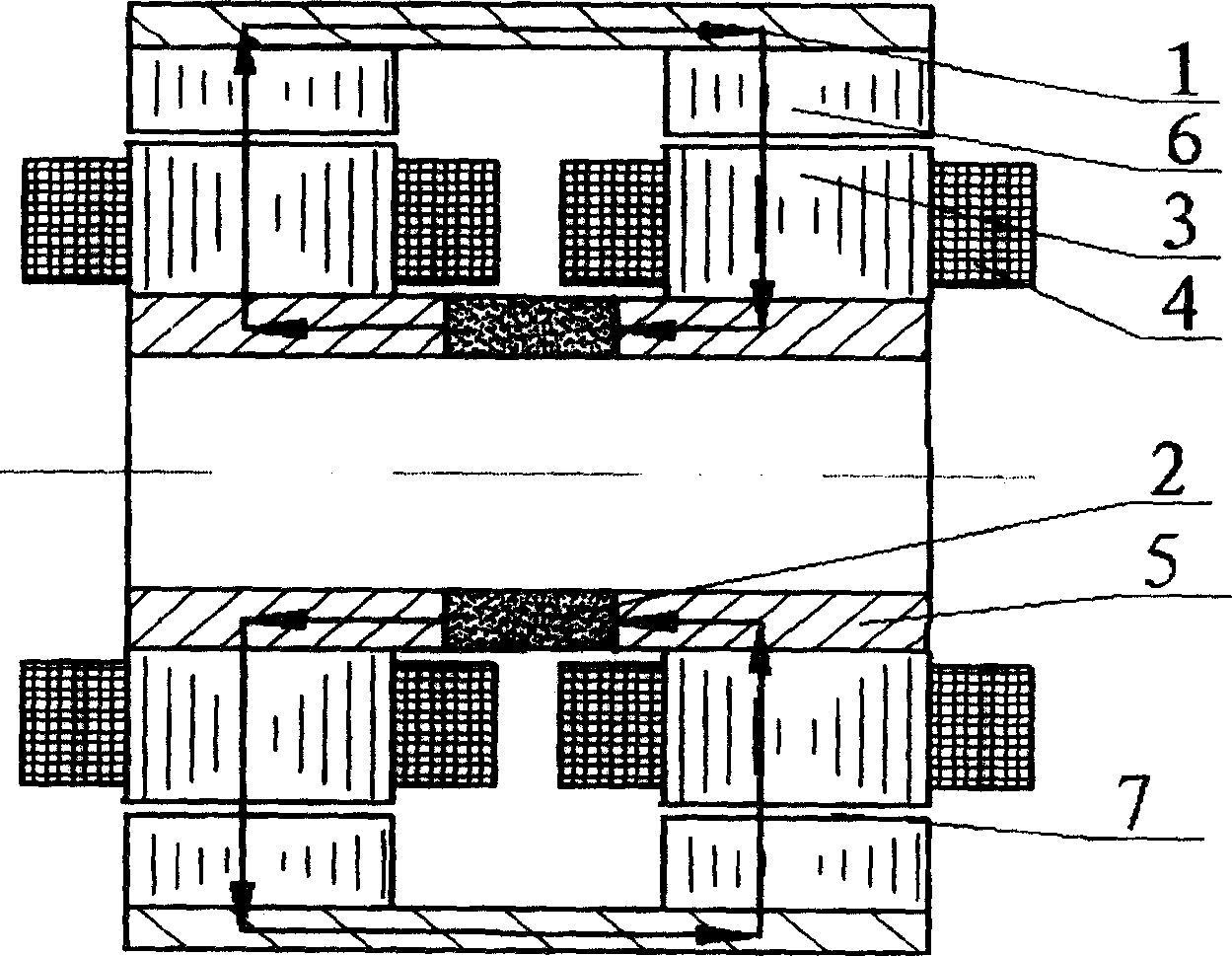
Figure 1 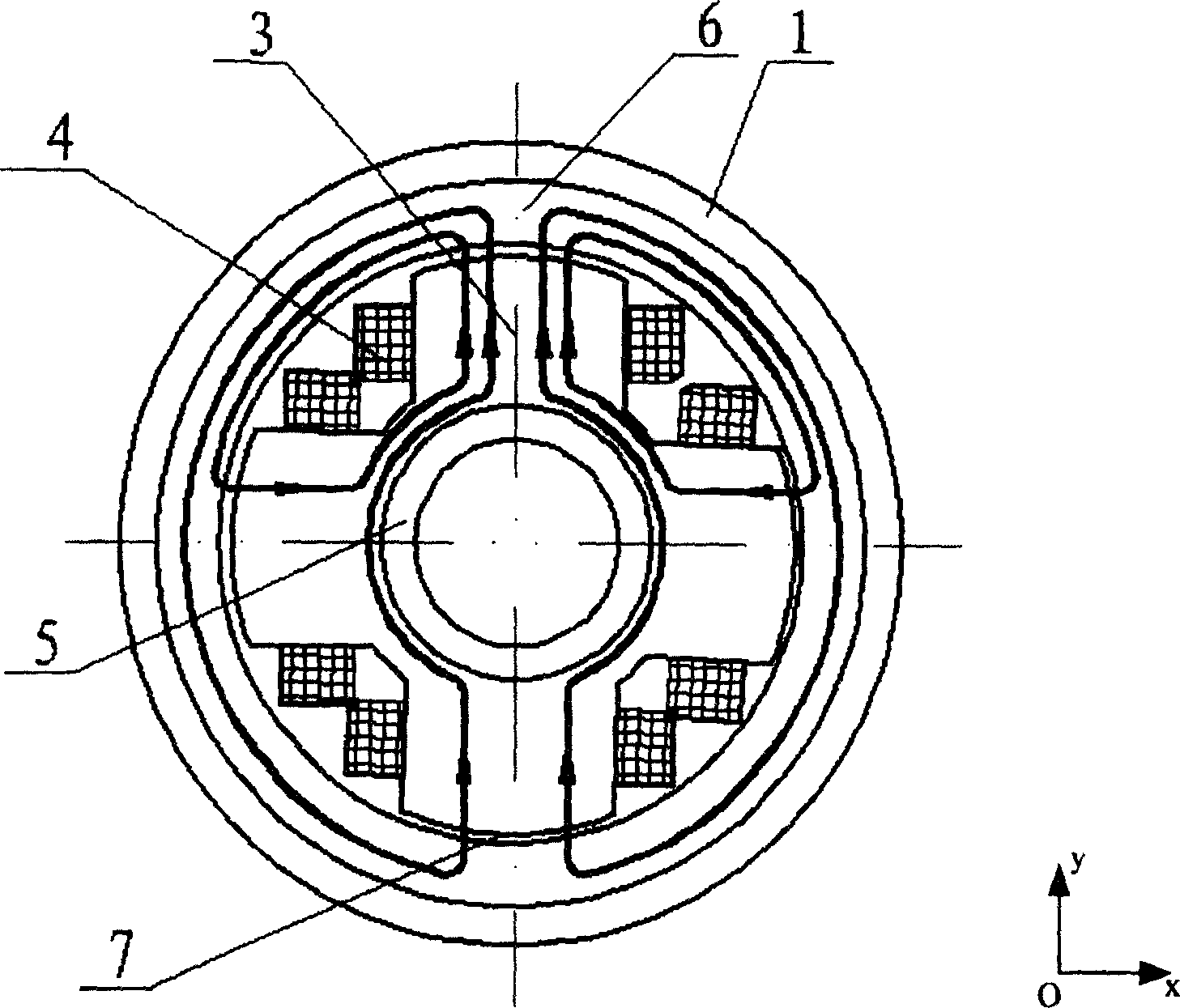
Figure 2 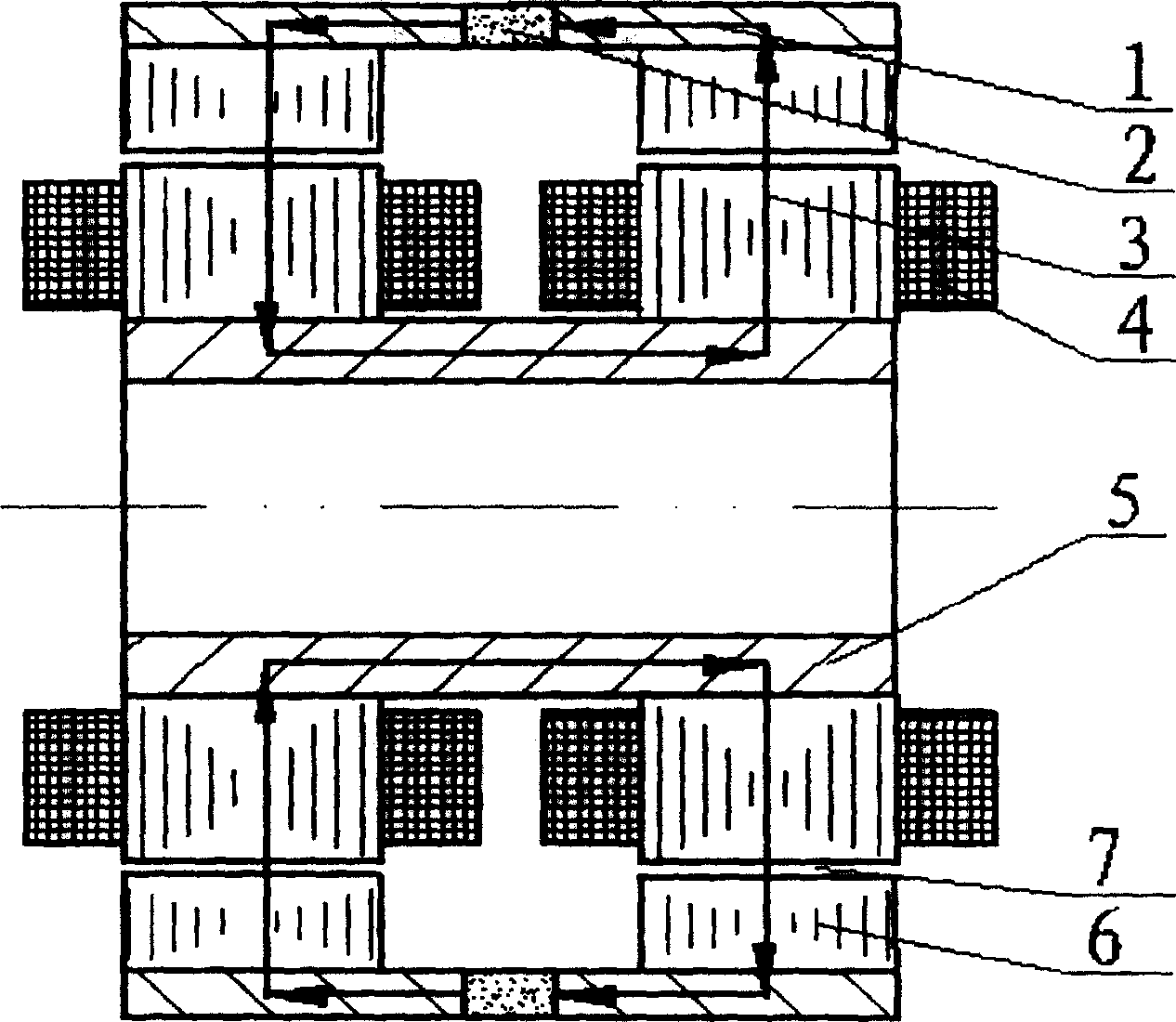
Figure 3
Abstract
Description
Technical field
[0001] The invention relates to a non-contact magnetic suspension bearing, in particular to a low-power permanent magnet bias external rotor radial magnetic bearing, which can be used as a non-contact support for rotating parts in mechanical equipment such as motors and machine tools. Background technique
[0002] Magnetic suspension bearings are divided into pure electromagnetic bearings and hybrid magnetic suspension bearings with permanent magnetic bias and electromagnetic control. The former uses large current and consumes a lot of power, and the hybrid magnetic suspension bearings with permanent magnetic bias and electromagnetic control. The magnetic field generated by the permanent magnet bears the main load. Bearing capacity, the electromagnetic field provides auxiliary adjustment bearing capacity, so this kind of bearing can greatly reduce the control current and reduce the loss. However, some of the current permanent magnet bias outer rotor radial ma...
Examples
Embodiment Construction
[0014] Such as figure 1 , 2 As shown, it is one of the technical solutions of the present invention, the inner magnetic steel, the inner excitation coil, the low power consumption permanent magnet bias outer rotor radial magnetic bearing, which is the basic form of the present invention, and it consists of an outer magnetic ring 1, 1 permanent magnet 2, 2 stator cores 3, 8 excitation coils 4, 2 inner magnetic rings 5, 2 rotor cores 6, 8 air gaps 7, each stator core 3 consists of 4 magnetic poles, 2 A stator core 3 forms 8 magnetic poles at the left and right ends of the magnetic bearing, which respectively form the magnetic poles in the positive and negative directions of the X and Y axes. The magnetic ring 1 is connected with the rotor core 6, the interior of the rotor core 6 is the stator core 3, and there is a certain gap between the outer surface of the stator core 3 and the inner surface of the rotor core 6, forming an air gap 7, and the inner magnetic ring 5 is installe...