
Meltless preparation of martensitic steel articles having thermophysically melt incompatible alloying elements
a martensitic steel and alloying element technology, applied in coatings and other directions, can solve the problems of imposing some fundamental limitations on the alloy content, avoiding methods, and avoiding problems, so as to improve the inspectionability, reduce the noise level, and improve the effect of inspectionability
Patent Information
- Authority / Receiving Office
- US · United States
- Patent Type
- Applications(United States)
- Current Assignee / Owner
- Publication Date
- 2005-10-06
- Estimated Expiration
- Not applicable · inactive patent
Smart Images
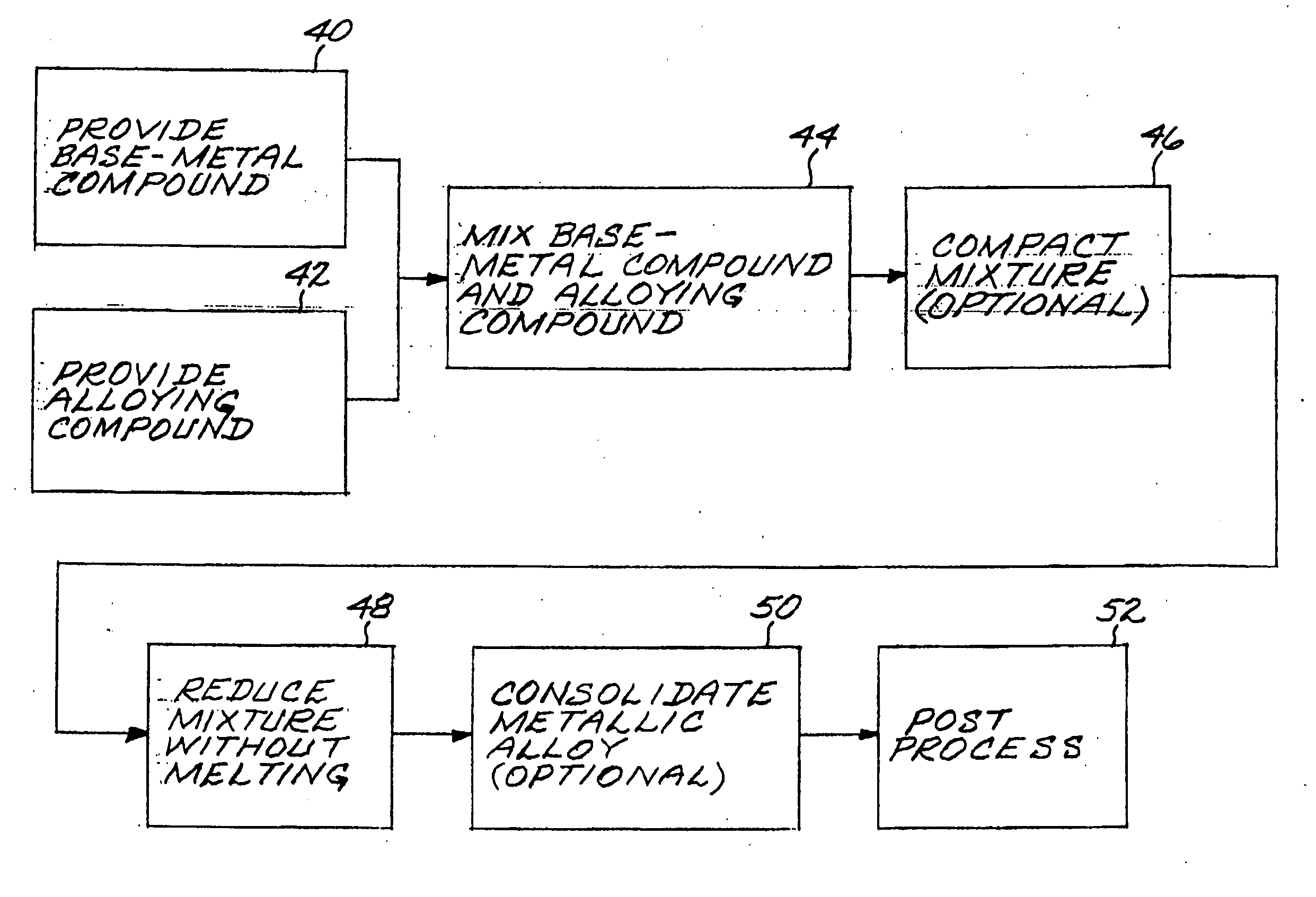
Figure 1 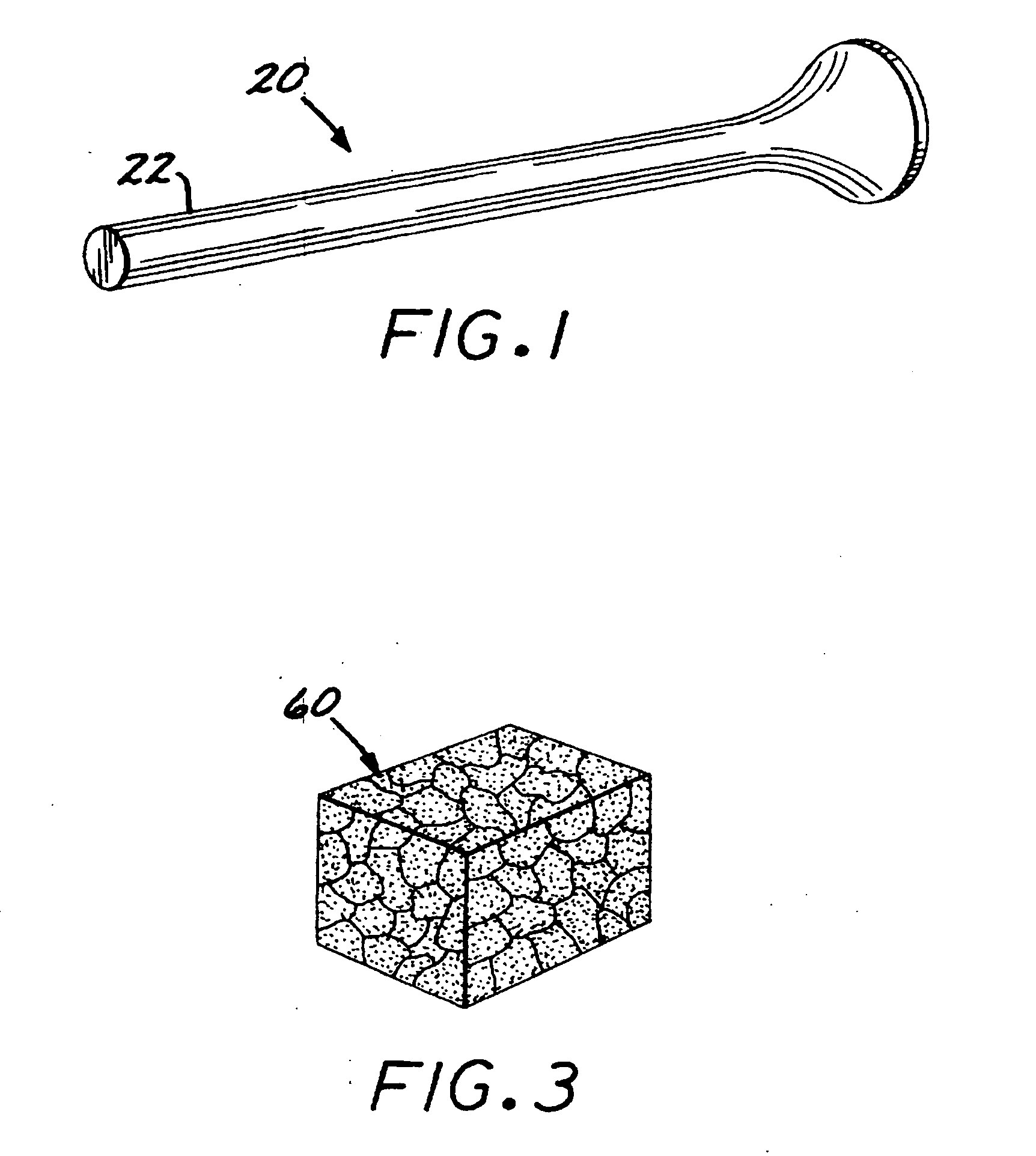
Figure 2 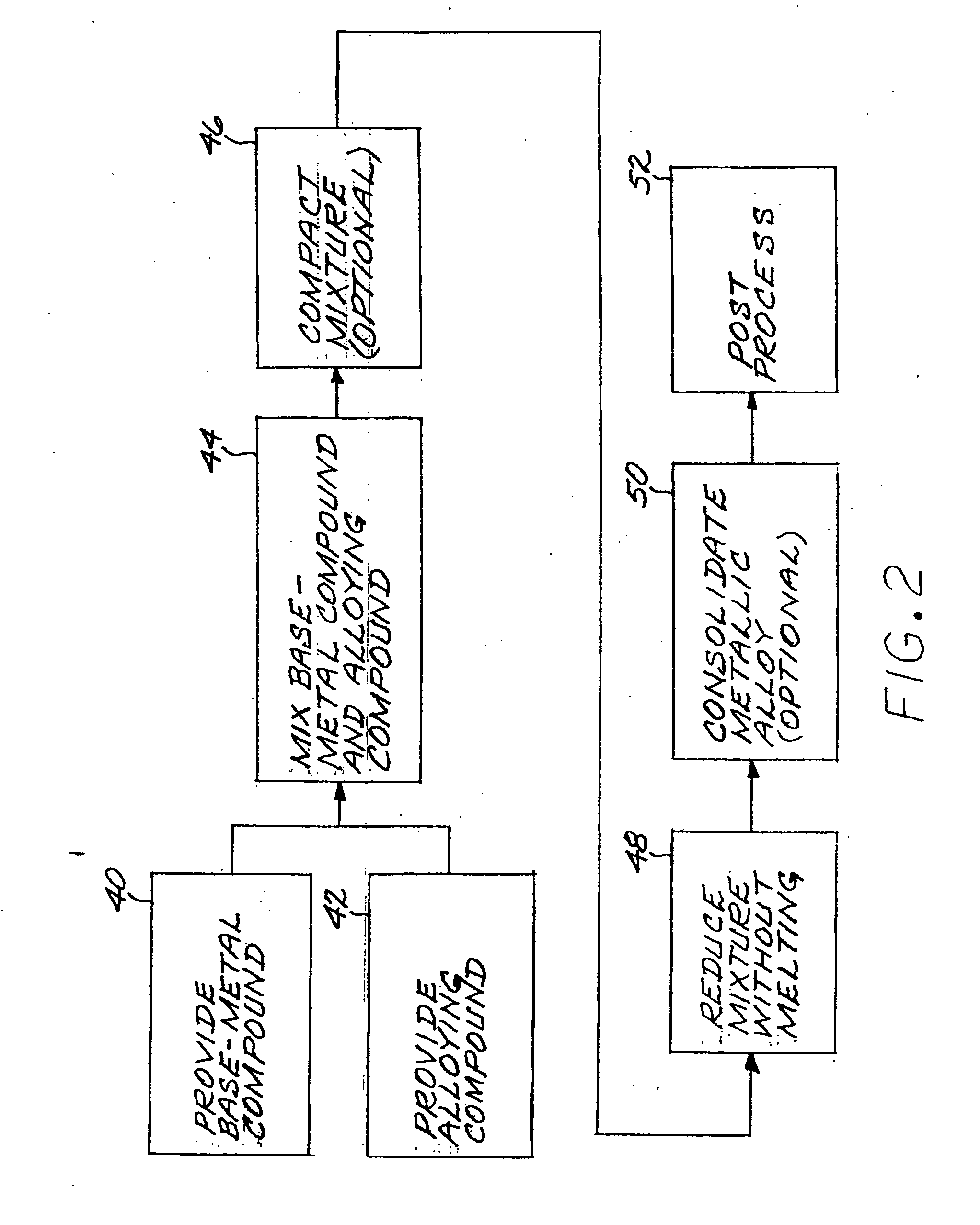
Figure 3
Abstract
Description
[0001] This invention relates to the preparation of metallic-alloy articles, specifically martensitic iron-base alloy articles, without melting of the metallic alloy. BACKGROUND OF THE INVENTION
[0002] Martensitic steels having a martensitic microstructure are one important class of the ferritic steels. The martensitic steels have wide application in the aircraft propulsion industry and are also used in other industries such as the automotive industry. Metallic articles made of martensitic steels are fabricated by any of a number of techniques, as may be appropriate for the nature of the metal and the article. In one common approach, metal-containing ores are refined to produce molten metal, which is thereafter cast. Ore refinement may take place separately for each of the major alloying elements, or in combination for more than one element. Elements and combinations of elements may take many intermediate forms before being melted to form the final alloy. The metal is refined as nec...
Examples
Embodiment Construction
[0039] The present approach may be used to make a wide variety of metallic articles 20, such as a gas turbine shaft 22 of FIG. 1. The shaft 22 is only one example of the types of articles 20 that may be fabricated by the present approach. Some other examples include other gas turbine parts such as stationary seals, bearing components, rings, cases, and frames, automobile parts, biomedical articles, and structural members such as airframe parts. There is no known limitation on the types of articles that may be made by this approach.
[0040]FIG. 2 illustrates a preferred approach for an article of a base metal and a thermophysically melt-incompatible alloying element. The method includes providing a chemically reducible nonmetallic base-metal precursor compound, step 40, and providing a chemically reducible nonmetallic alloying-element precursor compound of an alloying element that is thermophysically melt incompatible with the base metal, step 42. “Nonmetallic precursor compounds” are...