
Method for assessment of a coverage of a cellular network system
Patent Information
- Authority / Receiving Office
- US · United States
- Current Assignee / Owner
- Publication Date
- 2006-05-04
- Estimated Expiration
- Not applicable · inactive patent
Smart Images
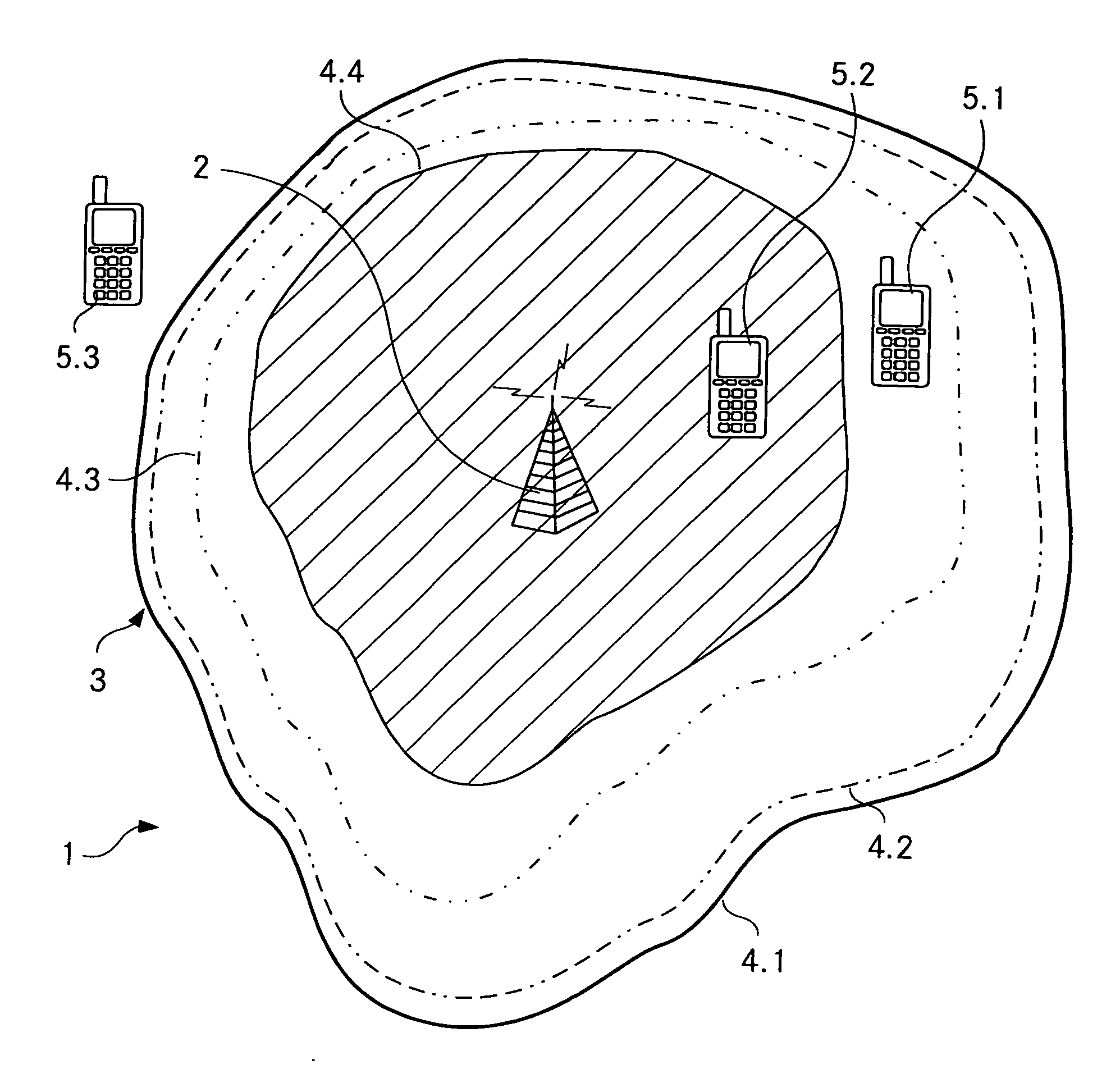
Figure 1 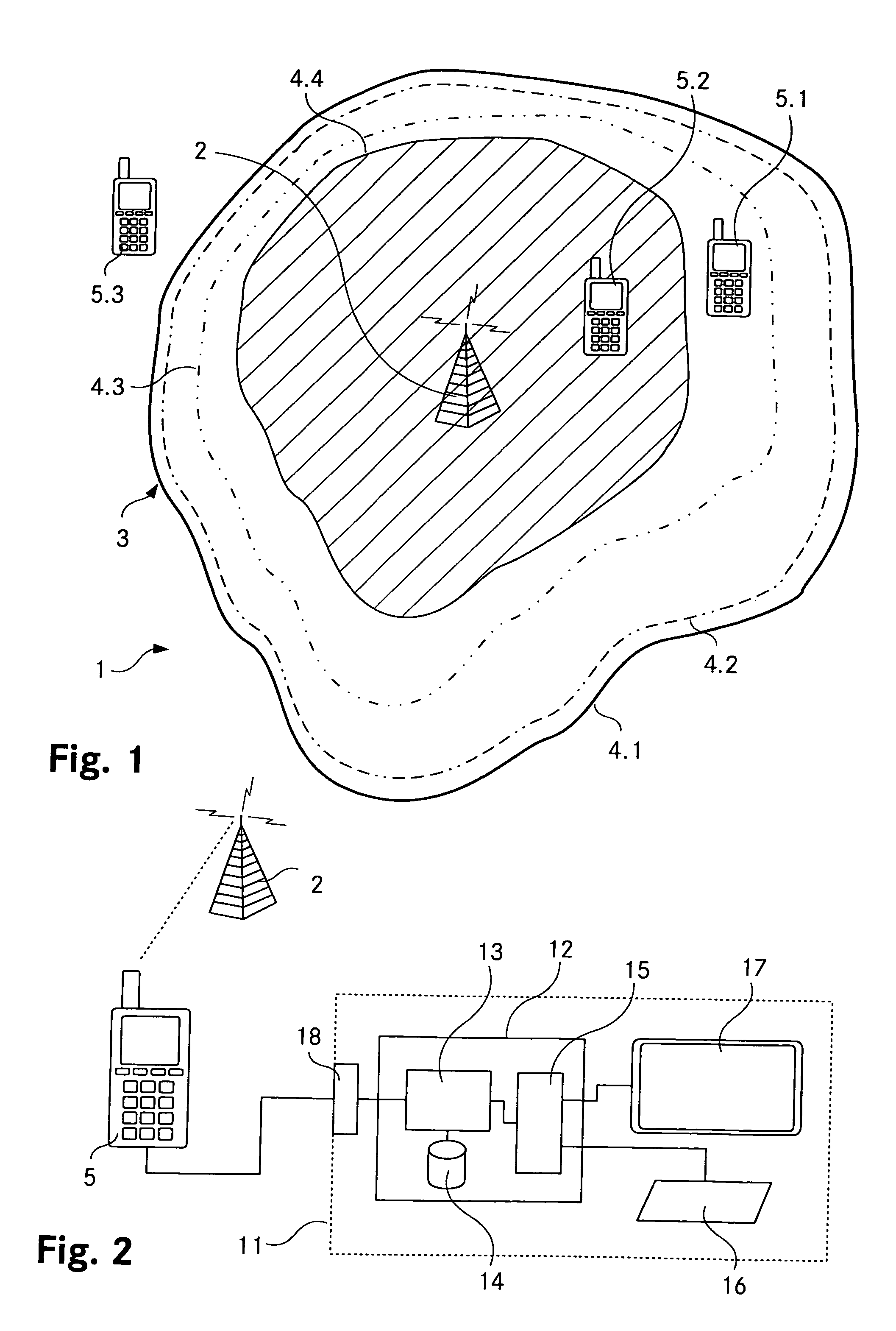
Figure 2 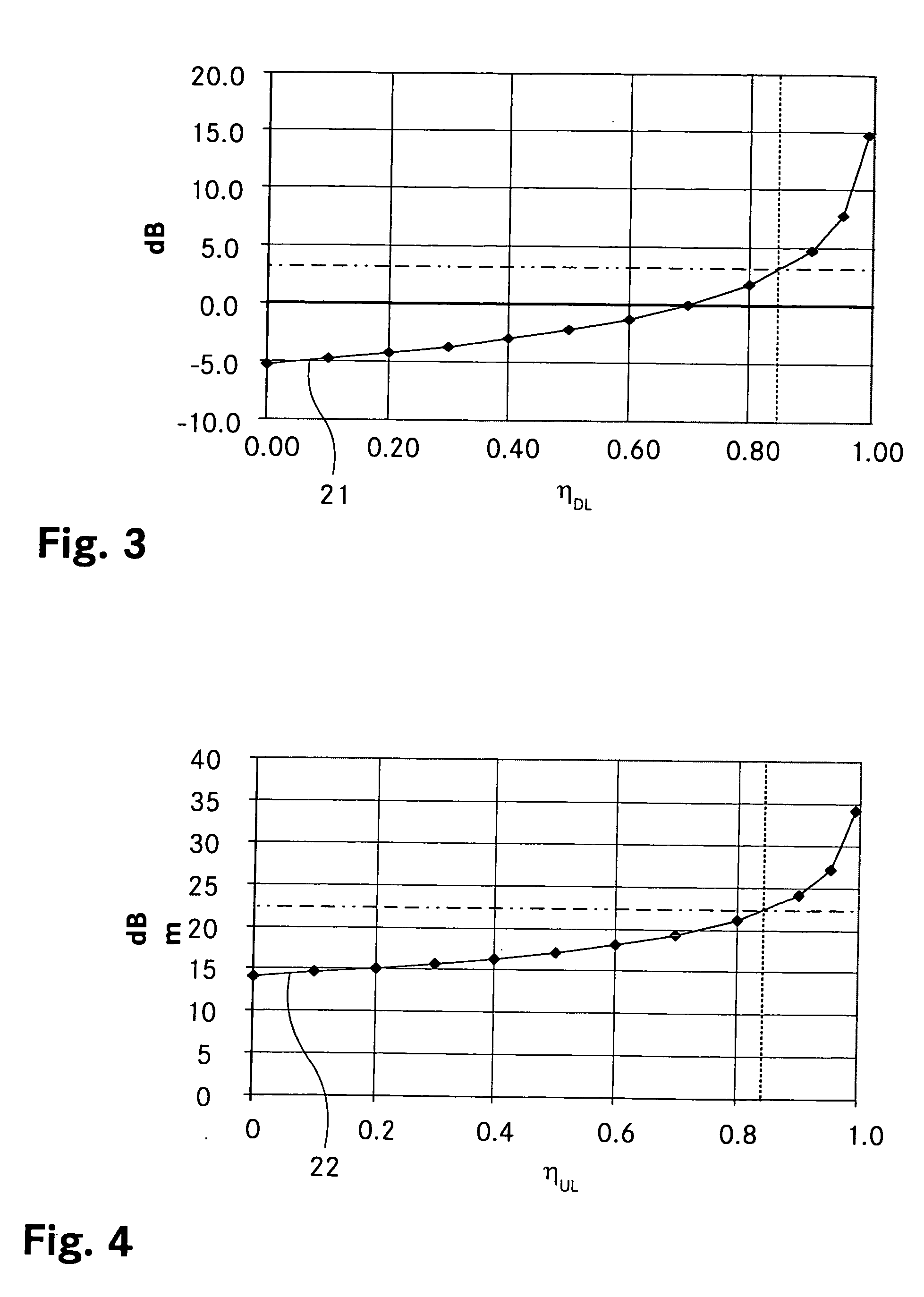
Figure 3
Abstract
Description
TECHNICAL FIELD
[0001] The invention relates to a method for assessment of a coverage of a cellular network system, in particular a CDMA cellular network system. It further relates to a device and a computer program product for assessment of a coverage of a cellular network system. BACKGROUND ART
[0002] In CDMA radio networks such as CDMA or WCDMA cellular network systems (such as UMTS) the coverage of the network and its capacity are strongly interdependent characteristics. This interrelation causes the so-called “cell breathing” effect: If increasing load or interference is introduced to the network, the cell coverage shrinks. Since traffic in a cell changes continuously the coverage changes continuously as well.
[0003] In the course of deploying and optimising a CDMA network system it is one of the biggest challenges to get this interdependency under control, i.e. to build up a network that reliably provides consecutive coverage for a certain maximum load (target load) with a min...
Examples
Embodiment Construction
[0044]FIG. 1 illustrates the cell breathing effect in CDMA networks. Each cell 1 of the network has a base station 2 (BTS or node B in a UMTS network). The cell 1 covers a certain region, the coverage area 3 of the cell 1. If there is little traffic (or load) in the network, the coverage area 3 may extend to a large region 4.1 for a certain service A (e.g. standard voice communication). It is possible to establish links from user terminals 5.1, 5.2 (or user equipment UE) located within the region 4.1 to the base station 2 for a service A communication. User terminals 5.3 located outside the region 4.1 are not covered by the cell 1 and there is no possibility of a service A link between this user terminal 5.3 and the base station 2 of cell 1. If available, the user terminal 5.3 may contact a base station of an adjacent cell to establish a communication link within the network.
[0045] The load of the network may be quantified by a parameter η whose value is between 0 (no load, i.e. no...