
Electronic document modification
a technology of electronic document and modification, applied in the field of electronic document design and editing, can solve the problems of user's inability to fully satisfy, certain document editing abilities have not been successfully implemented, and user's desire to go elsewhere, etc., to achieve realistic representation, increase flexibility and control over user's documen
Patent Information
- Authority / Receiving Office
- US · United States
- Patent Type
- Applications(United States)
- Current Assignee / Owner
- Publication Date
- 2008-06-12
- Estimated Expiration
- Not applicable · inactive patent
Smart Images
Figure 1 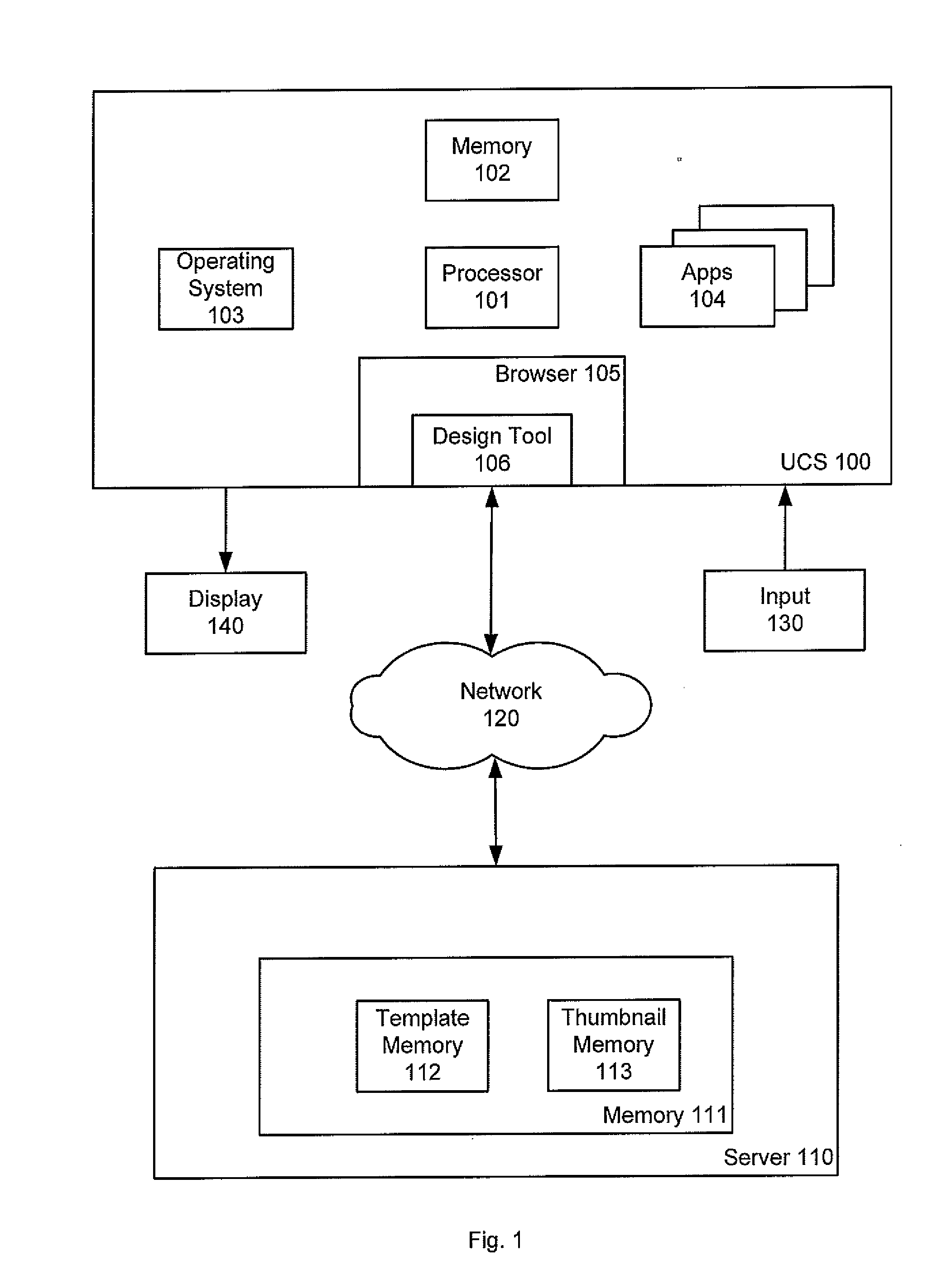
Figure 2 
Figure 3
Abstract
Description
FIELD OF THE INVENTION
[0001] The present invention relates to electronic document design and editing.BACKGROUND OF THE INVENTION
[0002] Desktop publishing applications allowing a user to create electronic documents on the user's personal computer are widely known and established. A copy of the desktop publishing application is typically installed on the user's computer system and stored in the user's computer memory until activated for use by the user. Desktop publishing products of this type must be licensed and paid for prior to or at the time that the product is installed.
[0003] Many people or businesses that occasionally have a need to create custom products, such as business cards, postcards, brochures and the like, have historically been required to either purchase, install and learn to operate a desktop publishing application, which they may need only infrequently, or go to the trouble and expense of identifying, visiting and trying to convey their requirements and desires to a p...
Examples
Embodiment Construction
[0021]Referring to FIG. 1, an exemplary user computer system UCS 100 includes processor 101 and memory 102. Memory 102 represents all UCS 100 components and subsystems that provide data storage, such as RAM, ROM, and hard drives. In addition to providing permanent storage for all programs installed on UCS 100, memory 102 also provides temporary storage required by the operating system and the applications while they are executing. In a preferred embodiment, UCS 100 is a typically equipped personal computer, but UCS 100 could also be a portable computer, a tablet computer or other device. The user views images from UCS 100 on display 140, such as a CRT or LCD screen, and provides inputs to UCS 100 via input devices 150, such as a keyboard and a mouse.
[0022]When UCS 100 is operating, an instance of the USC 100 operating system will be running, represented in FIG. 1 by Operating System 103. In addition, the user may be running one or more application programs, In FIG. 1, UCS 100 is run...