
Balloon system and methods for treating obesity
Patent Information
- Authority / Receiving Office
- US · United States
- Current Assignee / Owner
- Publication Date
- 2009-02-19
- Estimated Expiration
- Not applicable · inactive patent
Smart Images
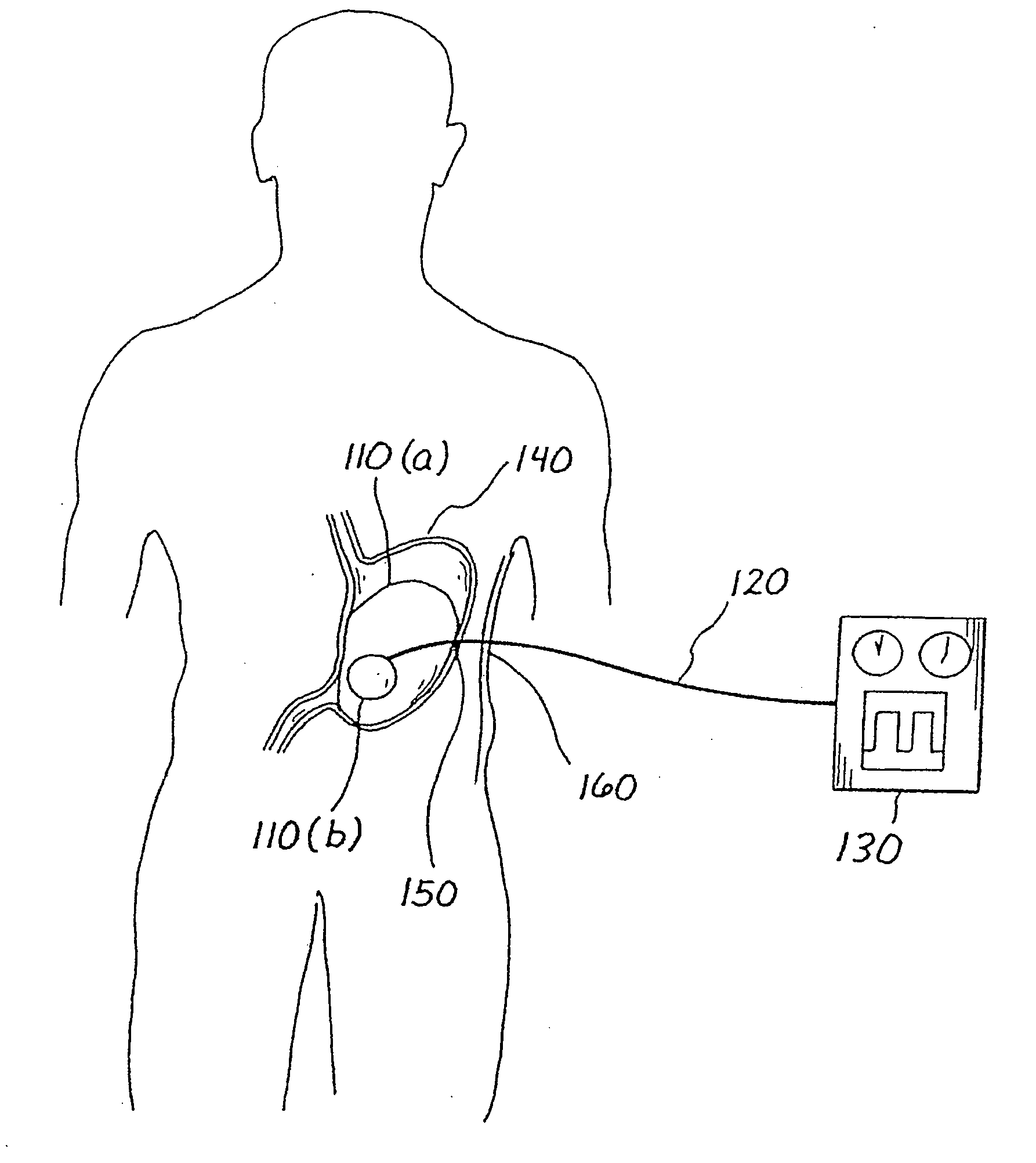
Figure 1 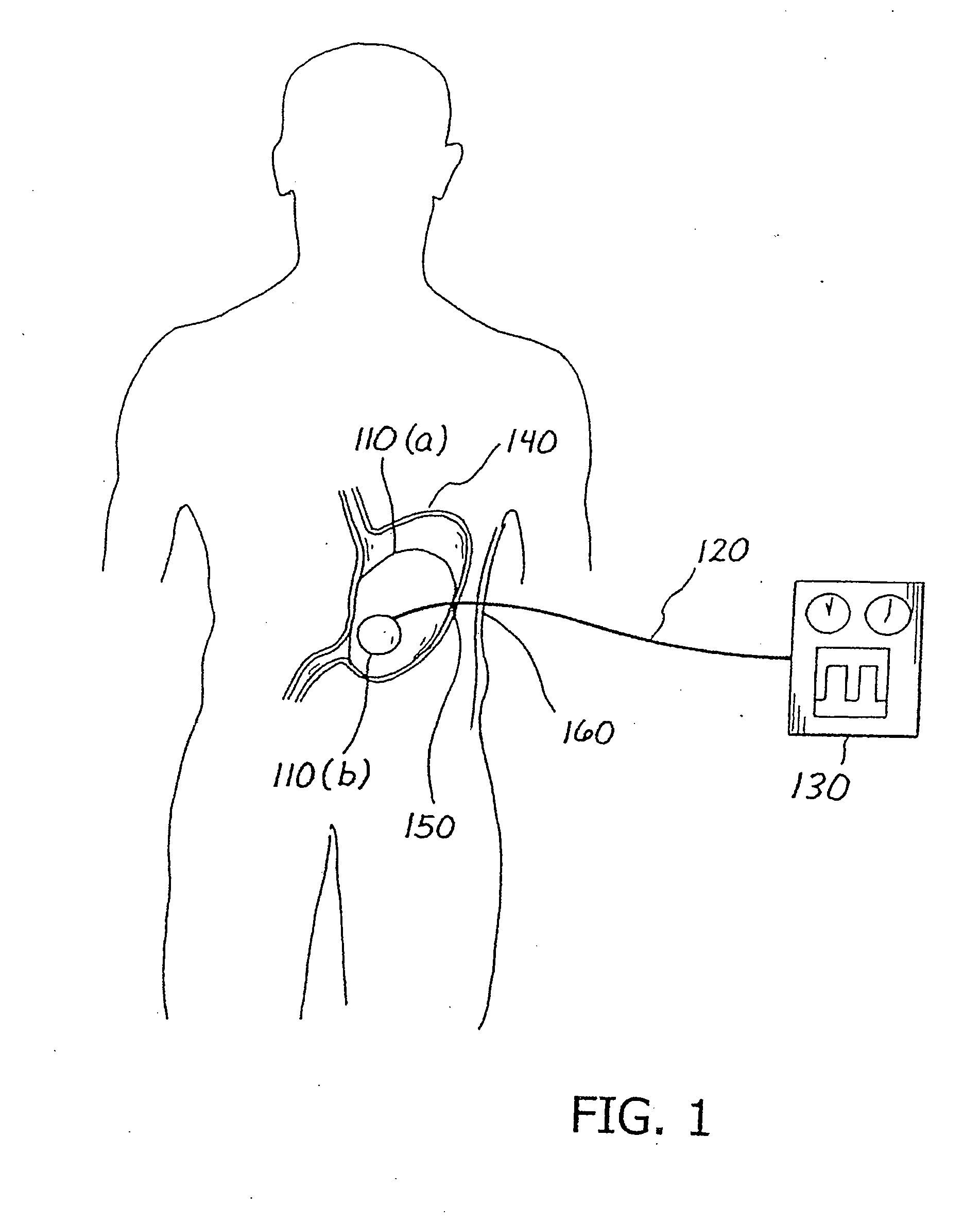
Figure 2 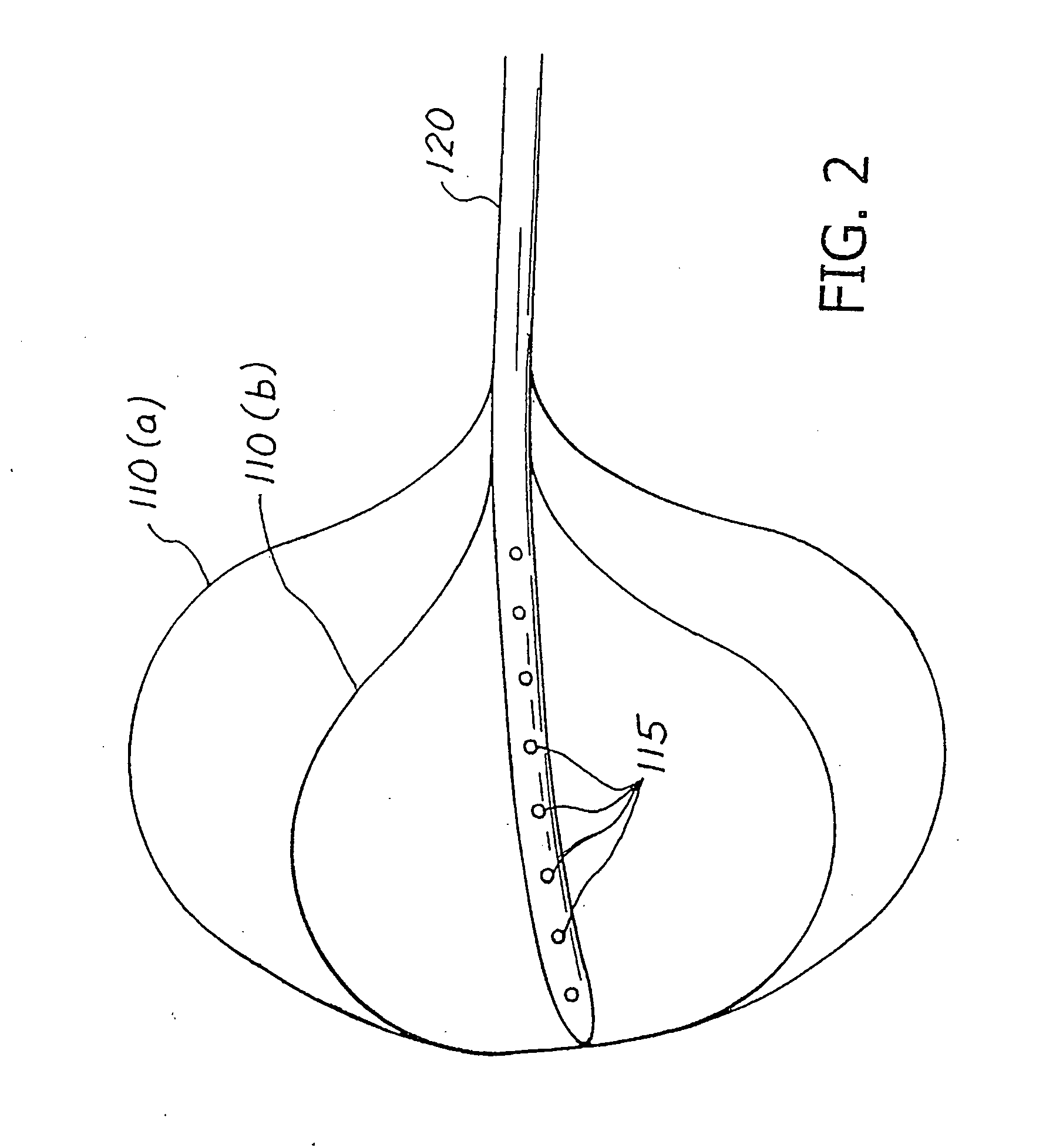
Figure 3
Abstract
Description
RELATED APPLICATION
[0001] This application is a continuation application of and claims the benefit and priority of U.S. patent application Ser. No. 10 / 513,583, filed Nov. 2, 2004, the contents of which are incorporated by reference herein in its entirety.BACKGROUND
[0002] 1. Field
[0003] This invention generally relates to the treatment of morbid obesity and, more specifically, to a system and method for treating morbid obesity using a variably cycled percutaneous balloon implanted in the gastric cavity.
[0004] 2. General Background
[0005] Morbid obesity is a major health problem confronting the general public and health care industry today. It is estimated that approximately 50% of the U.S. population is overweight and over ten million Americans are more than 100 pounds over their ideal weight. Generally, a person is considered morbidly (or seriously) obese if they are 100 pounds or more over their ideal weight. The morbidly obese group faces increased health risks including a higher likeli...
Examples
Embodiment Construction
[0015]With reference to FIGS. 1 and 2, a variably cycled percutaneous balloon system 100 for treating morbid obesity is illustrated and comprises an inflatable balloon 110 individually contoured to each patient's stomach, a percutaneous inflation or fillant delivery tube 120 having a proximal end and a distal end connected to the balloon 110, and a control module 130 connected to the proximal end of the tube 120. The tube 120 includes at least one opening 115 for filling the balloon 110 with a biocompatible fillant. The control module 130 variably controls the inflation and deflation of the balloon 110 with the biocompatible fillant such as a liquid, gas, gel or a mixture thereof. In accordance with the teachings of the present invention, the tube 120 is passed through and affixed to abdominal wall 160 and stomach wall 150. The balloon 110 is then positioned into the stomach or gastric cavity 140. The positioning of the balloon 110 may be done, e.g., by the percutaneous endoscopic g...