
Table
a technology for tables and chairs, applied in the field of tables, can solve the problems of difficulty in height adjustment, table tops constructed of wood, particle board or metal, awkward or difficult to move, etc., and achieve the effect of reducing or eliminating disadvantages and problems
Patent Information
- Authority / Receiving Office
- US · United States
- Patent Type
- Applications(United States)
- Current Assignee / Owner
- Publication Date
- 2009-03-26
- Estimated Expiration
- Not applicable · inactive patent
Smart Images
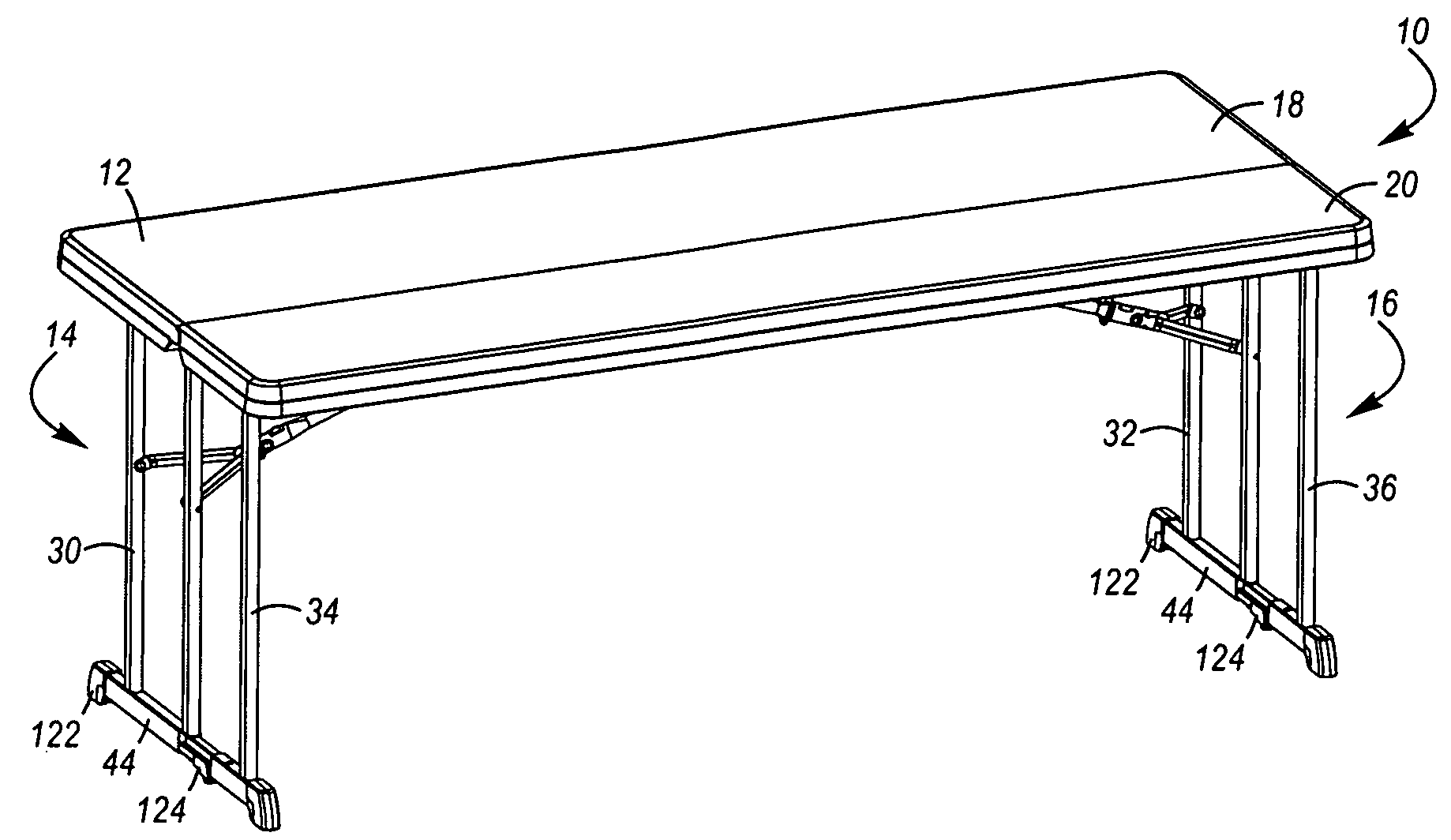
Figure 1 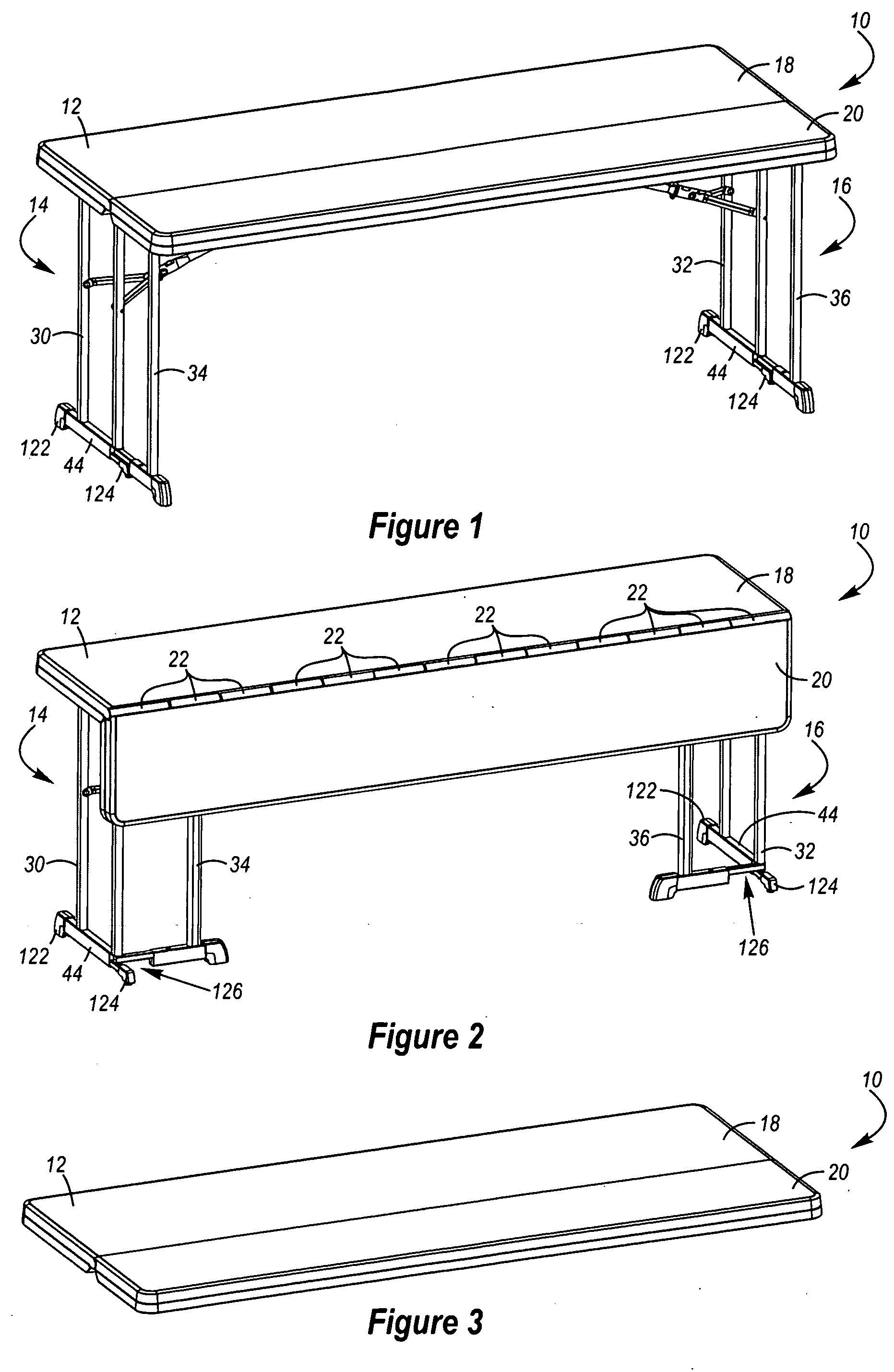
Figure 2 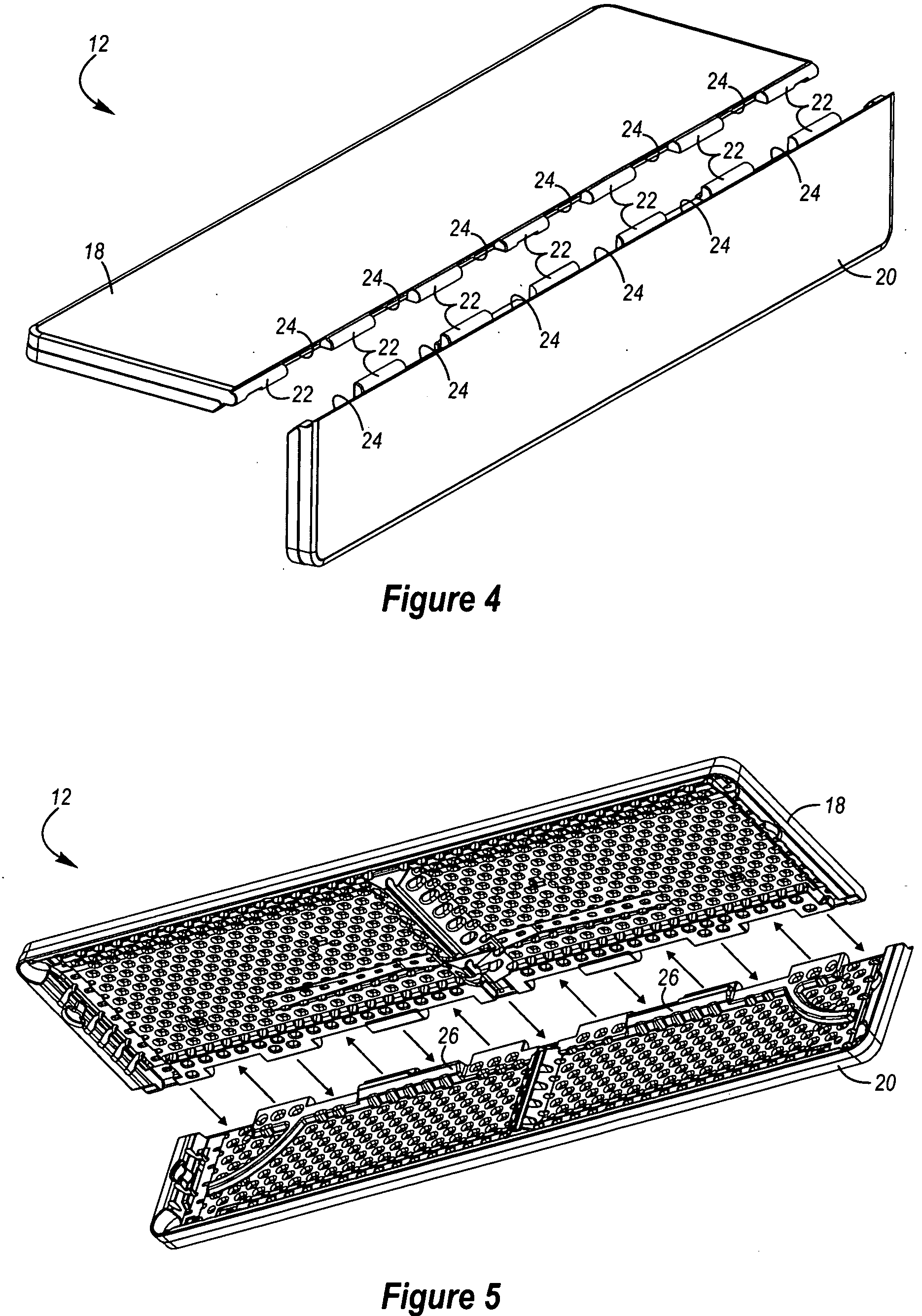
Figure 3
Abstract
Description
CROSS-REFERENCE TO RELATED APPLICATIONS
[0001] This application claims priority to and the benefit of U.S. provisional patent application Ser. No. 60 / 974,732, filed on Sep. 24, 2007, which is incorporated by reference in its entirety.BACKGROUND OF THE INVENTION
[0002] 1. Field of the Invention
[0003] The present invention is generally directed towards furniture and, in particular, towards tables.
[0004] 2. Description of Related Art
[0005] Conventional tables are used for a variety of purposes and come in a wide array of designs. In some situations, it is desirable to have a table that is adjustable. For example, it may be desirable to have a table that is adjustable in height. It may also be desirable to have a table that can be folded into a more compact configuration for storage or transport. Disadvantageously, many conventional tables are difficult to adjust the height or require complex mechanisms allow the tables to fold into a more compact configuration.
[0006] Conventional tables often ...
Examples
Embodiment Construction
[0008]A need therefore exists for a table that eliminates or diminishes the disadvantages and problems described above.
[0009]One aspect is a table that may include a table top with one or more sections. For example, the table top may include two sections and one or both of the sections may be movable. In particular, the table top may include first and second sections, and the second section may be movable relative to the first section. Desirably, the second section may be movable between a first position in which the first and second sections are generally aligned and a second position in which the second section is disposed at an angle relative to the first section. For instance, the second section may extend downwardly relative to the first section. Preferably, the second section extends downwardly and is disposed generally perpendicular or at about a 90 degree angle relative to the first section. This may allow the second panel to form a modesty or privacy panel, if desired.
[0010...