
Control features in a system and method for processing checks and check transactions
Patent Information
- Authority / Receiving Office
- US · United States
- Current Assignee / Owner
- Publication Date
- 2009-08-13
Smart Images
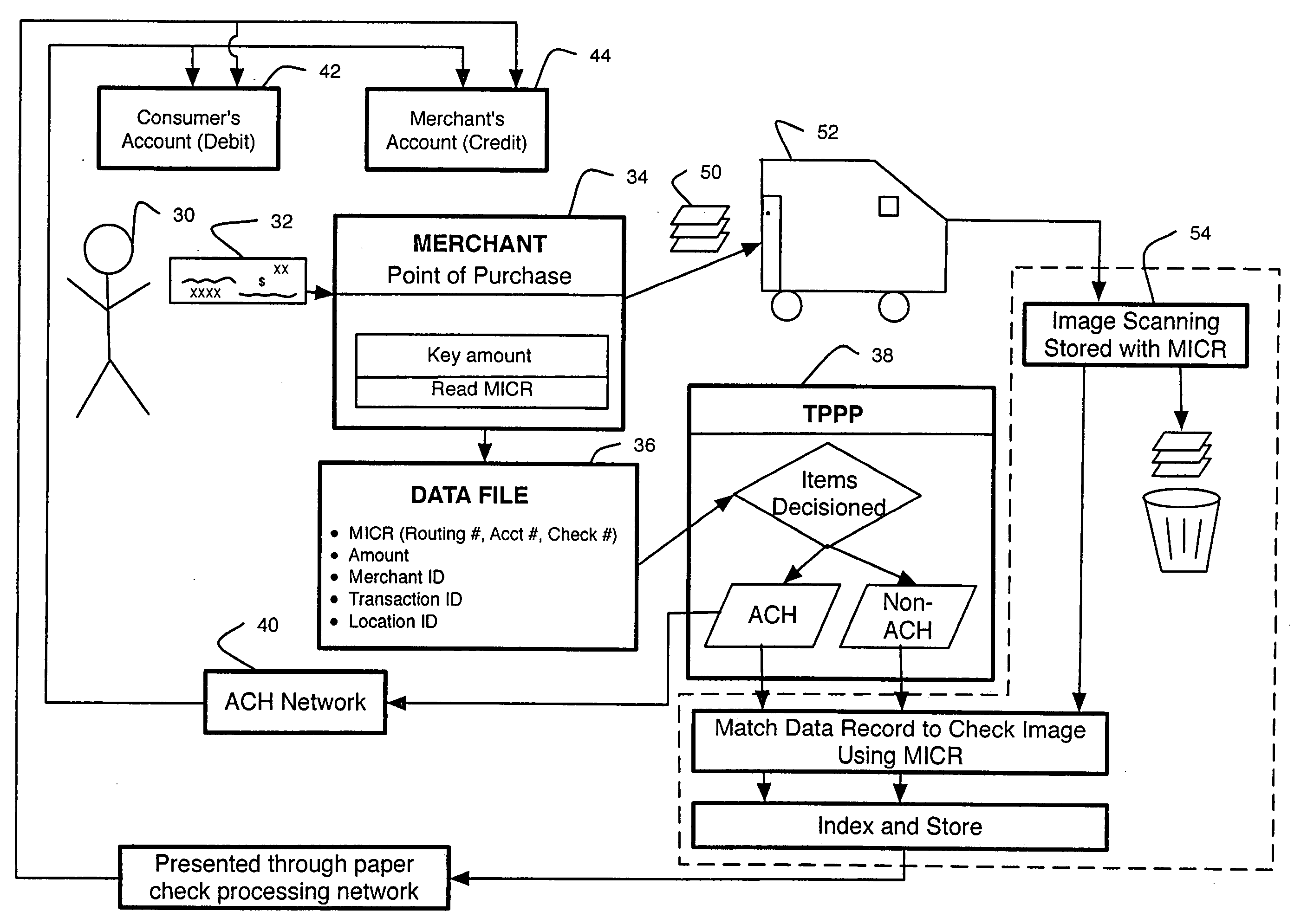
Figure 1 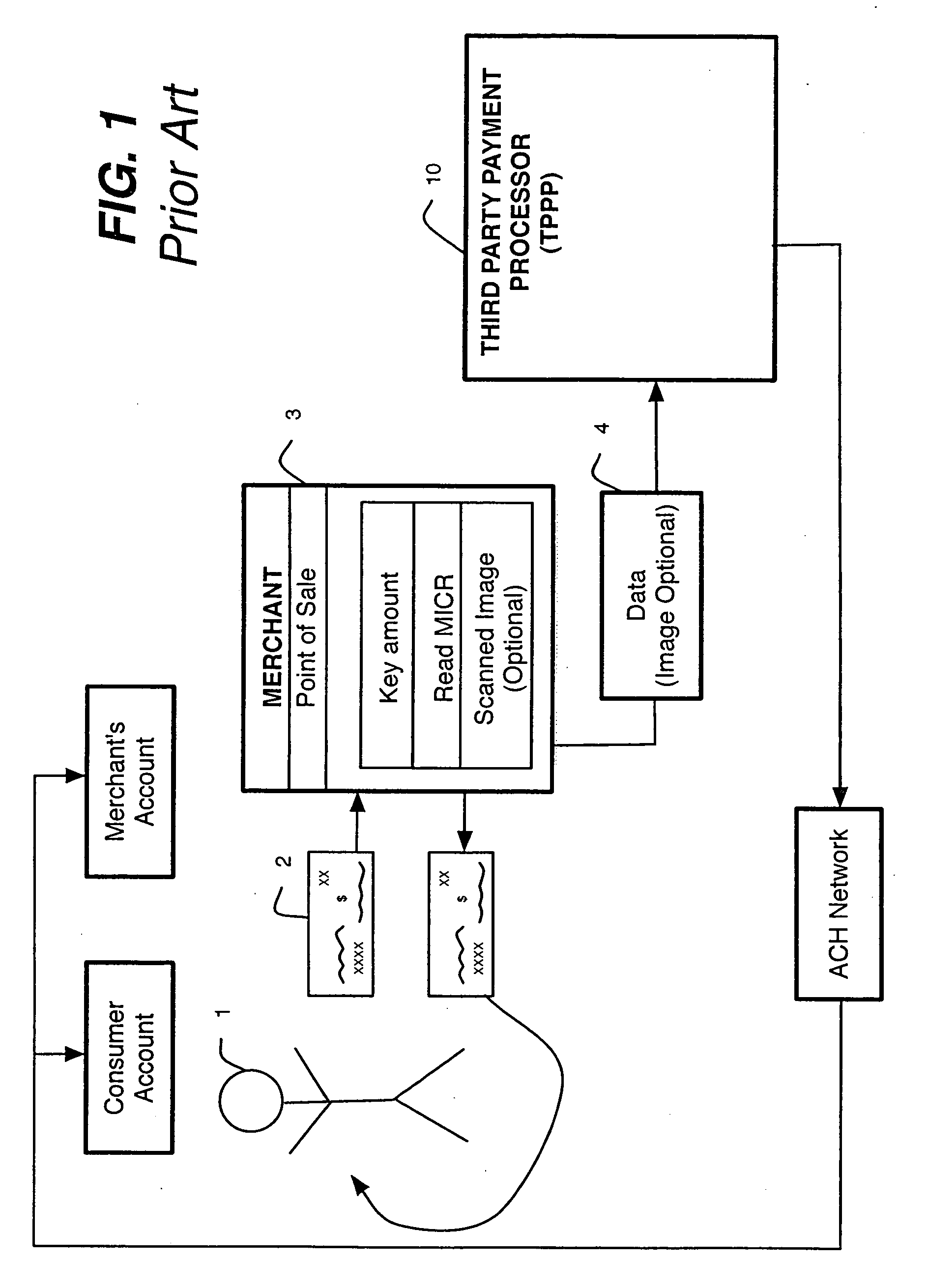
Figure 2 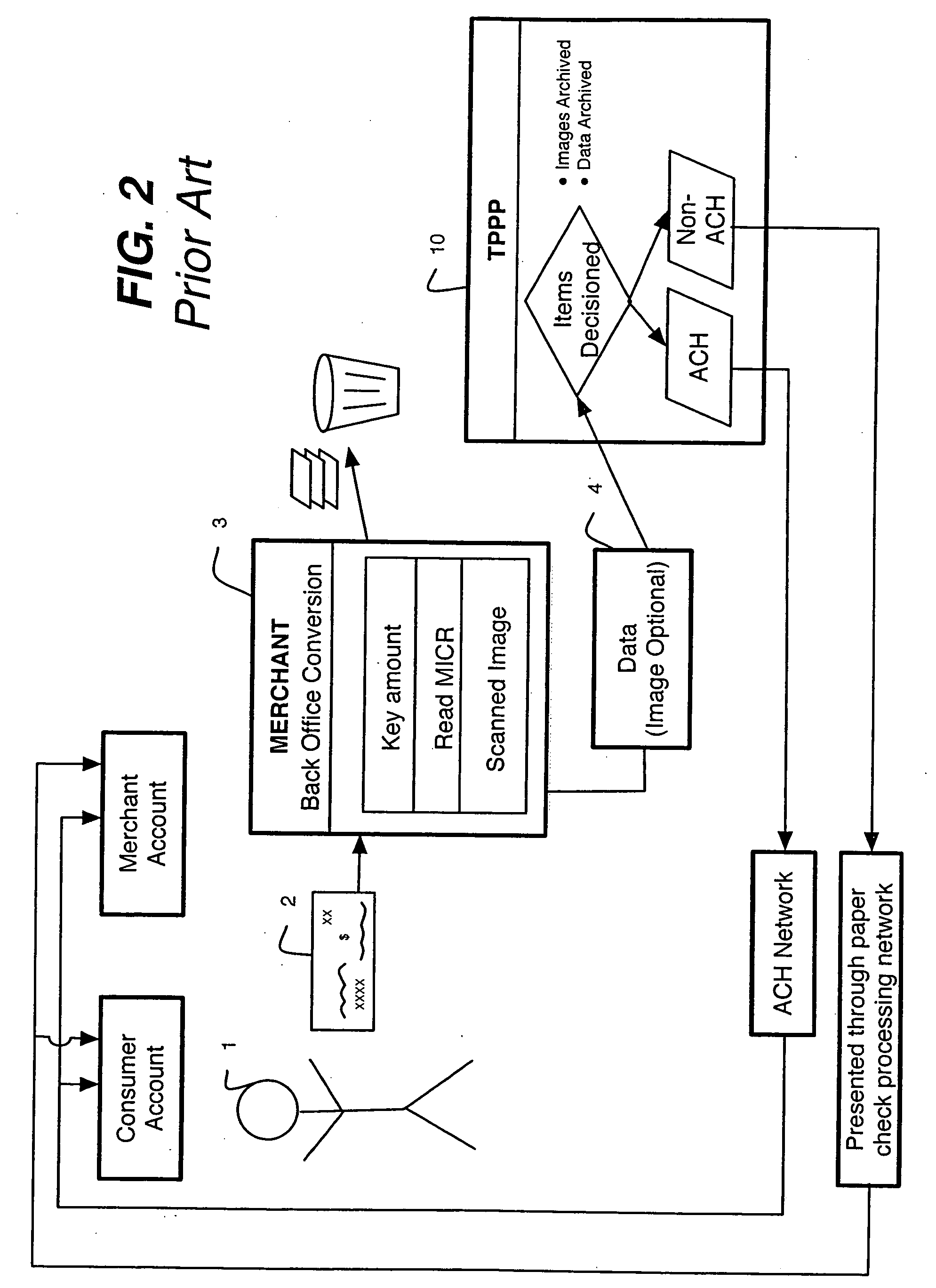
Figure 3
Abstract
Description
CROSS-REFERENCE TO RELATED APPLICATION
[0001] This application is a continuation-in-part of U.S. Ser. No. 11 / 699,776 filed Jan. 30, 2007, that in turn claims the benefit of U.S. Ser. No. 60 / 763,417, filed Jan. 30, 2006, which is incorporated herein in its entirety.FIELD OF THE INVENTION
[0002] The present invention relates generally to a system and method of processing checks and check transactions, and more particularly to capturing data from a check at point of sale and later and remotely capturing the image of the check for later matching of the check image with the check data.BACKGROUND OF THE INVENTIONA. Paper Checks—Functions Served by Paper Checks and How Paper Checks Were Physically Processed Historically
[0003] Conceptually, a paper check is a vehicle for two things: 1) the data pertinent to the financial transaction; and 2) evidence of the authorization given by the check writer (the “payer”) to transfer funds from the payer's account to the designated payee and evidence that th...
Examples
Embodiment Construction
)
[0039]FIG. 1 shows a prior art system and method for converting a check at the point of purchase (POP conversion). A consumer 1 pays for goods or services with a check 2. At the point of purchase terminal 3, the merchant keys, or applies amount captured at POS, into the terminal the amount of the purchase. The merchant also passes the check through a MICR (magnetic ink character recognition) reader to capture the consumer's account number, routing number of the financial institution holding the account, and the check number. Optionally, the merchant may also capture a digital image of the check. The merchant determines eligibility based on current NACHA rules, and returns the check to the consumer for the ACH eligible items. The merchant then transfers a file 4 containing this captured information to a third party payment processor (TPPP) 10. Typically, the merchant would periodically (typically daily) send batches of these transaction files. The TPPP would then process the transac...