
Internet route deaggregation and route selection preferencing
a network and routing technology, applied in the field of network routing, can solve the problems of unbalanced bandwidth, no incentive for a carrier to transport additional bandwidth, and inefficient routing of exchange information traffic (bandwidth) freely and without charge, so as to avoid inefficient routing and improve the accuracy of the address space map
Patent Information
- Authority / Receiving Office
- US · United States
- Patent Type
- Applications(United States)
- Current Assignee / Owner
- Publication Date
- 2009-12-31
- Estimated Expiration
- Not applicable · inactive patent
Smart Images
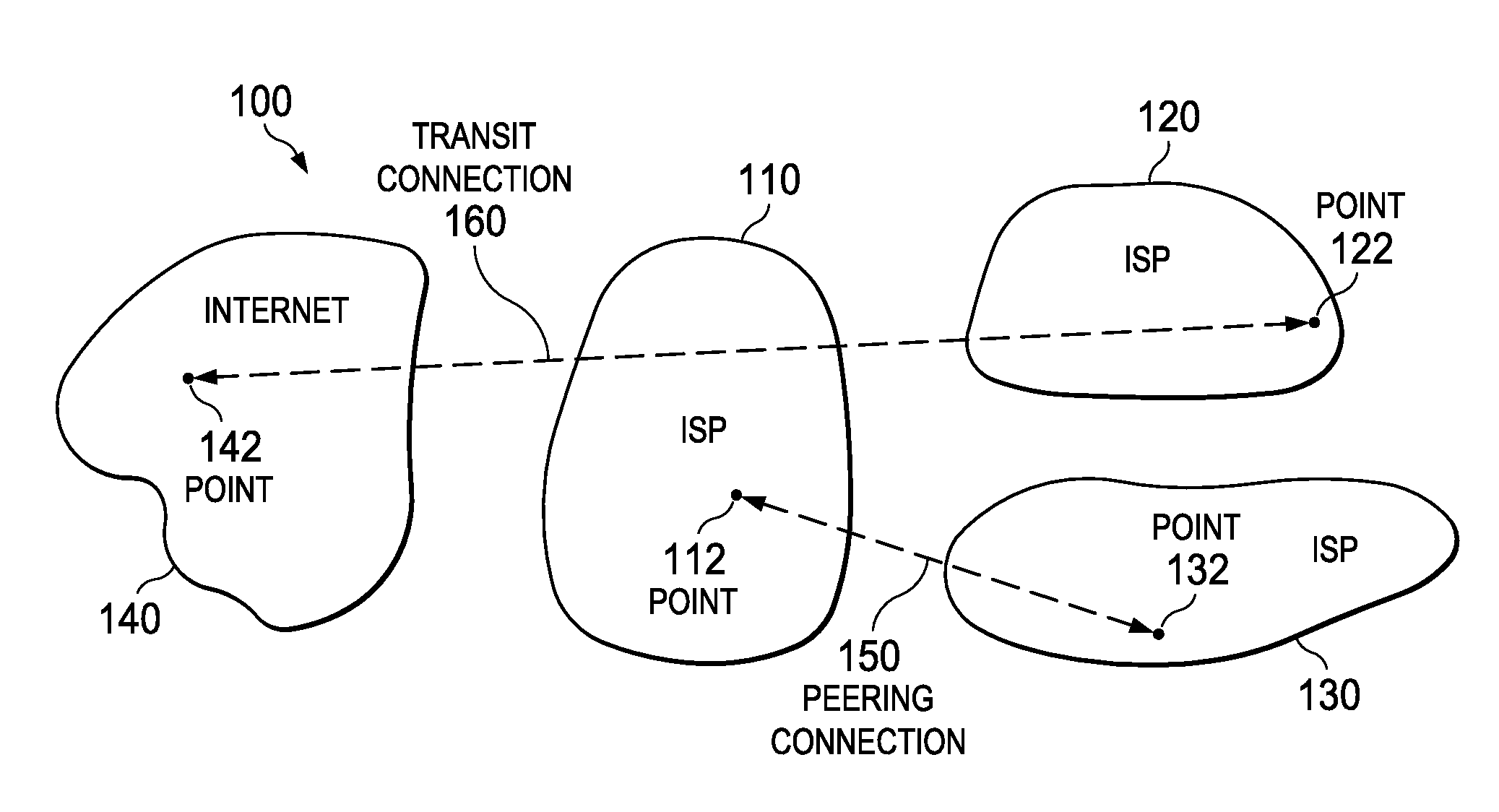
Figure 1 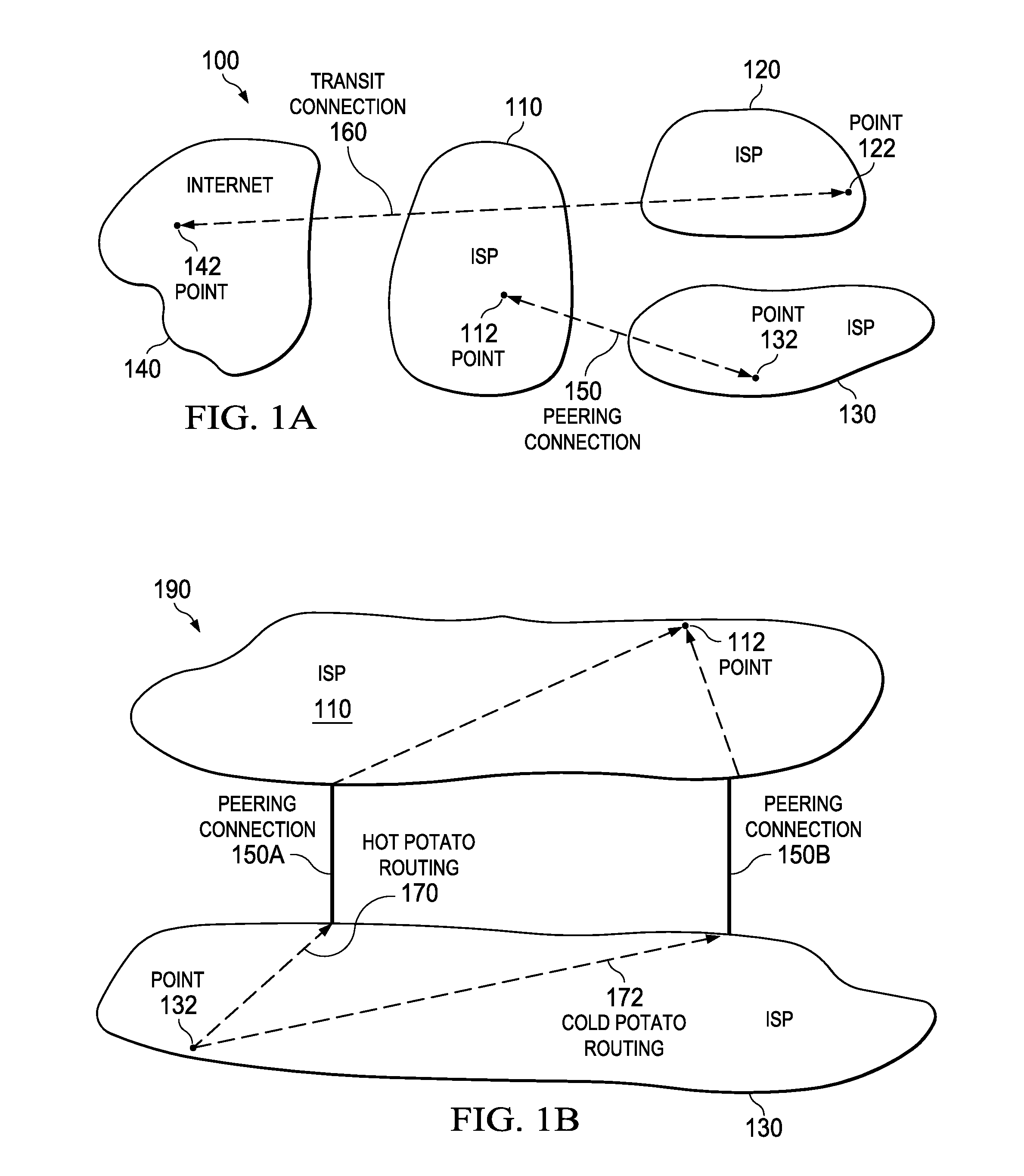
Figure 2 
Figure 3
Abstract
Description
CROSS REFERENCE TO RELATED APPLICATIONS
[0001] This application is a continuation of copending application Ser. No. 11 / 084,804, filed Mar. 18, 2005, which is a divisional of application Ser. No. 09 / 594,461, filed Jun. 14, 2000 (now abandoned), which applications are incorporated herein by reference.BACKGROUND
[0002] 1. Field of the Invention
[0003] The present invention relates generally to network routing, and more particularly, to dynamically determining regional address locations for best exit routing based upon route deaggregation and route selection preferencing.
[0004] 2. Background of the Invention
[0005] The growth of the Internet, and the World Wide Web (WWW) in particular, has led to enormous increases in the amount of traffic flowing over the group of connected networks that comprise the Internet and connected network systems. Access providers such as Internet Service Providers (ISPs) provide connections for businesses and individuals to connect to the Internet and access the WWW. ...
Examples
Embodiment Construction
[0038]Reference will now be made in detail to several embodiments of the present invention, examples of which are illustrated in the accompanying drawings. Wherever practicable, the same reference numbers will be used throughout the drawings to refer to the same or like parts.
[0039]Introduction
[0040]FIG. 1A provides background information on existing systems for carrying Internet and Web traffic. FIG. 1A shows a communications network 100. Network 100 includes three Internet Service Providers (ISPs) 110, 120, and 130 and a representation of the Internet 140. ISP 110 includes a point 112; ISP 120 includes a point 122; ISP 130 includes a point 132; and the Internet 140 includes a point 142. Each point represents a particular Internet Protocol (IP) address within the network 100. Each ISP represents a set of equipment and telecommunication lines providing Internet access for a certain geographic region. An ISP provides an Internet connection to various individuals and companies, wherei...