
Electric car with maximized solar assist
a solar energy and assistive technology, applied in the direction of light-to-electric conversion, transportation and packaging, propulsion parts, etc., can solve the problems of limited speed or driving range, lack of solution to the problem of carrying multiple passengers, and easy to get,
Patent Information
- Authority / Receiving Office
- US · United States
- Current Assignee / Owner
- Publication Date
- 2010-08-05
- Estimated Expiration
- Not applicable · inactive patent
Smart Images
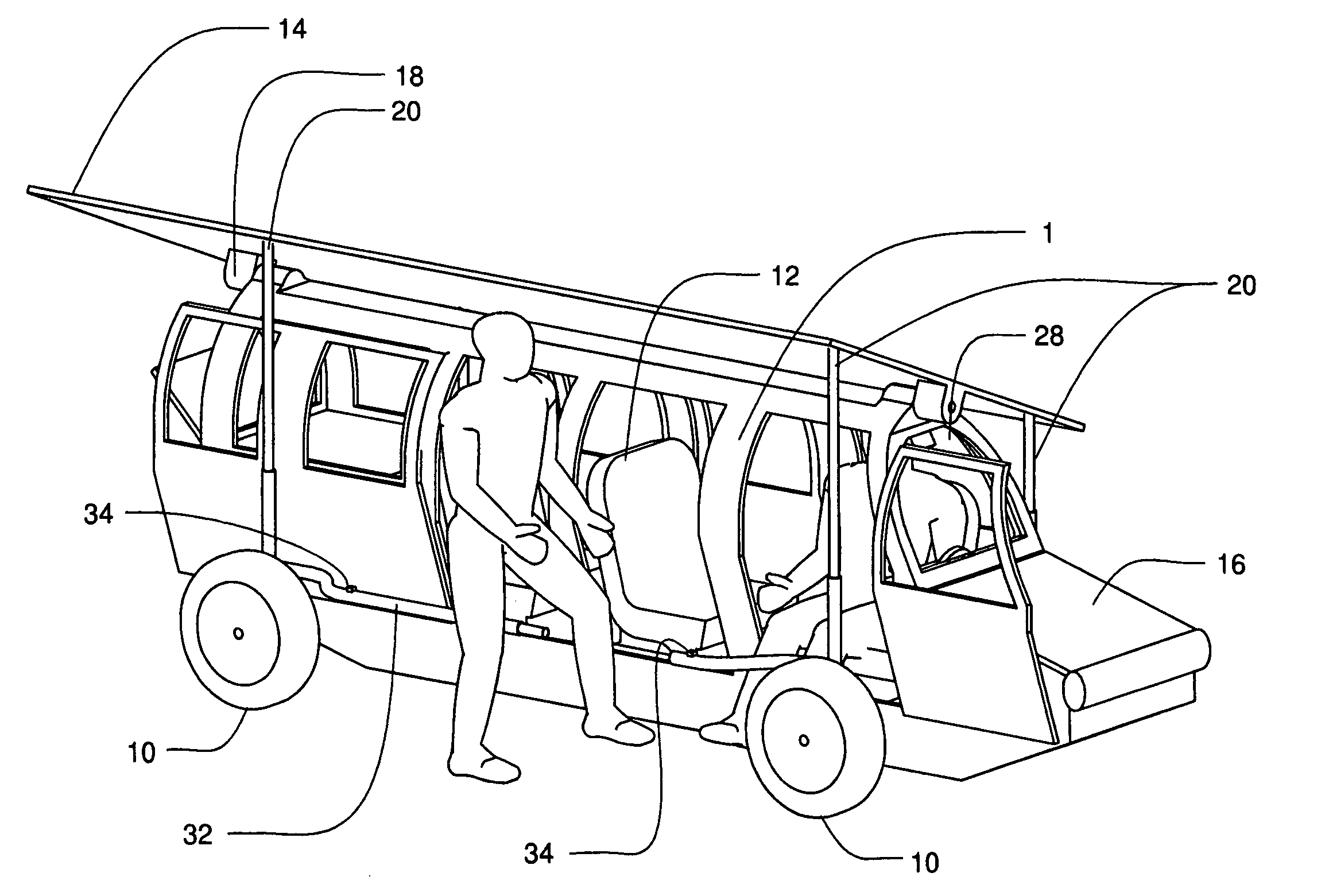
Figure 1 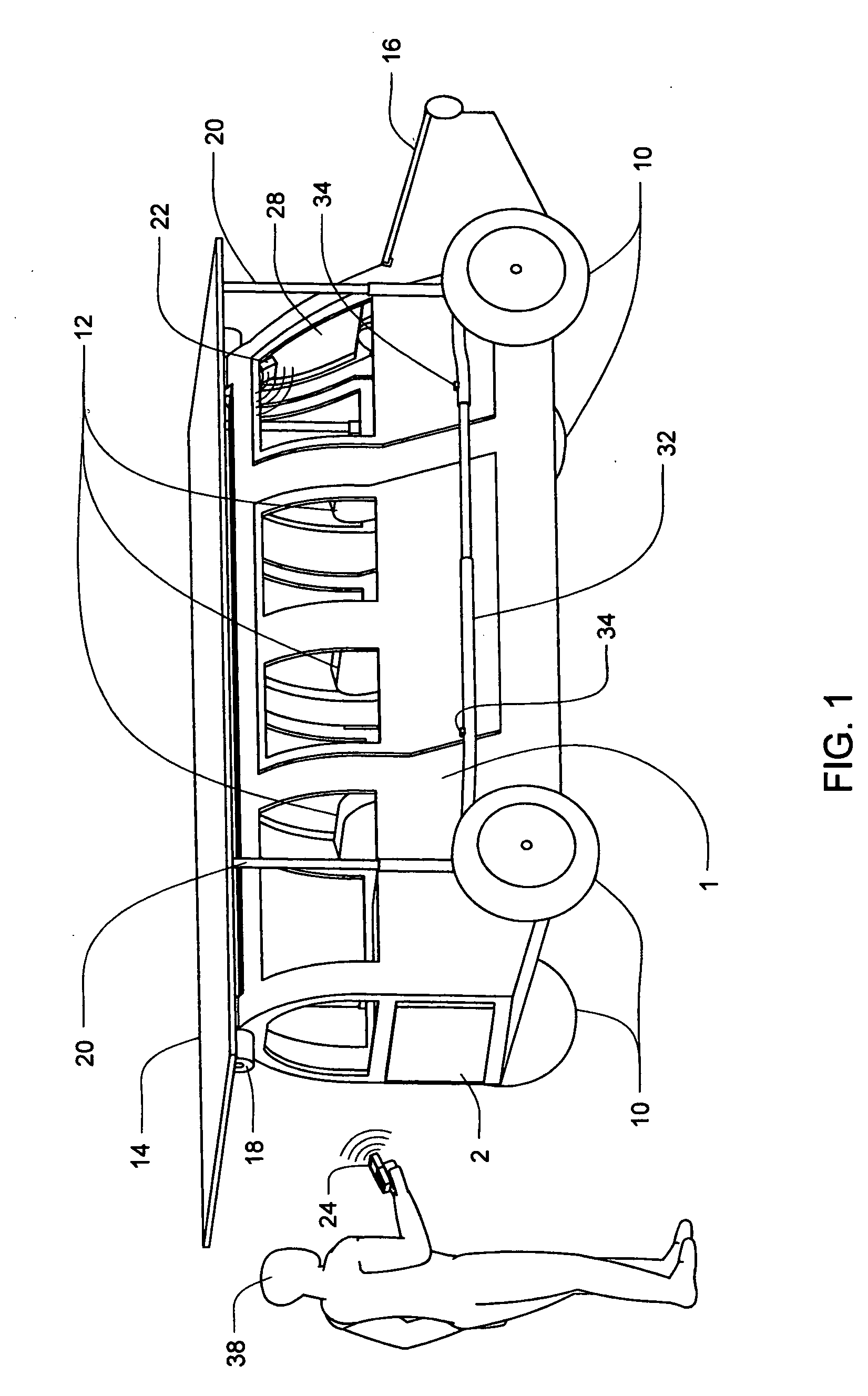
Figure 2 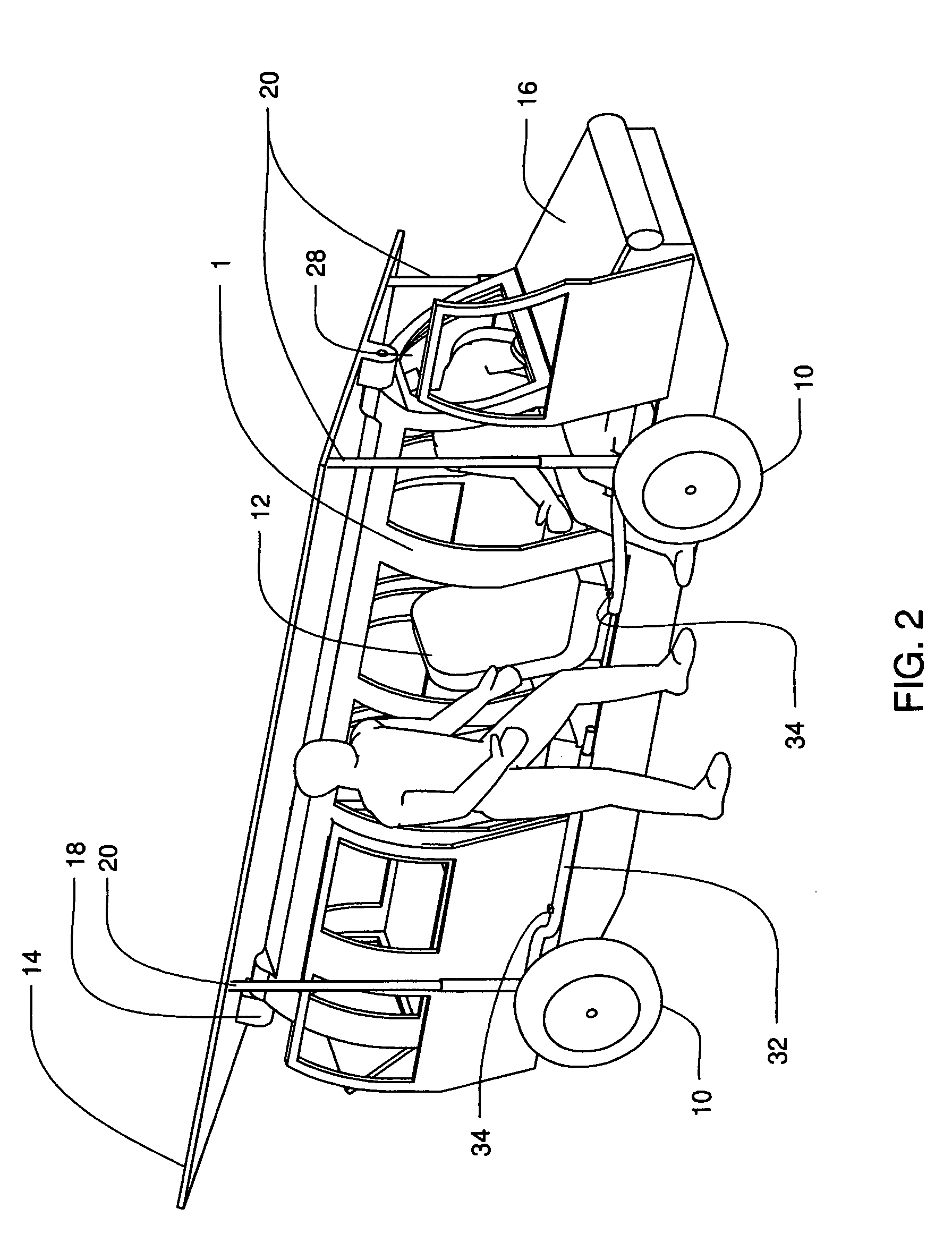
Figure 3
Abstract
Description
STATEMENT REGARDING FEDERALLY SPONSORED RESEARCH OR DEVELOPMENT
[0001] Not ApplicableTHE NAMES OF THE PARTIES TO A JOINT RESEARCH AGREEMENT
[0002] Not ApplicableINCORPORATION-BY-REFERENCE OF MATERIAL SUBMITTED ON A COMPACT DISC
[0003] Not ApplicableSEQUENCE LISTING
[0004] Not ApplicableBACKGROUND OF THE INVENTION
[0005] 1. Field of the Invention
[0006] Because of the expense, political and ecological problems involved with importing oil, the US, and the world, needs electric cars. In fact, the only fundamental impediment to electric cars becoming more important than those with internal combustion engines is the difficulty of building a reasonably priced electric car (or a reasonably priced gas / electric hybrid with the electric motor being the dominant one) that has the range people want. It is also worth noting, however, that a “plug in” pure electric car or a hybrid whose dominant electric motor only relies on plug in electricity and electricity indirectly generated by the internal combustion ...
Examples
Embodiment Construction
[0075]Referring to FIGS. 1 and 2, the body 1 is supported by the four wheels 10. Located where a hood would normally go on body 1 is the hood solar panel 16. Located on the roof of the body 1 is the solar panel roof 14. Located near the front of the body 1 on the inside near the top of where the windshield 28 is located are the sensor displays 22. Figure one only depicts how the sensor displays 22 can be wirelessly accessed by the communicator 24 that the driver 38 is holding. Between the wheels are side bumpers 32. Mounted on the side bumpers are sensors 34 to tell if the vehicle has suffered a side impact collision 34 which could set off outside air bags. Coming up from the side bumpers 32 are supports 20 which connect with and help support the solar panel roof 14. As you can see by comparing the length of these supports 20 in the figures one and two, these supports 20 can move up and down as the solar panel roof 14 moves up and down. Under the solar panel roof 14 near the back of...