
Method for Producing a Latent Heat Storage Material and Dialkyl Ether as a Latent Heat Storage Material
Patent Information
- Authority / Receiving Office
- US · United States
- Current Assignee / Owner
- Publication Date
- 2011-03-10
- Estimated Expiration
- Not applicable · inactive patent
Smart Images
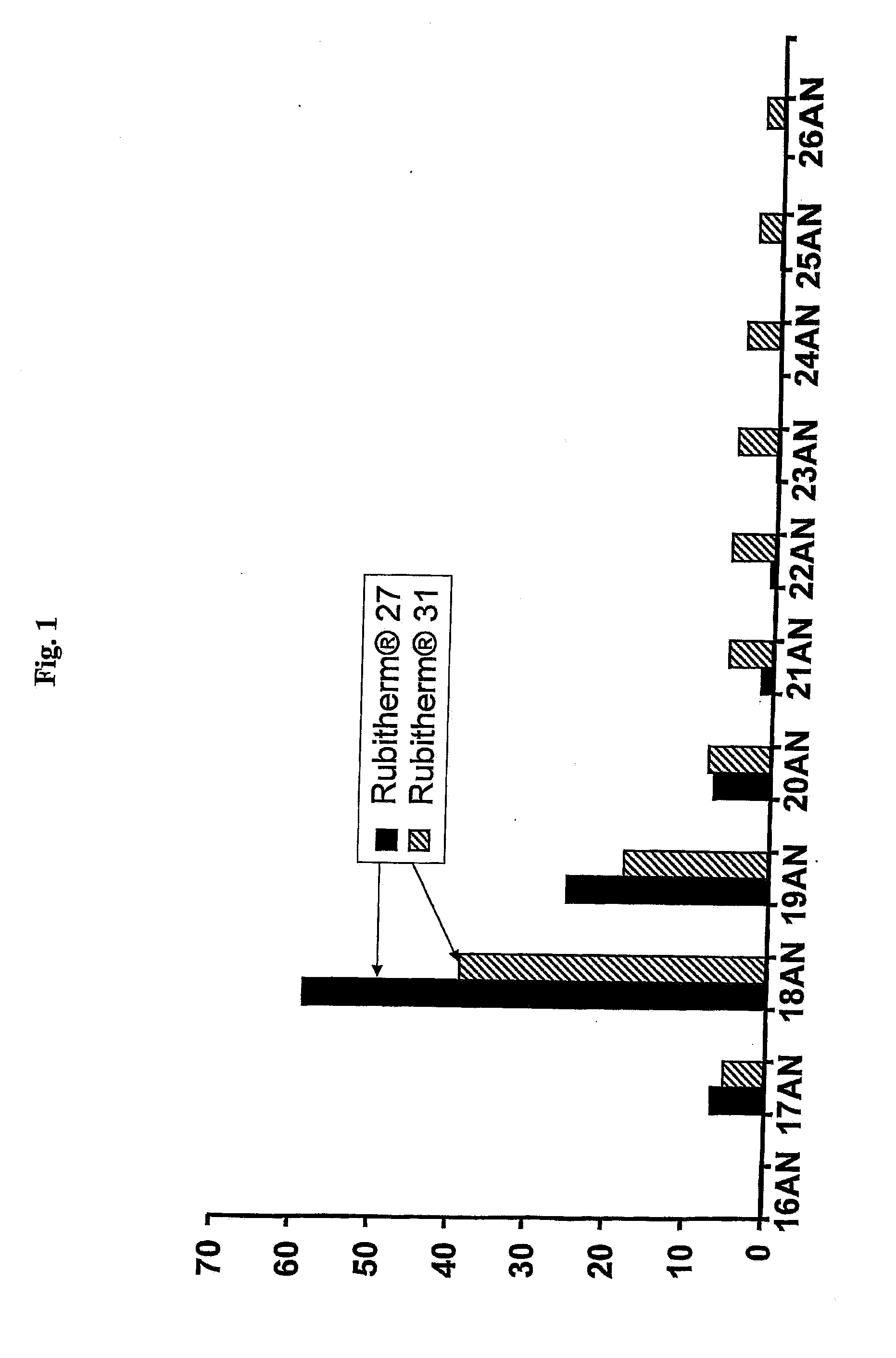
Figure 1 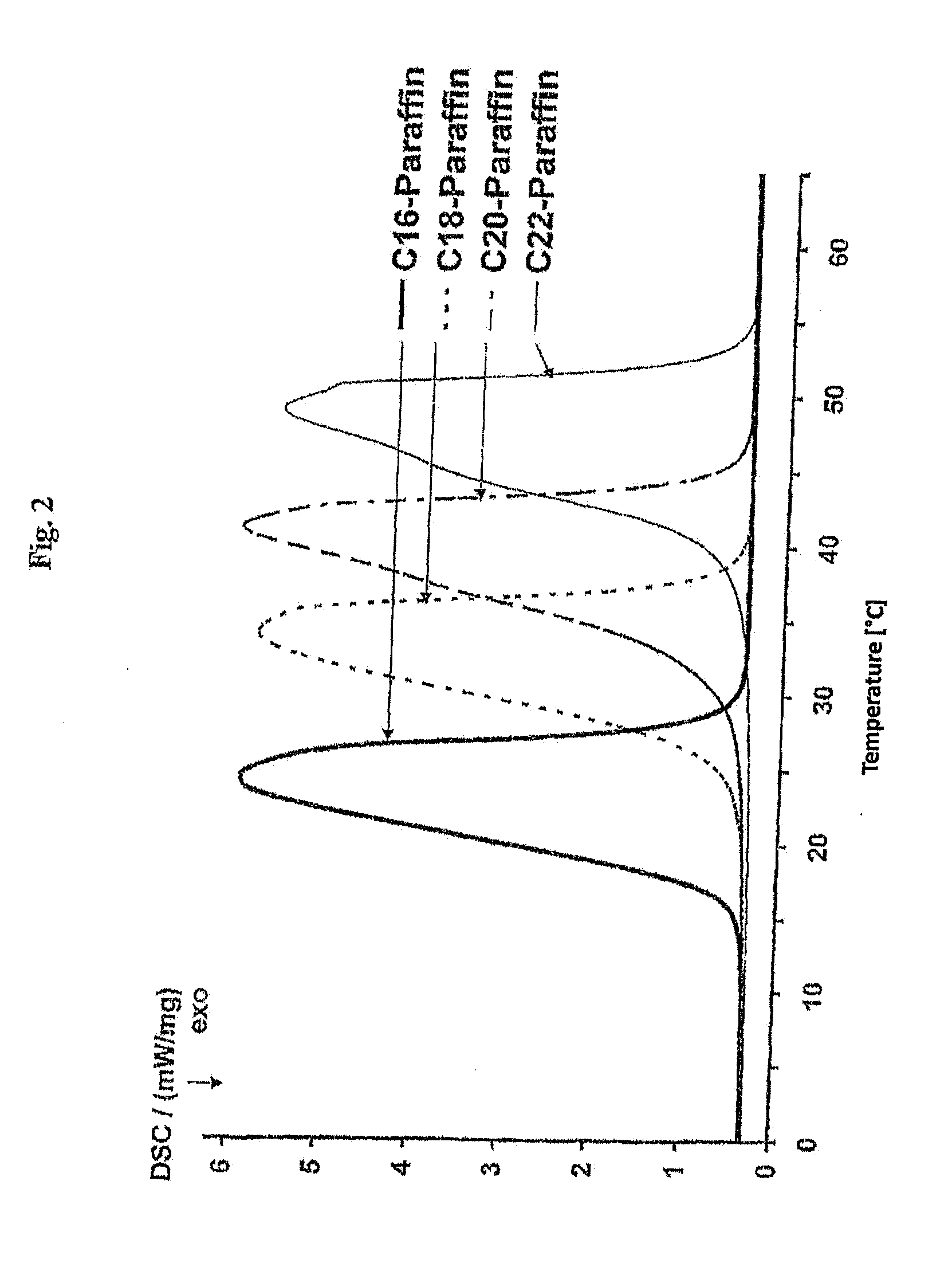
Figure 2 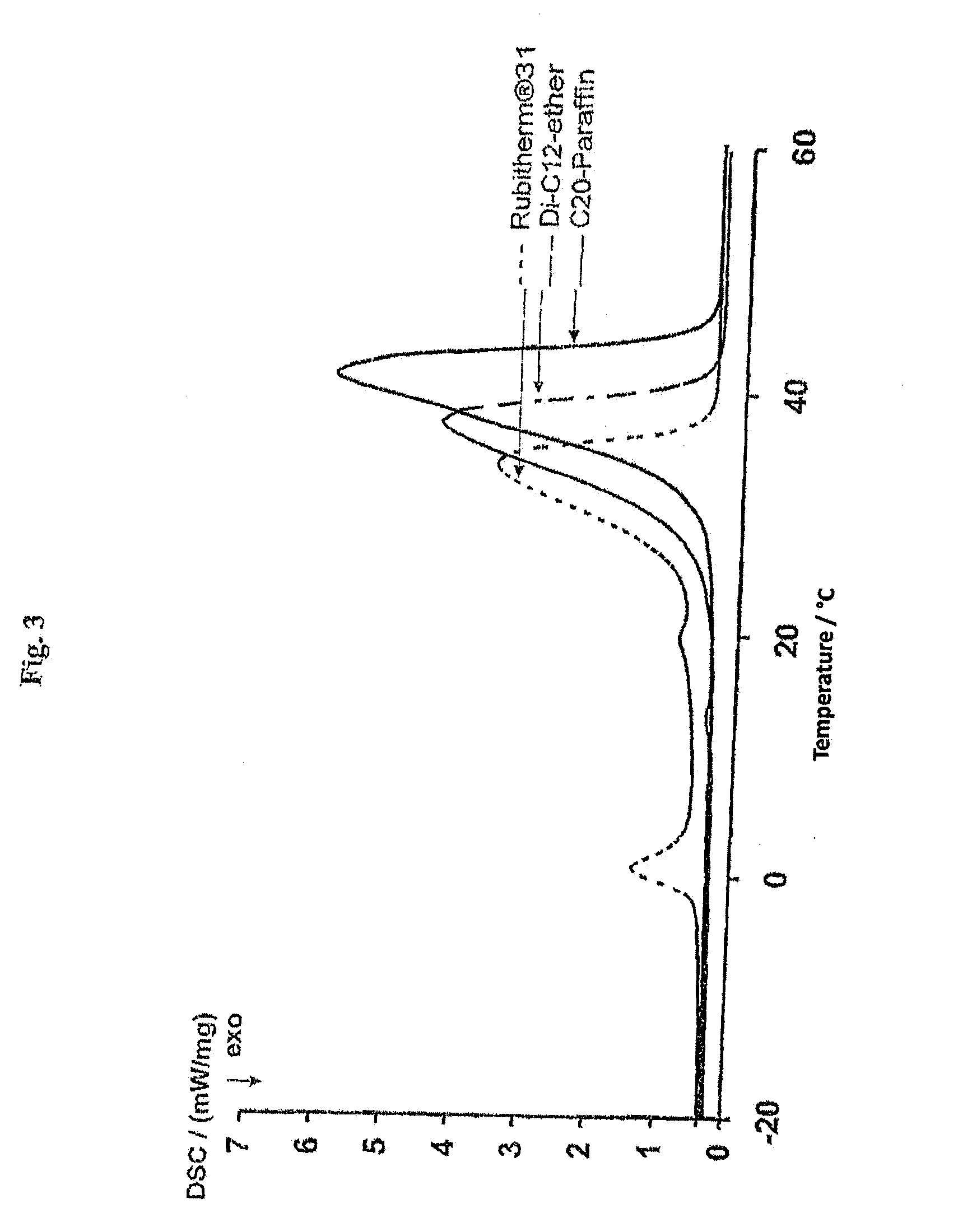
Figure 3
Abstract
Description
FIELD OF THE INVENTION
[0001] The invention relates to a method for producing a latent heat storage material from linear alcohols and dialkyl ether as a latent heat storage material.BACKGROUND OF THE INVENTION
[0002] Phase change materials (PCMs) may release or absorb, respectively, or store, respectively, heat by melting or solidifying, respectively, within a defined temperature range, and thus function as latent heat storage materials. This principle of heat storage may also be used, for example, in the wall insulation of buildings. Such latent heat storage materials are, e.g. in the form of micro-capsules, introduced into the wall plaster or into gypsum plasterboards and liquefy during the day with high heat input. The heat absorbed is stored in the wall and keeps the interior cool. Following cooling during the evening hours and at night, the liquid storages solidify and release the crystallization heat to the environment. In that, the interior is warmed up.
[0003] As latent heat stora...
Examples
experiment 1
[0039]Dehydrating fatty alcohols to linear olefins 2474 g of NACOL® 16-99 (purity 99.5%, based on renewable raw materials) were mixed with 500 g of Al2O3 and 60 ml of xylene in a 6 l flask and heated at up to 295° C. at the water separator for 4.5 hours. In that, 180 ml of water were formed. The hexadecene formed was distilled in vacuum. The yield was a mixture of alpha- and internal olefins.
experiment 2
[0040]Hydrating linear olefins to linear paraffins 685 g of the hexadecene obtained in Experiment 1 were hydrated for 7 hours at 98° C. according to a known method over a heterogeneous Ni-containing catalyst at 20 bar H2 pressure and filtrated after cooling.
[0041]Fatty alcohols with chain lengths of C16 to C22 were used according to Experiments 1 and 2, and the following paraffins were obtained:
TABLE 2ParaffinHexadecaneOctadecaneEicosaneDocosanen-paraffin (main99.698.893.297.4component) [%]n-paraffin99.898.996.898.6(total) [%]iso-paraffin [%]0.20.11.81.2Onset [° C.]17.427.432.540.6Melting heat [J / g]245.6250.7247.2270.5
experiment 3
[0042]Experiments 1 and 2 were repeated, however, a synthetic fatty alcohol (hexadecanol) from the Ziegler process with a purity of 95.6% was used as the alcohol.