
Method for Network Co-ordination in a Mobile Communications System and Apparatus Thereof
a mobile communications system and network coordination technology, applied in the field of network coordination in a mobile communications system and apparatus thereof, can solve the problems of inapplicability and inability to integrate co-operative transmission within 3gpp, and achieve the effect of reducing interference, reducing interference among cells, and high capacity of users equipmen
Patent Information
- Authority / Receiving Office
- US · United States
- Current Assignee / Owner
- Publication Date
- 2011-12-15
- Estimated Expiration
- Not applicable · inactive patent
Smart Images
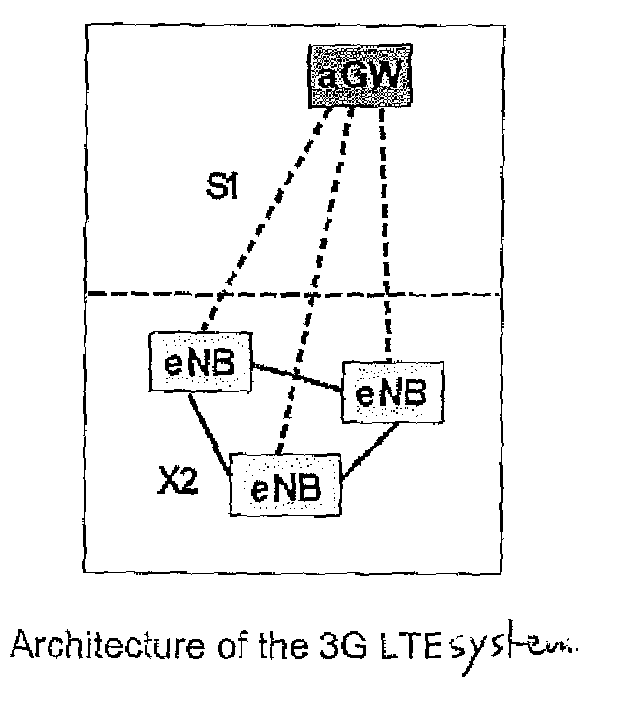
Figure 1 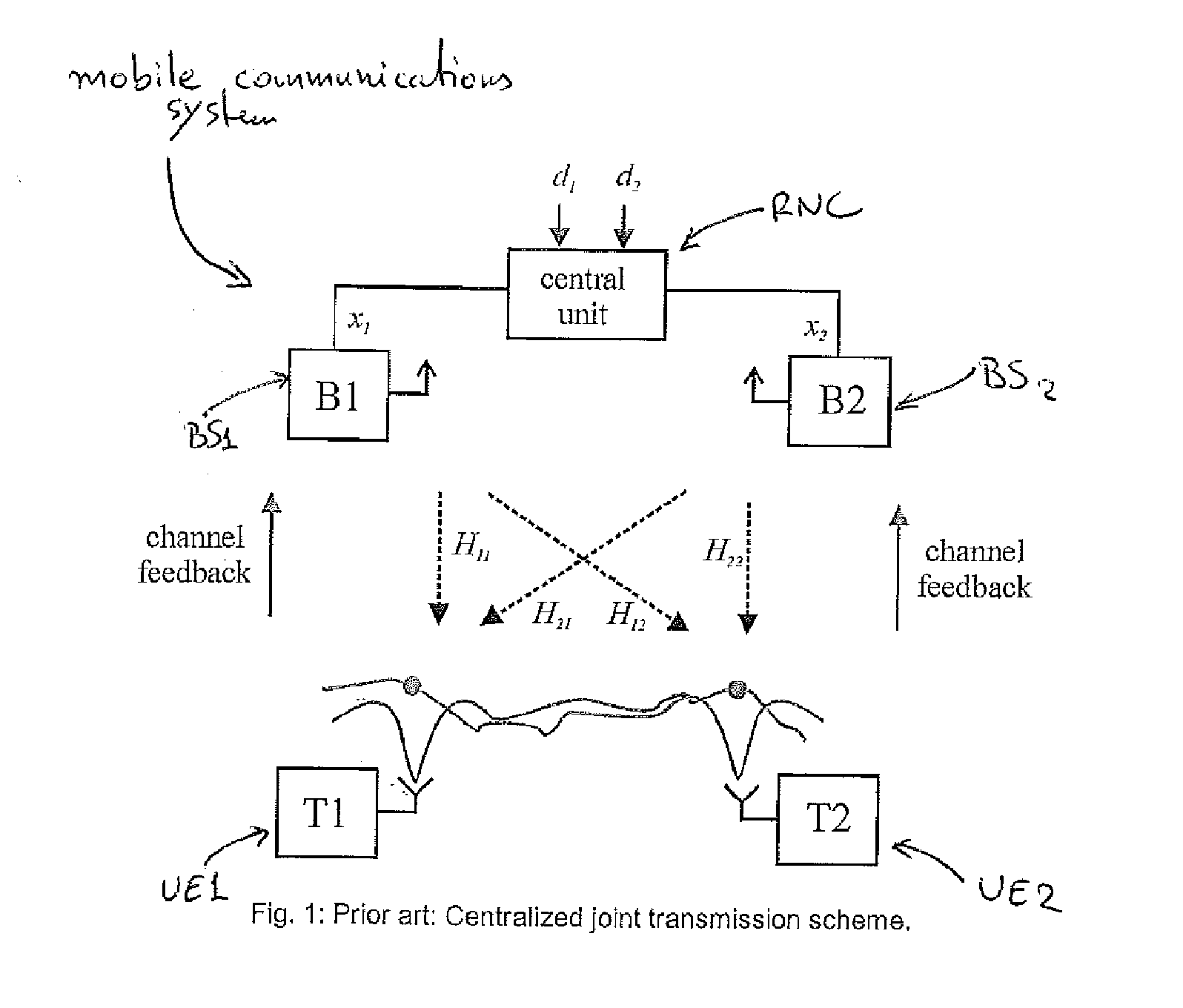
Figure 2 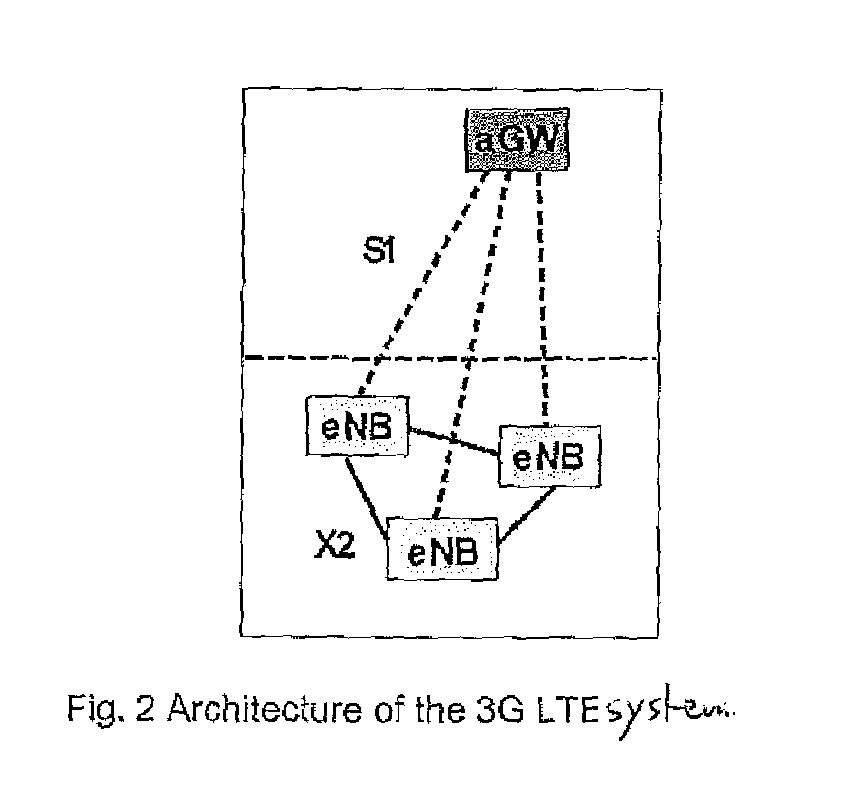
Figure 3
Abstract
Description
FIELD OF THE INVENTION
[0001] The invention is used in mobile communications systems to ensure that the networks operating therein are co-ordinated and that co-operative transmissions can be effected.SUMMARY OF THE INVENTION
[0002] 3G (3rd Generation Wireless Mobile Communication Technology) mobile networks require intensive network planning in order to achieve a high capacity of UEs (User Equipments) and user satisfaction based on pre-determined traffic models, network topology data and networking scenarios. In order to reduce interference caused by the high number of UEs present, co-operative transmission is used. By co-operative transmission it is meant that multiple base stations (BSs) serve jointly a set of user terminals (UEs) scheduled onto the same radio resource in their respective cells, within a mobile communications system. Using co-operative beam-forming at the base stations, interference among the cells can be reduced. For this purpose, the base stations exchange data sig...
Examples
Embodiment Construction
[0030]The basic principle of the invention is shown in FIG. 3. Rather than using a central unit as in FIG. 1, data are distributed to all cooperative base stations (BSs). Moreover, the superimposed pilots of all base stations (BSs) are received by each user terminal (UE), and the compound channel information from all base stations (BSs) is fed back to the serving base station (BS). Observations are exchanged between the base stations (BS) over the X2 interface, such that the compound multiuser multicell channel matrix can be recovered at each base station (BS) involved in the cooperative transmission. At each base station, there is a local processing unit which computes the locally relevant beam forming weights and applies them to the data streams intended for the user terminals (UEs).
[0031]In order however, to make such distributed co-operative transmission efficient and well integrated within the mobile communications system, further points have also to be clarified. These points ...