
Data bundling and fast dormancy based upon intelligent application learning
a data bundling and intelligent application technology, applied in power management, high-level techniques, instruments, etc., can solve the problems of consuming a large amount of rnc power, significantly increasing the rnc load, and reducing the number of radio resource control (rrc) connection establishments, so as to facilitate bundling data sessions and reduce the number of radio resource control connection establishments
Patent Information
- Authority / Receiving Office
- US · United States
- Current Assignee / Owner
- Publication Date
- 2012-05-17
Smart Images
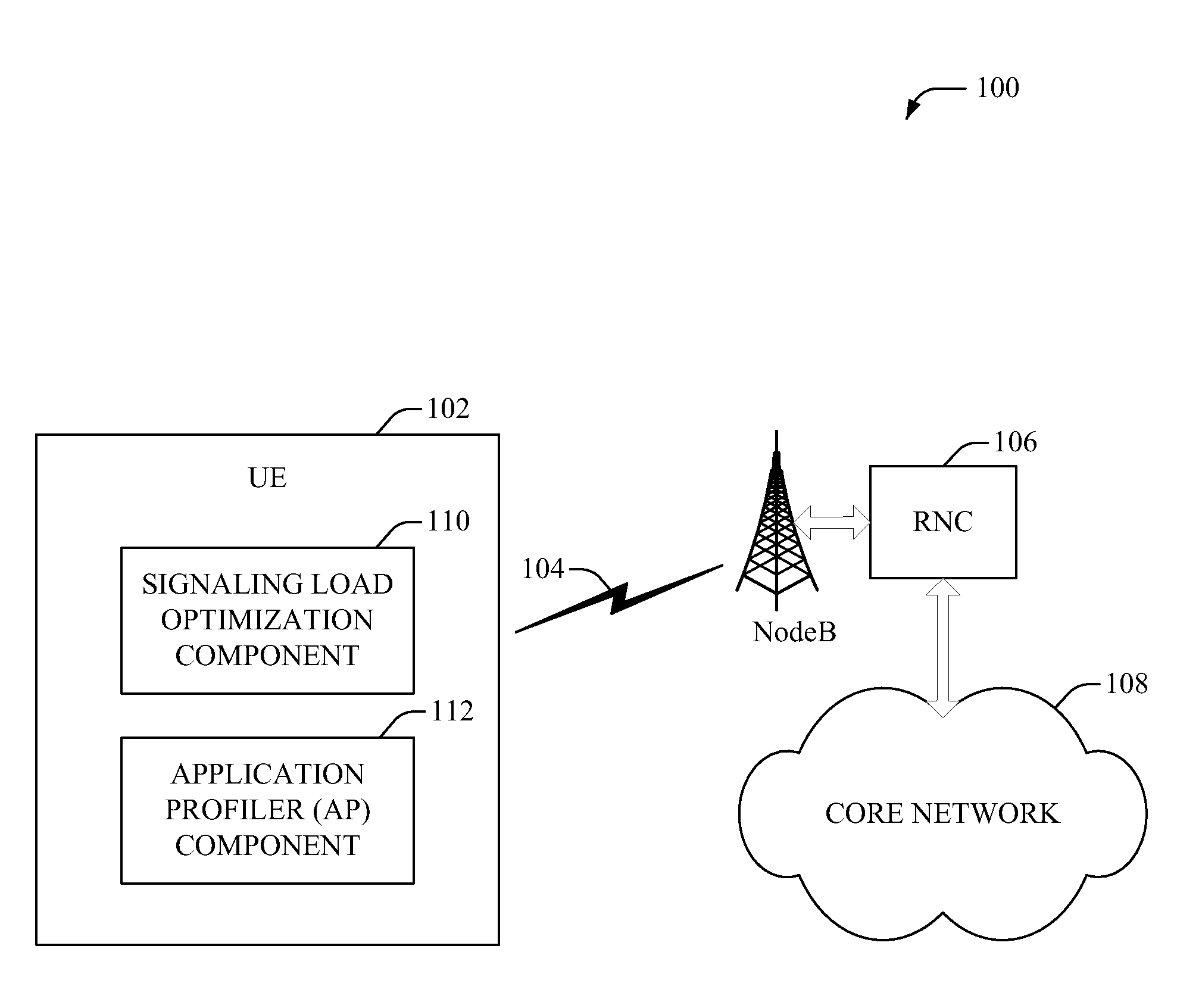
Figure 1 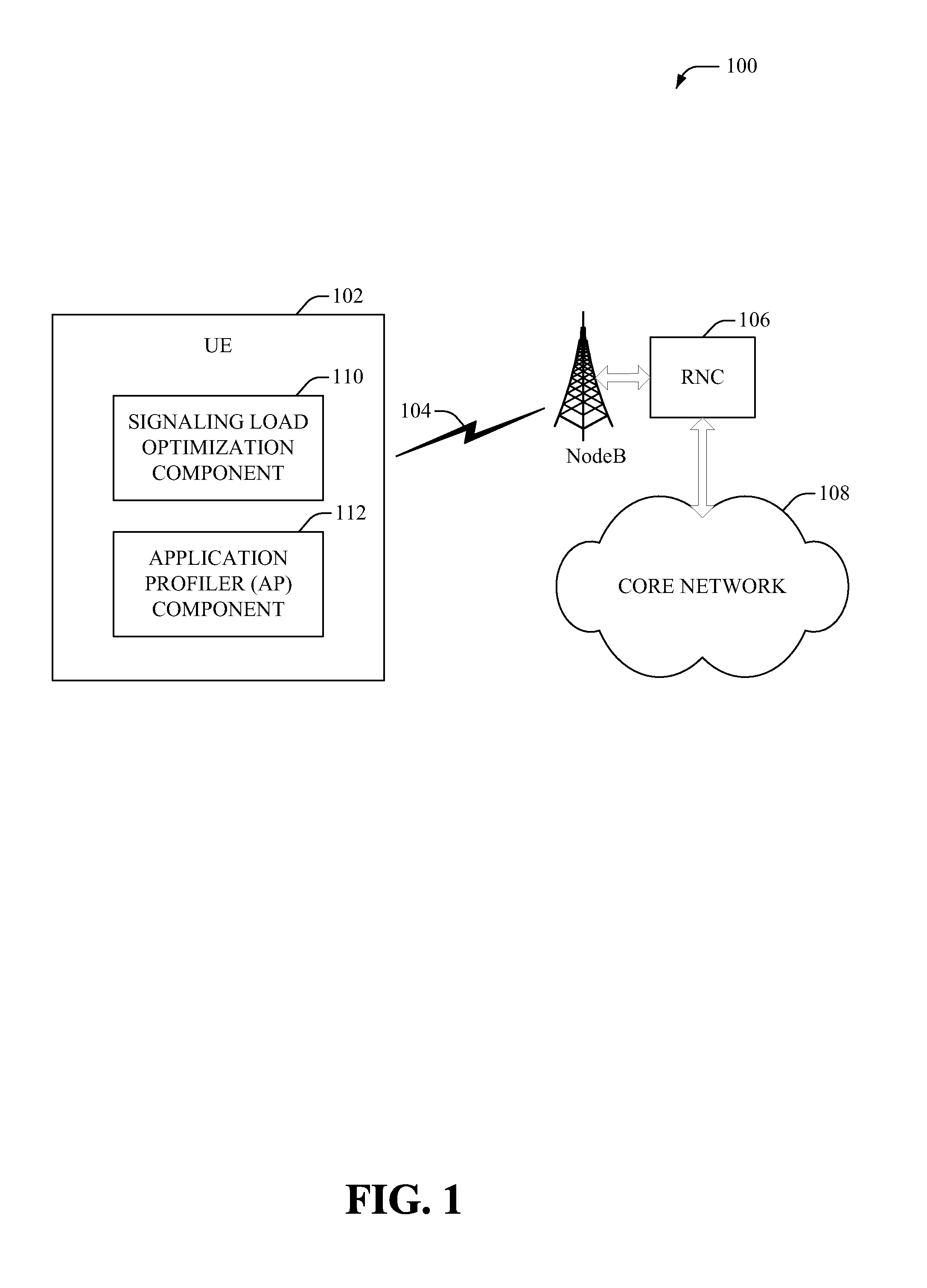
Figure 2 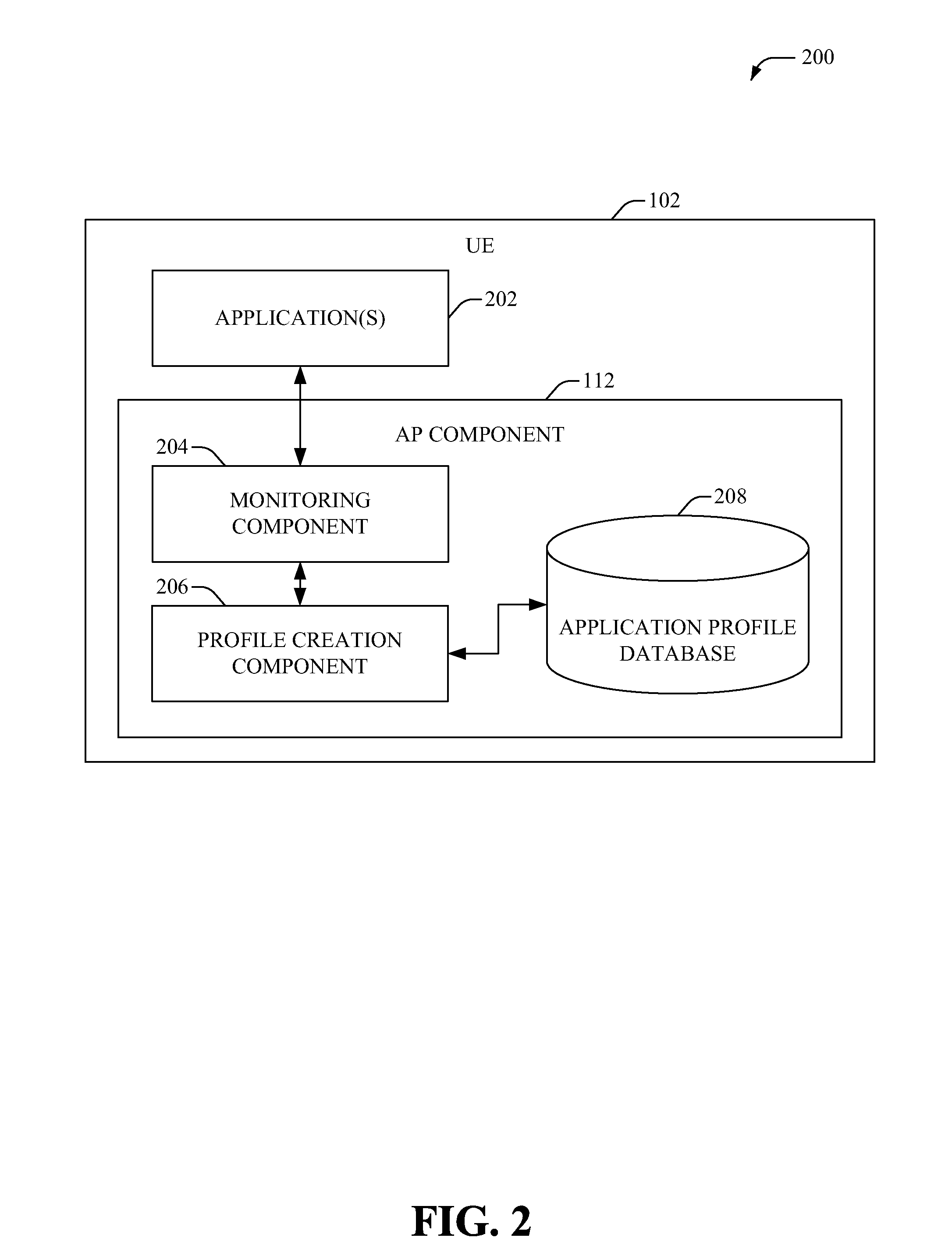
Figure 3
Abstract
Description
TECHNICAL FIELD
[0001] The subject disclosure relates to wireless communications and, more particularly, to a mechanism that facilitates data bundling and fast dormancy based on intelligent learning and characterization of applications employed by a user equipment (UE), to reduce network signaling in the communication network.BACKGROUND
[0002] Universal Mobile Telecommunications System (UMTS) networks have seen an explosive data growth in past few years and, in future, are expected to see continuing growth in the Packet Switched (PS) domain. Beyond data traffic volume growth, an even more aggressive growth in data signaling load has been detected. Among all the signaling messages / procedures on UMTS networks, Radio Access Network (RAN) signaling procedures have caused the most growth and impact. This is due to complicated radio resource sharing techniques required to conserve resources occupied by various users and services.
[0003] The majority of RAN signaling events are for connection se...
Examples
Embodiment Construction
[0023]One or more embodiments are now described with reference to the drawings, wherein like reference numerals are used to refer to like elements throughout. In the following description, for purposes of explanation, numerous specific details are set forth in order to provide a thorough understanding of the various embodiments. It may be evident, however, that the various embodiments can be practiced without these specific details, e.g., without applying to any particular networked environment or standard. In other instances, well-known structures and devices are shown in block diagram form in order to facilitate describing the embodiments in additional detail.
[0024]As used in this application, the terms “component,”“module,”“system,”“interface,”“platform,”“service,”“engine,” or the like are generally intended to refer to a computer-related entity, either hardware, a combination of hardware and software, software, or software in execution or an entity related to an operational mach...