
Grooved anode for electrolysis cell
Patent Information
- Authority / Receiving Office
- US · United States
- Current Assignee / Owner
- Publication Date
- 2012-05-24
- Estimated Expiration
- Not applicable · inactive patent
Smart Images
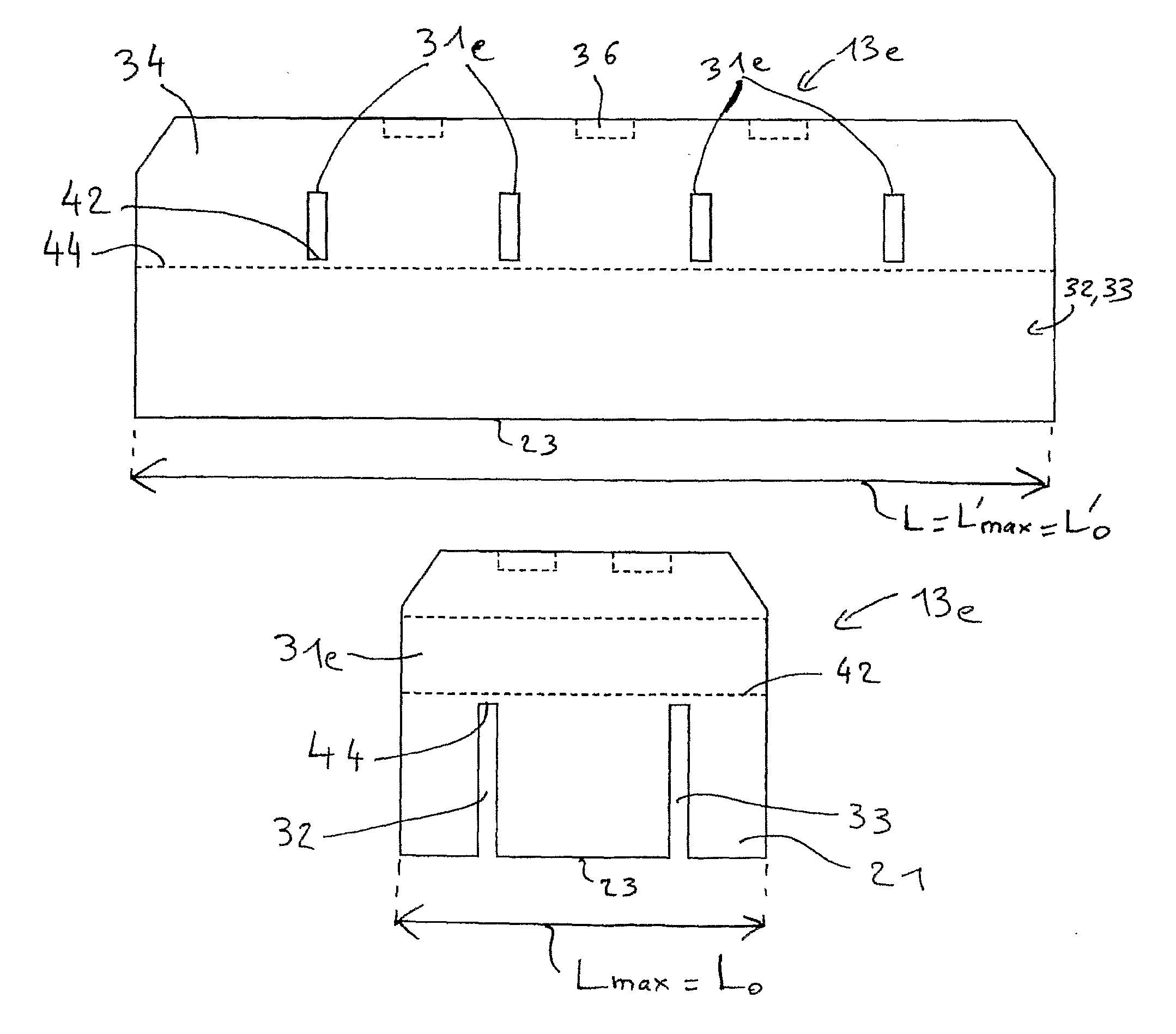
Figure 1 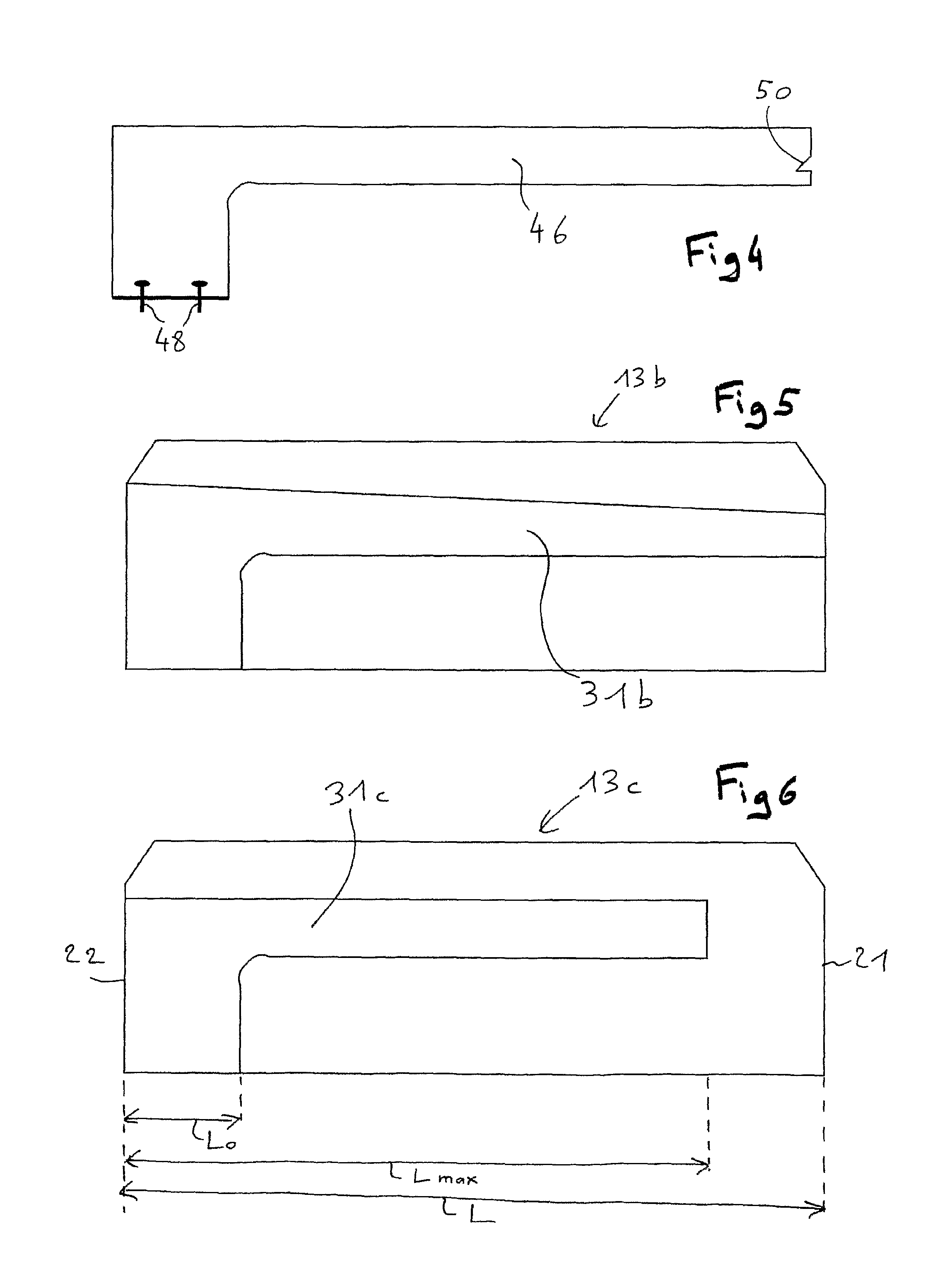
Figure 2 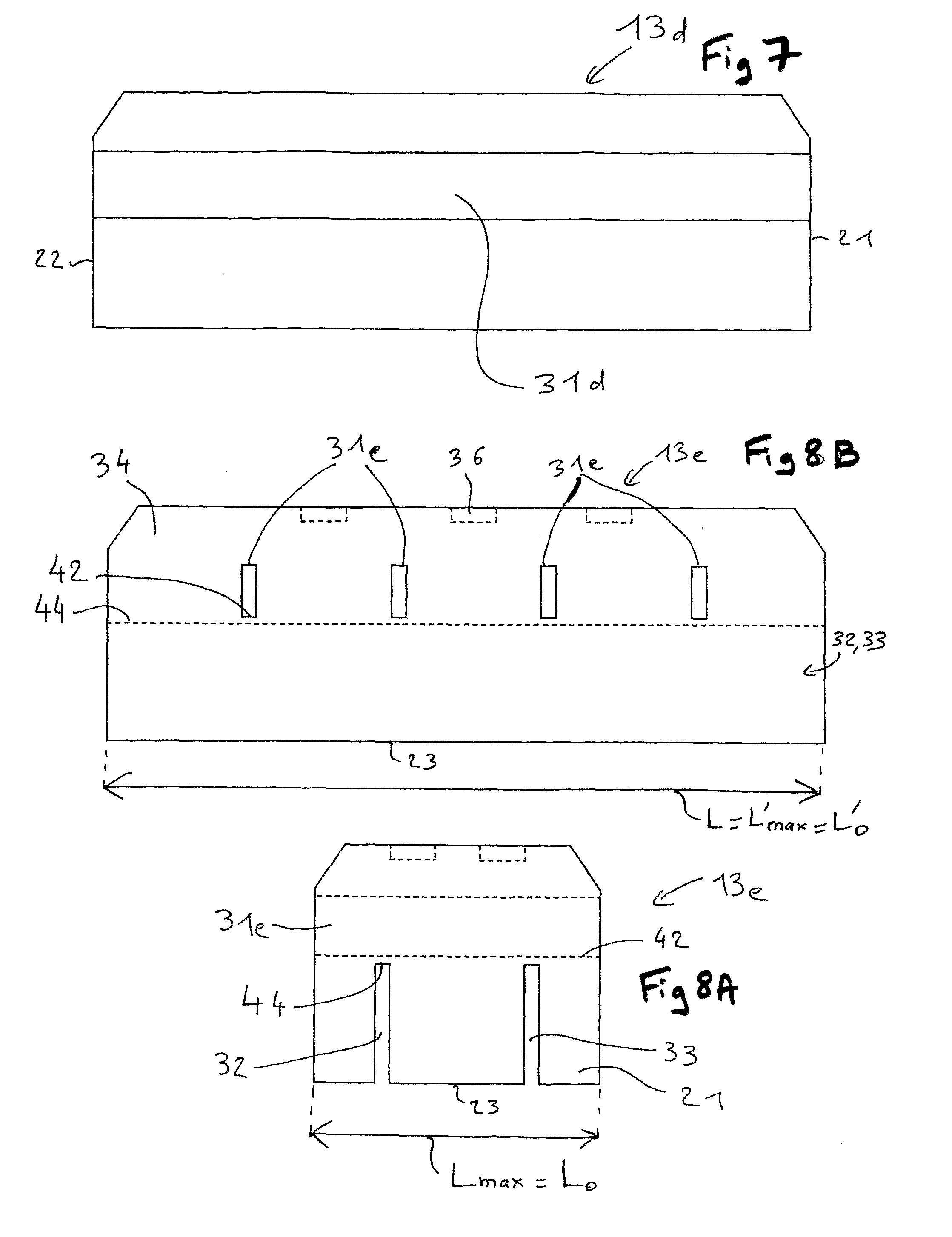
Figure 3
Abstract
Description
SCOPE OF THE INVENTION
[0001] The invention relates to the production of aluminum by igneous electrolysis using the Hall-Héroult process, and more particularly the pre-baked anodes used in aluminum production plants and comprising an anode block made of carbon, a manufacturing process for such anode blocks and a device designed for the manufacture of such anode blocks.BACKGROUND OF RELATED ART
[0002] Metallic aluminum is produced industrially by igneous electrolysis, namely by electrolysis of alumina in solution in a molten cryolite bath, known as an electrolysis bath, using the well-known Hall-Héroult process. The electrolysis bath is contained in cells which comprise a steel container coated on the inside with refractory and / or insulating materials, and cathodic elements located at the bottom of the cell. Anode blocks made of carbonaceous material are partially immersed in the electrolysis bath. Each tank and the corresponding anodes form what is often called an electrolysis cell. T...
Examples
first embodiment
[0062]FIGS. 2A, 2B and 3 show an anode block 13a according to the invention. The anode block 13a is typically of right-angled parallelepipedic shape of length L between two opposite short side faces 21 and 22 typically vertical and of height H between a typically horizontal lower face 23 and a higher face 24. As shown in FIGS. 2A, 2B and 3, the higher edges can be cut away to limit carbon losses. The anode blocks are designed to be consumed down to a maximum wear height indicated by arrows 25.
[0063]The anode block 13a comprises a first groove 31a and two second grooves 32 and 33.
[0064]The second grooves 32, 33 typically pass right through the anode block in the direction of length L. FIGS. 2A and 2B, which shows the short opposite side faces 21, 22 of the anode block 13a, show that these second grooves 32, 33 lead onto the lower face 23 throughout its length and onto the two short side faces. Consequently, the second grooves 32, 33 lead onto the lower face 23 over lengths L′0 equal ...