
Apparatus for Supporting a Parachute Flight Controller and Flight Controller for a Parachute
a flight controller and parachute technology, applied in the field of flight or guidance controllers, can solve problems such as inability or convenience, and achieve the effects of reducing the number of components required, compactness, and reducing the number of components
Patent Information
- Authority / Receiving Office
- US · United States
- Patent Type
- Applications(United States)
- Current Assignee / Owner
- Publication Date
- 2012-06-14
Smart Images
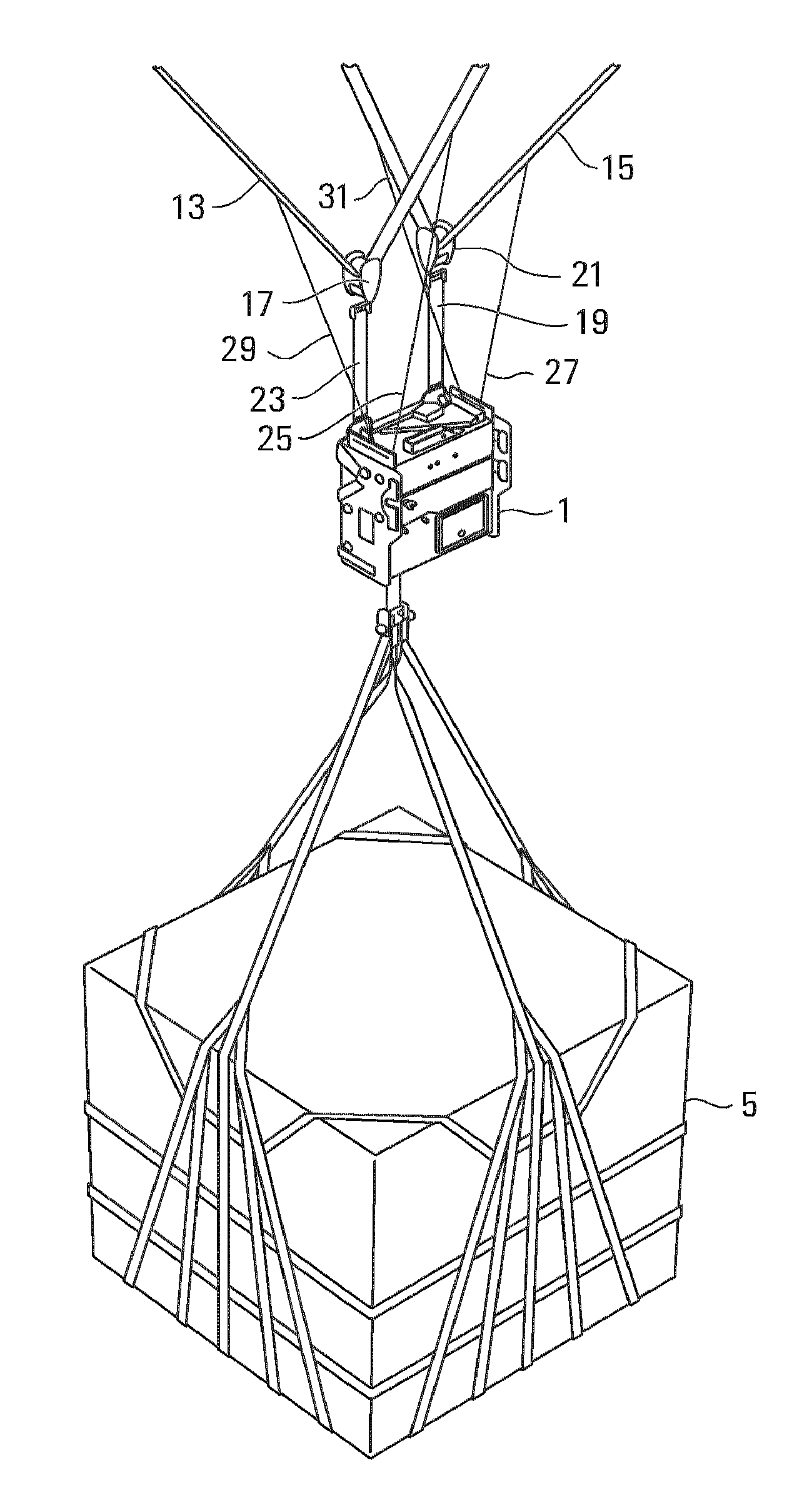
Figure 1 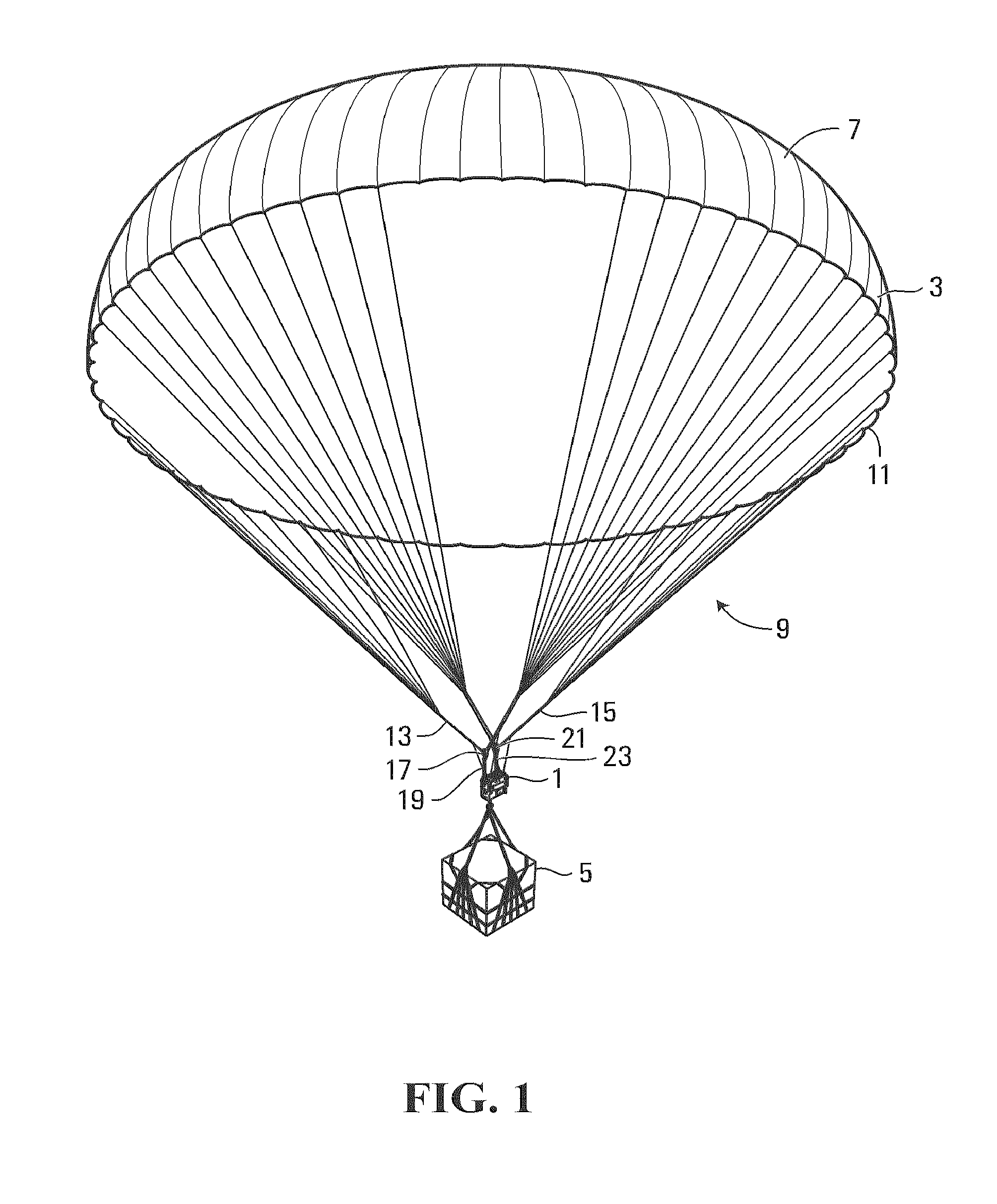
Figure 2 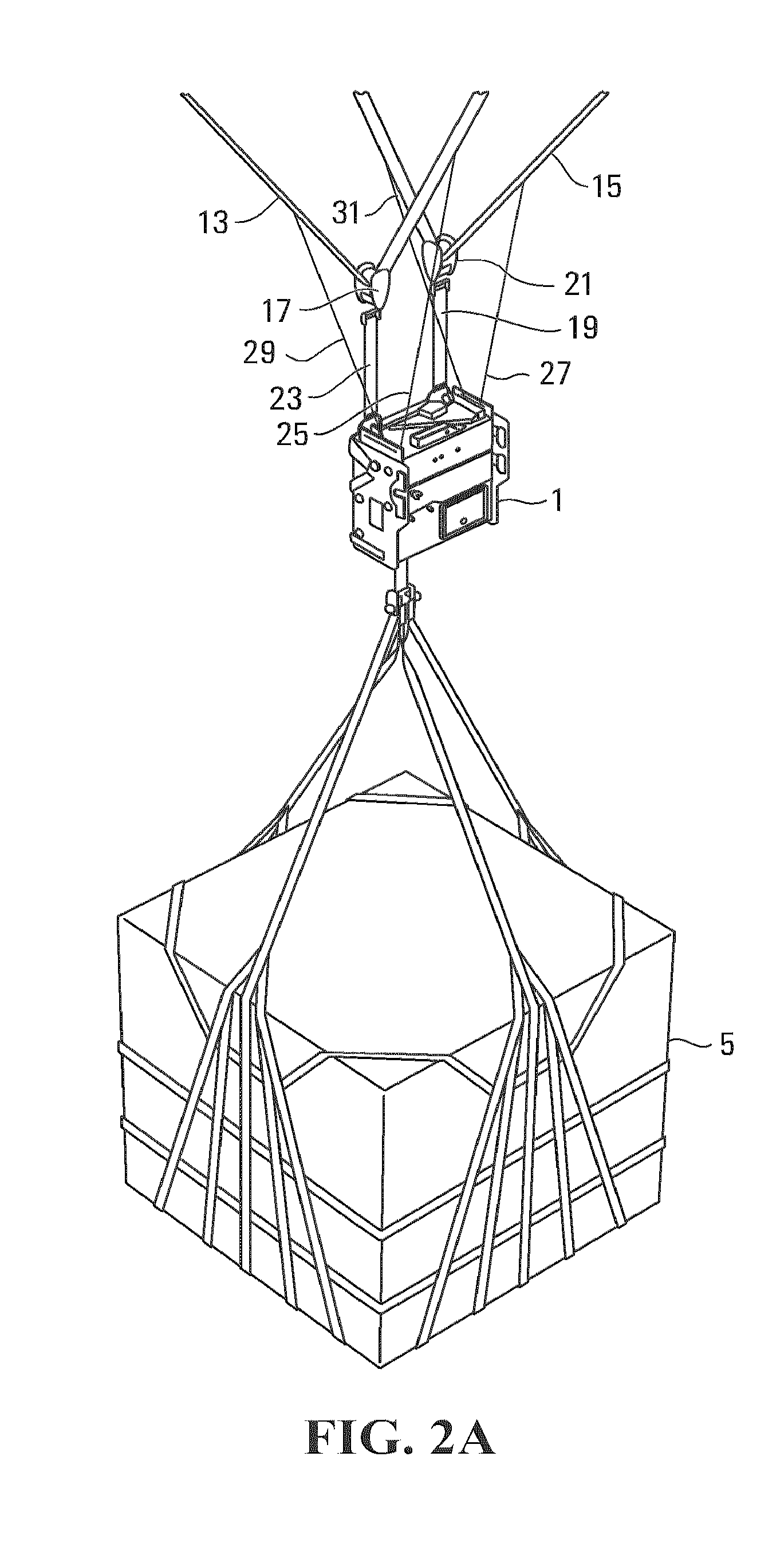
Figure 3
Abstract
Description
FIELD OF THE INVENTION
[0001] The present invention relates to flight or guidance controllers for parachutes and other drag devices, and in particular, but not limited to flight controllers that enable parachutes with payloads to be steered according to a desired flight path towards a desired target location.BACKGROUND OF THE INVENTION
[0002] Equipment, supplies and other items may be efficiently delivered to a desired location by dropping them from aircraft and using parachutes to slow their descent to bring them safely to ground. This method of deployment removes the need for the aircraft to land, which might not be possible or convenient, depending on the terrain and availability of a suitable runway and ground support. The parachute guidance system may be used to steer the parachute and its cargo towards a desired location during its flight. An example of an aerial delivery device having a parachute guidance system is described in U.S. Pat. No. 7,059,570 to Strong. The delivery devi...
Examples
Embodiment Construction
[0142]FIG. 1 shows a flight control unit 1 according to an embodiment of the present invention suspended beneath a round parachute 3 carrying a payload 5. The parachute 3 has a canopy 7 and suspension lines 9 extending downwardly from the peripheral edge 11 of the canopy. The suspension lines are divided into four groups, with the suspension lines of each group being associated with a particular quadrant of the canopy 7. A first support member, for example, a first coupling line or sling 13 is connected between the suspension lines of a first quadrant and the suspension lines of a third, opposite quadrant. A second support member, for example, a second coupling line or sling 15 is connected between the suspension lines of a second quadrant and the suspension lines of an opposite, fourth quadrant. A first bearing member, for example a first pulley 17 which is connected to a first riser 19 is positioned on the first coupling line or sling 13, and a second bearing member, for example, ...