
Engine diagnostics with skip fire control
a technology of engine diagnostics and fire control, applied in the direction of electrical control, combustion engines, valve arrangements, etc., can solve the problems of reducing the effectiveness of the test, the oxidizing and reducing sites are neither saturated, and the test can be difficult to run during normal engine operation
Patent Information
- Authority / Receiving Office
- US · United States
- Current Assignee / Owner
- Publication Date
- 2014-09-18
Smart Images
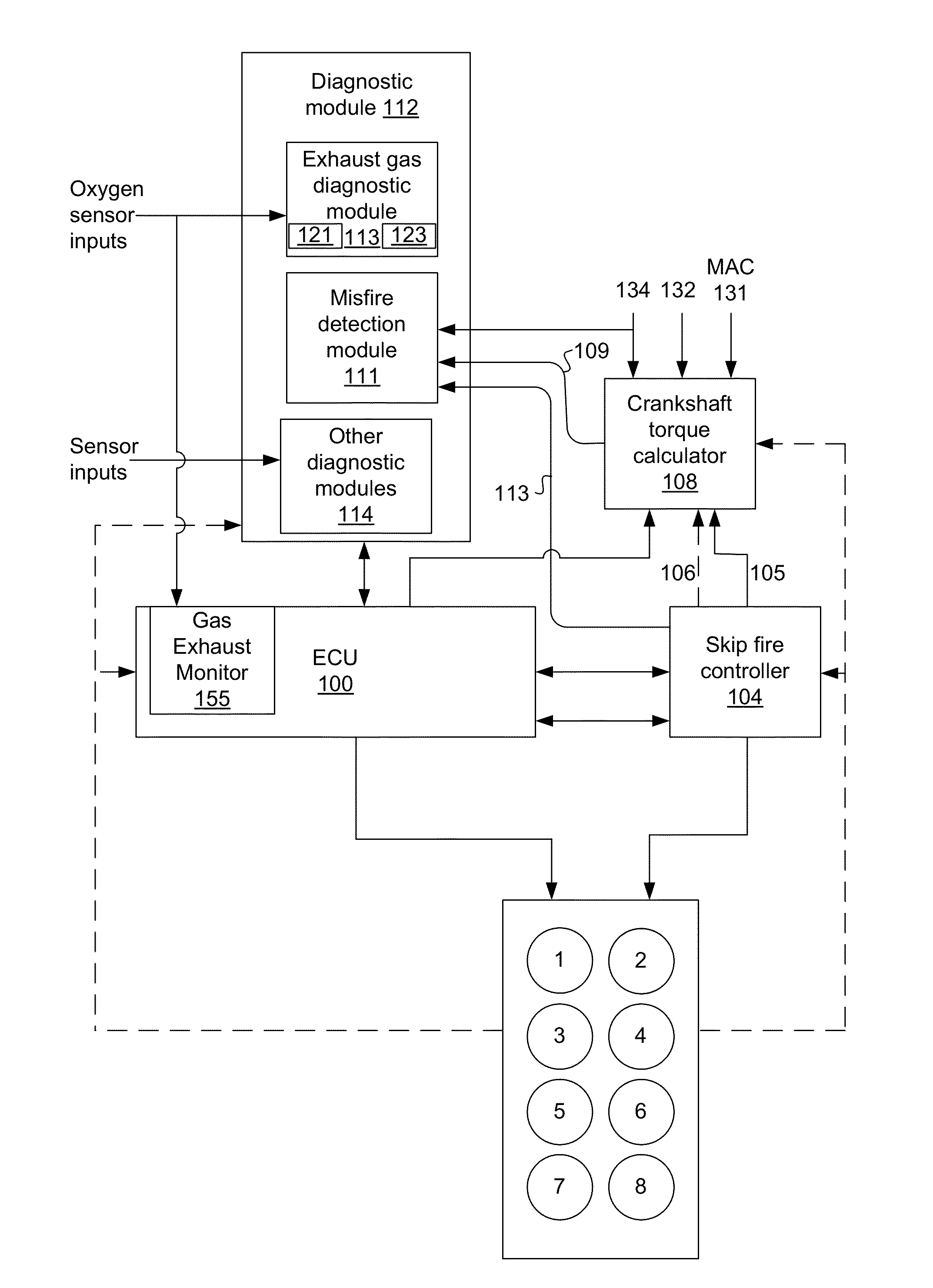
Figure 1 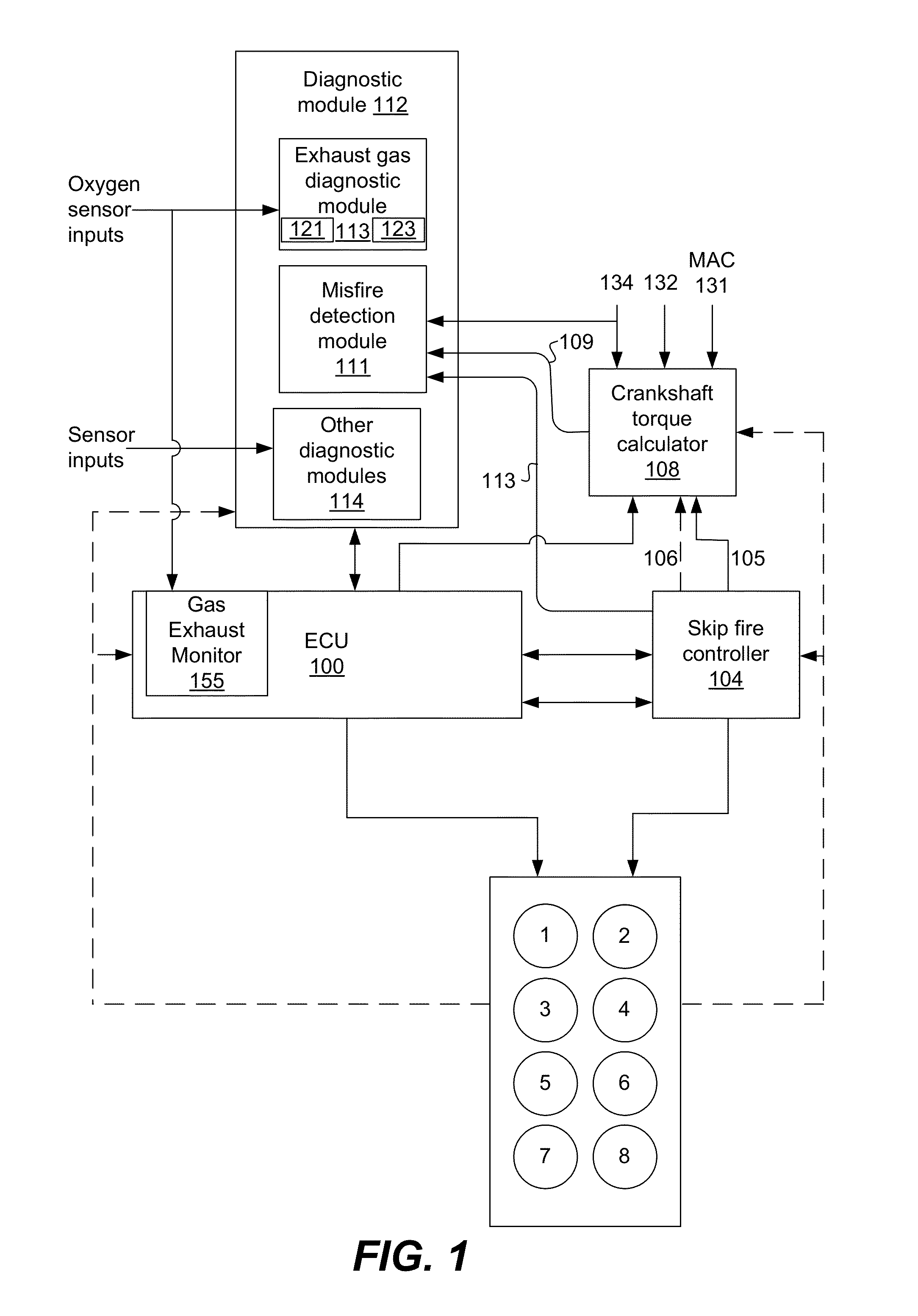
Figure 2 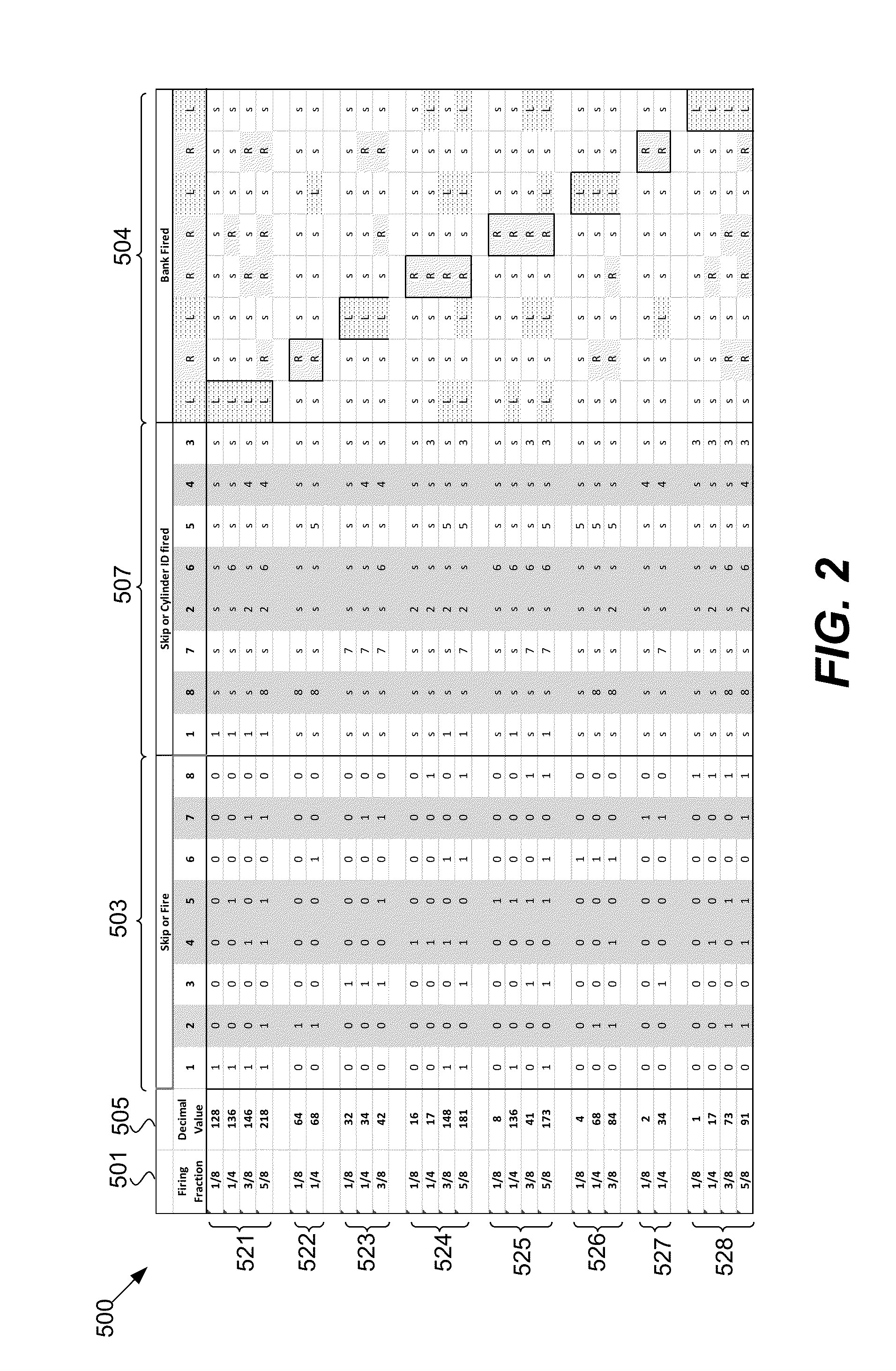
Figure 3
Abstract
Description
RELATED APPLICATIONS
[0001] This application claims priority of U.S. Provisional Application No. 61 / 799,180, filed Mar. 15, 2013, which is incorporated herein by reference.BACKGROUND OF THE INVENTION
[0002] The present invention relates generally to powertrain diagnostics conducted during skip fire control of an internal combustion engine.
[0003] Skip fire engine control is understood to offer a number of benefits including the potential of increased fuel efficiency. In general, skip fire engine control contemplates selectively skipping the firing of certain cylinders during selected firing opportunities. Thus, for example, a particular cylinder may be fired during one firing opportunity and then may be skipped during the next firing opportunity and then selectively skipped or fired during the next. This is contrasted with conventional variable displacement engine operation in which a fixed set of the cylinders are deactivated during certain low-load operating conditions.
[0004] When a cyli...
Examples
Embodiment Construction
[0023]The present invention relates generally to diagnostics in skip fire controlled engines. The skip fire controlled engines may be used to provide motive power for a vehicle.
[0024]Most modern passenger vehicles operate with four stroke, internal combustion engines. Such engines typically have a plurality of cylinders, which may be arranged in one or more banks Engine output is controlled by throttling the air flow into the engine so that all cylinders operate with substantially the same air intake level, the air intake level being reduced to reduce the engine output. Skip fire control provides a different method to control the engine output by firing some cylinders and skipping other cylinders so as to achieve the desired engine output.
[0025]Although the concept of skip fire control has been around for some time and its potential benefits with respect to fuel economy are known, to date, skip fire control has not achieved wide-spread acceptance. The applicant has developed a dynam...