
Systems and methods for manufacturing of multi-property anatomically customized devices
a technology of anatomically customized devices and manufacturing methods, applied in additive manufacturing processes, instruments, insoles, etc., can solve the problems of limiting the mechanical properties which a clinician can offer a patient to the specific predetermined, requiring a great deal of manual labor, and high cost, and achieve the effect of improving the quality of output products
Patent Information
- Authority / Receiving Office
- US · United States
- Patent Type
- Applications(United States)
- Current Assignee / Owner
- Publication Date
- 2015-06-18
- Estimated Expiration
- Not applicable · inactive patent
Smart Images
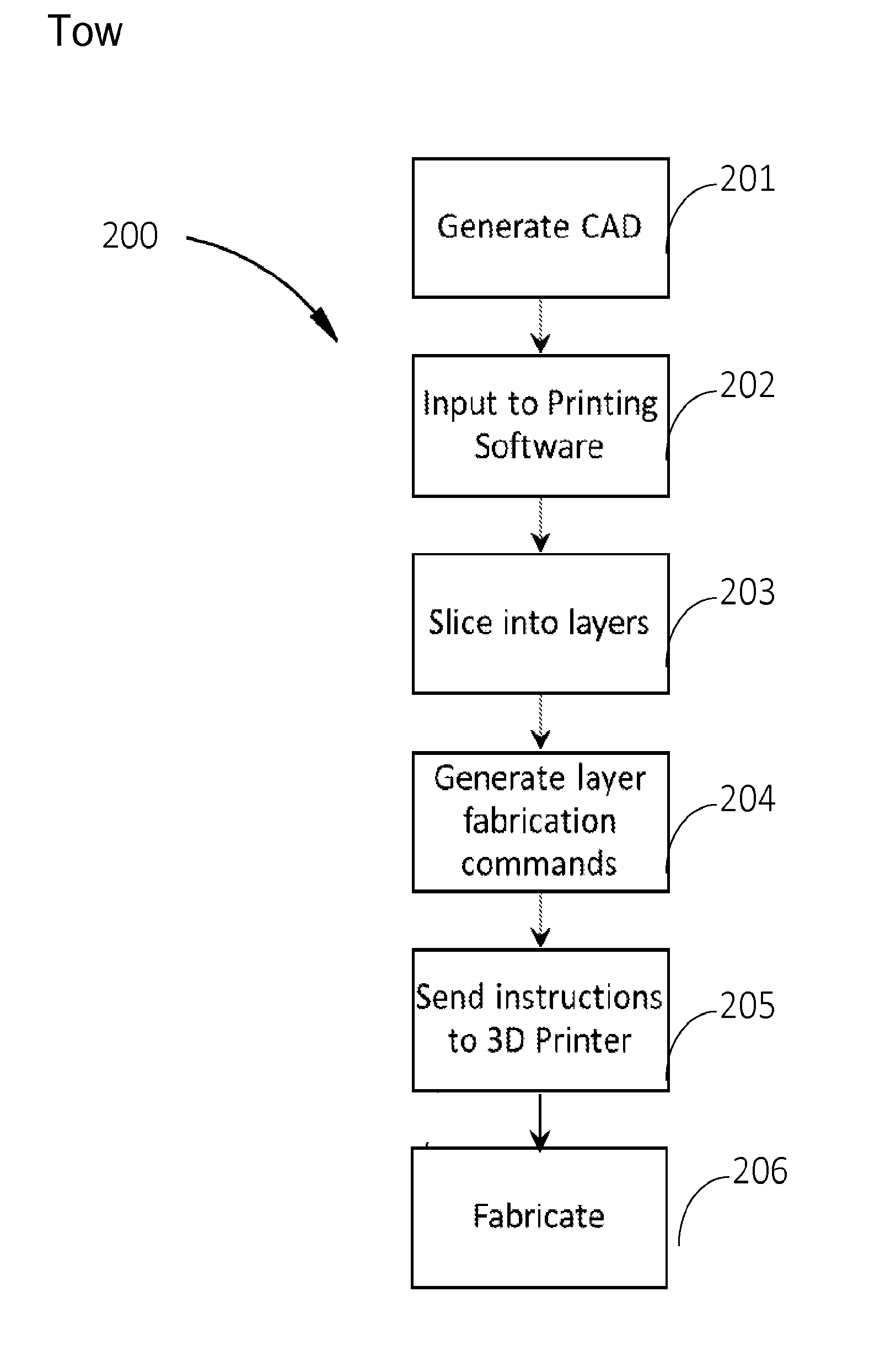
Figure 1 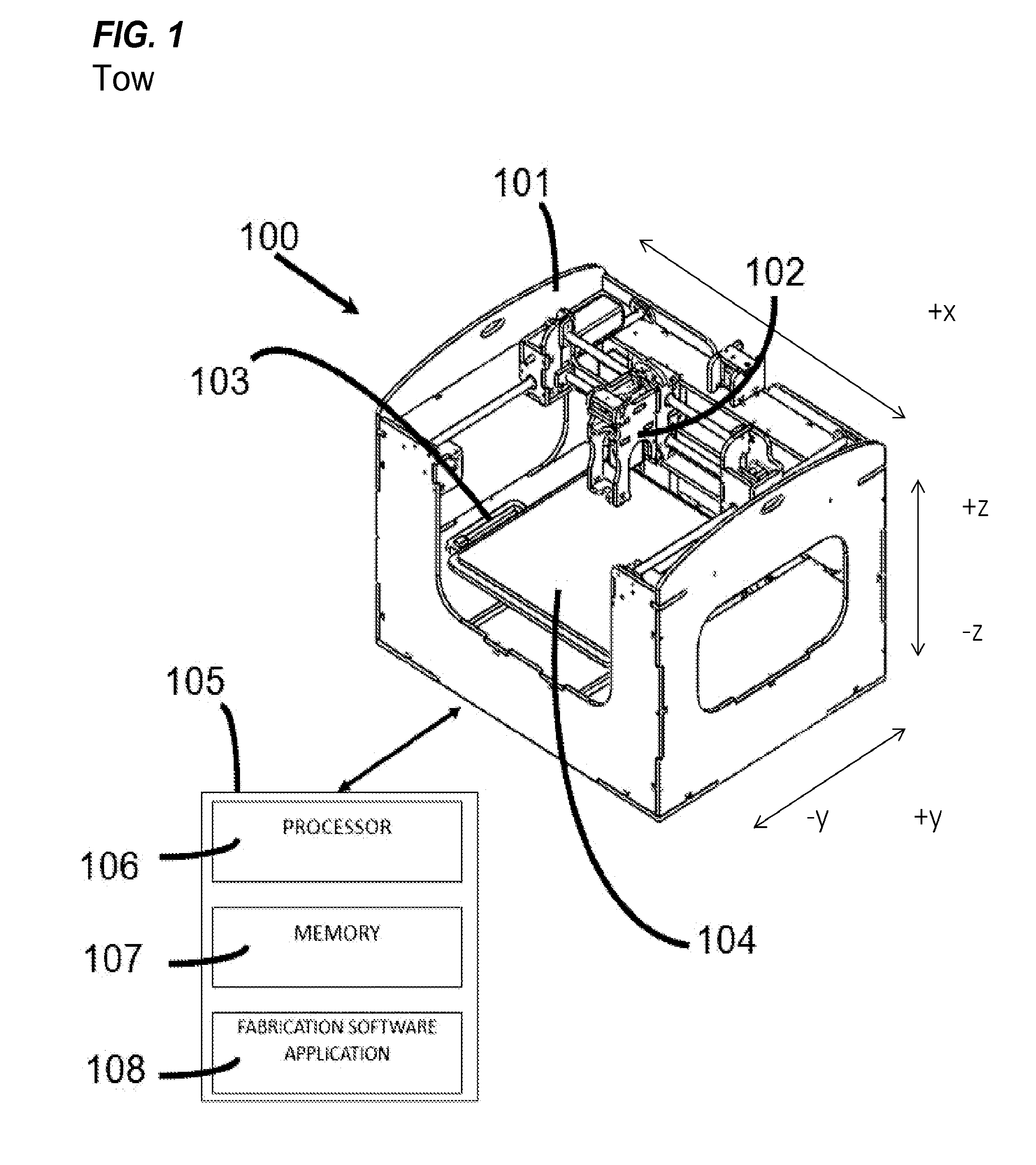
Figure 2 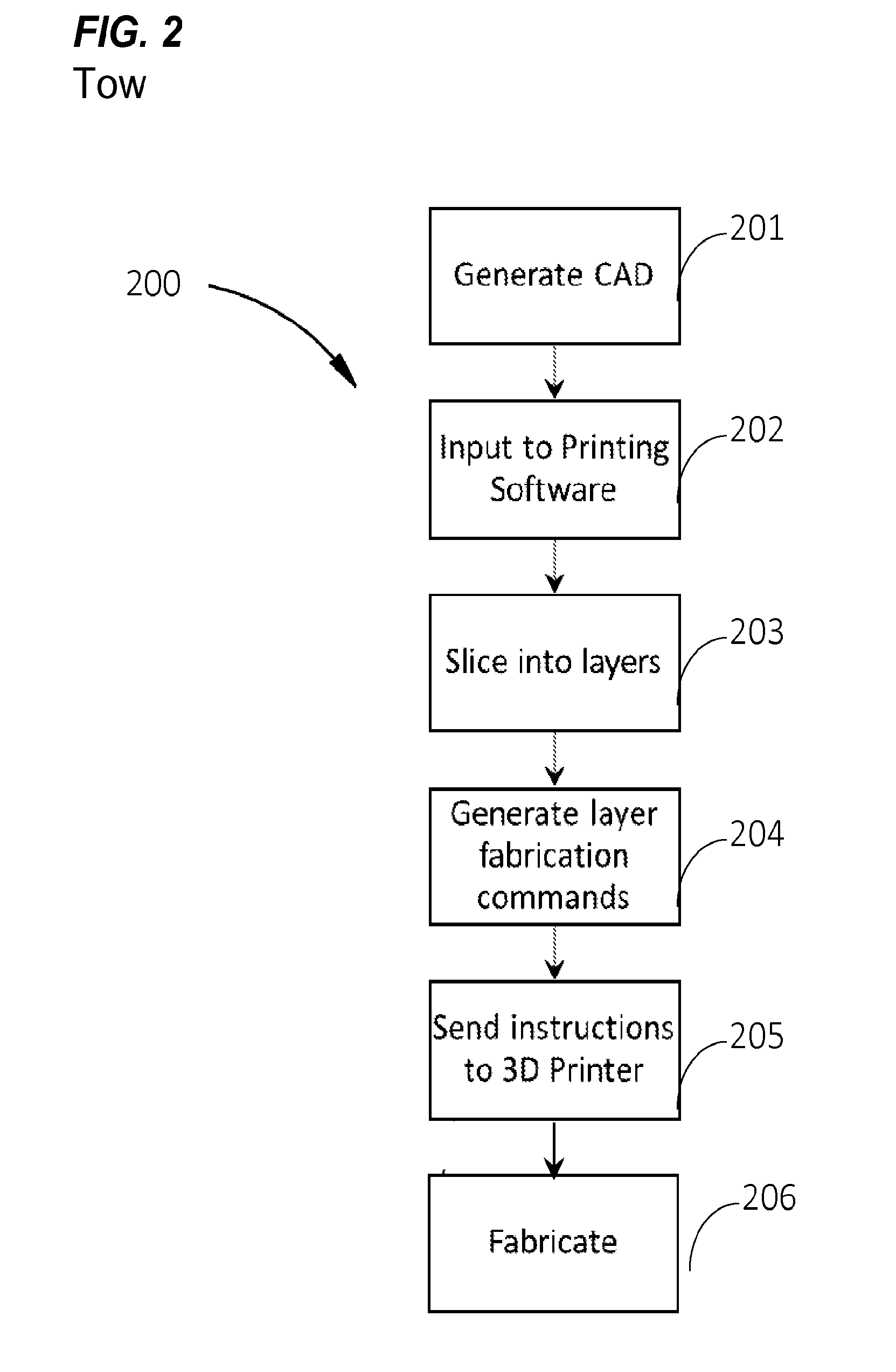
Figure 3
Abstract
Description
REFERENCE TO RELATED APPLICATIONS
[0001] This applicant claims the benefit of U.S. Provisional Application Ser. No. 61 / 741,368, filed Jul. 18, 2012 and incorporated by reference herein.BACKGROUND OF THE INVENTION
[0002] 1. Field of the Invention
[0003] The present invention primarily relates to additive manufacturing systems and techniques, often referred to as three dimensional (“3D”) fabrication or 3D Printing.
[0004] 2. Background
[0005] There have been many developments in additive manufacturing in recent years, and three dimensional fabrication or “printing” systems have become an increasingly practical means of manufacturing organic and inorganic materials from a digital model. Three dimensional fabricators are often referred to as additive manufacturing devices or 3D Printers. Such devices have also been adapted to work as part of, or in conjunction with, traditional computer numeric control (CNC) systems and other robotic motion or robotic arm systems, which have motions systems simil...
Examples
Embodiment Construction
)
1. Benefits and Features of Embodiments of the Present Invention
[0050]Before detailing particular embodiments of the present invention, it may be helpful to further describe various limitations of the prior art and the corresponding features in embodiments of the present invention that can overcome those limitations.
[0051]Unlike the prior art, and as described further herein, embodiments of the present invention can support the creation of a fully functional custom medical device with regions of varied mechanical properties, without multiple manual assembly steps. Certain existing methodologies do exist for altering mechanical properties in 3D-printed objects by using combinations of two materials in a grid-based ink jetting processes or by using material combinations in extrusion deposition processes. Additionally, mechanical variation in 3D-printed products has been accomplished in single-material objects by using air voids via a handful of unique patterning methods. However, the...