
A thermodynamic machine
a thermodynamic machine and heat pump technology, applied in the direction of machines/engines, efficient propulsion technologies, mechanical apparatuses, etc., can solve the problems of low efficiency, large energy consumption for domestic and industrial heating and cooling, and low efficiency of effective pumping of working fluid by non-mechanical means, so as to reduce heat transfer
Patent Information
- Authority / Receiving Office
- US · United States
- Current Assignee / Owner
- Publication Date
- 2016-04-14
Smart Images
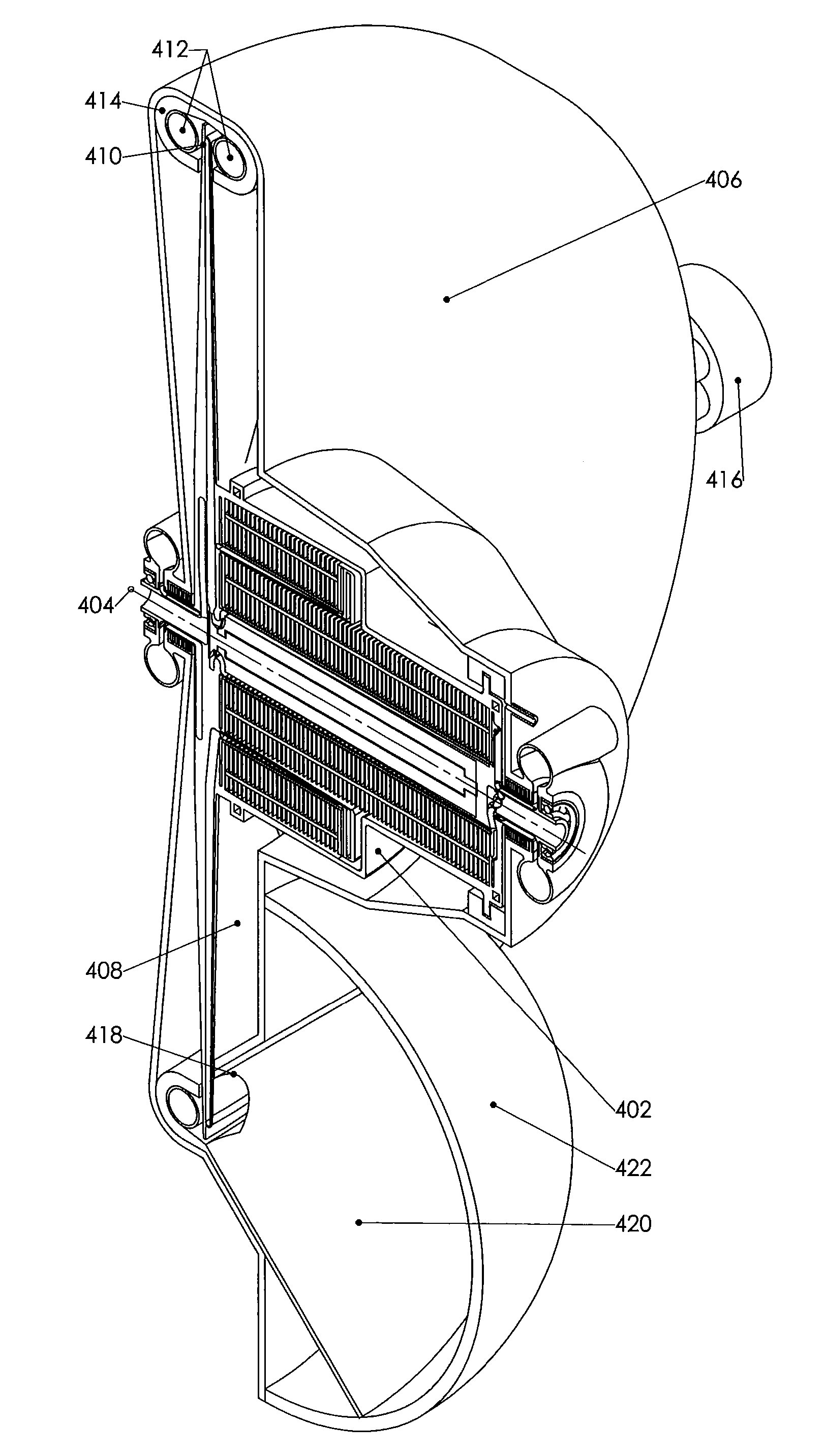
Figure 1 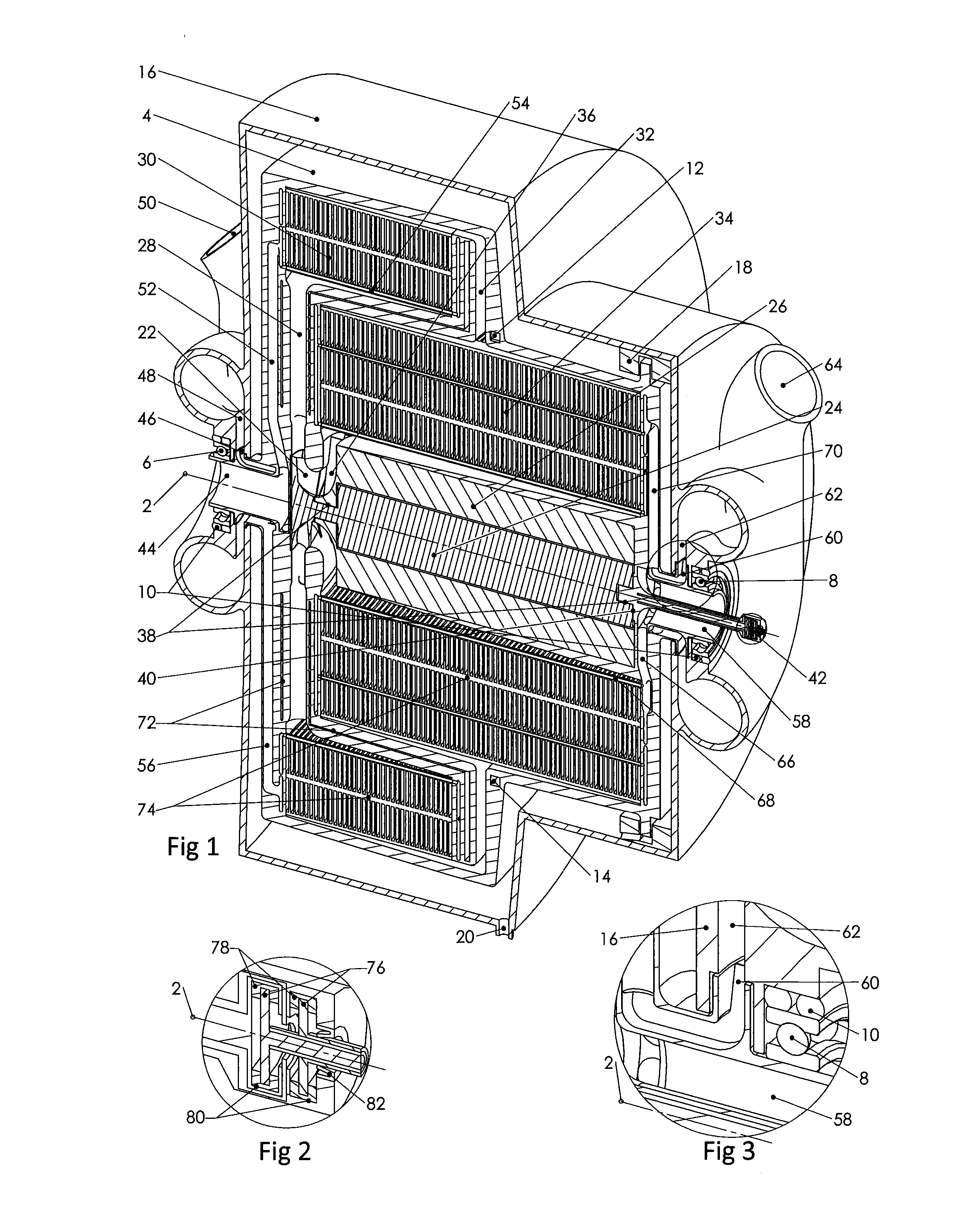
Figure 2 
Figure 3
Abstract
Description
FIELD OF THE INVENTION
[0001] The present invention relates to a thermodynamic machine. More particularly, the invention relates to a closed cycle heat pump or engine having a rotor that rotates and contains rare or noble gases as the working fluid that are sealed within the rotor and undergo cyclical thermodynamic processes. Even more particularly the rotor in some configurations rotates within a sealed and evacuated casing with ports at one or both ends of the rotor to allow cooling and heating fluids to enter and exit the rotor through rotor fluid ports, and in some configurations through rotary vacuum seals that seal the fluids from the evacuated casing. Even more particularly, the invention relates to a closed cycle heat pump or engine with compact radial spiral heat exchangers. Even more particularly, the invention relates to a closed cycle heat pump or engine where external liquids (coolant fluid and heating fluid / s) are passed to and from the rotor at opposite ends of rotor to...
Examples
Embodiment Construction
[0254]The invention will now be described in general terms before expanding upon various areas and features in more detail.
Description of Rotor Compression and Expansion Processes
[0255]The heat pumps and engines of the current invention utilise a rotor that rotates about a rotor axis. A gaseous working fluid is circulated at typically relatively low flow speeds around a generally hermetically sealed working fluid circulation path within the rotor that takes it from near the rotor axis, to near the periphery of the rotor and back. This working fluid is subjected to large centripetal accelerations within the spinning rotor that result in radial pressure gradients due to the action of the acceleration on the working fluid mass. As the working fluid circulates around the working fluid circulation path within the rotor the centripetal accelerations result in high efficiency compression as the fluid travels away from rotor axis and high efficiency expansion as the fluid travels towards th...