
Method of converting 2d video to 3D video using machine learning
Patent Information
- Authority / Receiving Office
- US · United States
- Current Assignee / Owner
- Publication Date
- 2017-03-23
Smart Images
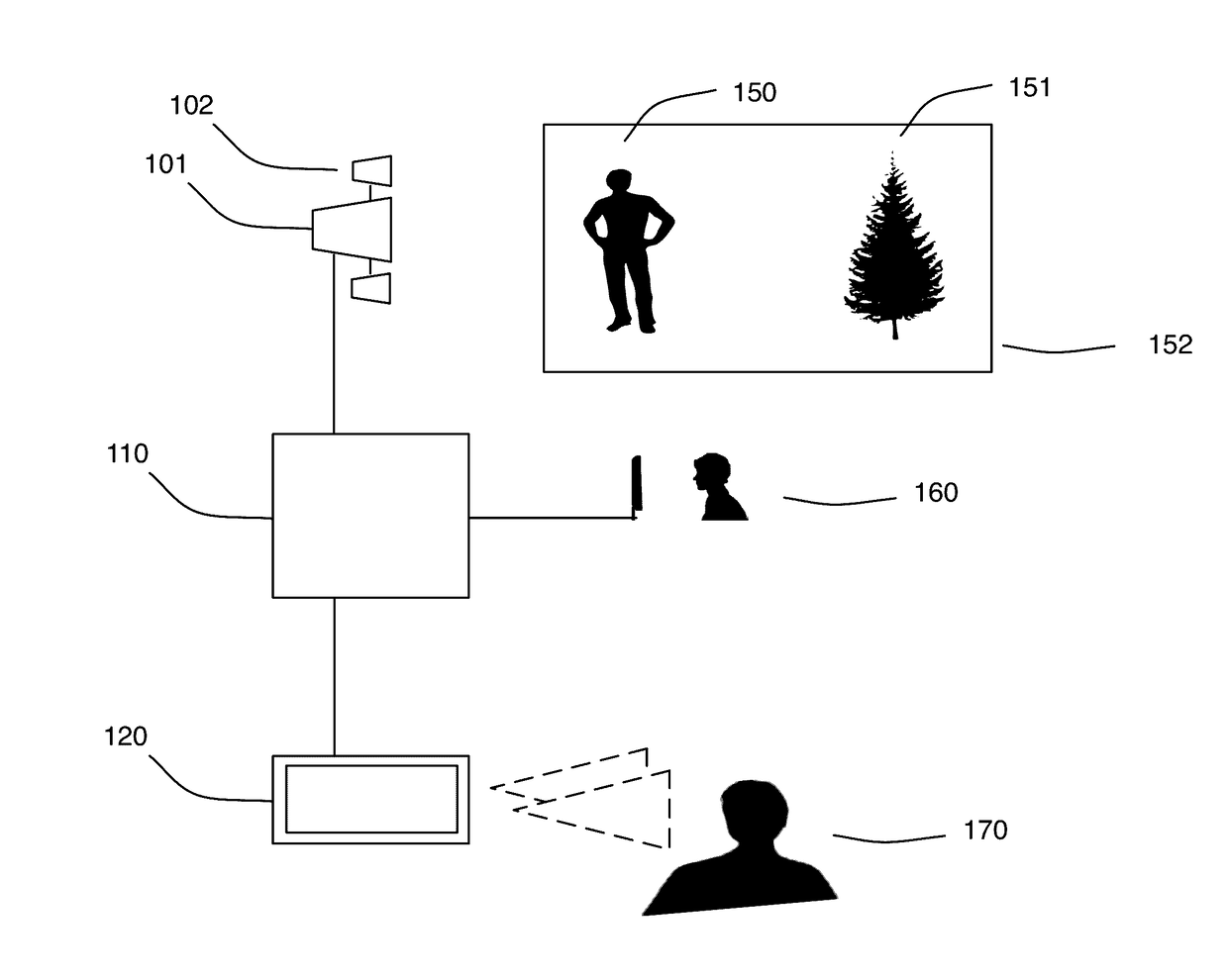
Figure 1 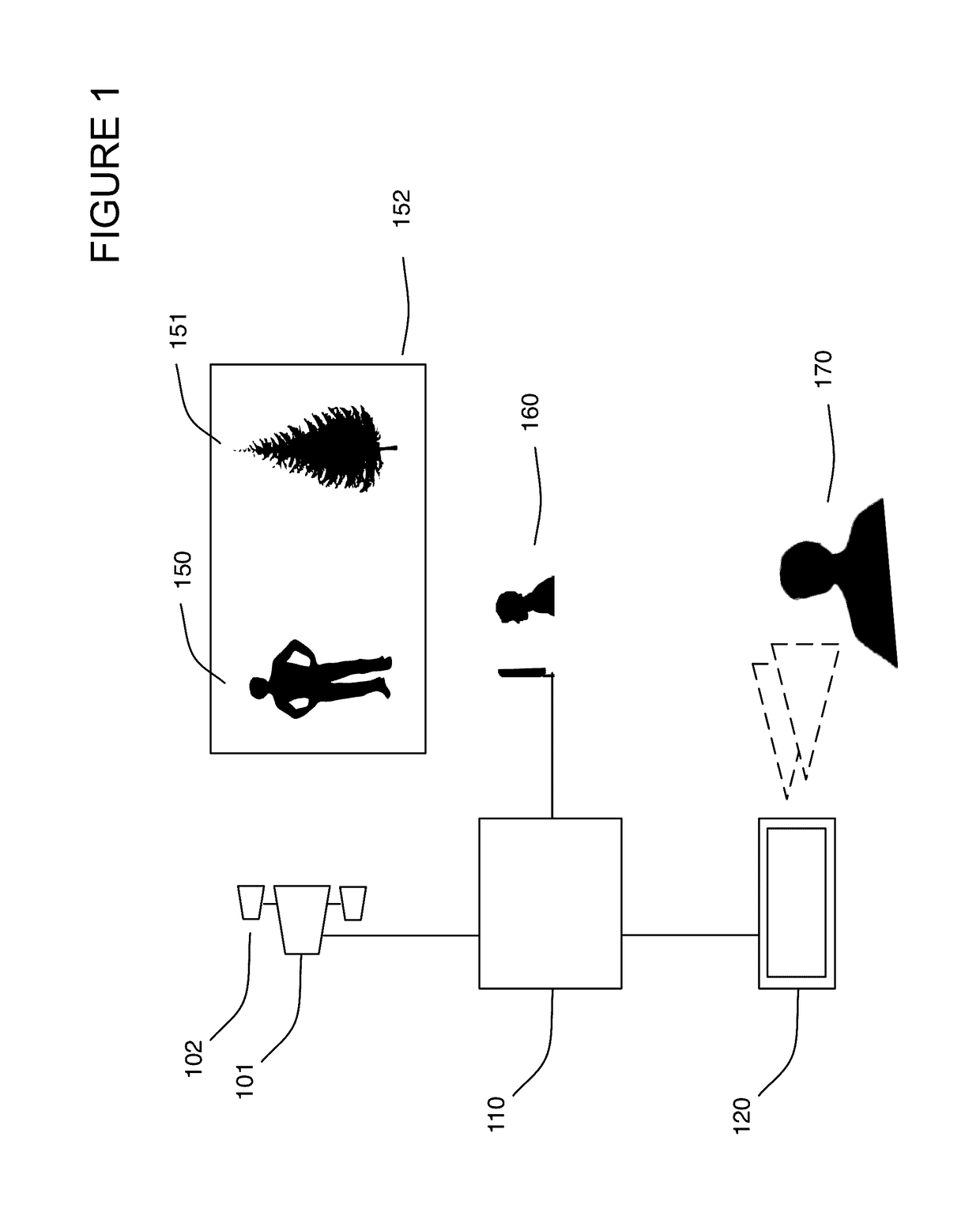
Figure 2 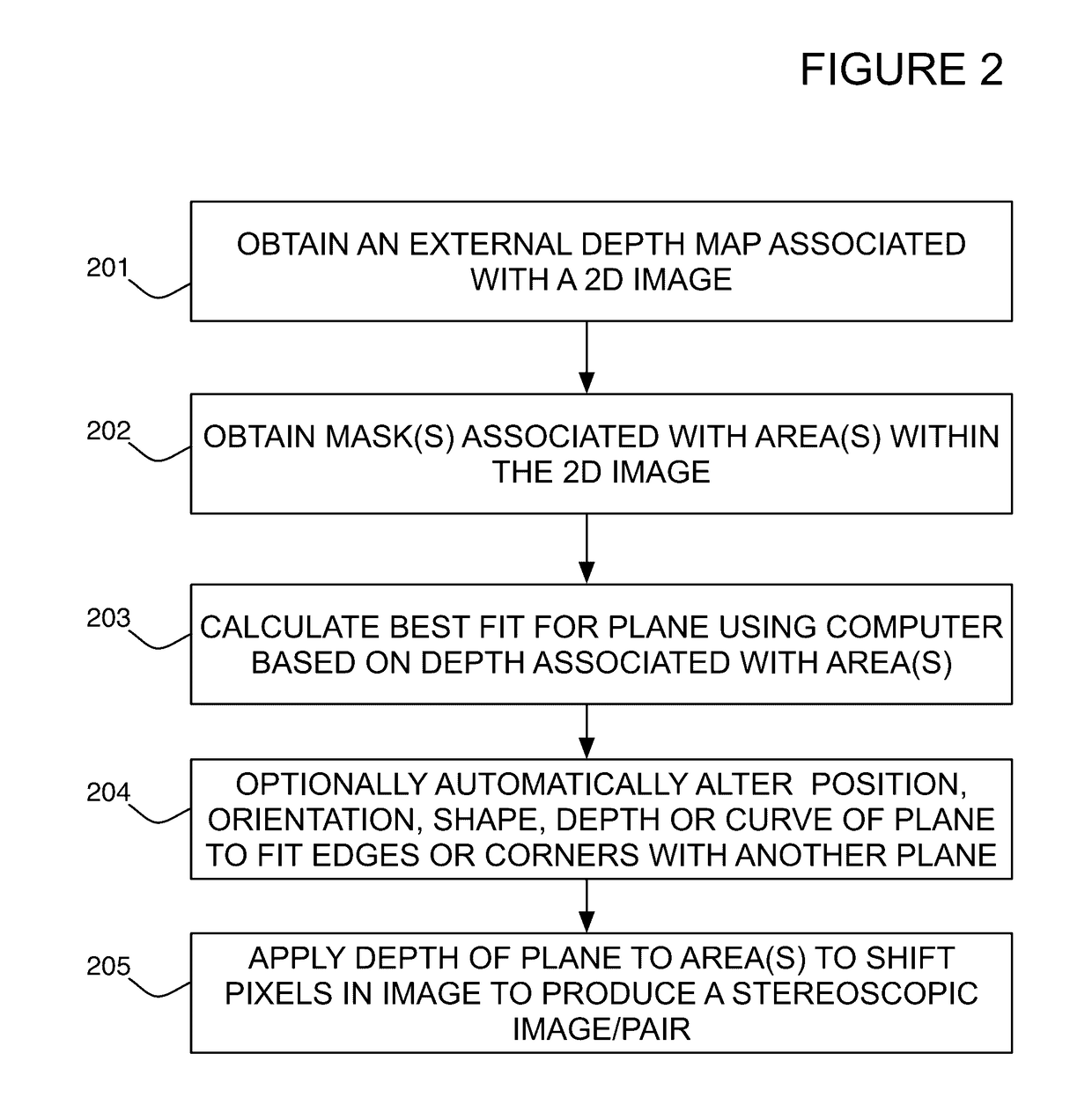
Figure 3
Abstract
Description
[0001] This application is a continuation in part of U.S. Utility patent application Ser. No. 14 / 857,704, filed 17 Sep. 2015, the specification of which is hereby incorporated herein by reference.BACKGROUND OF THE INVENTION
[0002] Field of the Invention
[0003] One or more embodiments of the invention are related to the field of image processing. More particularly, but not by way of limitation, one or more embodiments of the invention enable a method of converting 2D video to 3D video using machine learning. Embodiments of the invention train a machine learning system to perform one or more 2D to 3D conversion steps. The machine learning system is trained on a training set that includes 2D to 3D conversion examples; it derives generalized 2D to 3D transformation functions from this training set. Embodiments of the invention may also obtain 3D models of objects, such as characters, and process the frames of a video to locate and orient these models in the frames. Depth maps and stereoscopi...
Examples
Embodiment Construction
[0061]A method for converting 2D video to 3D video using machine learning will now be described. In the following exemplary description numerous specific details are set forth in order to provide a more thorough understanding of embodiments of the invention. It will be apparent, however, to an artisan of ordinary skill that embodiments of the invention may be practiced without incorporating all aspects of the specific details described herein. In other instances, specific features, quantities, or measurements well known to those of ordinary skill in the art have not been described in detail so as not to obscure the invention. Readers should note that although examples of the invention are set forth herein, the claims, and the full scope of any equivalents, are what define the metes and bounds of the invention.
[0062]FIG. 1 illustrates an exemplary overall system architecture for one or more embodiments of the invention. As shown, camera 101 and associated external depth capture appar...