
Tape transport control with feedback of velocity and tension
a technology of velocity and tension, applied in the direction of electric controllers, instruments, carrier mechanical tension control, etc., can solve the problems of limiting the density of tracks that can be recorded on the tape, increasing the rate at which data is created, and increasing the cost per gb of tape systems, so as to improve the control of tape tension and velocity, reduce mechanical stress, and improve the effect of tape thickness
Patent Information
- Authority / Receiving Office
- US · United States
- Patent Type
- Applications(United States)
- Current Assignee / Owner
- Publication Date
- 2018-03-01
Smart Images
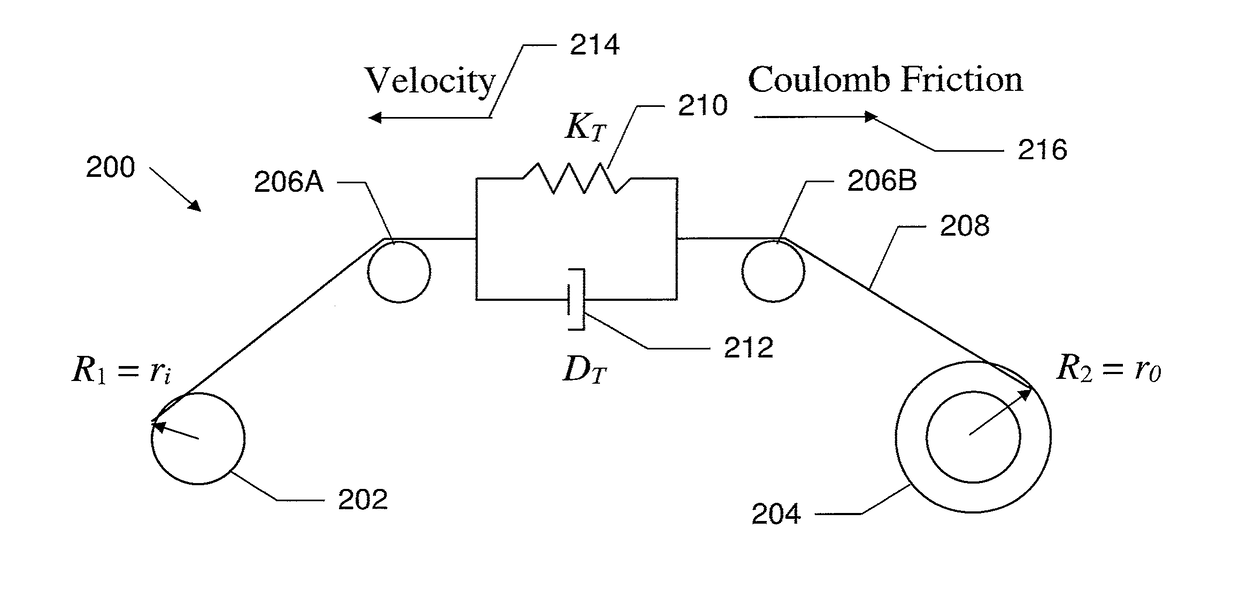
Figure 1 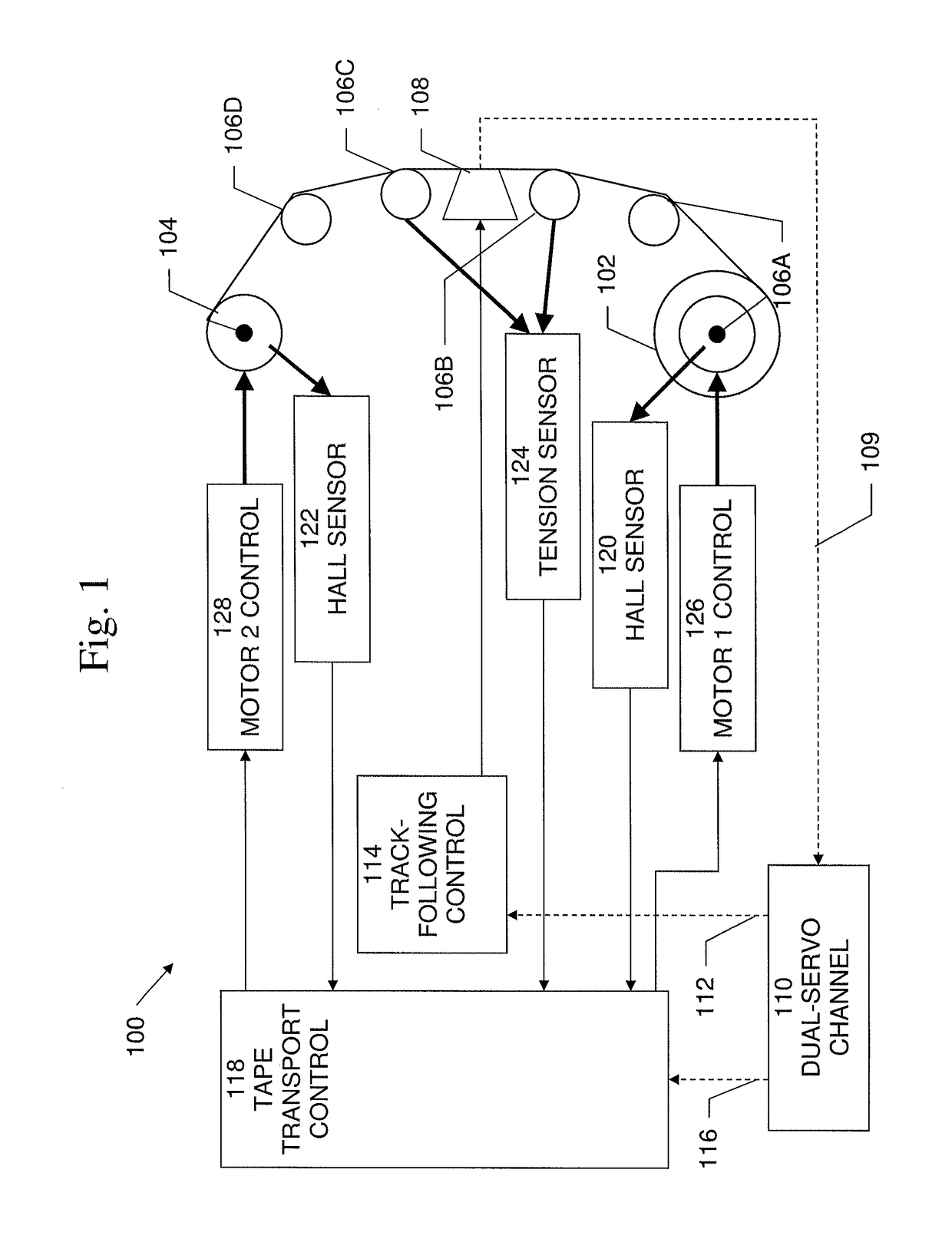
Figure 2 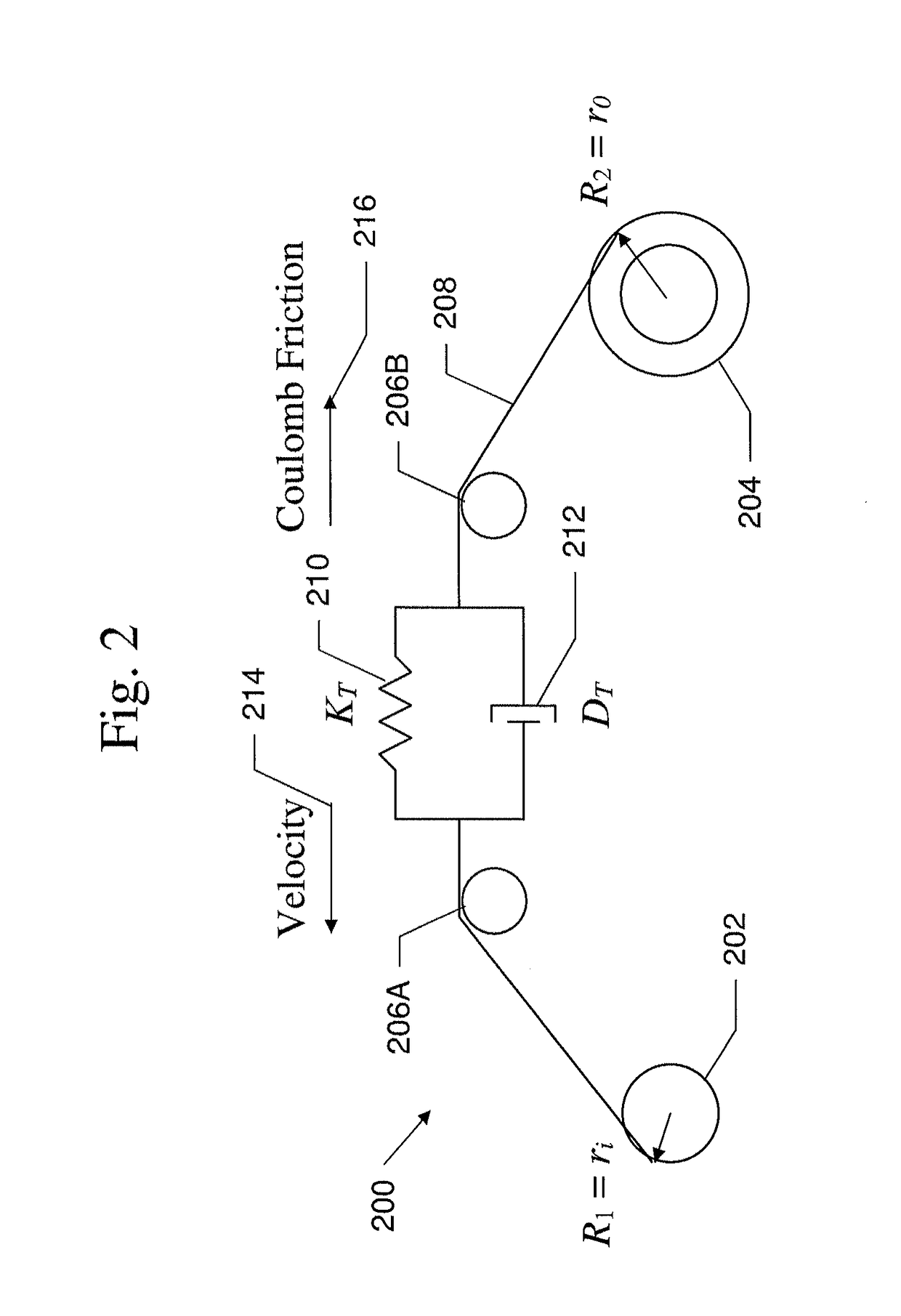
Figure 3
Abstract
Description
BACKGROUND
[0001] The present application relates to techniques for controlling a tape transport using feedback of velocity and tension using controllers that depend on the longitudinal tape position.
[0002] Demand for cost effective storage solutions is being driven by the explosive growth in the rate at which data is being created. Tape systems are well suited to address this demand due to their low total cost of ownership compared to other storage technologies. However, the continued success of tape technology depends on maintaining its cost advantage over other storage technologies, and hence it is necessary to continue scaling the cartridge capacity and hence the cost per GB of tape systems at least as quickly as competing technologies, such as hard disk drive (HDD) storage systems.
[0003] Historically, the capacity scaling of tape systems at a roughly 40% compound annual growth rate (CAGR) has been enabled through continuous incremental improvements in track and linear densities, fo...
Examples
Embodiment Construction
[0016]Embodiments of the present disclosure provide a tape transport control system with enhanced regulation of tape tension and velocity over the entire length of the tape, thus reducing mechanical stress and enabling reduction in tape thickness. For example, a tape transport control scheme with feedback of velocity and tension may use p-type controllers that depend on the longitudinal tape position. The time-varying characteristics of the tape transport system may be taken into account to design the velocity and tension feedback control system. Analytical expressions may be obtained for the p-type controller gains, for which all transfer functions may become essentially independent of longitudinal position. More specifically, the closed-loop transfer functions for tension and velocity may exhibit a negligible bandwidth variation as the tape moves from the supply reel to the take-up reel. Consequently, the dynamic characteristics of the tape transport system may also become essenti...