
Method for converting heavy hydrocarbon feedstocks
a technology of hydrocarbon feedstock and conversion method, which is applied in the direction of hydrocarbon oil cracking, metal/metal-oxide/metal-hydroxide catalyst, physical/chemical process catalyst, etc., can solve the problems of clogging process equipment, affecting the stability of the effluent, and relatively difficult upgrading of oil residues, so as to increase the thermal cracking of the heavy cut, improve the stability of the effluent, and increase the conversion
Patent Information
- Authority / Receiving Office
- US · United States
- Patent Type
- Applications(United States)
- Current Assignee / Owner
- Publication Date
- 2018-07-12
- Estimated Expiration
- Not applicable · inactive patent
Smart Images
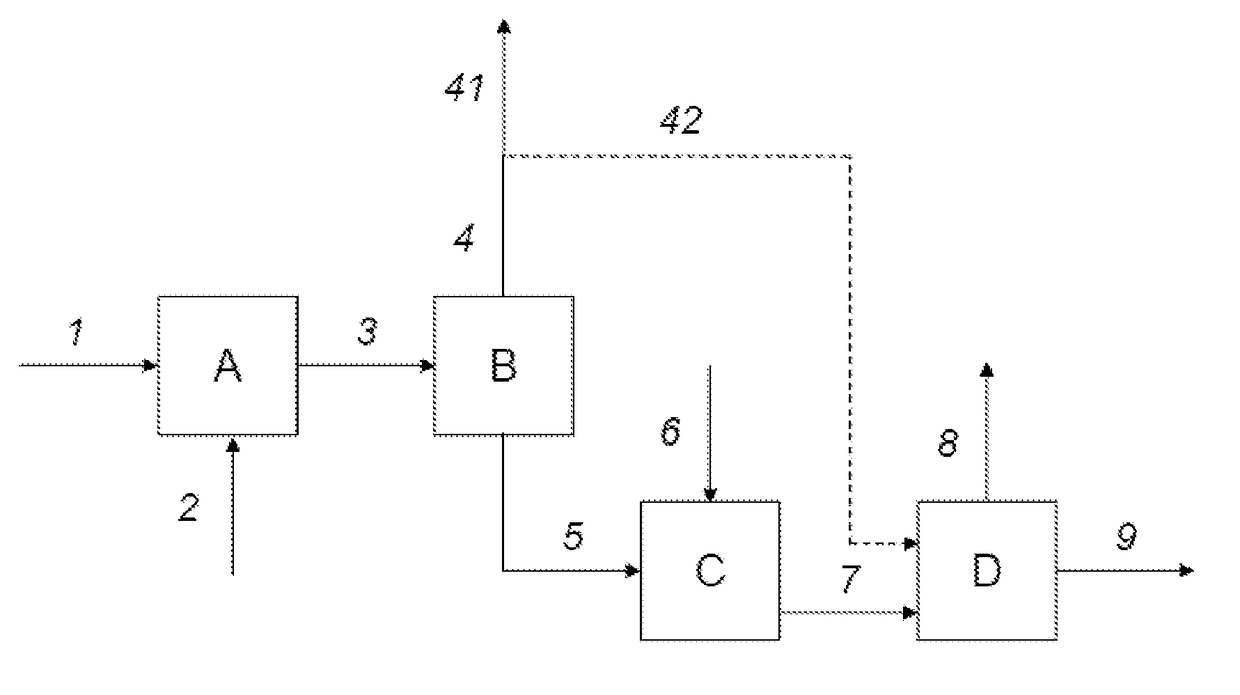
Figure 1 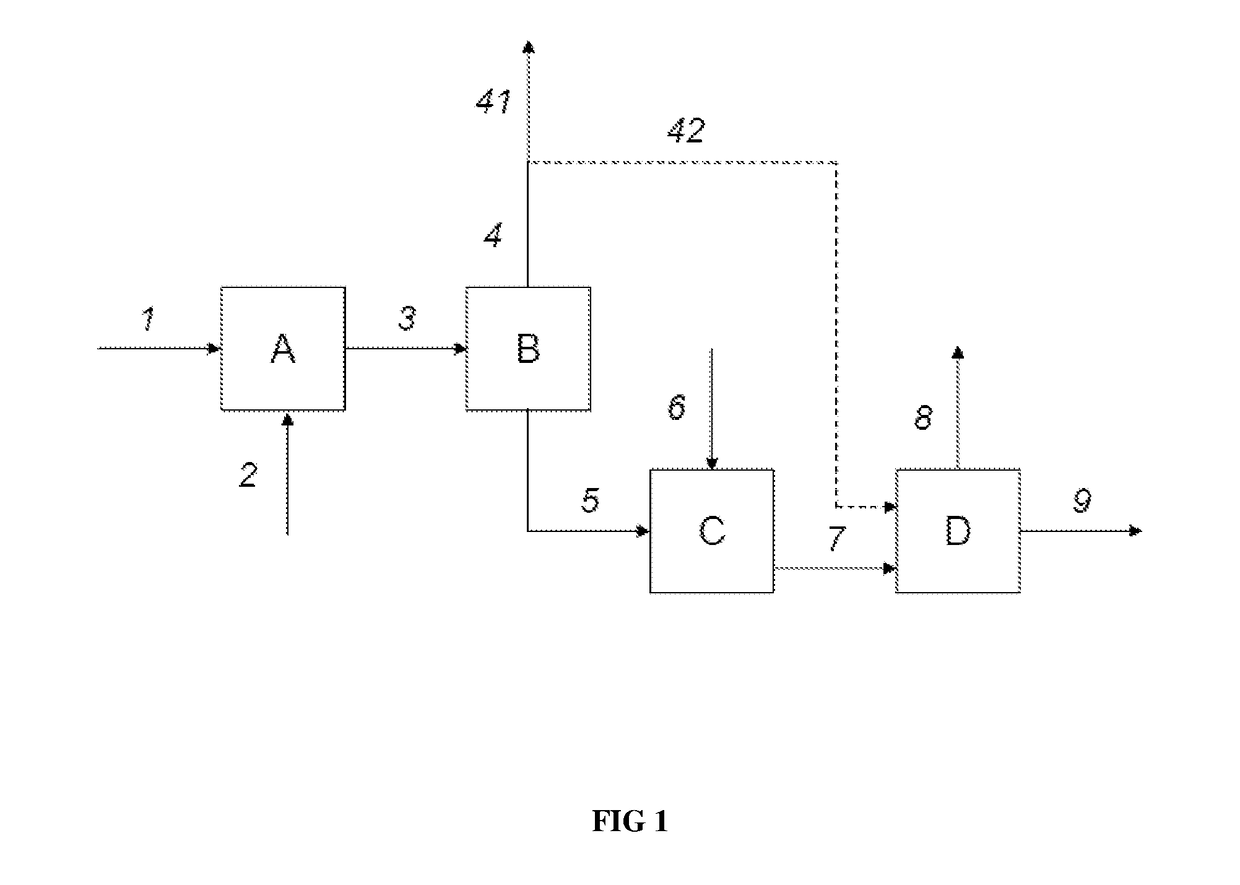
Figure 2 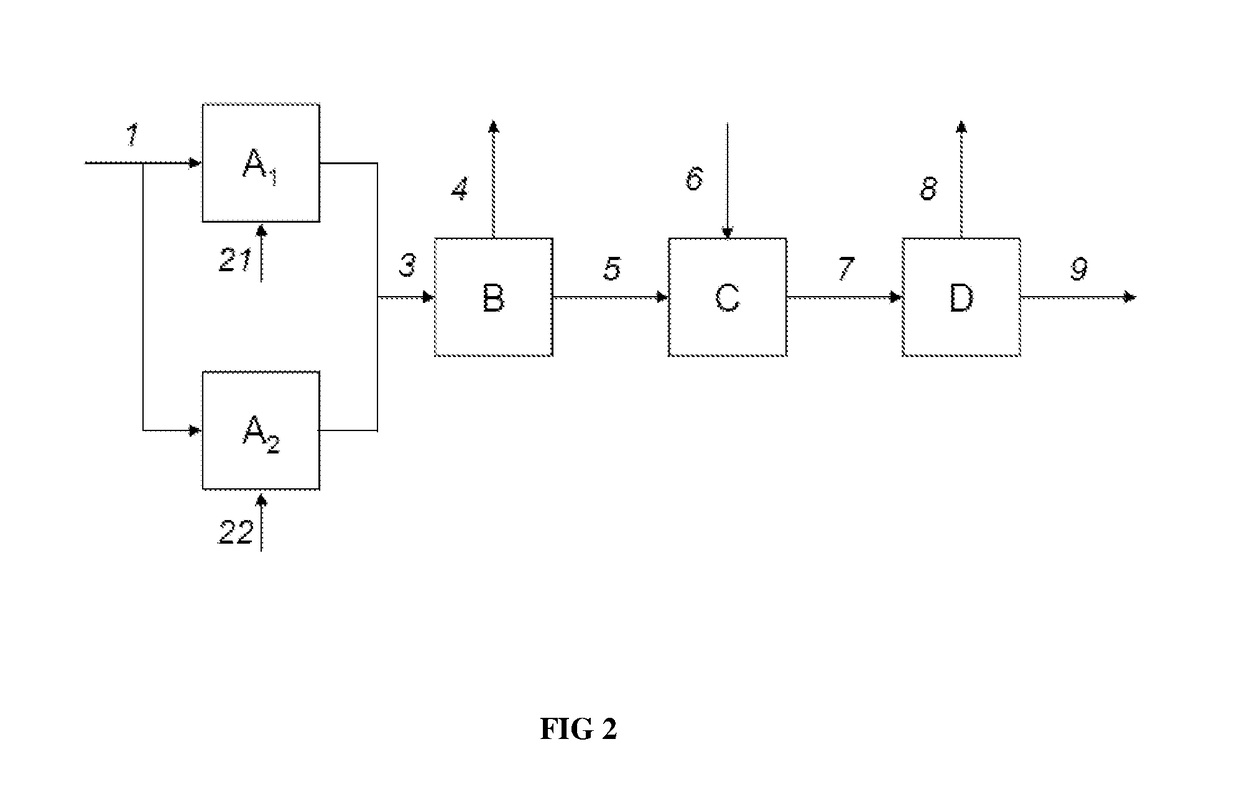
Figure 3
Abstract
Description
TECHNICAL FIELD OF THE INVENTION
[0001] The present invention relates to a process for the conversion of a heavy hydrocarbon feed advantageously obtained either from a crude oil or from atmospheric and / or vacuum distillation of a crude oil and containing at least 80% by weight of a fraction with an initial boiling temperature of at least 300° C.PRIOR ART
[0002] More precisely, the feeds which are treated in the context of the present invention are either crude oils or heavy hydrocarbon fractions obtained from the atmospheric distillation and / or vacuum distillation of a crude oil and containing at least 80% by weight of a fraction with an initial boiling temperature of at least 300° C., preferably at least 350° C. and more preferably at least 375° C., and preferably vacuum residues containing at least 80% by weight of a fraction with an initial boiling temperature of at least 450° C. and preferably at least 500° C. These feeds are generally hydrocarbon fractions with a sulphur content of...
Examples
example 2 (
in Accordance with the Invention)
[0074]Process layout in accordance with the invention with low hourly space velocity (overall HSV=0.089 h−1) and low temperature
[0075]In this example, the present invention is illustrated in a process layout with two ebullated bed reactors disposed in series, operated at a low hourly space velocity (HSV) and at a low temperature and with a separation section.
Hydroconversion Section a)
[0076]The fresh feed of Table 1 was sent in its entirety to a section A for hydroconversion in the presence of hydrogen, said section comprising a three-phase reactor containing a NiMo / alumina hydroconversion catalyst with a NiO content of 4% by weight and a MoO3 content of 9% by weight, the percentages being expressed with respect to the total mass of catalyst. The section functioned in ebullated bed mode with an upflow of liquid and gas.
[0077]The conditions applied in the hydroconversion section A are shown in Table 6.
TABLE 6Operating conditionsSectionAP, totalMPa16Tem...