
Plant cultivation system
Patent Information
- Authority / Receiving Office
- US · United States
- Current Assignee / Owner
- Publication Date
- 2019-11-07
Smart Images
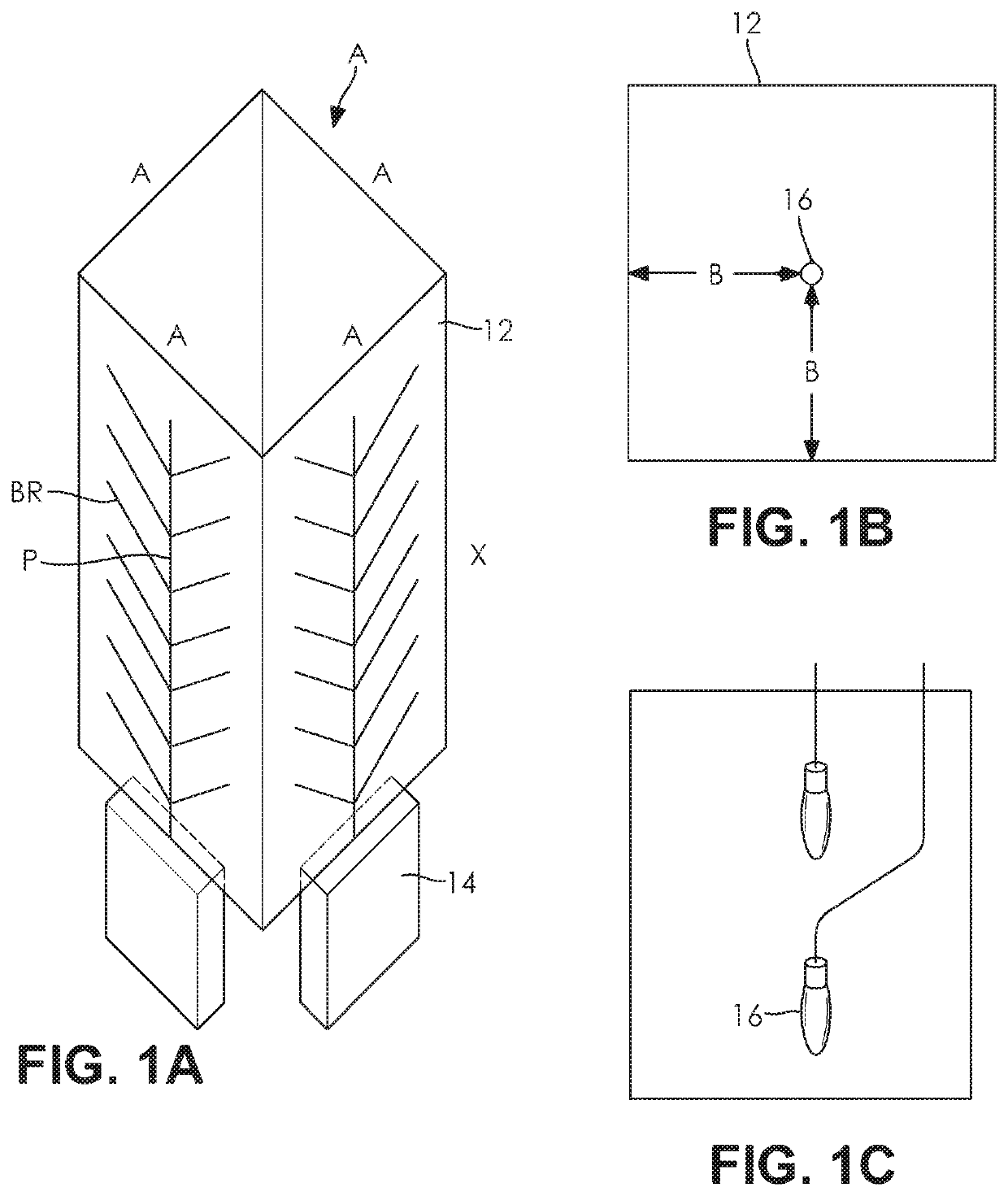
Figure 1 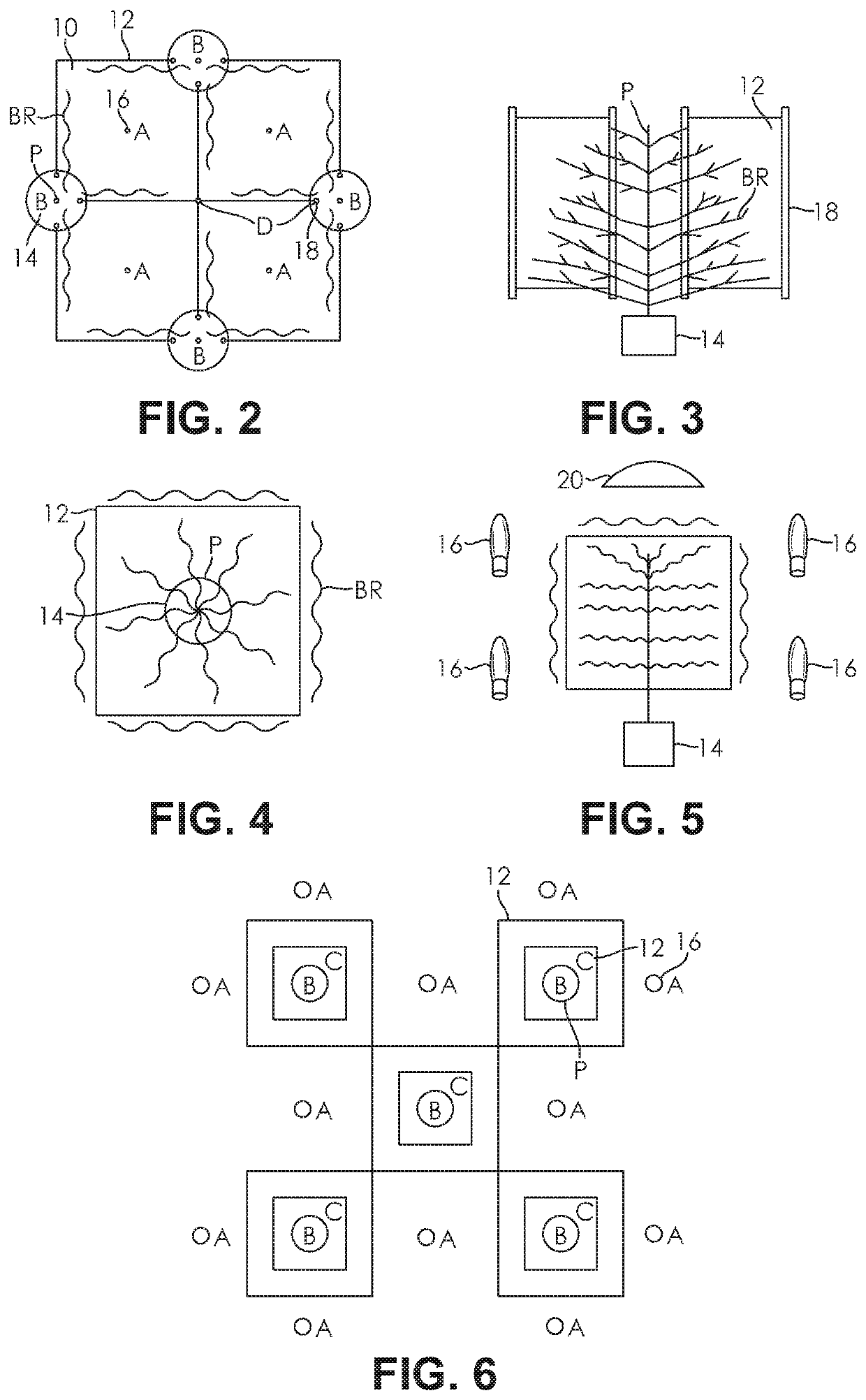
Figure 2 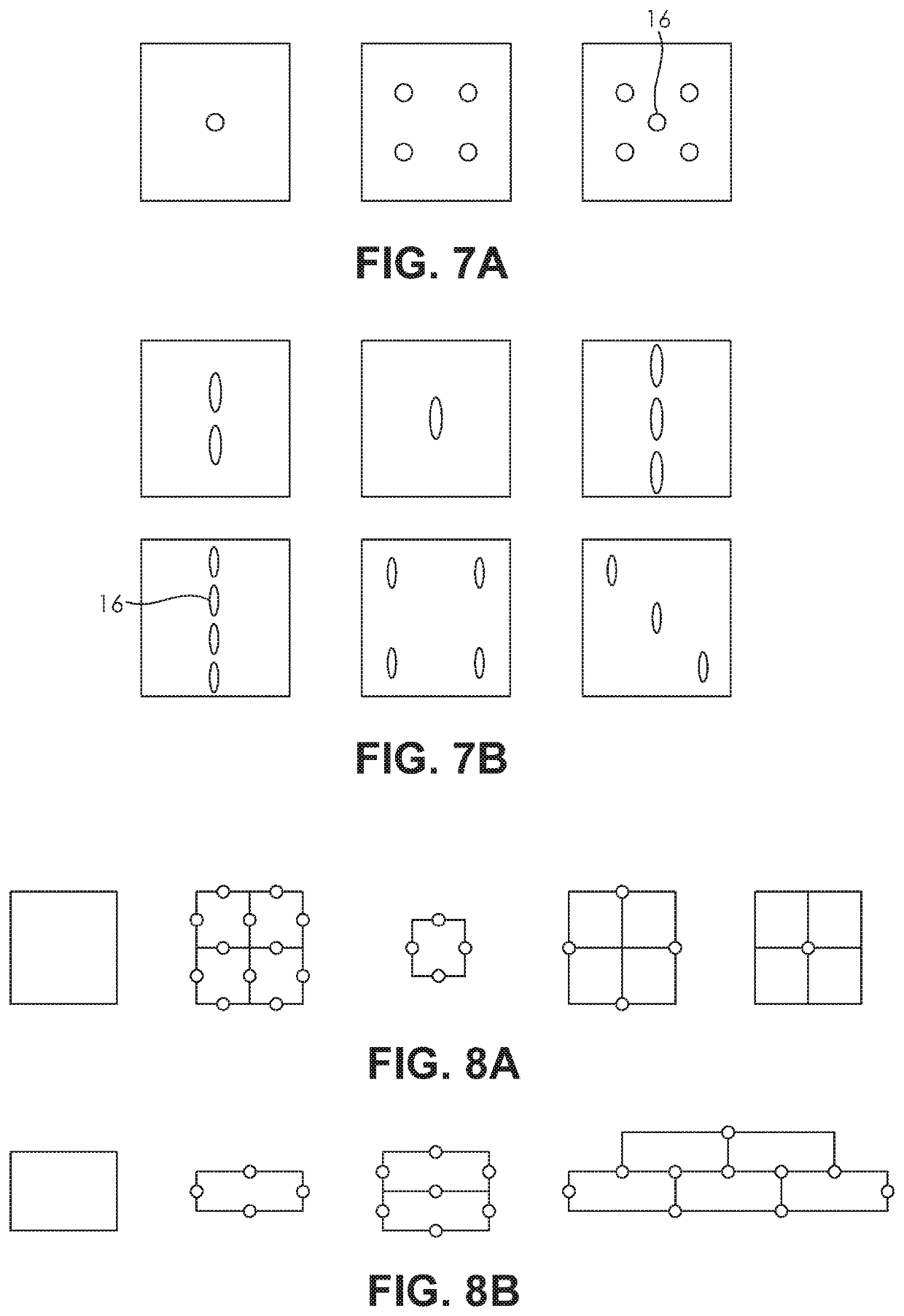
Figure 3
Abstract
Description
CROSS-REFERENCE TO RELATED APPLICATION
[0001] This application is a bypass continuation application of PCT Application Serial Number PCT / US2018 / 014697 filed Jan. 22, 2018 that in turn claims priority of U.S. Provisional Patent Application Ser. No. 62 / 448,614 filed Jan. 20, 2017, which is incorporated herein by reference.TECHNICAL FIELD
[0002] The present invention generally relates to the field of agriculture, and more specifically to a system and method for improving yields of larger fruiting plants.BACKGROUND
[0003] The cultivation of larger fruiting plants generally results in a lack of light penetration into and through the upper portion or canopy of the plant to the lower regions of the plant. Light penetration to the lower portion of the plant is necessary in order to stimulate photosynthesis and therefore growth on the lower portion of the plant so as to increase health and yield. Fruit or flower sets are nonexistent on plant sites where light does not reach, else the fruit or flow...
Examples
Embodiment Construction
[0021]The present invention has utility as a system and method for the indoor and outdoor cultivation of larger fruiting plants. Embodiments of the inventive system and method provide improved lighting techniques, plant layouts, and space utilization to improve the quality and yields of harvested products from large fruiting plants on a per plant and unit area basis. Embodiments of the invention improve the uniformity of artificial light from the top to the bottom of tall plants and vines. Embodiments of the invention overcome the lack of light penetration through the canopy of the plant by changing the orientation of lights from a horizontal to vertical alignment along the side of the plant verses over the top of the canopy, as well as increasing the number of light sources to reduce shading. Non-limiting examples of artificial light sources illustratively include high pressure sodium, metal halide, ceramic metal halide, compact fluorescent; T12, T8, T5, high output T5 fluorescent ...