
Spinal fixation access and delivery system
a technology of spinal fusion and which is applied in the field of spinal fusion access and delivery system, can solve the problems of requiring extensive dissection of muscles and ligaments, a large number of risks and difficult recovery and rehabilitation, and the majority of the techniques and devices used for spinal fusion are relatively invasiv
Patent Information
- Authority / Receiving Office
- US · United States
- Current Assignee / Owner
- Publication Date
- 2020-05-21
Smart Images
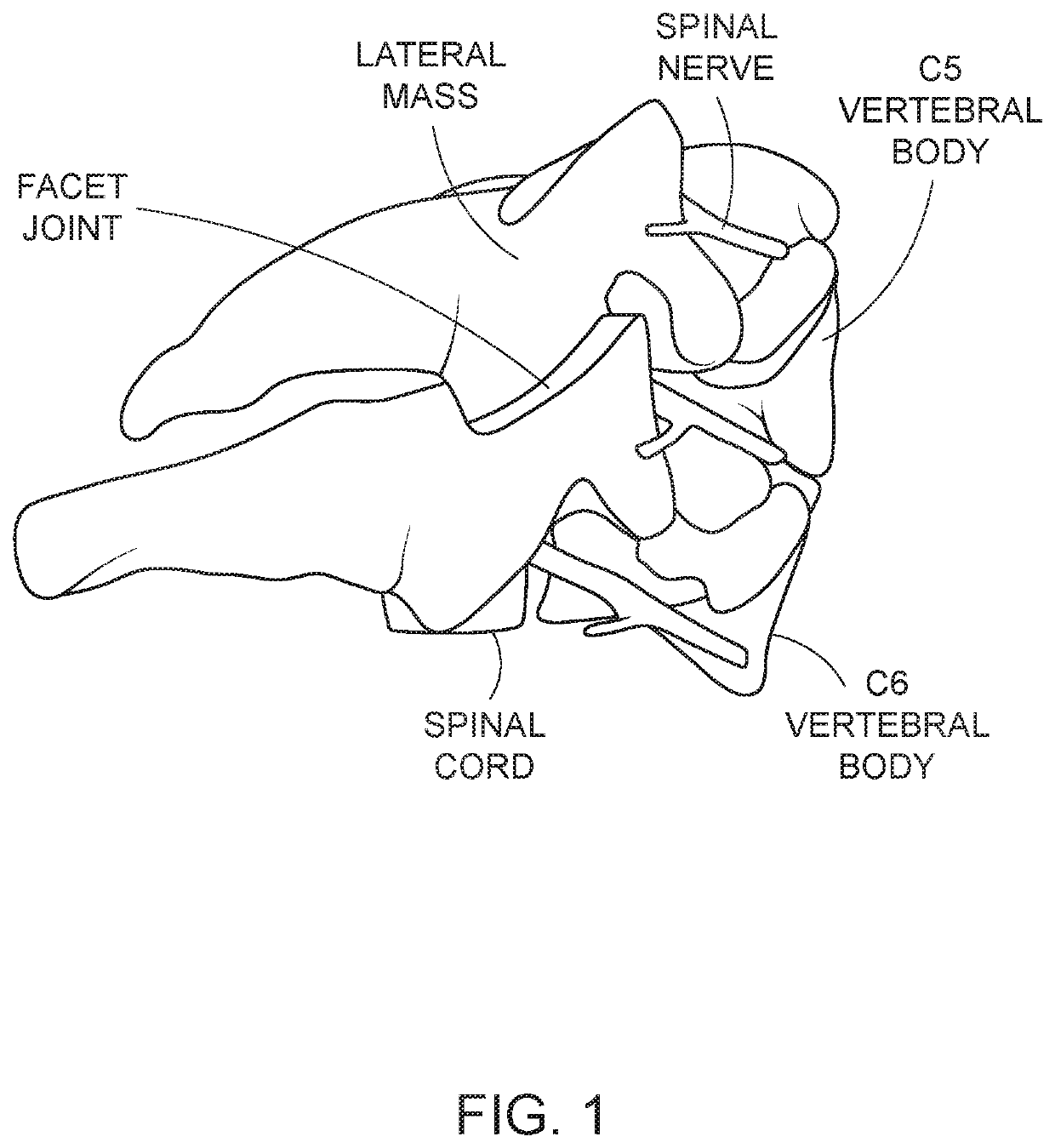
Figure 1 
Figure 2 
Figure 3
Abstract
Description
CROSS-REFERENCE TO RELATED APPLICATION
[0001] This application claims priority to U.S. Patent Application No. 62 / 508,434, filed May 19, 2017 and entitled SPINAL FIXATION ACCESS AND DELIVERY SYSTEM, which is hereby incorporated by reference in its entirety and for all purposes.FIELD
[0002] This application is directed to medical devices and methods. More specifically, the application is directed to devices and methods related to spinal fixation to provide stability to the spine and promote spinal fusion.BACKGROUND
[0003] Chronic back problems are one of the most common causes of pain and disability in the United States and other developed countries. According to at least one estimate, spinal fusion procedures, in which two adjacent vertebrae are fused together using plates, screws and other implants, are the most commonly performed surgical procedures in the United States. Spinal fusion is often performed in an attempt to increase space between the two adjacent vertebrae being operated on ...
Examples
Embodiment Construction
[0055]Spinal stenosis reflects a narrowing of one or more areas of the spine, often in the upper or lower back. This narrowing can put pressure on the spinal cord or on the nerves that branch out from the compressed areas. Individual vertebrae of the spine are positioned relative to each other, and their separation is maintained by discs separating main vertebral bodies and by capsules positioned within facet joints. The discs and capsules are separated from the bone of their respective joints by cartilage. Spinal stenosis is often indicative of degeneration of a disc, a capsule, or the cartilage in a joint, which leads to a compression of the joints and the narrowing mentioned.
[0056]Options for distracting two adjacent vertebrae of a spine, such as the cervical vertebrae shown in FIG. 1, in an effort to ameliorate spinal stenosis, are varied and may include the use of implants, or cages and screws. In many cases, it may be possible to insert a facet joint implant into a facet joint...