
System and method for enhanced data analysis with specialized video enabled software tools for medical environments
a software tool and enhanced data technology, applied in the field of medical software tools, can solve the problems of poor visibility, surgeons must deal, and the number of challenges, and achieve the effect of facilitating equipment integration
Patent Information
- Authority / Receiving Office
- US · United States
- Current Assignee / Owner
- Publication Date
- 2022-02-10
Smart Images
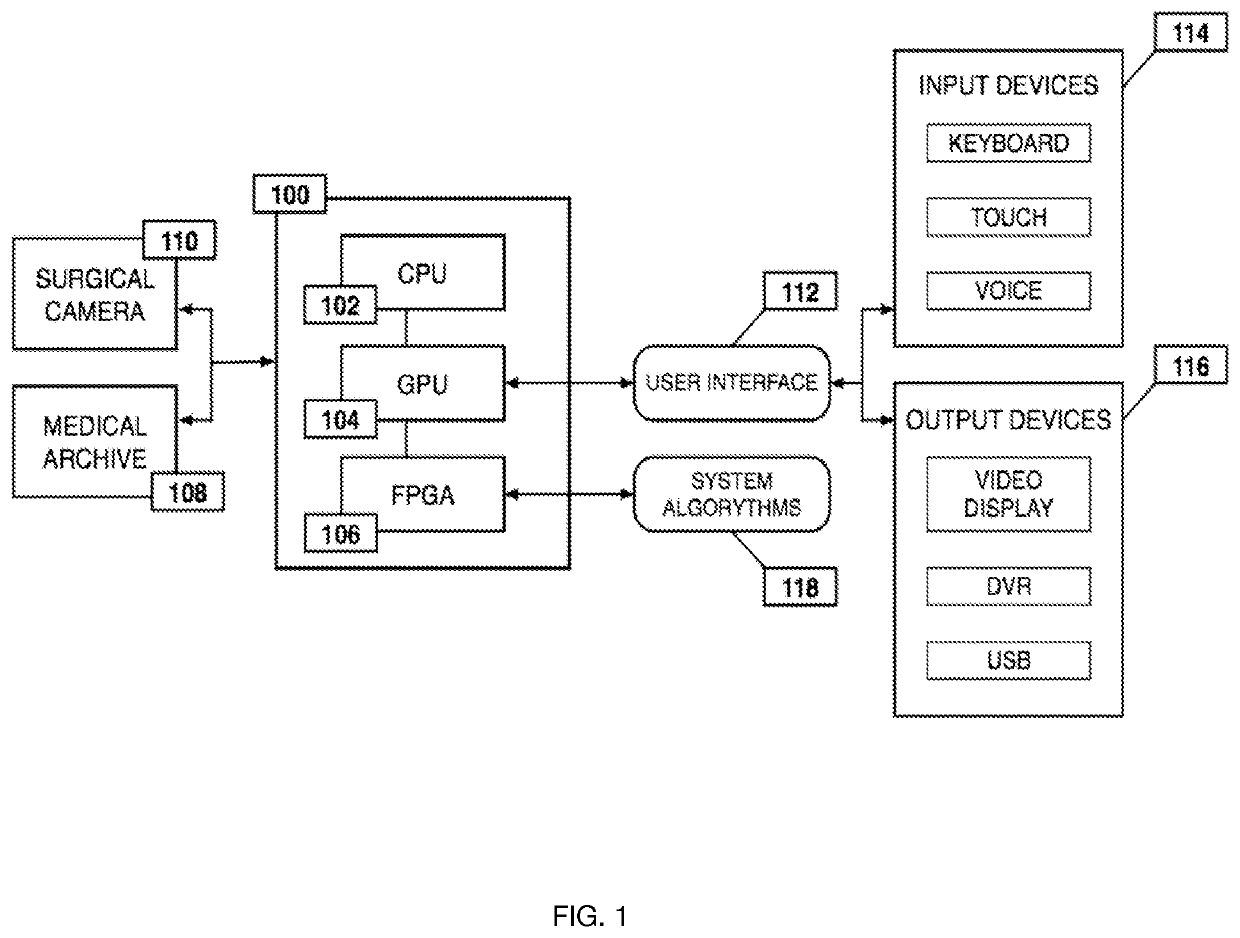
Figure 1 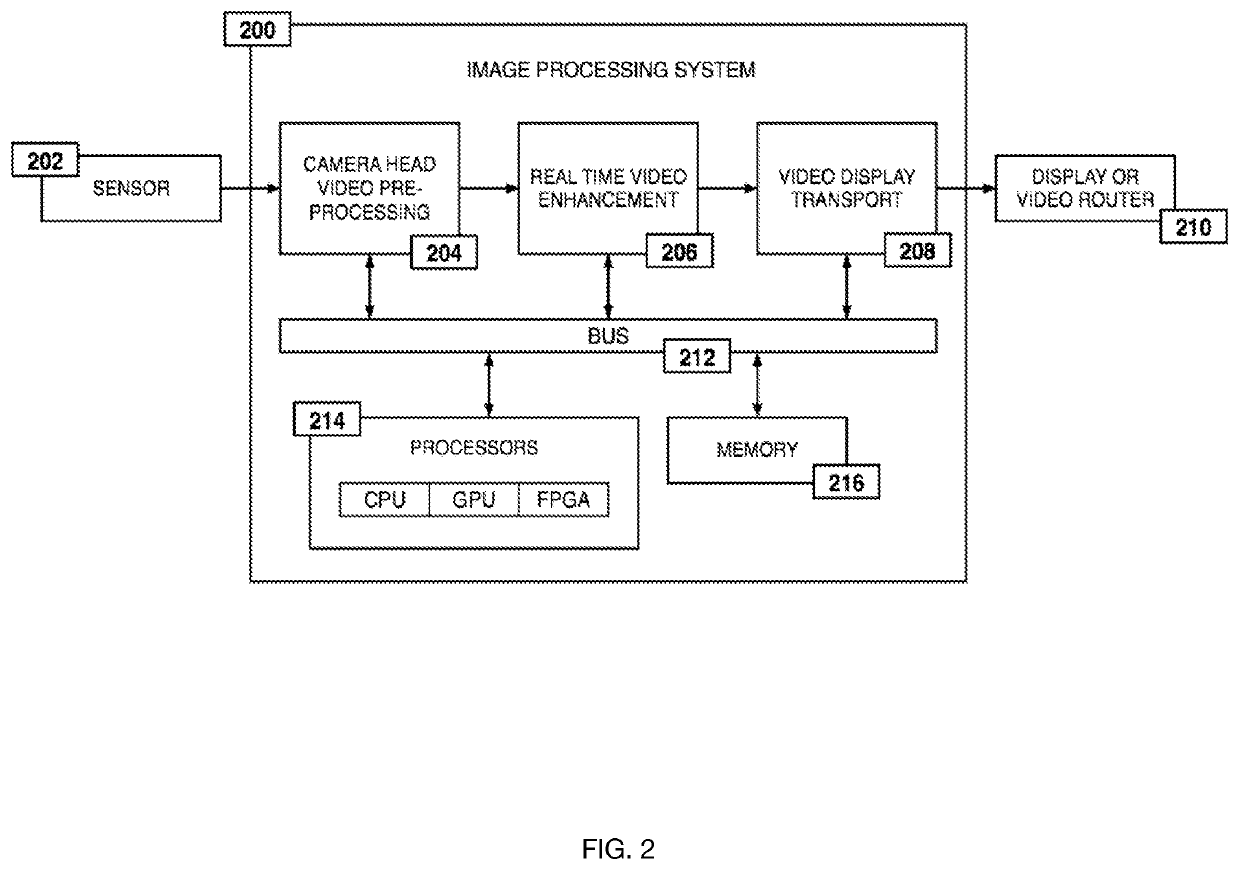
Figure 2 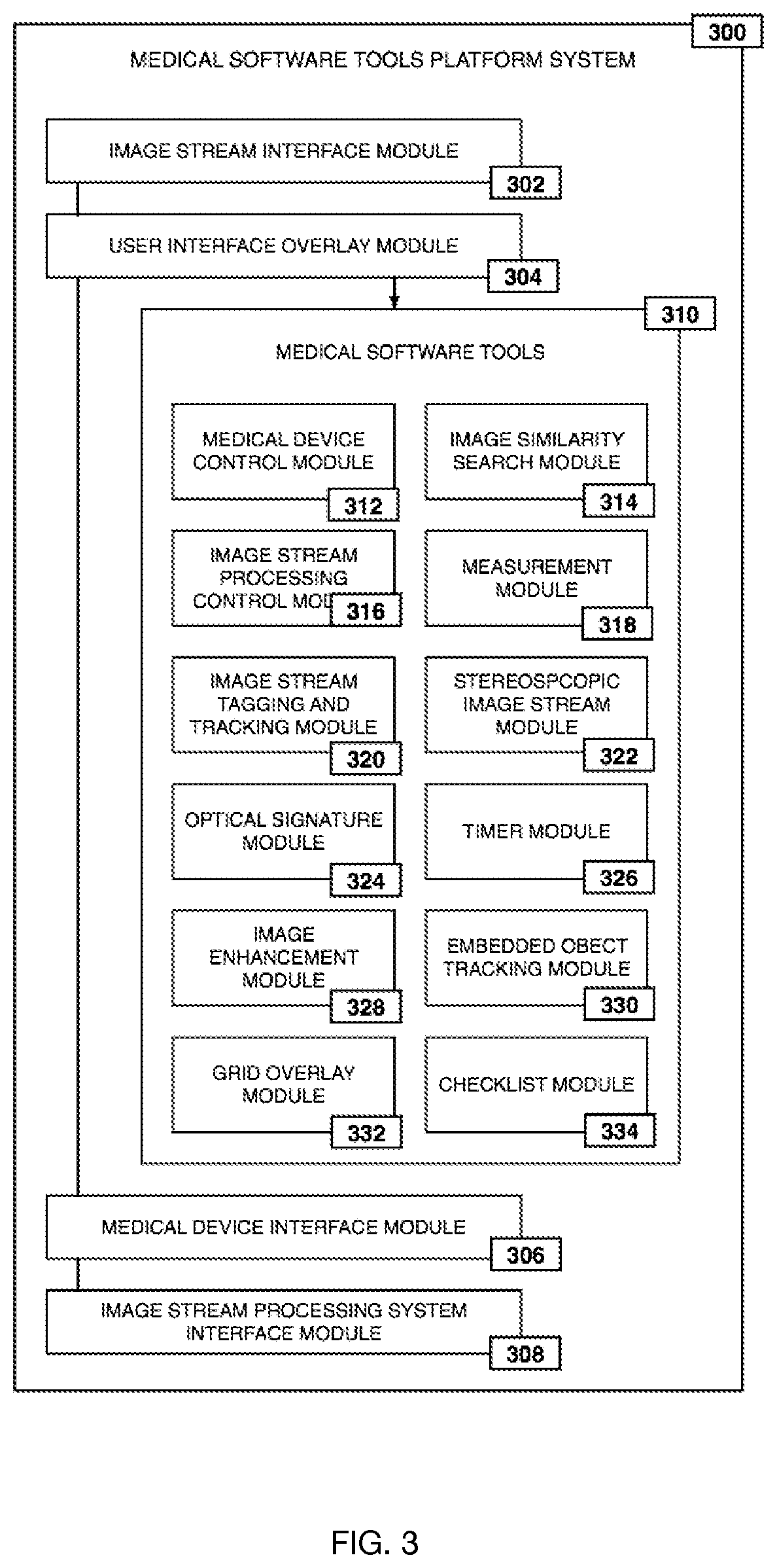
Figure 3
Abstract
Description
PRIORITY CLAIMS
[0001] This application is a continuation of U.S. patent application Ser. No. 16 / 694,711, filed on Nov. 25, 2019, which is a continuation of U.S. patent application Ser. No. 16 / 204,487, filed on Nov. 29, 2018, and issued as U.S. Pat. No. 10,517,689 on Dec. 31, 2019, which is a continuation of U.S. patent application Ser. No. 16 / 107,071, filed on Aug. 21, 2018, and issued as U.S. Pat. No. 10,687,914 on Jun. 23, 2020, which is a continuation of U.S. patent application Ser. No. 15 / 958,983, filed Apr. 20, 2018, and issued as U.S. Pat. No. 10,507,075 on Dec. 17, 2019, which is a continuation of U.S. patent application Ser. No. 15 / 789,948, filed Oct. 20, 2017, which is a continuation in part of U.S. patent application Ser. No. 15 / 652,031, filed Jul. 17, 2017, and issued as U.S. Pat. No. 10,433,917 on Oct. 8, 2019, which is a continuation in part of U.S. patent application Ser. No. 15 / 456,458, filed Mar. 10, 2017, and issued as U.S. Pat. No. 10,758,314 on Sep. 1, 2020, which ...
Examples
Embodiment Construction
[0052]FIG. 1 is a block diagram illustrating an example of the overall processing system that may be used in implementing various features of embodiments of the disclosed technology. In accordance with the preferred embodiment of the present invention, the processing system 100 consists of processor elements such as: a central processing unit (CPU) 102; a graphics processing unit (GPU) 104; and a field programmable gate array (FPGA) 106. The processing system 100 may be used to retrieve and process raw data derived from a surgical camera 110 or a data storage device, such as a medical archive 108. The surgical camera 110 or medical archive 108 transmits a data stream to the processing system 100, whereby that data is processed by the CPU 102. The FPGA 106, connected to the CPU 102 and the GPU 104, simultaneously processes the received data by using a series of programmed system algorithms 118, thus functioning as an image clarifier within the processing system 100. The GPU 104 commu...