
Needleless method and apparatus for transferring liquid from a container to an injecting device without ambient air contamination
a technology of ambient air contamination and liquid transfer method, which is applied in the direction of pharmaceutical containers, packaging foodstuffs, packaged goods, etc., can solve the problems of wasting time, time and energy, and wasting resources, so as to avoid the possibility of both unwanted contamination and reduce the amount of time , the effect of eliminating the fear
Patent Information
- Authority / Receiving Office
- US · United States
- Patent Type
- Patents(United States)
- Current Assignee / Owner
- Publication Date
- 2003-07-01
- Estimated Expiration
- Not applicable · inactive patent
Smart Images
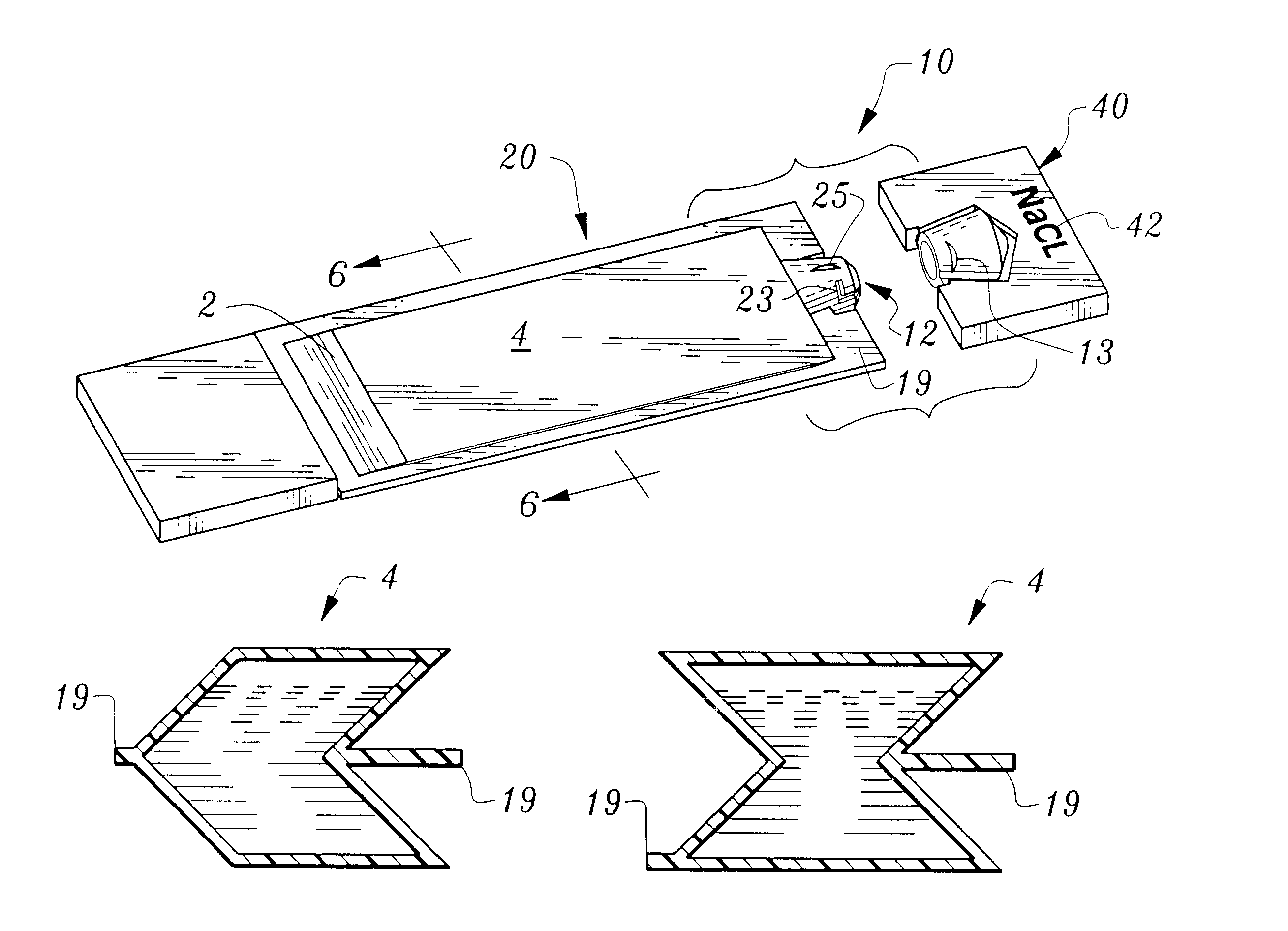
Figure 1 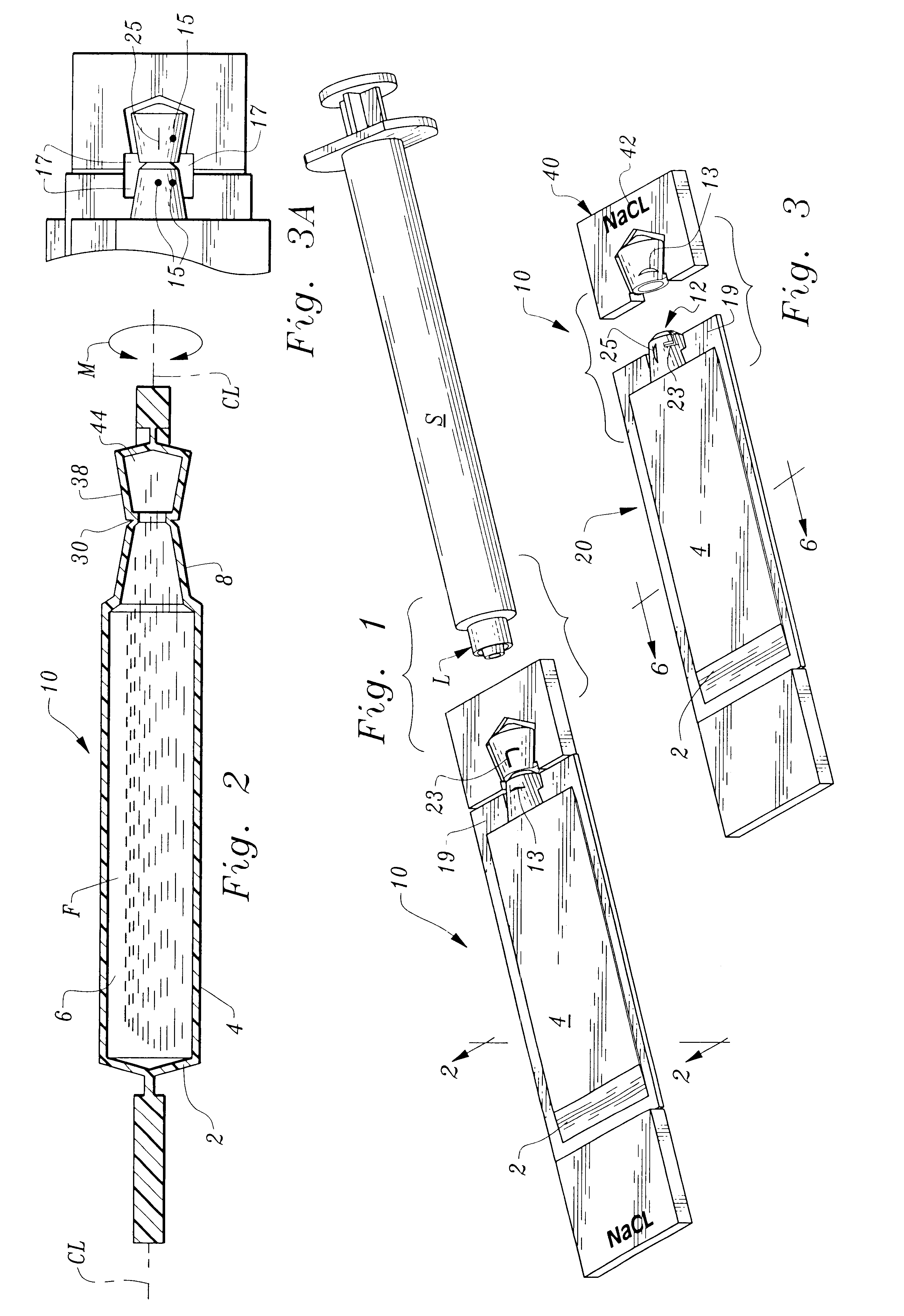
Figure 2 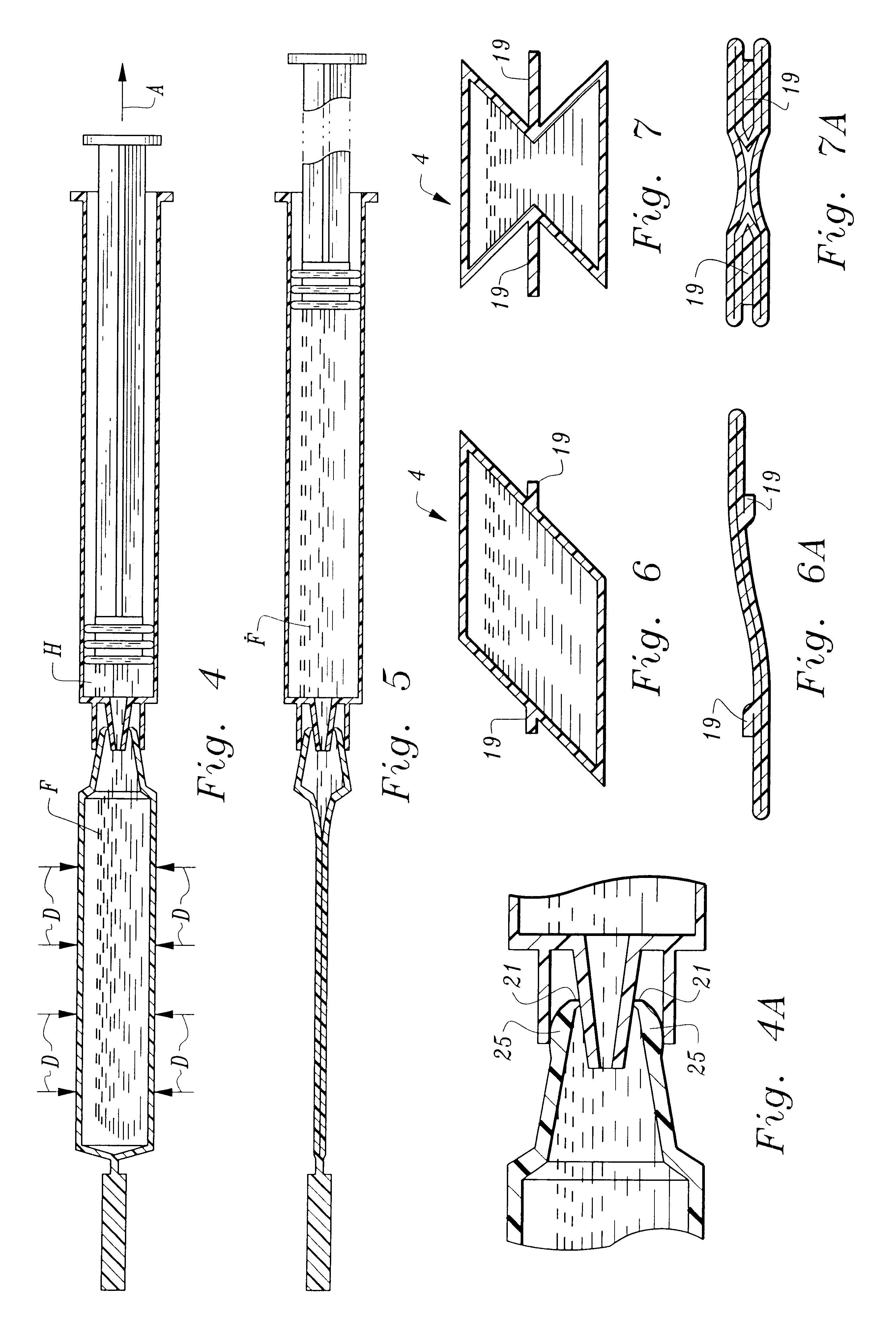
Figure 3
Abstract
Description
The following invention relates generally to a method and apparatus for transferring fluid from a deformable ampule or vial into a syringe, injecting system (IS) or cannula without the need for a needle. More specifically, a male and female docking arrangement is disclosed coupled with structure for storing and transferring liquids so that the number of times needles are used in a medicating situation is kept to a minimum. The ampule has a structure which docks with the syringe, (IS) or cannula in a fluid tight sealing arrangement and the ampule is designed to collapse easily when extracting a substance such as liquid therefrom so as to preserve the fluid tight seal and therefor not allow air into the ampule, or syringe, or injecting system during the collapsing phase.Diseases such as nosocomial infections, hepatitis and AIDS, which are pathogens that can be transmitted with the body fluids of a person, are running rampant globally. As a result, medical environments such as hospital...
Examples
Embodiment Construction
Referring to the drawings now, wherein like reference numerals refer to like parts throughout the various drawing figures, reference numeral 10 is directed to the vial or ampule according to the present invention.
In its essence, the vial 10 is formed from two parts: a body portion 20 and a cap portion 40. An area of transition noted as a scoreline 30 serves as an area of demarcation between the cap 40 and body 20. The scoreline 30 allows the cap 40 to be dissociated from the body 20 so that the body 20 can dock with a syringe S as shown in FIGS. 1, 4 and 5 for filling the syringe S with a fluid F contained within the body 20 of the vial 10.
More specifically, and referring to the drawings in detail, the vial 10 includes a body 20 having an end wall 2, and an enclosing sidewall 4. The peripheral side wall 4 has one proximal end coterminus with an outer periphery of the end wall 2 and extends away from the end wall 2 so that a blind bore 6 has been formed within which the fluid F is to...