
System for building electronic queue(s) utilizing self organizing units in parallel to permit concurrent queue add and remove operations
Patent Information
- Authority / Receiving Office
- US · United States
- Current Assignee / Owner
- Publication Date
- 2004-06-29
- Estimated Expiration
- Not applicable · inactive patent
Smart Images
Figure 1 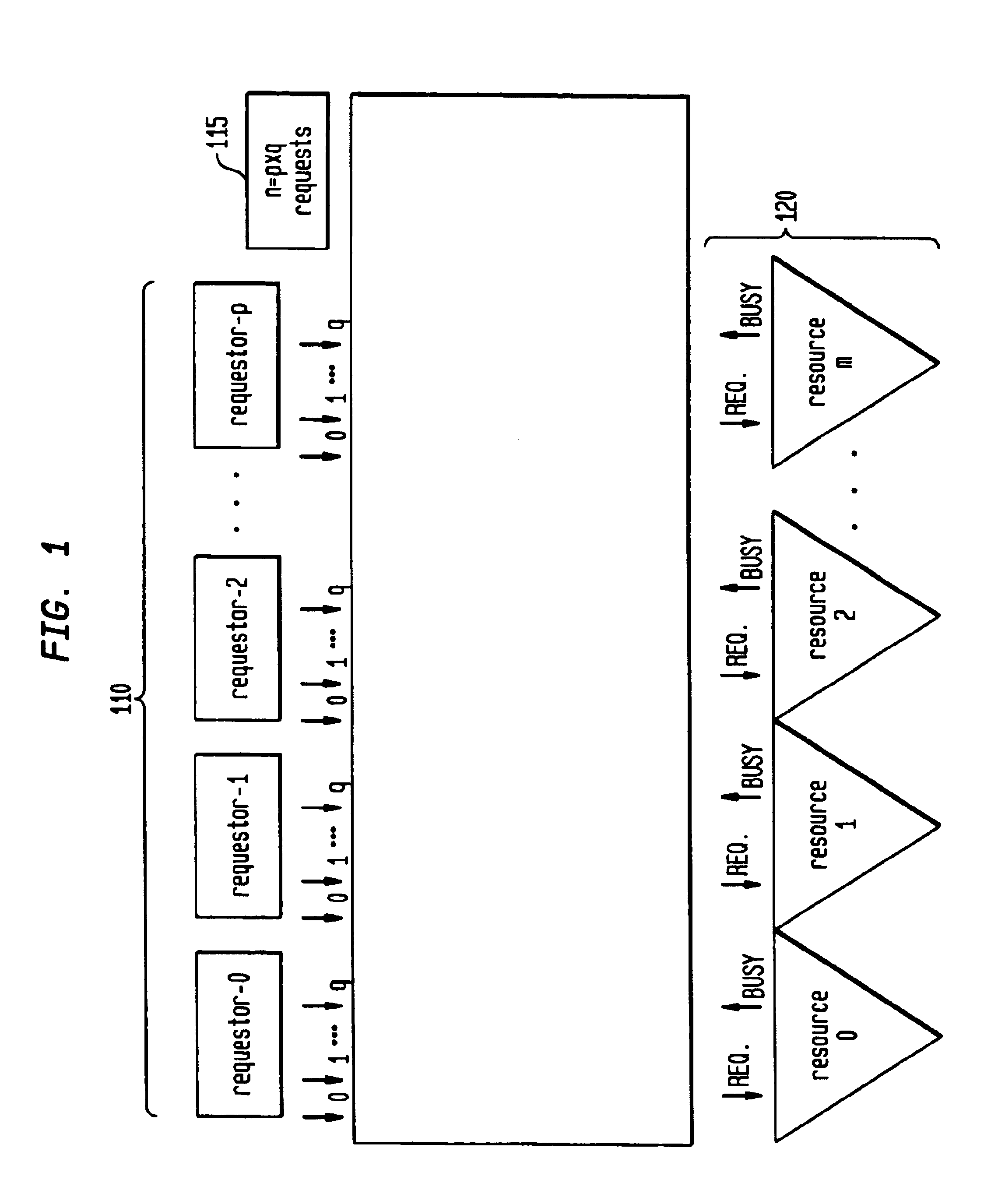
Figure 2 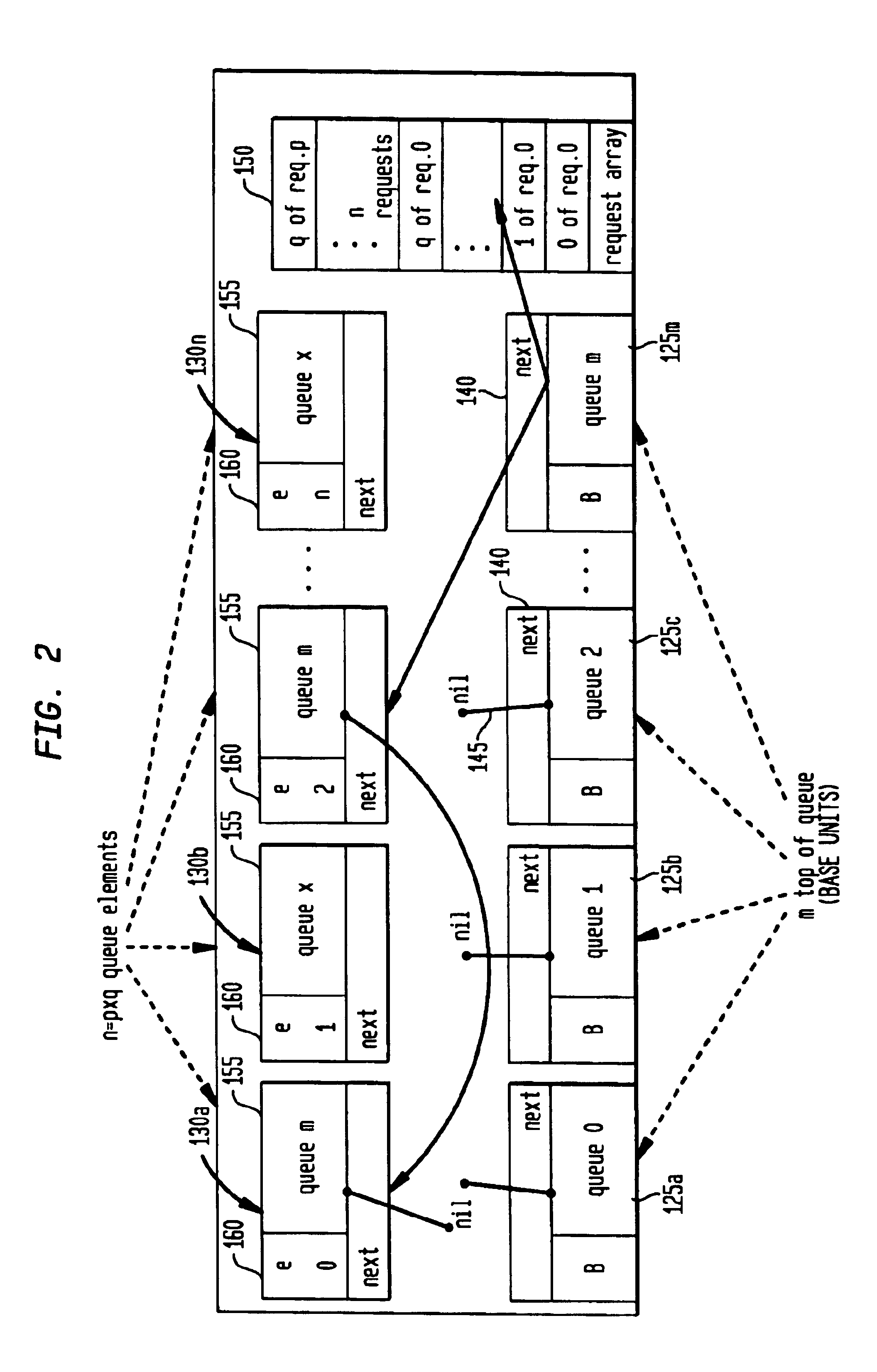
Figure 3
Abstract
Description
1. Technical FieldThe preset invention relates to electronic queue management systems. It relates in particular to a method and system for managing multiple requests sent by multiple requesters and to service by multiple resources each managed by a queue.2. Prior ArtOften in electronic systems, requests sent by p requesters must be queued to m resources, which may be busy. In such a case these requests must be held represented in queues.In general, queue management systems as disclosed in European patent application EP 654 740 are programs which are written in any programming language available according to prior art techniques. In C language such queues can be mapped to some kind of data structures called `chain lists`.A disadvantage of such an approach is, however, that when running such a program there is a central instance which has to reference long sequences of pointers before a particular pointer which is represented by some current request can be found. Thus, caused by that ...
Examples
Embodiment Construction
In most cases the maximum number of outstanding requests per requester o at a given time is limited, such that the total number of request at a given time is n=o.times.p.
The basic idea comprised of the present invention is to provide a hardware implementation of such a queue management system on a chip.
According to an advantageous feature of the present invention such a queue management system can be realized by a plurality of primitive queue elements consisting each basically of a register for a next-pointer and a register for a queue number. The next-pointer values of the queue elements are available to each queue element as an input via a multiplexer and through a register.
Such queue elements are associated with an entry in a central array in which the data belonging to the actual requests are stored. This separation is advantageous as said data amounts are quite large compared to the small amount of data being required for the pure logic of the queue management system.
In said ha...