
Data structures for efficient processing of IP fragmentation and reassembly
a data structure and fragmentation technology, applied in the field of communication on a network by a network processor, can solve the problems of imposing a significant burden on memory allocation requirements, and the high performance network processors generally cannot afford to allocate the additional memory bandwidth required in this approach, so as to reduce memory requirements and minimize memory allocation requirements
Patent Information
- Authority / Receiving Office
- US · United States
- Patent Type
- Patents(United States)
- Current Assignee / Owner
- Publication Date
- 2005-08-30
- Estimated Expiration
- Not applicable · inactive patent
Smart Images
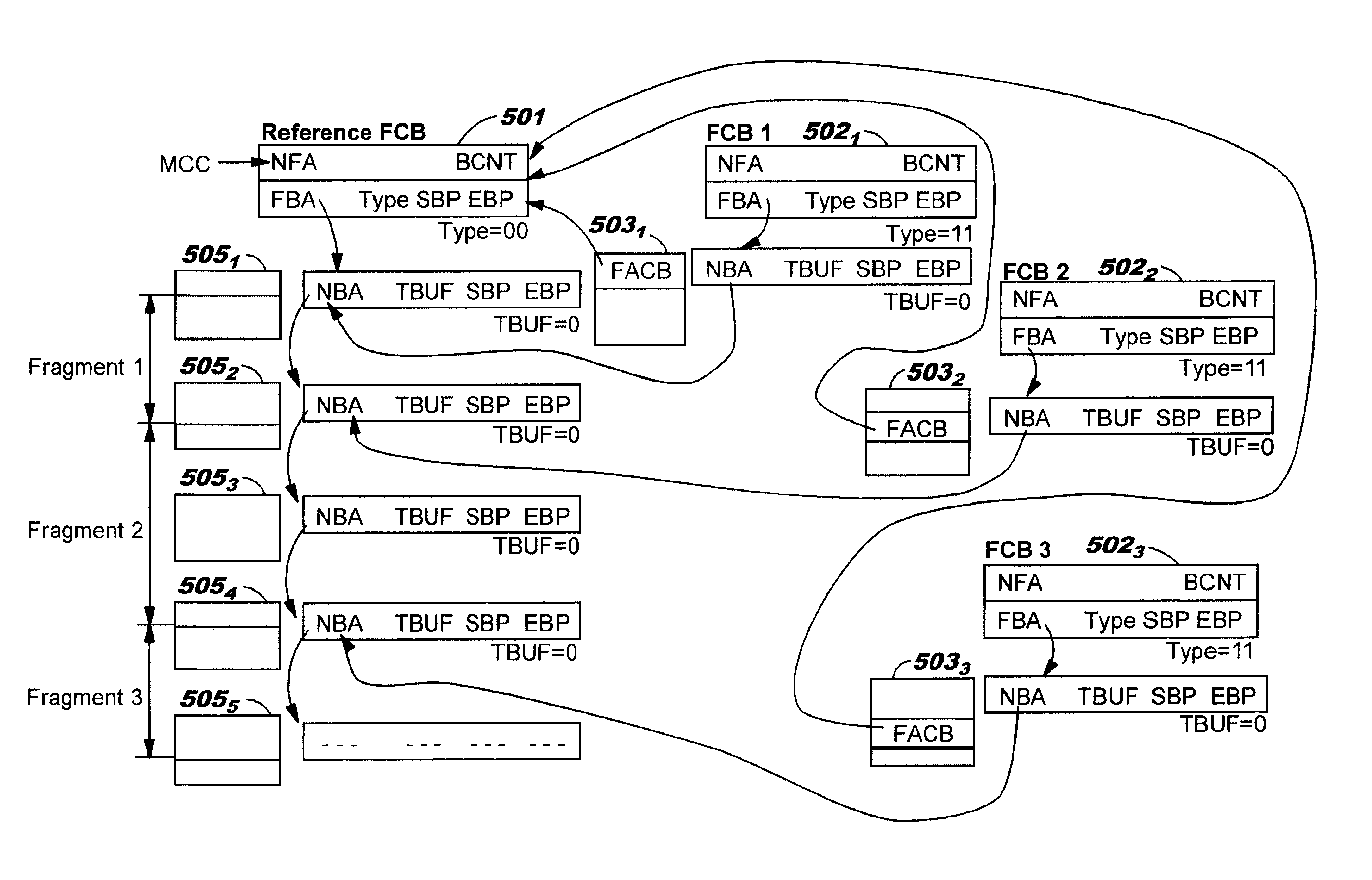
Figure 1 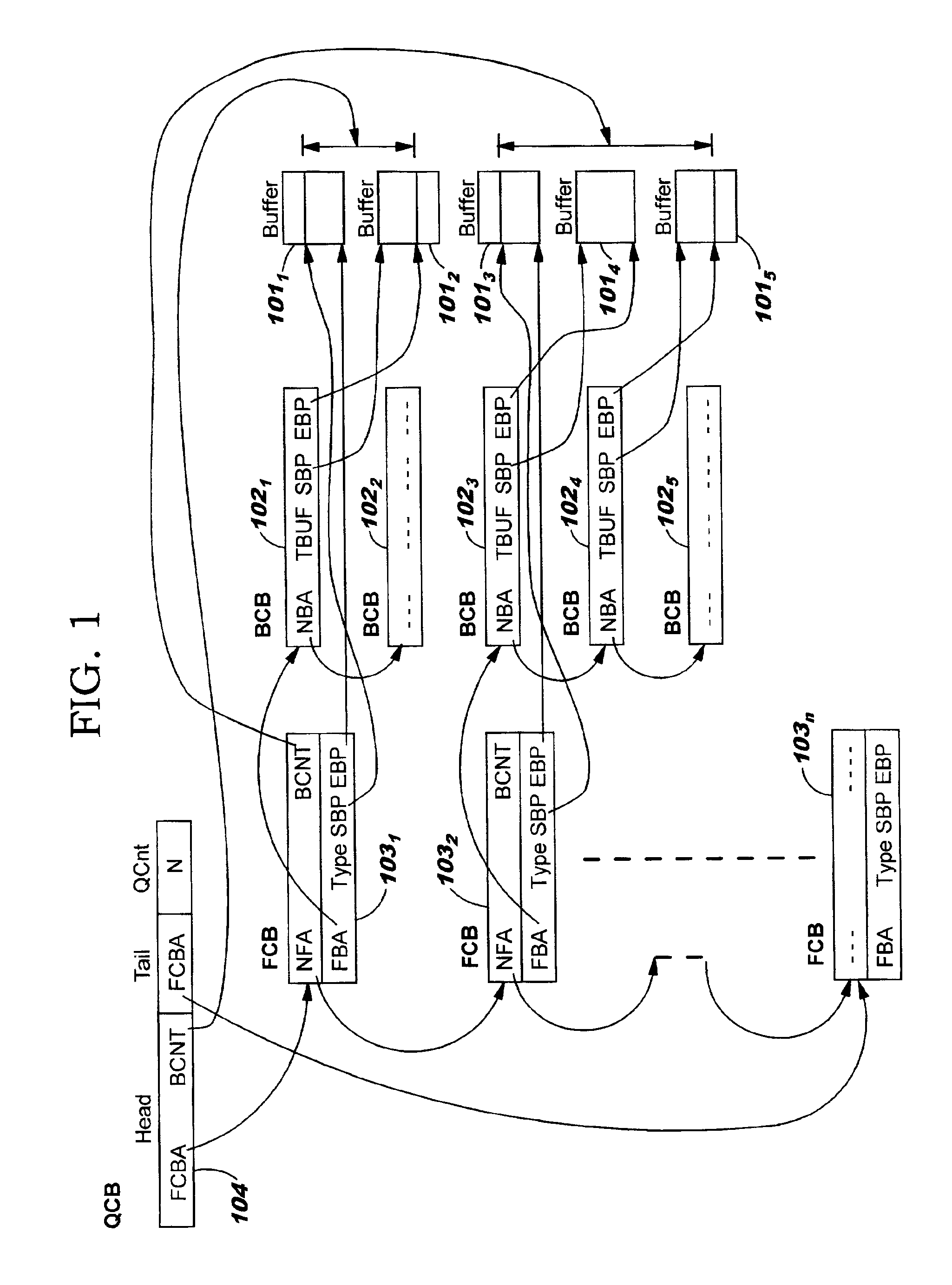
Figure 2 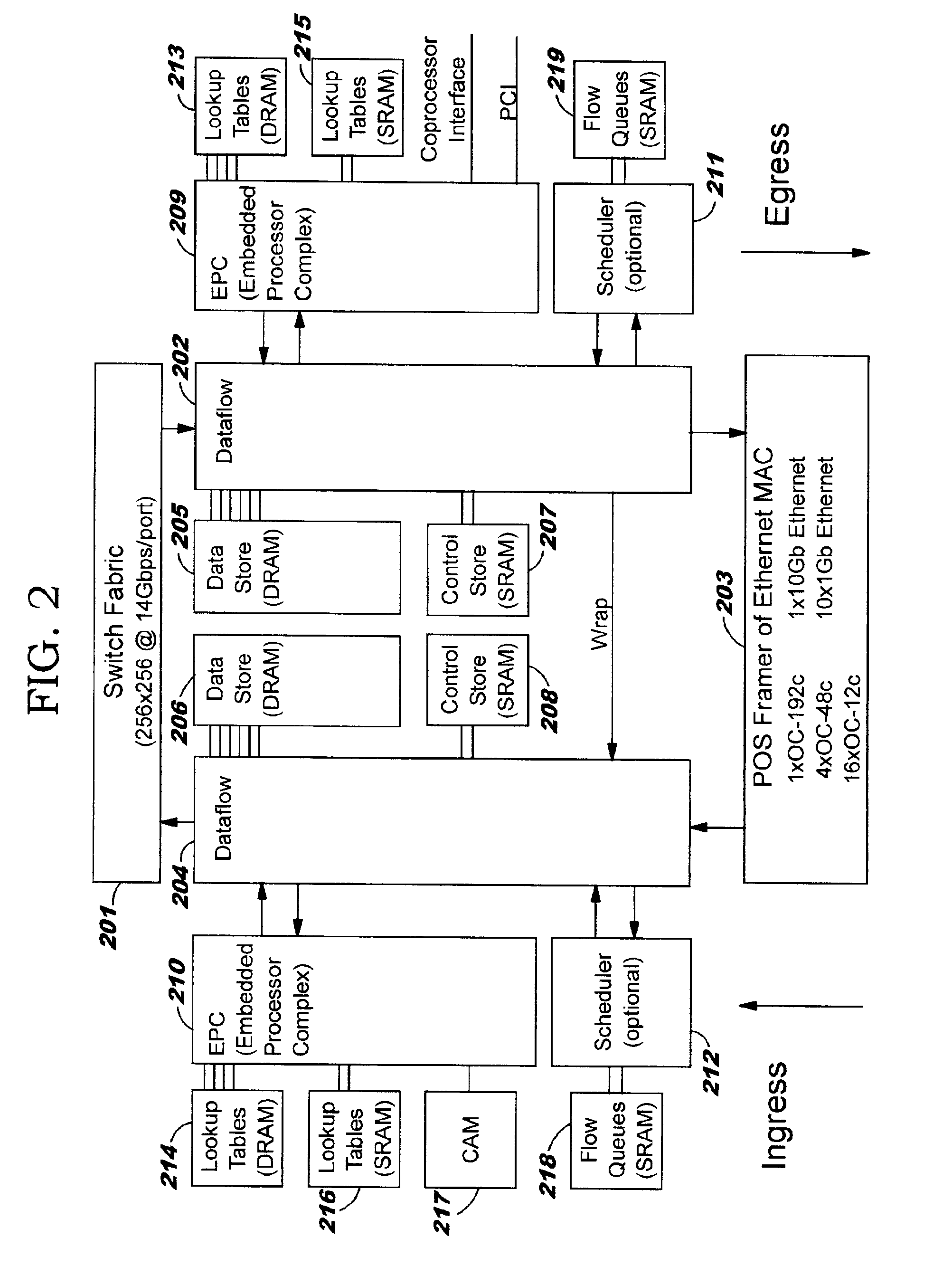
Figure 3
Abstract
Description
CROSS-REFERENCE TO RELATED APPLICATION
[0001] The invention disclosed in this application is related in subject matter to co-pending U.S. patent application Ser. No. 09 / 839,079 (RAL9-2000-0120US) filed concurrently herewith by J. F. Logan et al. for “Data Structures for Efficient Processing of Multicast Transmissions” and assigned to a common assignee with this application. The disclosure of application Ser. No. 09 / 839,079 is incorporated herein by reference.DESCRIPTIONBACKGROUND OF THE INVENTION
[0002] 1. Field of the Invention
[0003] The present invention generally relates to communications on a network by a network processor and, more particularly, to a method of performing Internet Protocol (IP) fragmentation and reassembly in a network processor in a more efficient manner than current designs accomplish this process.
[0004] 2. Background Description
[0005] In telecommunications scenarios it is sometimes necessary to break a data frame into smaller pieces prior to transmission. This is ty...
Examples
Embodiment Construction
[0018]Referring now to the drawings, and more particularly to FIG. 1, there is shown the data structures. A frame is stored in a series of buffers 1011 to 1015. Each buffer 101 has a corresponding Buffer Control Block (BCB) 1021 to 1025, which is used to link the series of buffers into a frame. Each frame has a corresponding Frame Control Block (FCB) 1031 to 103n, which is used to link a series of frames into a queue. Each queue has a Queue Control Block (QCB) 104, which maintains the address of the first and last FCB 103 in the queue, and a count of the number of frames in the queue.
Data Structure Definitions
[0019]Buffers 101 are used for storage of data. Each buffer 101 is 64-bytes in size and may store from 1 to 64-bytes of valid data. All valid data within a buffer 101 must be stored as a single contiguous range of bytes. Multiple buffers are chained together via a linked list to store frames larger than 64 bytes.
[0020]Initially, all buffers 101 are placed in the free buffer que...