
Method and apparatus for providing multiple quality of service levels in a wireless packet data services connection
a technology of wireless packet data and quality of service, applied in the field of wireless communication, can solve the problems of not being able to support simultaneous packet data services having substantially different grades of service, and the transmission delay of rlp data generally exhibits a variable, transmission delay-dependent behavior from sender to receiver
Patent Information
- Authority / Receiving Office
- US · United States
- Patent Type
- Patents(United States)
- Current Assignee / Owner
- Publication Date
- 2006-08-22
Smart Images
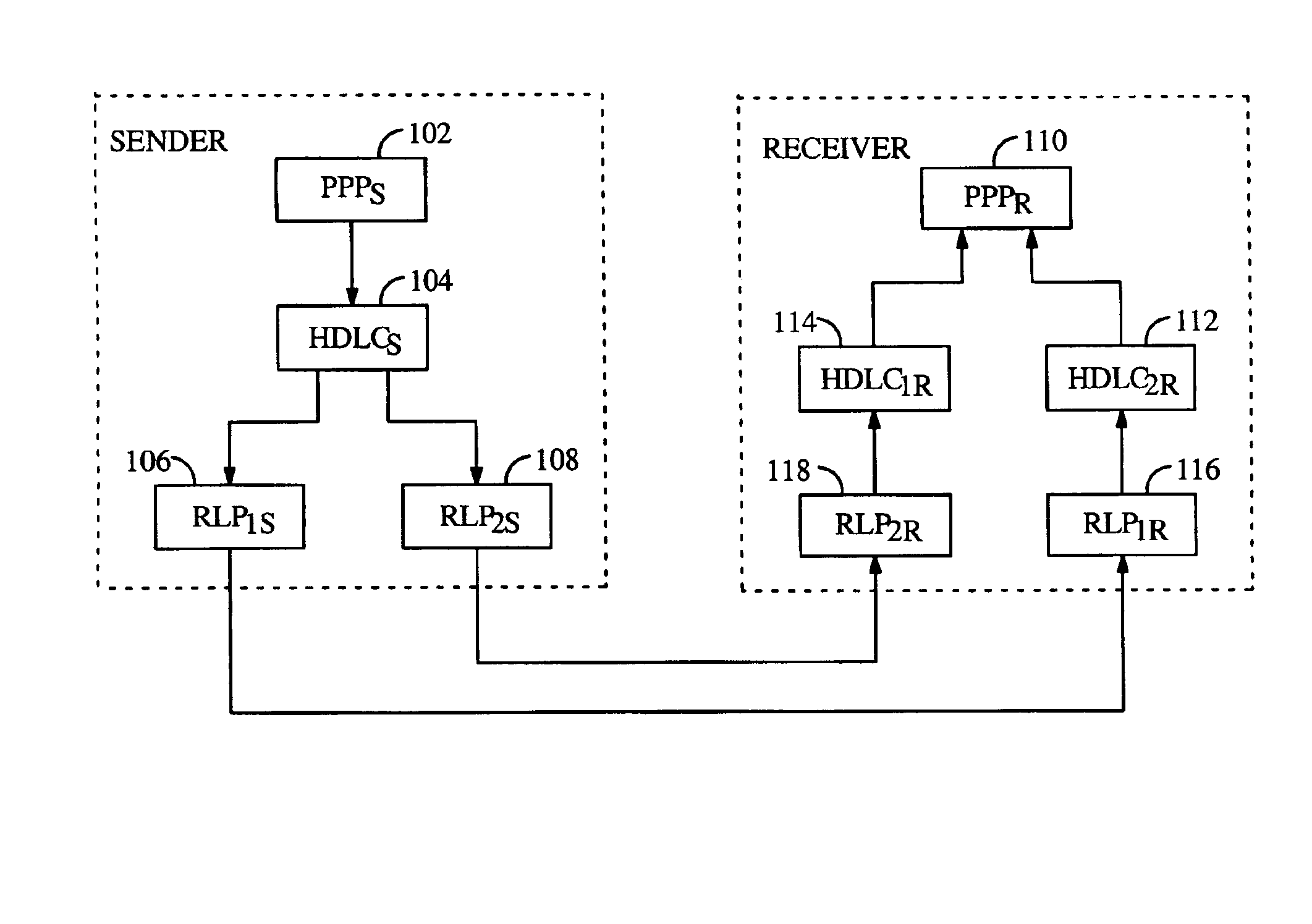
Figure 1 
Figure 2 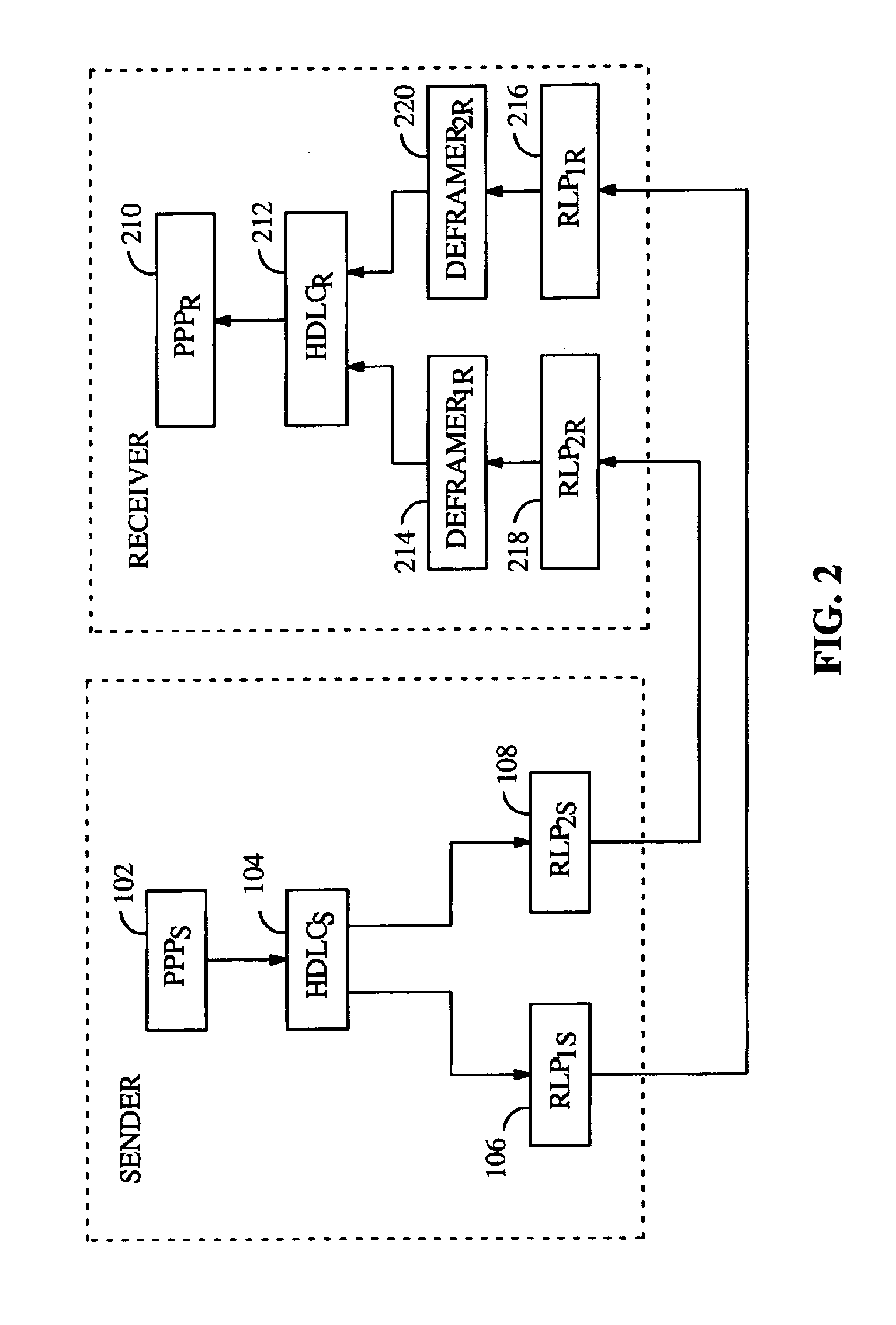
Figure 3
Abstract
Description
CROSS REFERENCE OF APPLICATION
[0001] This application claims priority from co-pending Provisional Application No. 60 / 275,242, file Mar. 12, 2001, entitled “Method and Apparatus for Providing Multiple Quality of Service Levels in a Wireless Packet Data Services Connection.”BACKGROUND
[0002] 1. Field
[0003] The present invention relates to wireless communications. More particularly, the present invention relates to a novel method and apparatus for providing multiple levels of quality of service in a wireless packet data network between a mobile station and a wireless network.
[0004] 2. Background
[0005] The use of code division multiple access (CDMA) modulation techniques is one of several techniques for facilitating communications in which a large number of system users are present. Other multiple access communication system techniques, such as time division multiple access (TDMA), frequency division multiple access (FDMA) and AM modulation schemes such as amplitude companded single sideband ...
Examples
Embodiment Construction
[Optional Definitions Section]
[0022]Multiple applications using different grades of service could be supported on a single wireless device using a separate Point-to-Point Protocol (PPP) stack for each application. This approach has several disadvantages. Supporting multiple PPP instances for a single mobile station (MS) would needlessly consume large amounts of data memory in both the MS and the Packet Data Serving Node (PDSN).
[0023]In addition, if a Radio Link Protocol (RLP) session were established for use by an application that required low latency, the RLP should be configured to operate without retransmissions. While this would result in the low latency that is best for overlying application, the Link Control Protocol (LCP) and other configuration protocols that are required to establish the PPP link would have to proceed without error control. The resulting increase in frame error rate could cause delays or even failure of PPP configuration before any application packets could...