
Layered low density parity check decoding for digital communications
a parity check and digital communication technology, applied in the field of digital data communications, can solve the problems of data corruption due to noise, the likelihood of data communication error must be considered, and the inability to correct every tim
Patent Information
- Authority / Receiving Office
- US · United States
- Patent Type
- Patents(United States)
- Current Assignee / Owner
- Publication Date
- 2006-11-21
Smart Images
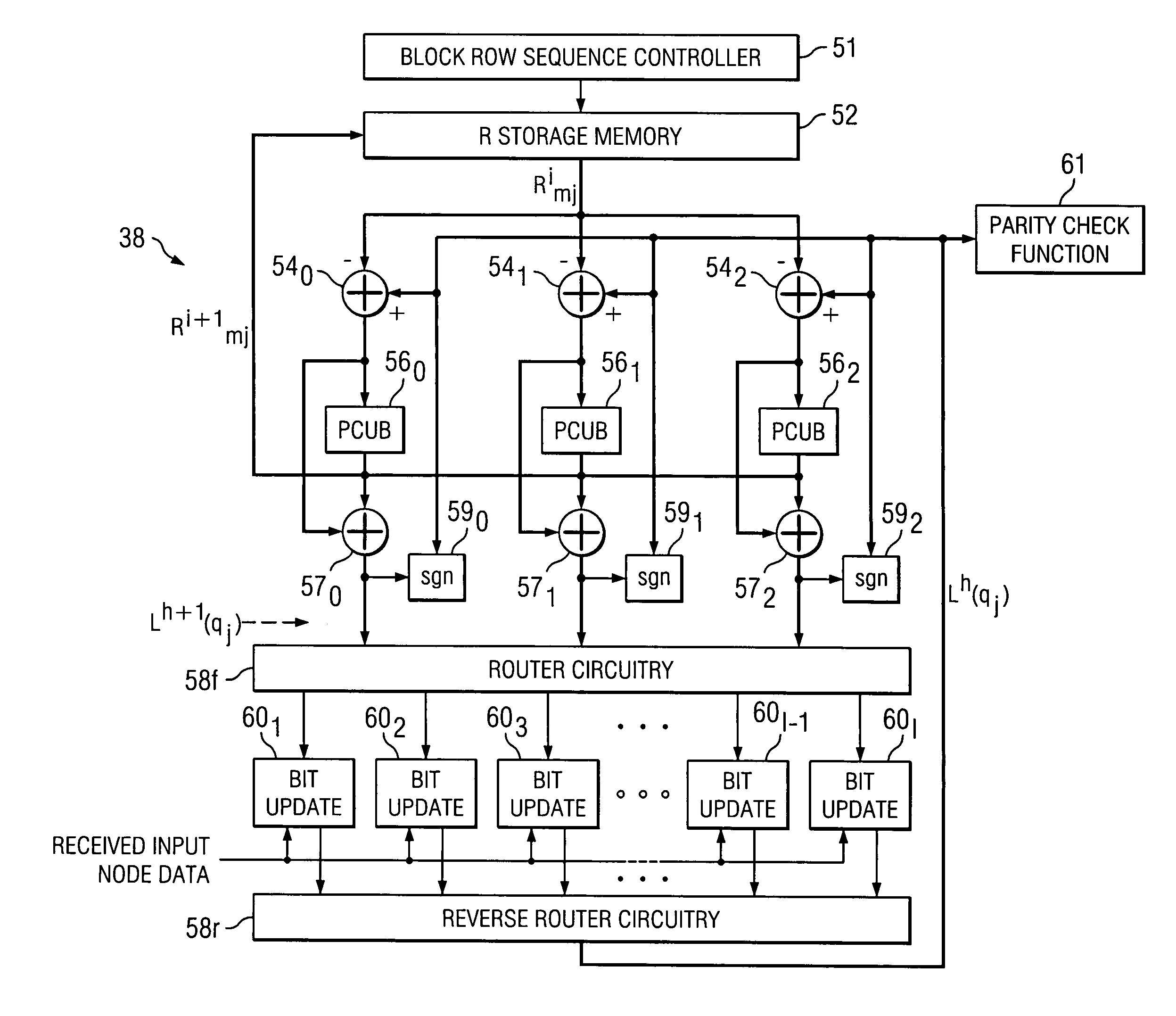
Figure 1 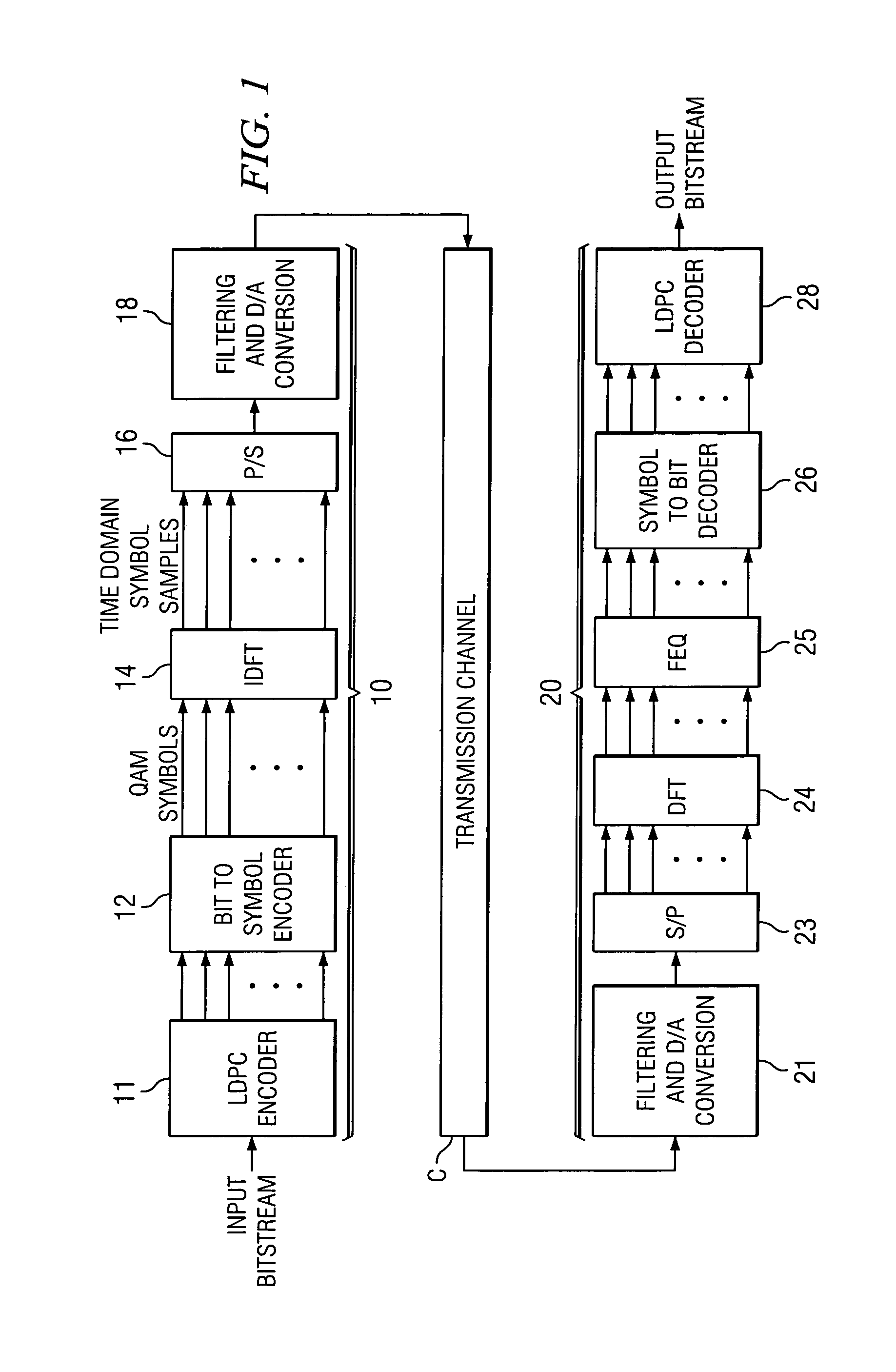
Figure 2 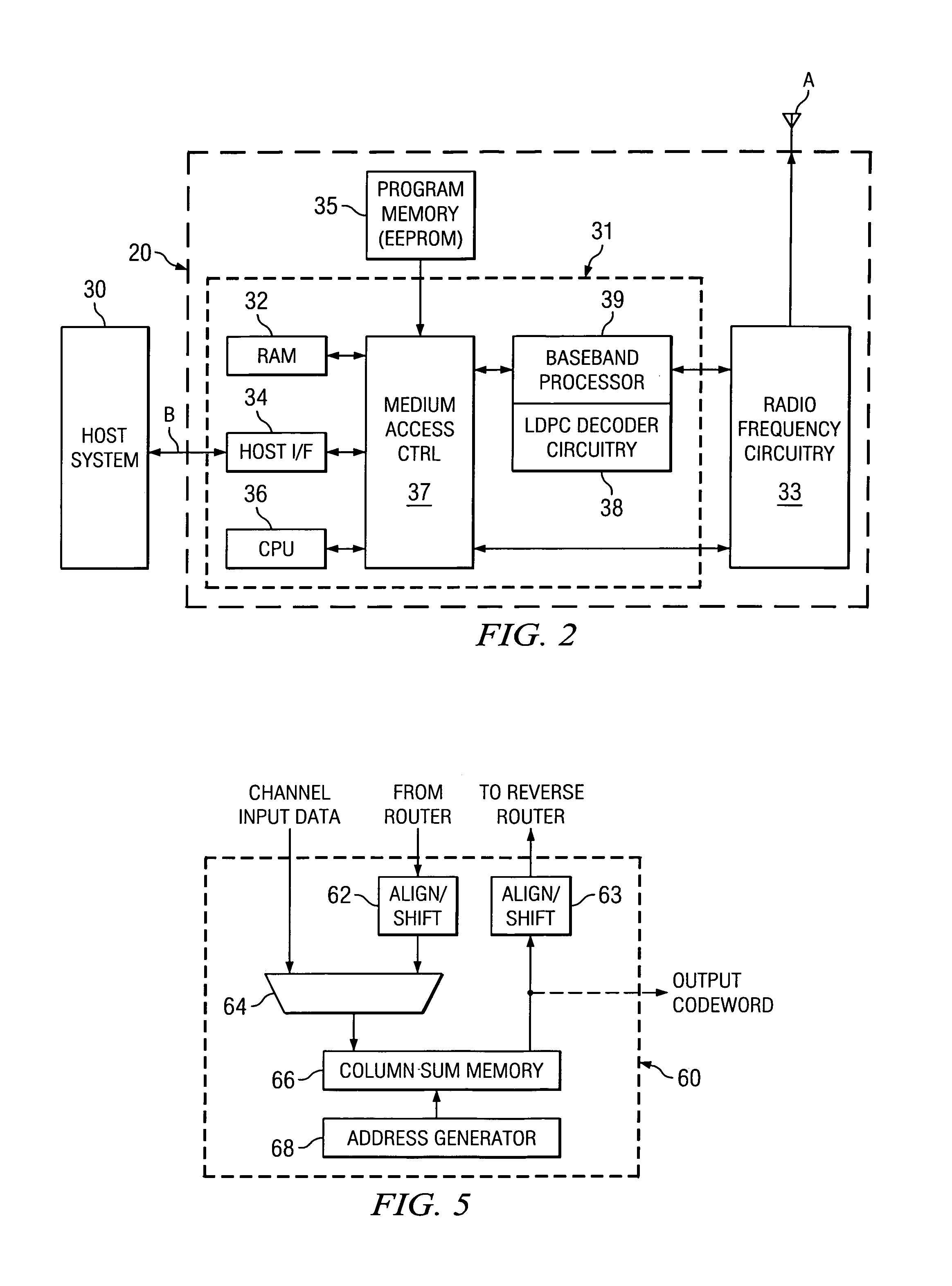
Figure 3
Abstract
Description
CROSS-REFERENCE TO RELATED APPLICATIONS
[0001] This application claims priority, under 35 U.S.C. §119(e), of Provisional Application No. 60 / 457,003, filed Mar. 24, 2003.STATEMENT REGARDING FEDERALLY SPONSORED RESEARCH OR DEVELOPMENT
[0002] Not ApplicableBACKGROUND OF THE INVENTION
[0003] This invention is in the field of digital data communications, and is more specifically directed to decoding of transmissions that have been coded for error detection and correction.
[0004] High-speed data communications, for example in providing high-speed Internet access, is now a widespread utility for many businesses, schools, and homes. At this stage of development, such access is provided according to an array of technologies. Data communications are carried out over existing telephone lines, with relatively slow data rates provided by voice band modems (e.g., according to the current v.92 communications standards), and at higher data rates using Digital Subscriber Line (DSL) technology. Another moder...
Examples
Embodiment Construction
[0031]The present invention will be described in connection with an example of its implementation in an exemplary transceiver, for example a wireless network adapter such as according to the IEEE 802.11 wireless standard. It will be apparent to those skilled in the art having reference to this specification that this invention is particularly well-suited for use in such an application. However, it is also contemplated that this invention will be of similar benefit in many other applications that involve error correction coding, including communications according to orthogonal frequency division multiplexing (OFDM), discrete multitone modulation (DMT) for example as used in conventional Digital Subscriber Line (DSL) modems, and other modulation and communication approaches, whether carried out as land line or wireless communications. It is therefore to be understood that these and other alternatives to and variations on the embodiment described below are contemplated to be within the...