
Electromechanical and solid-state AC relay with reduced arcing
a technology of arcing and arcing, applied in the field of alternating-current (ac) relays, can solve the problems of large electromagnetic interference (emi), difficult to turn the emr on and off at the zero-crossing of the ac current, and more complex alternating-current relays
Patent Information
- Authority / Receiving Office
- US · United States
- Patent Type
- Patents(United States)
- Current Assignee / Owner
- Publication Date
- 2010-02-09
- Estimated Expiration
- Not applicable · inactive patent
Smart Images
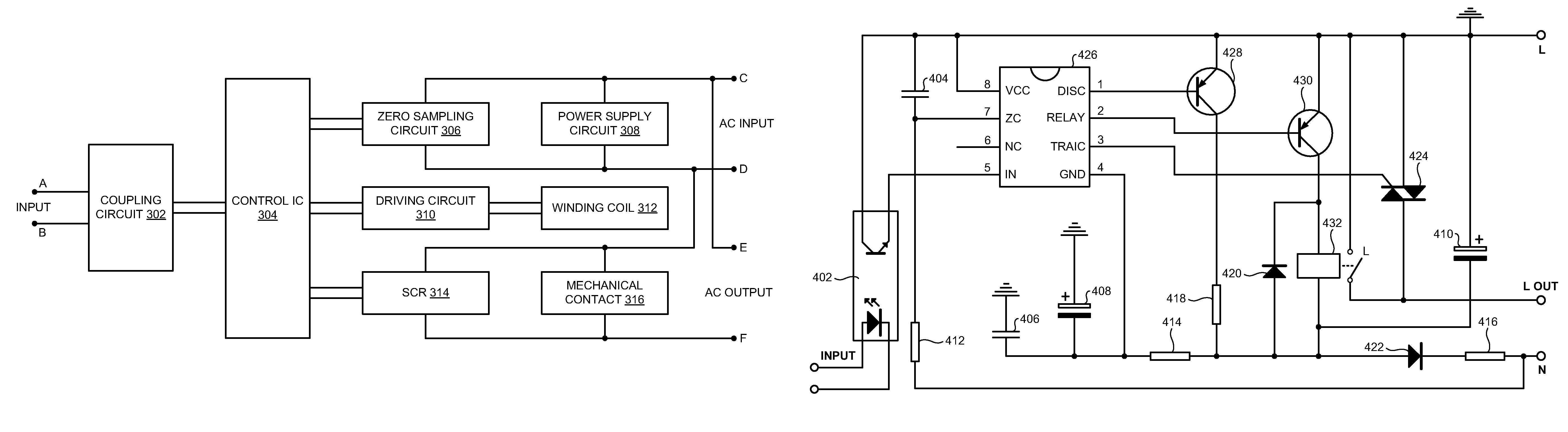
Figure 1 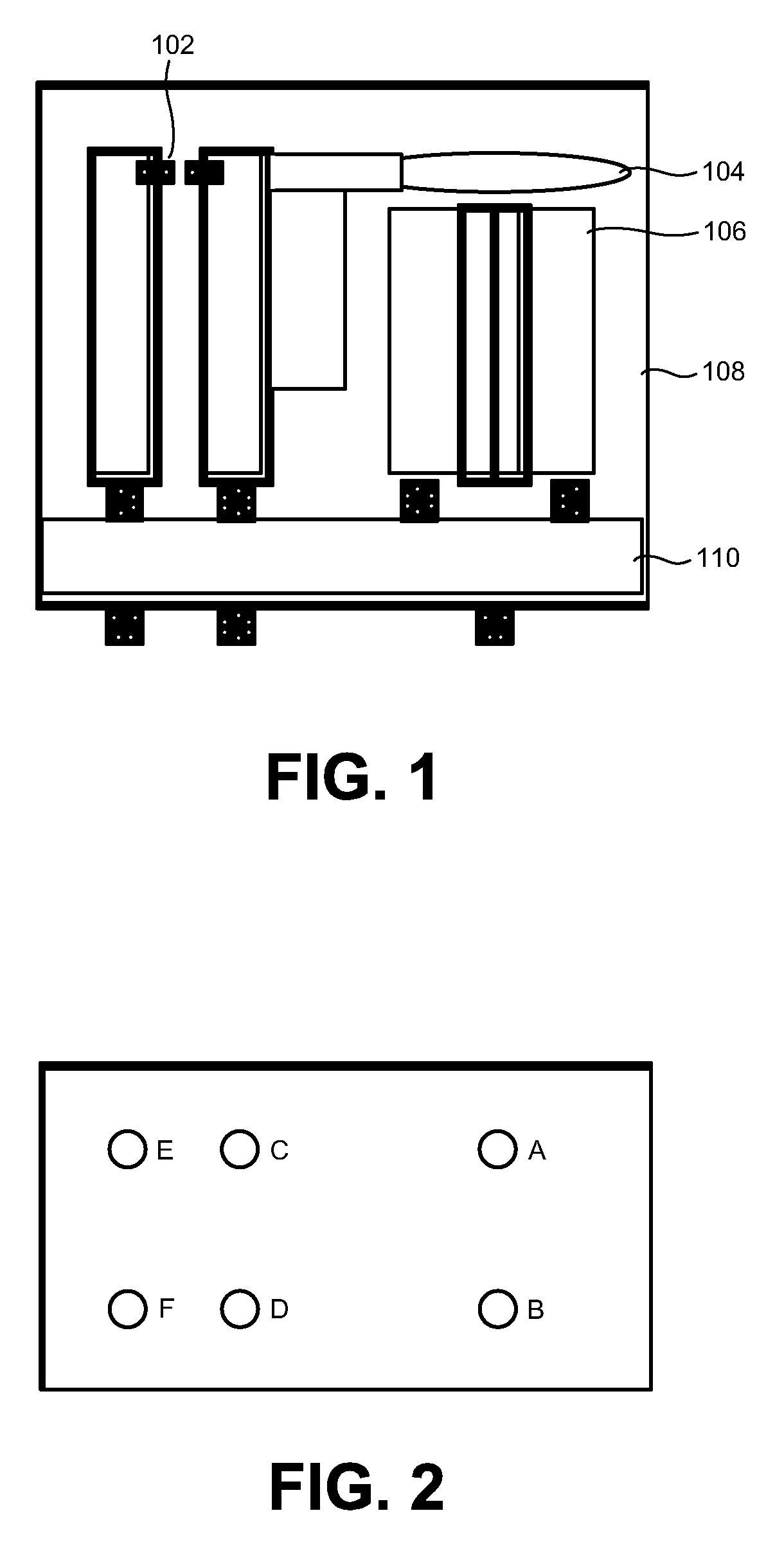
Figure 2 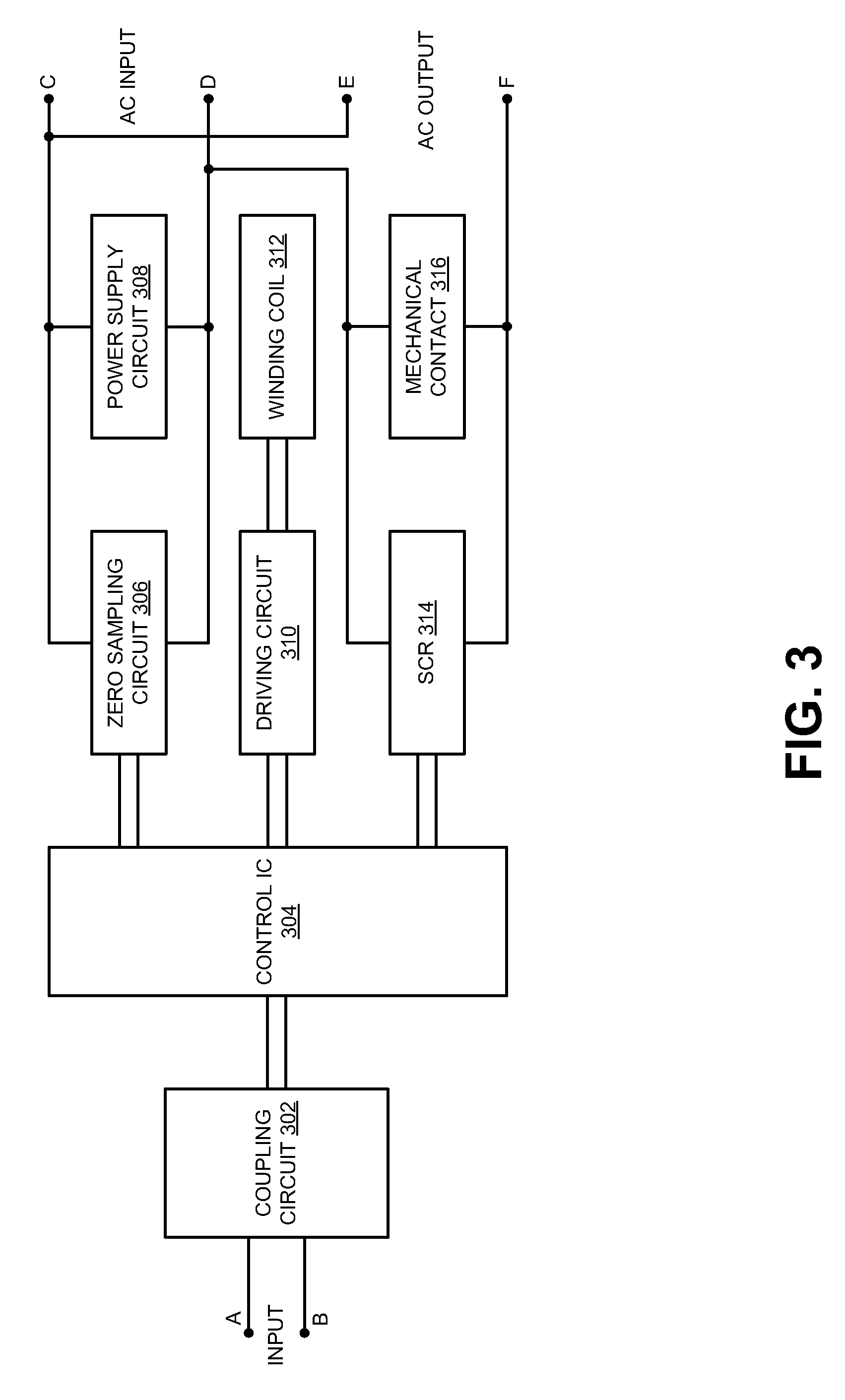
Figure 3
Abstract
Description
RELATED APPLICATION
[0001] This application claims the benefit under 35 USC § 119 of the co-pending application for “AC Relay”, China App. No. 200620045110.0, filed Aug. 25, 2006.FIELD OF THE INVENTION
[0002] This invention relates to alternating-current (AC) relays, and more particularly to AC relays with both mechanical and solid-state contacts.BACKGROUND OF THE INVENTION
[0003] A relay is a type of electronic control device that often used as an automatic control circuit. It has a control system (also known as the input circuit) and a controlled system (also known as the output circuit). A smaller current in the control system can control a larger current of the controlled system using such an “Automatic Switch.”
[0004] While simple direct current (DC) relays are common, alternating-current (AC) relays may be somewhat more complex since the AC current switches direction. However, many commercial appliances use AC and thus could benefit from an AC relay to control the AC current that powe...
Examples
Embodiment Construction
[0017]The present invention relates to an improvement in AC relays. The following description is presented to enable one of ordinary skill in the art to make and use the invention as provided in the context of a particular application and its requirements. Various modifications to the preferred embodiment will be apparent to those with skill in the art, and the general principles defined herein may be applied to other embodiments. Therefore, the present invention is not intended to be limited to the particular embodiments shown and described, but is to be accorded the widest scope consistent with the principles and novel features herein disclosed.
[0018]The inventors have realized the desirability of a solution to the technical problem of the low reliability of electromechanical relays caused by arcing of the mechanical contacts, and the 1-volt drop of the solid-state relay.
[0019]The electromagnetic relay usually has an iron core, a winding coil, an iron armature, a movable spring wi...