
Control device for medical catheters
a control device and catheter technology, applied in the field of medical catheter control, can solve the problems of affecting the accuracy or control of the medical practitioner, the inability of the medical practitioner to achieve the inability to accurately or control the necessary force for the deployment of the stent-graft, so as to achieve the effect of reducing the cost of manufacturing, reducing the risk of stent insertion, and reducing the risk of insertion
Patent Information
- Authority / Receiving Office
- US · United States
- Patent Type
- Patents(United States)
- Current Assignee / Owner
- Publication Date
- 2010-11-23
- Estimated Expiration
- Not applicable · inactive patent
Smart Images
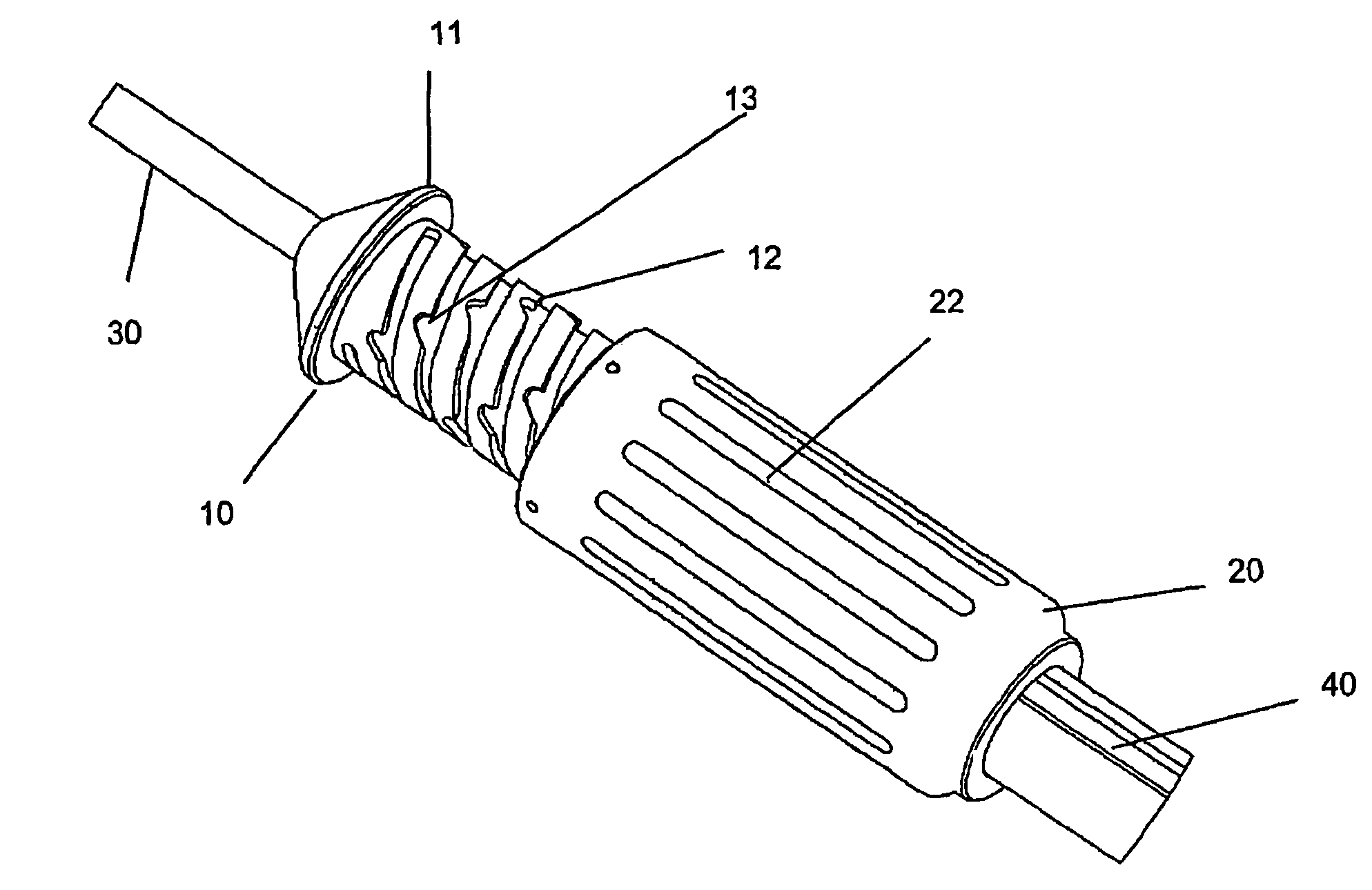
Figure 1 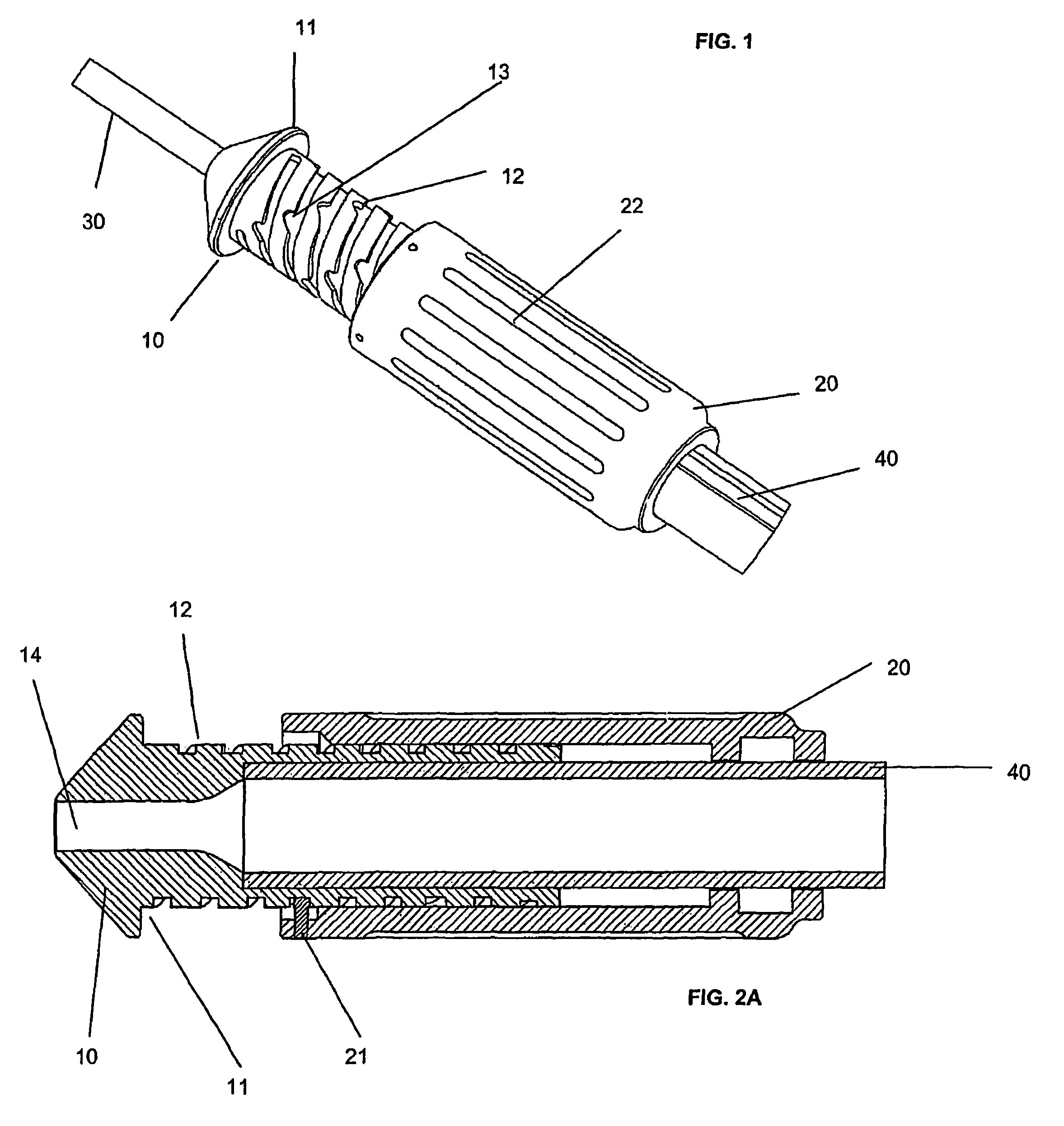
Figure 2 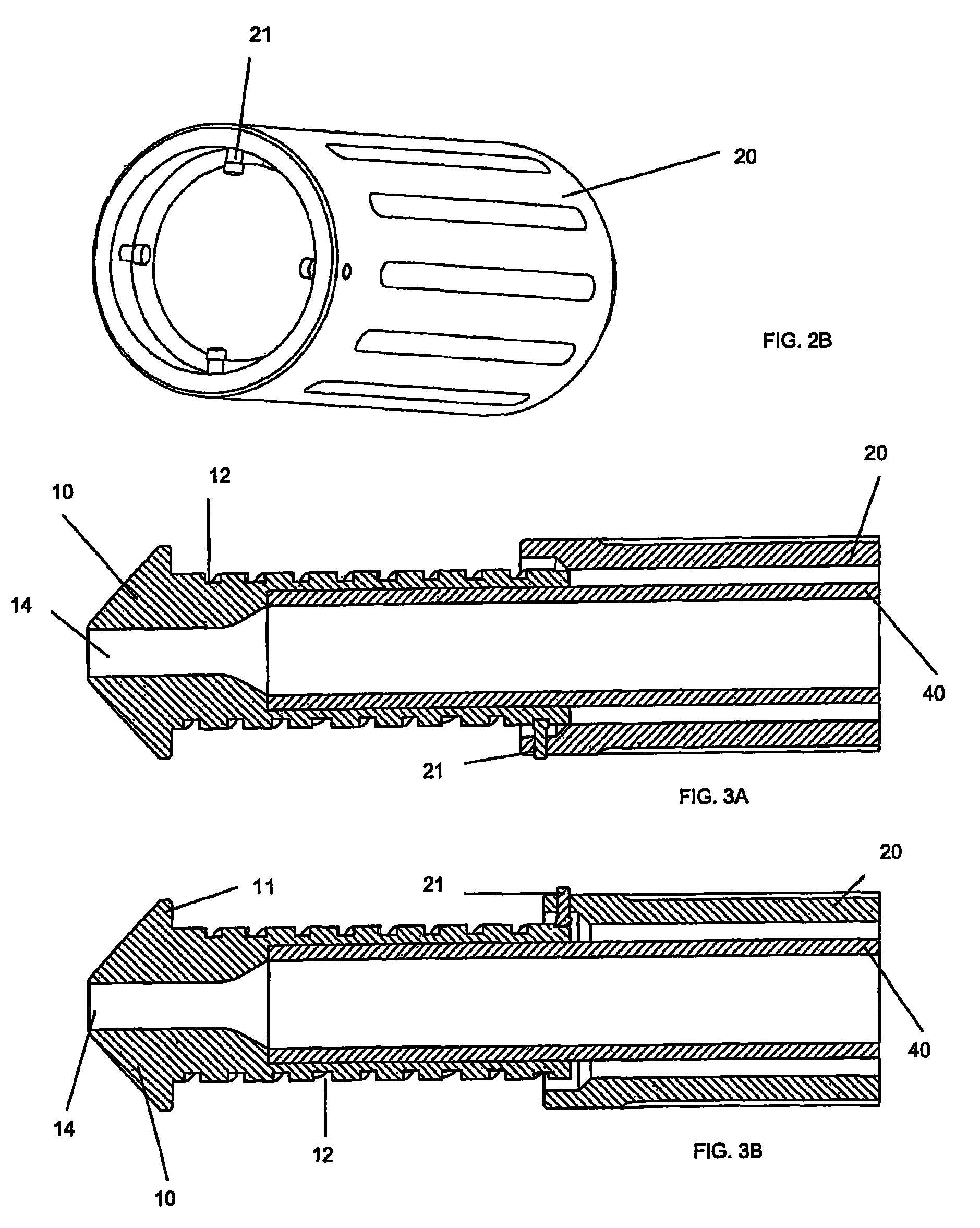
Figure 3
Abstract
Description
FIELD OF THE INVENTION
[0001] The present disclosure relates to an improved mechanism for controlling medical catheters and more particularly those catheters which are used to deliver implants to particular sites within a patient's body, such as cardiovascular stents. The system has applications in a wide range of catheter or laparoscopic surgery and is of particular value in delivering larger implants, such as stent grafts, within arteries.BACKGROUND OF THE INVENTION
[0002] Catheter delivery systems usually comprise a sheath at whose tip is contained the device to be implanted. The device is usually highly compressed, particularly in diameter, and the device is released by drawing the sheath back, allowing the device to emerge from its tip. All designs feature a structure which provides a reaction force for the device so that it maintains its position while the sheath is being withdrawn.
[0003] A simple example of this type of delivery system is provided with the Talent™ stent-graft manu...
Examples
Embodiment Construction
[0027]The control mechanism comprises a handle (10) which is an elongate element with a central bore (14) through which delivery catheter (30) can pass. The outside surface of handle (10) has thread (12) with a plurality of steps (13) therein and a stop (11) at one end of handle (10).
[0028]Barrel (20) has four pins (21) projecting from its inner surface, pins (21) engaging with thread (12) to enable barrel (20) to be threaded axially over the external surface of handle (10).
[0029]The external surface of barrel (20) has a hand grip (22) to enable the user to grip barrel (20) and rotate it about handle (10).
[0030]Pins (21) are mounted in four holes (not shown) in barrel (20) and are able to move radially from a position of maximum projection into the centre of barrel (20) to a position of radial retraction and minimal projection into the centre of barrel (20). This enables pins (21) to engage and disengage with thread (12) as will be described below.
[0031]Catheter delivery tube (40) i...