
Real-time barcode recognition using general cameras
a general camera and barcode technology, applied in the field of image recognition, can solve the problems of affecting the quality of barcode images, affecting so as to achieve efficient buffering of recognition history, restore blurry barcode images, and improve the accuracy of barcode images
Patent Information
- Authority / Receiving Office
- US · United States
- Patent Type
- Patents(United States)
- Current Assignee / Owner
- Publication Date
- 2013-05-14
Smart Images
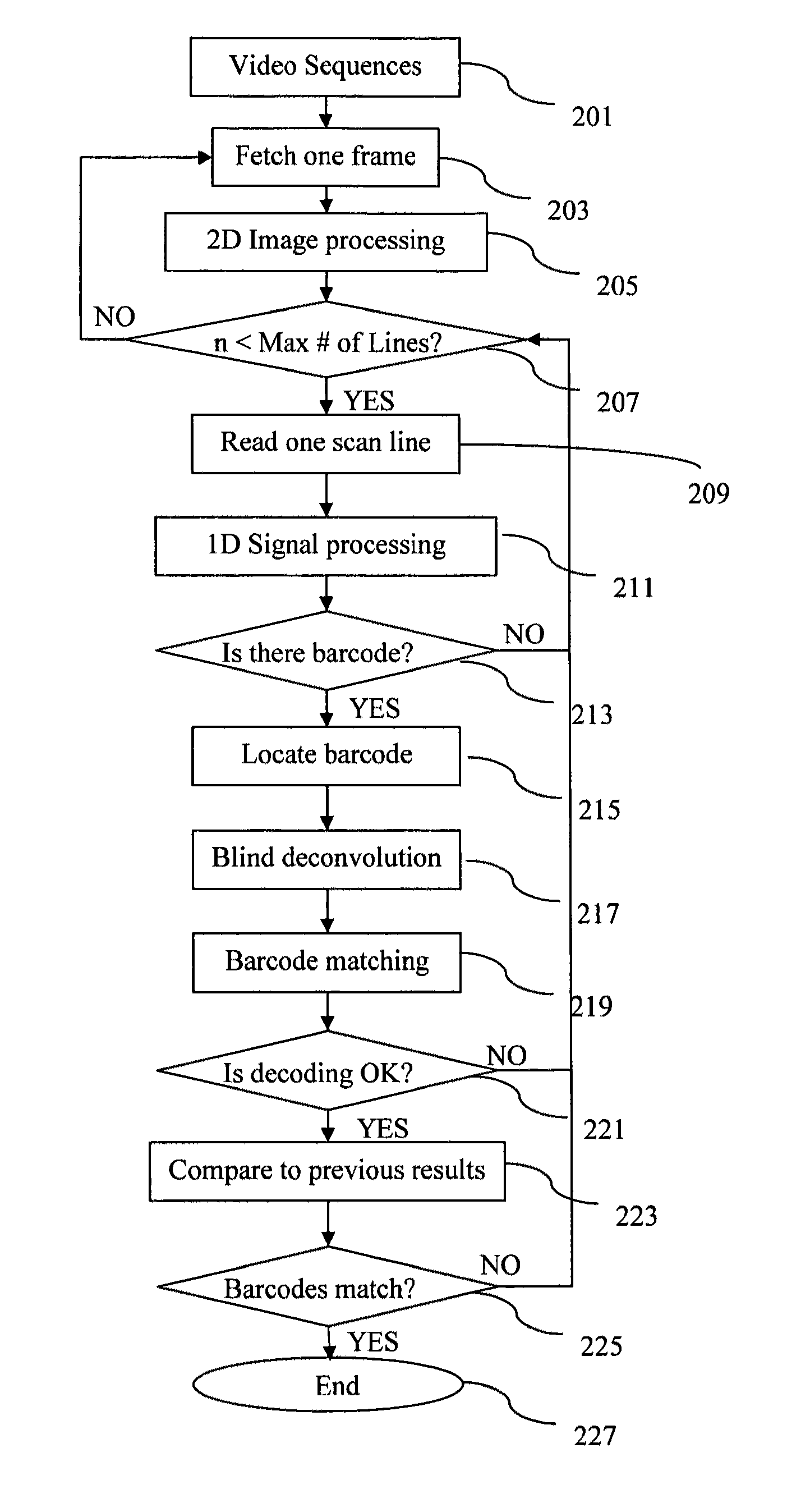
Figure 1 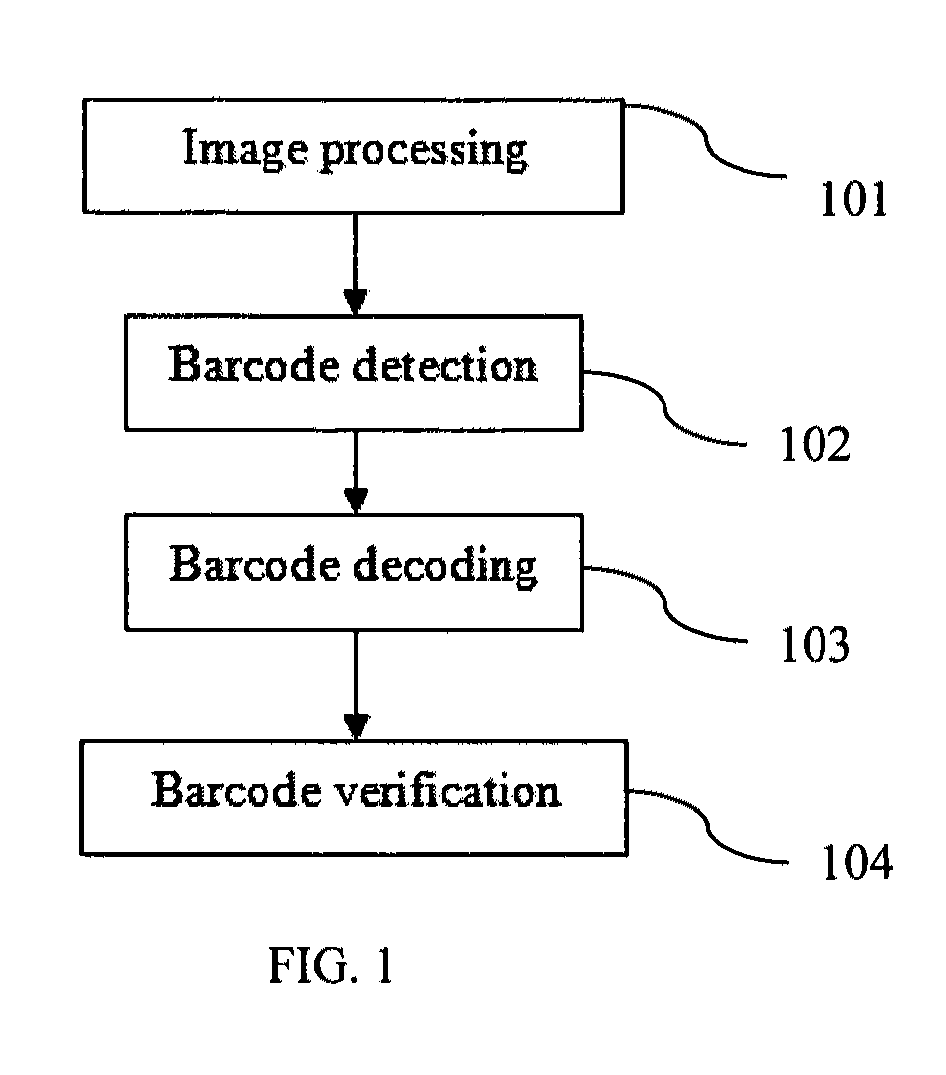
Figure 2 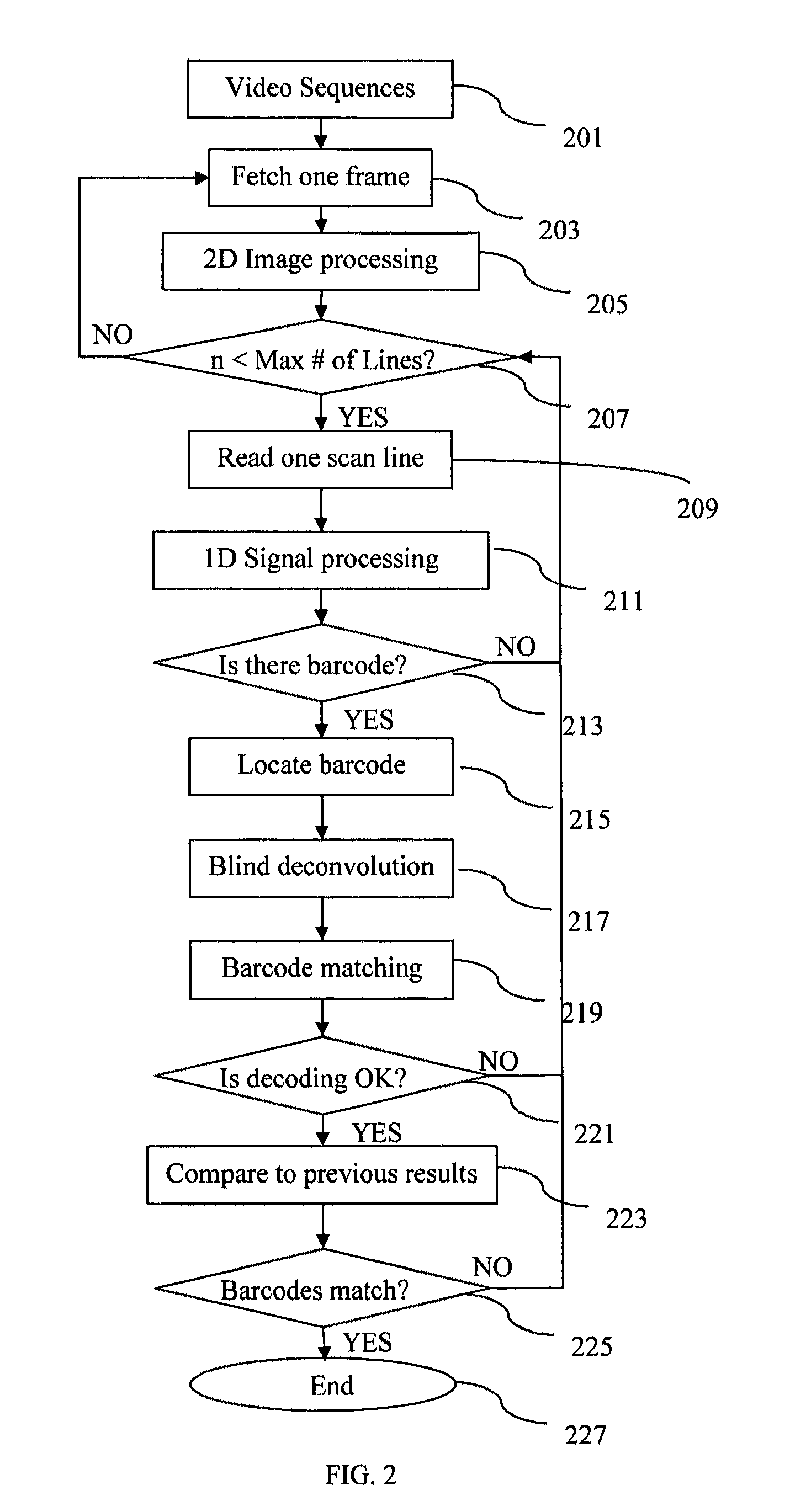
Figure 3
Abstract
Description
CROSS REFERENCE TO RELATED APPLICATIONS
[0001] This utility patent application claims priority to provisional patent application Ser. No. 61 / 455,284 filed Oct. 18, 2010 and entitled “Real-time Barcode Recognition Using General Cameras in Mobile Devices.” Provisional patent application Ser. No. 61 / 455,284 is hereby incorporated by reference in its entirety.FIELD OF INVENTION
[0002] This invention relates to image recognition in general, and more particularly to barcode recognition.BACKGROUND OF THE INVENTION
[0003] Barcode is a machine-recognizable visual identification of products. It encodes numerical digits and / or alphabetic letters into images. Barcode has been widely used in many applications, such as product checkout in retail stores and product tracking during shipping services. Barcode was designed originally for recognition by using special handheld devices. These devices emit energy to highlight barcode for accurate and fast recognition. This method is called active barcode recog...
Examples
Embodiment Construction
[0018]FIG. 1 shows the major components of the barcode recognition system. The system first reads either a still image or image frames from video sequences. Image pre-processing methods are applied by the image processing component 101 to reduce noise and normalize pixel grayscale. On each normalized image, the barcode detection component 102 checks if the image contains barcode lines. If there is a barcode, the barcode detection component 102 tries to identify the beginning and ending positions of the barcode. The tailored barcode region is passed to the barcode decoding component 103, which selectively decodes multiple scan lines across the barcode and match against predefined barcode models. The best matched barcodes are saved in the history buffer. The barcode verification component 104 ensures that the method achieve the highest recognition sensitivity while maintaining the lowest false recognition rate.
[0019]FIG. 2 shows a flow diagram of the barcode recognition system in acco...