
Electronic operational control device for a piloting member with cross-monitoring, piloting device and aircraft
a piloting member and electronic technology, applied in the direction of actuating personally, process and machine control, instruments, etc., can solve the problems of low reliability, heavy implementation and operation costs, and devices that do not perform monitoring functions, etc., to improve reliability and operating safety, simple, light and compact
Patent Information
- Authority / Receiving Office
- US · United States
- Current Assignee / Owner
- Publication Date
- 2014-02-25
Smart Images
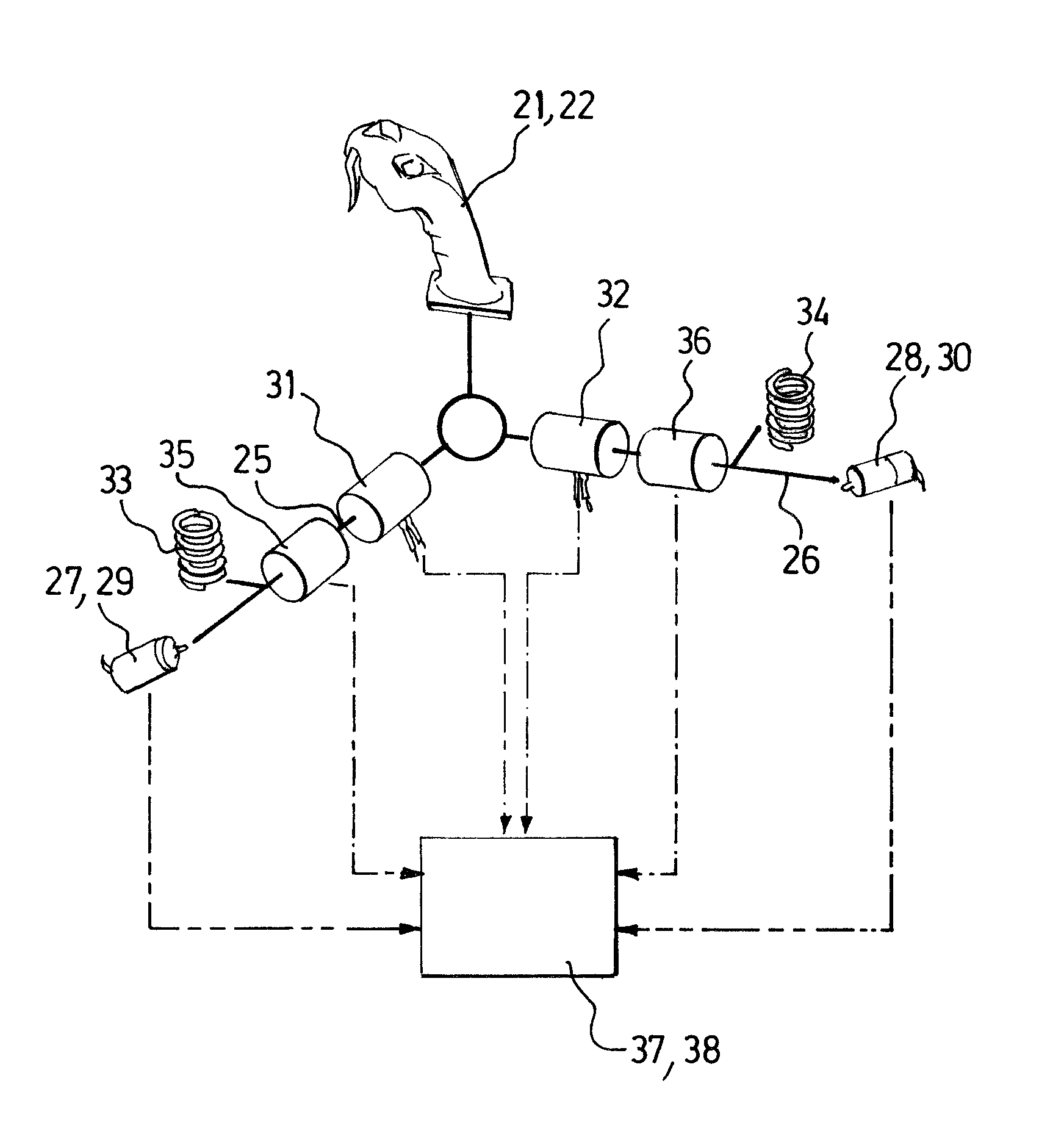
Figure 1 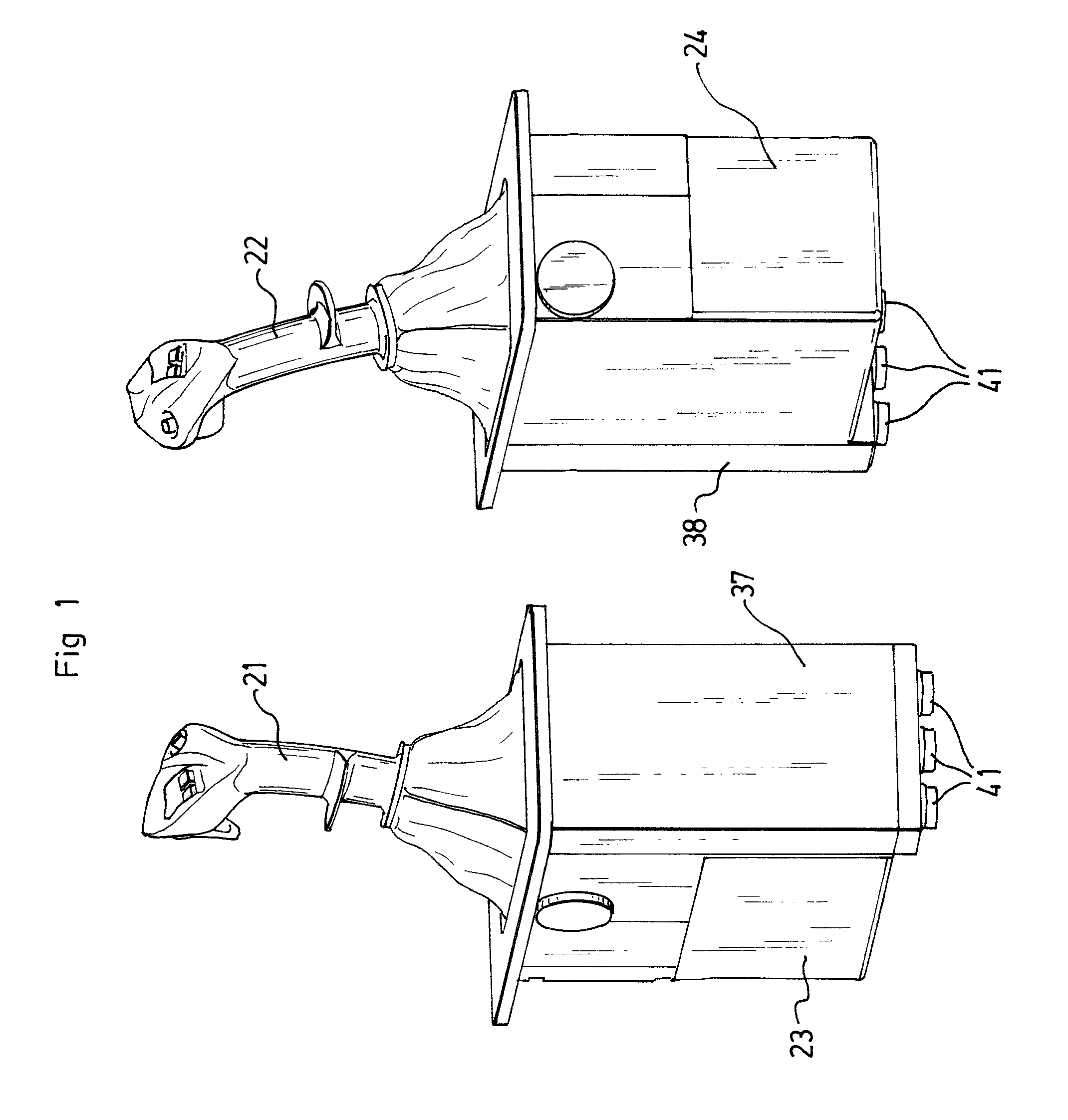
Figure 2 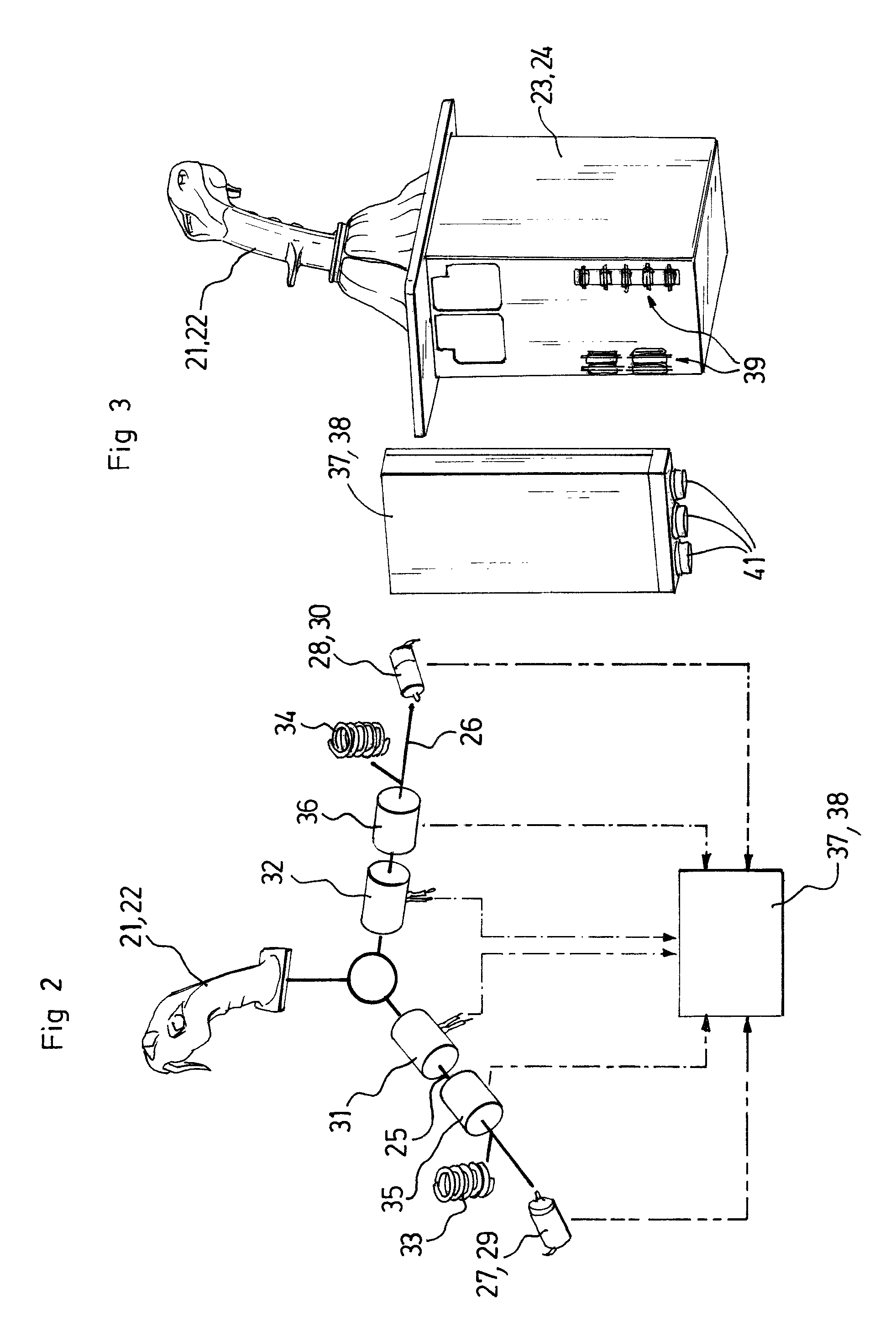
Figure 3
Abstract
Description
BACKGROUND OF THE INVENTION
[0001] 1. Field Of The Invention
[0002] The invention relates to an electronic operational control device for a piloting member, called the controlled piloting member, of an aircraft comprising a piloting device equipped, for each flying member of the aircraft, with two such piloting members connected (by a completely mechanical kinematic chain or at least partly electrically) to this flying member, so that the aircraft can be piloted simultaneously by two people: a captain and a copilot. Throughout the text, the term “piloting” and its derivatives denote, unless otherwise stated, the flying of an aircraft by at least one human pilot operating at least one piloting member such as a stick, handle, rudder bar, pedal, etc., connected to at least one flying member such as a control surface or a throttle control of the aircraft, etc. The term “command” and its derivatives denote in the traditional manner in aeronautics the fact of supplying a device with signals w...
Examples
Embodiment Construction
[0057]FIG. 1 shows a piloting device according to the invention which, in the example, comprises two pivoting mini-sticks 21, 22 for piloting an aircraft, one, 21, of which is intended to be used by the captain, and the other, 22, of which is intended to be used by the copilot.
[0058]Each mini-stick 21, 22 is mounted on an electromechanical supporting box 23 and 24, respectively, which incorporates (FIG. 2) in particular the kinematics for guiding the mini-stick in rotation about the pitch axis 25 and the roll axis 26, and, for each of these axes, at least angular position sensors 27, 28, preferably also angular velocity sensors 29, 30 (in a variant not shown also angular acceleration sensors), and force sensors 31, 32, return springs 33, 34 associated with levers making it possible to return the mini-stick to the neutral position, and actuating motors (namely two motors 35a, 35b and 36a, 36b per axis, shown and designated collectively by the references 35, 36 in FIG. 2) making it po...