
Three-dimensional spine correction robot
a robot and spine technology, applied in the field of medical devices, can solve the problems of limited effect of massage and traction treatment, change (unbalance) of three-dimensional directions of intervertebral relative position and injury of intervertebral soft tissue, and serious adverse effects on human health, and achieve short treatment course, good curative effect, and high controllability.
Patent Information
- Authority / Receiving Office
- US · United States
- Patent Type
- Patents(United States)
- Current Assignee / Owner
- Publication Date
- 2017-10-03
Smart Images
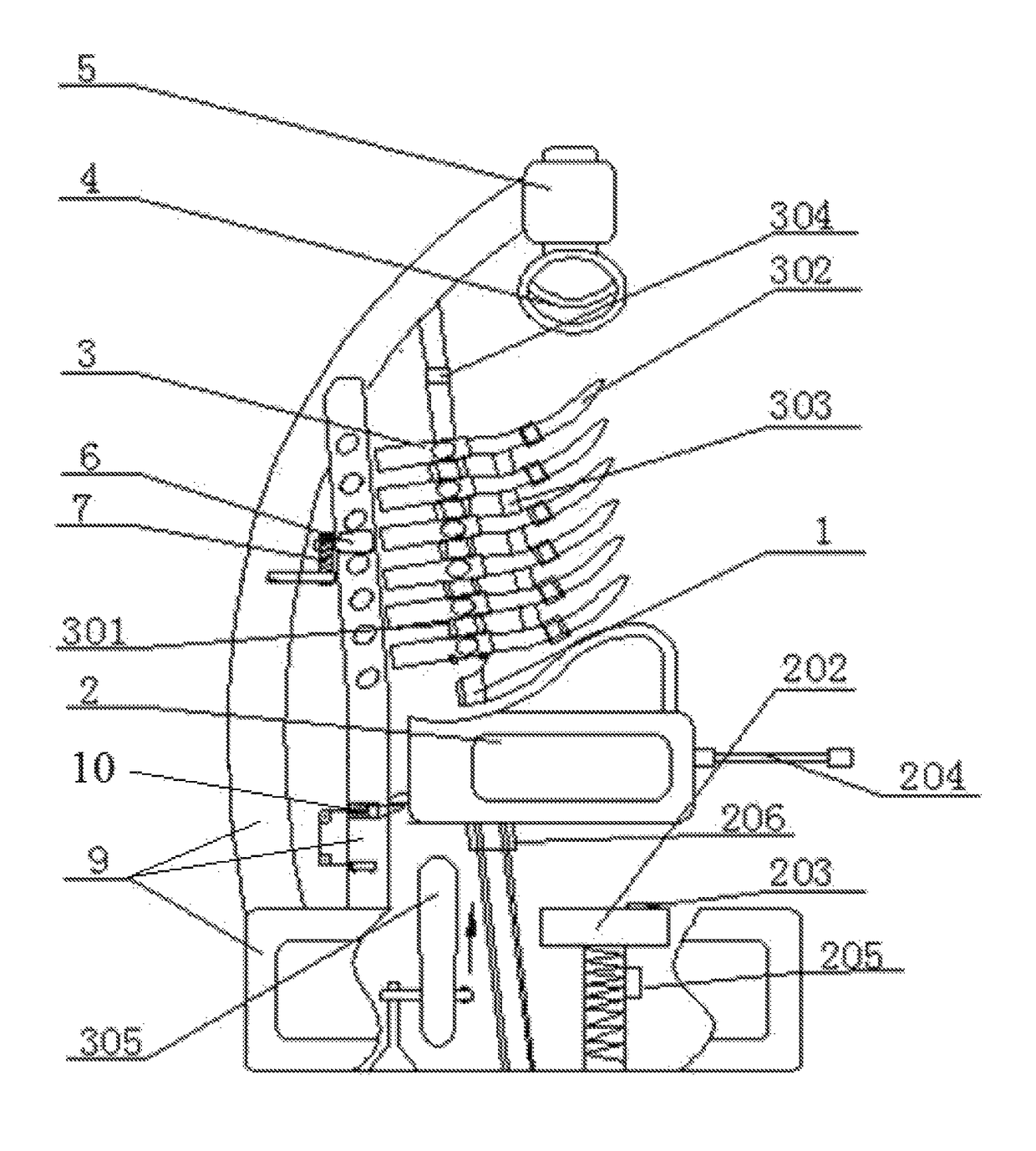
Figure 1 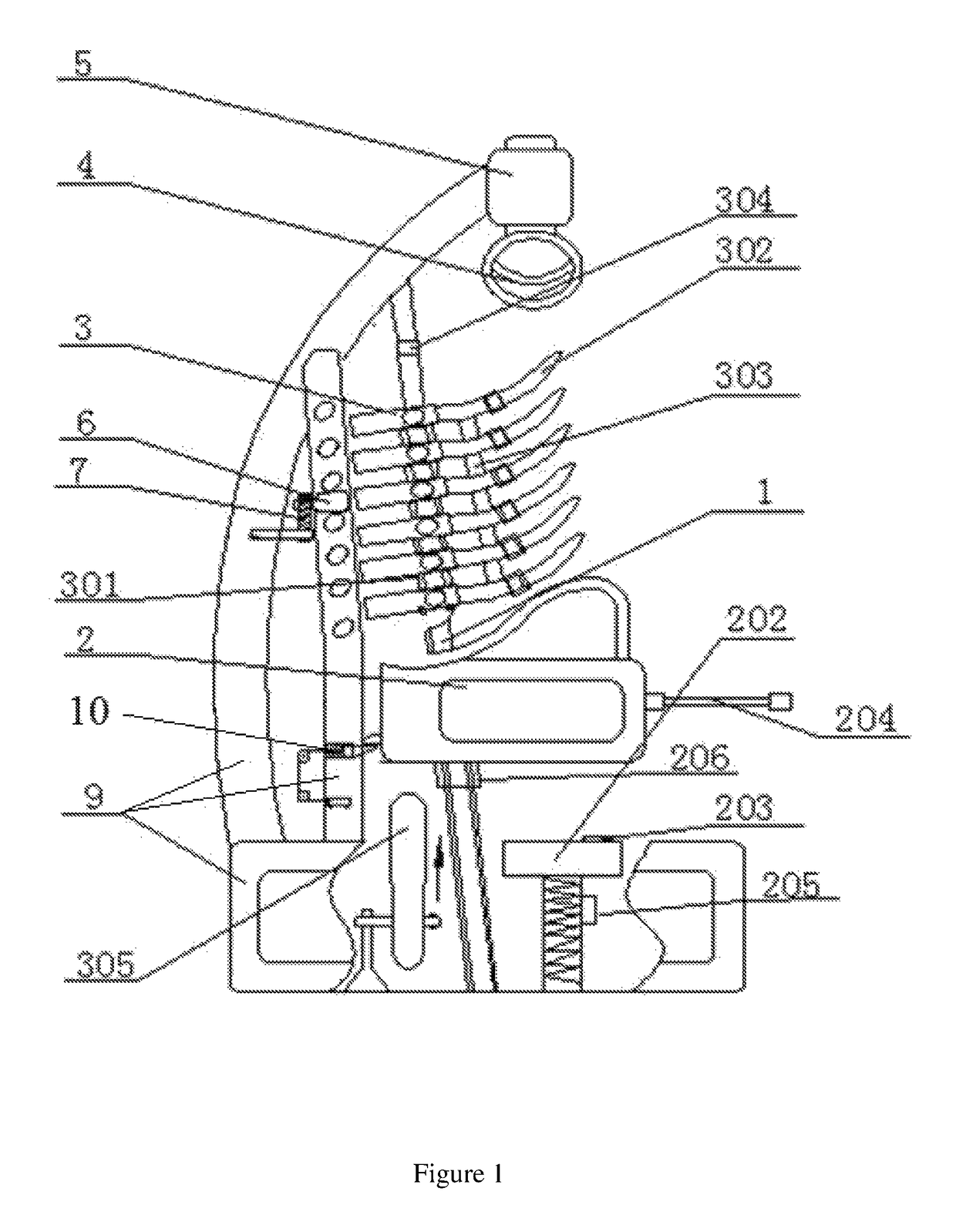
Figure 2 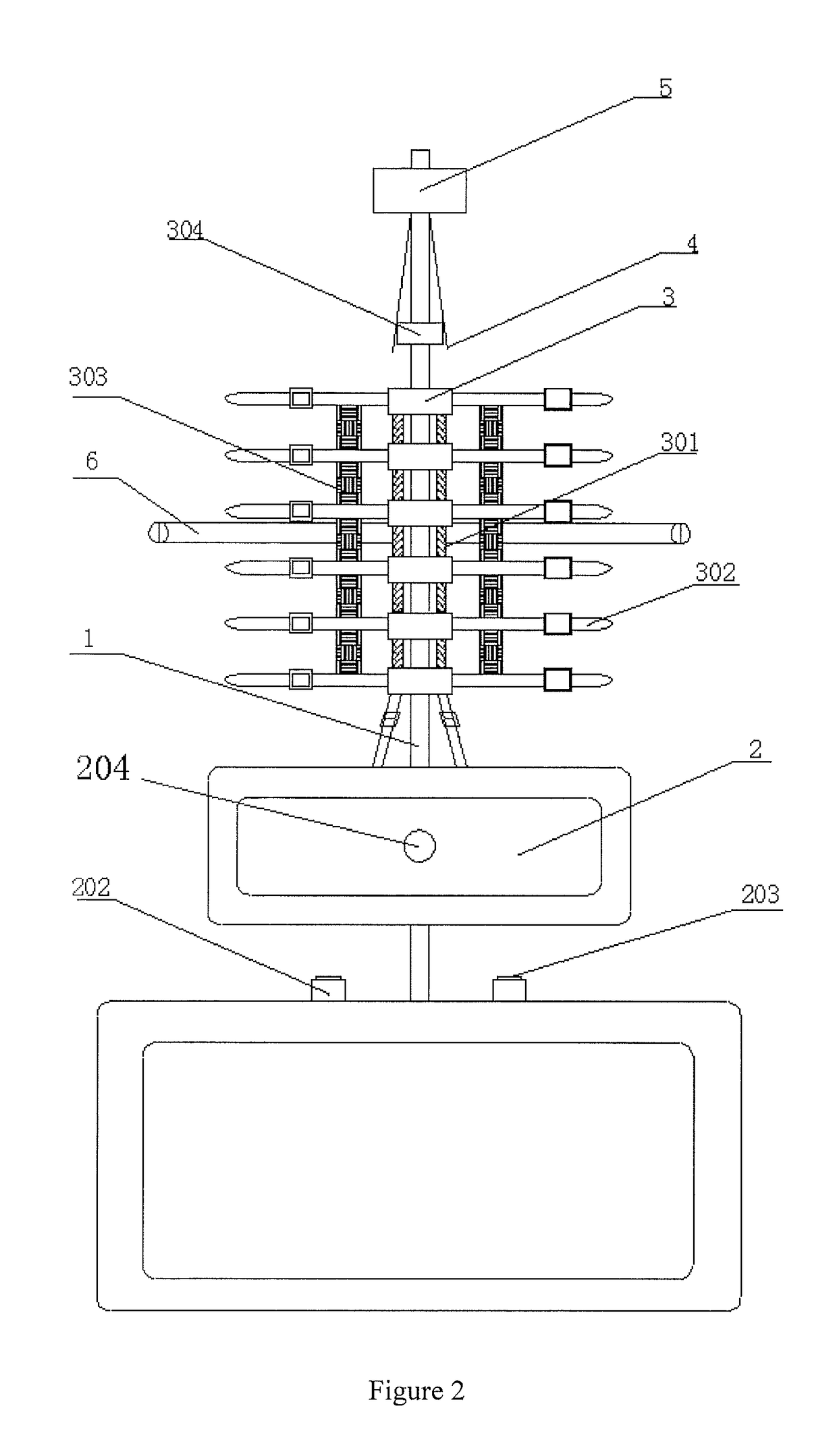
Figure 3
Abstract
Description
TECHNICAL FIELD
[0001] The present invention relates to the field of medical appliances and in particular to a three-dimensional spine correction robot used for treatment of spinal intervertebral diseases and for spine care.BACKGROUND OF THE INVENTION
[0002] Spinal intervertebral soft tissue injury diseases, “intervertebral diseases” for short, including cervical spondylosis, prolapse of lumbar intervertebral disc, thoracic and lumbar posterior articular disorders and other spine-related diseases, are commonly and frequently encountered diseases, which have serious adverse effect on human health. Although the clinical manifestations of intervertebral diseases vary, the etiologies, pathologies and therapeutic principles thereof are basically the same. After many years of clinical research, the inventor believes the main cause of the diseases is adverse mechanical behaviors, like excessive spinal movement, overloading, etc., which result in the change (unbalance) of three-dimensional dire...
Examples
Embodiment Construction
[0020]The technical scheme of the present invention is further described below through the accompanying drawings and the preferred embodiment.
[0021]Referring to FIG. 1 and FIG. 2, the preferred embodiment of the present invention provides a three-dimensional spine correction robot that may cure spinal intervertebral diseases, enhance the function of spine care and improve the comfort level and accuracy of the treatment. The three-dimensional spine correction robot comprises a pillar 1, a seat 2, a plurality of human body fixing belts 302, a head fixing apparatus, a bracket 9, a plurality of pillar casing pipes 3, a spine lateral push-and-pull apparatus 6, an overall casing-pipe retractor device 304 and a seat locking mechanism 10, wherein the head fixing apparatus is fixed on the top of the bracket 9; the pillar casing pipes 3 are sleeved over the pillar 1 in a movable manner, and each pillar casing pipe 3 is connected to a human body fixing belt 302; the lower end of each pillar ca...