
Posterior chamber intraocular lens
a technology of intraocular lens and anterior chamber, which is applied in the field of posterior chamber intraocular lens, can solve the problems of poorer imaging quality, affecting imaging quality, affecting imaging quality, etc., and achieves excellent imaging quality, reduce the probability of posterior capsule opacification, and ensure the stability of the iol in the capsul
Patent Information
- Authority / Receiving Office
- US · United States
- Patent Type
- Patents(United States)
- Current Assignee / Owner
- Publication Date
- 2018-01-02
Smart Images
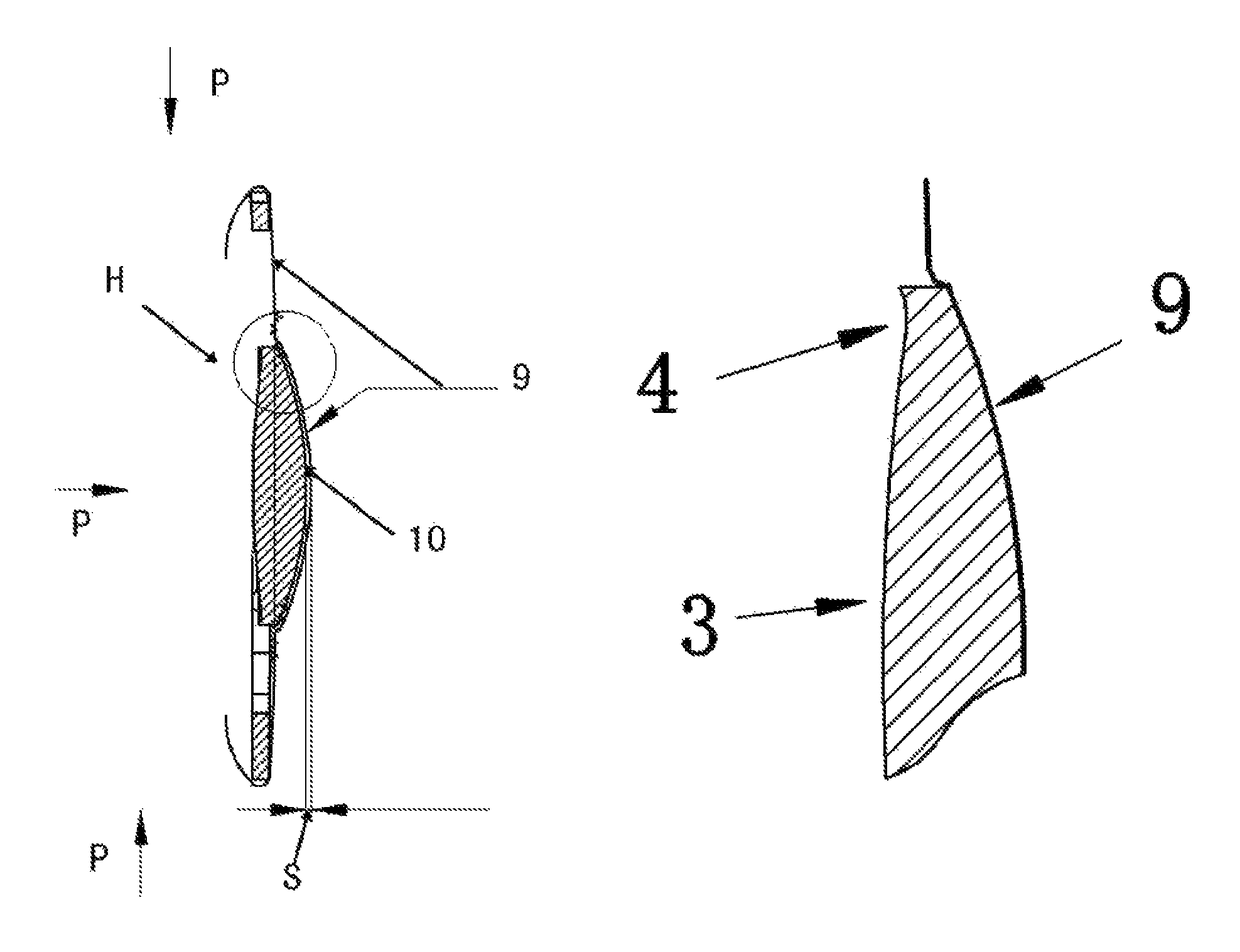
Figure 1 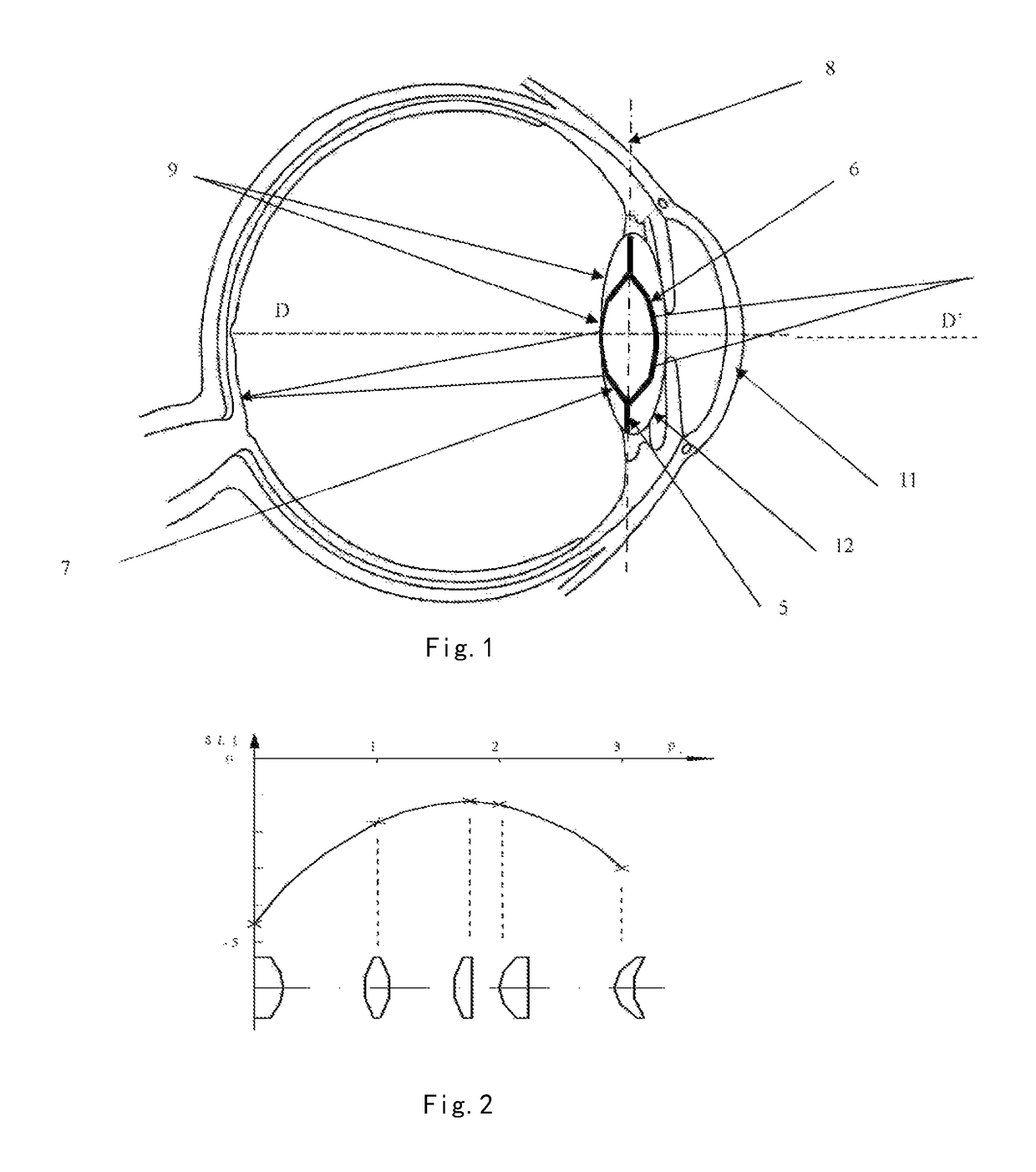
Figure 2 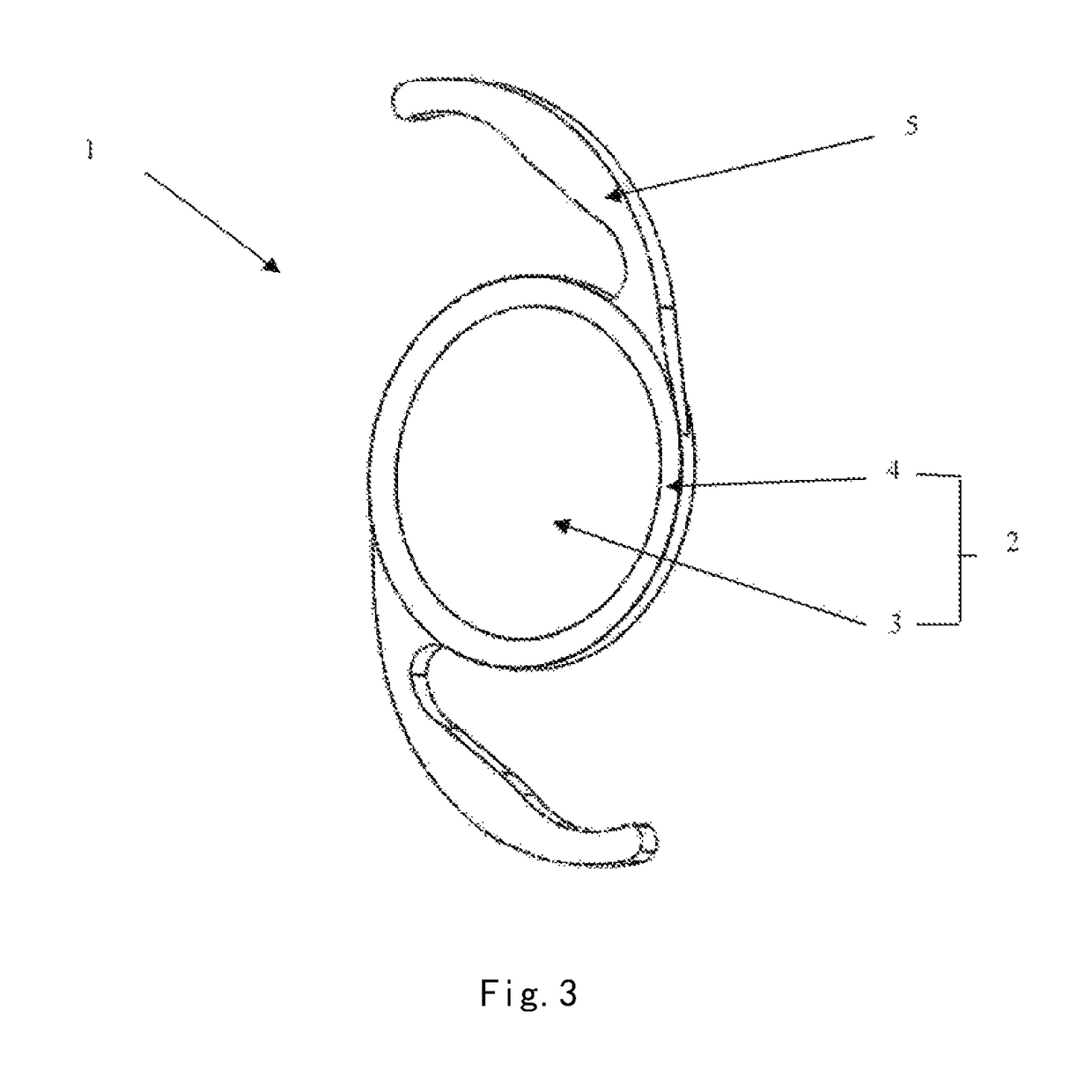
Figure 3
Abstract
Description
CROSS REFERENCE TO RELATED APPLICATIONS
[0001] The present application is the U.S. national phase entry of PCT / CN2013 / 000057, with an international filing date of Jan. 18, 2013, which claims the benefit of Chinese Patent Application Nos. 201210017070.9, filed Jan. 19, 2012; 201210017055.4, filed Jan. 19, 2012 and 201210335578.3 filed Sep. 12, 2012, the entire disclosures of which are incorporated herein by reference.FIELD OF THE INVENTION
[0002] The present invention mainly relates to a posterior chamber intraocular lens. Specifically, the present invention relates to a posterior chamber intraocular lens with an obviously convex effective optical area posterior surface (the effective optical area obviously protruding rearward), which can improve the stability of spatial position of the intraocular lens in a capsule bag and facilitate reduction of an incidence rate of Posterior Capsule Opacification (PCO) after the implantation of the intraocular lens. In particular, the present inventio...
Examples
Embodiment Construction
[0159]The features and advantages will be made more apparent according to the following figures and description, wherein:
[0160]FIG. 1 schematically illustrates a basic composition of a human eye refractive system;
[0161]FIG. 2 schematically illustrates a graph showing the distribution of spherical aberration magnitude (δL0′) of intraocular lenses in the prior art having different surfaces;
[0162]FIG. 3 schematically illustrates a perspective view of a one-piece posterior chamber intraocular lens according to an embodiment of the present invention as viewed from above an anterior surface of the intraocular lens, wherein haptics are unfolded and not yet folded onto the anterior surface of the optics of the intraocular lens;
[0163]FIG. 4 schematically illustrates a perspective view of a one-piece posterior chamber intraocular lens according to an embodiment of the present invention as viewed above a posterior surface of the intraocular lens, wherein haptics are unfolded and not yet folded...