
Variable frequency electrostatic drive
a variable frequency electrostatic drive and electrostatic motor technology, applied in the direction of piezoelectric/electrostrictive device details, dynamo-electric gear control, dynamo-electric converter control, etc., can solve the problem that prior techniques for electrostatic motors were unable to extract maximum torque per volt or field oriented control in dynamic variable speed situations, so as to improve the characterization of the necessary current vector angle and improve the control of electrostatic motors. , the effect o
Patent Information
- Authority / Receiving Office
- US · United States
- Patent Type
- Patents(United States)
- Current Assignee / Owner
- Publication Date
- 2018-05-01
Smart Images
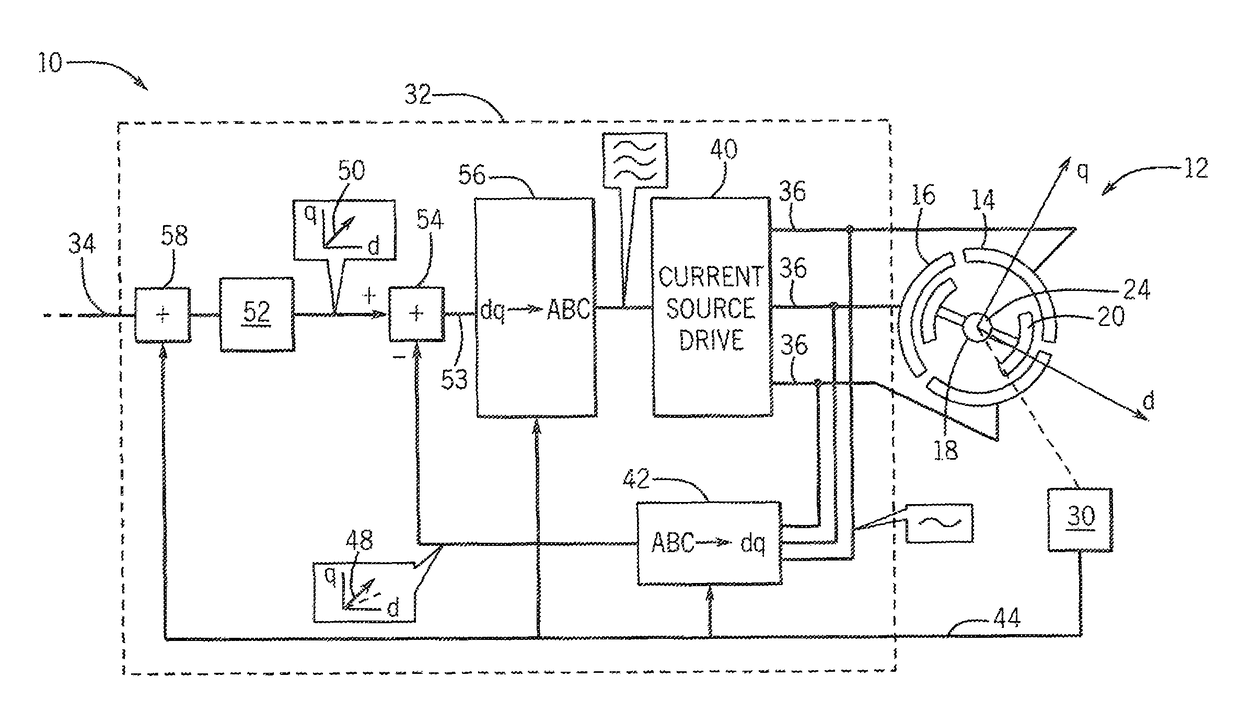
Figure 1 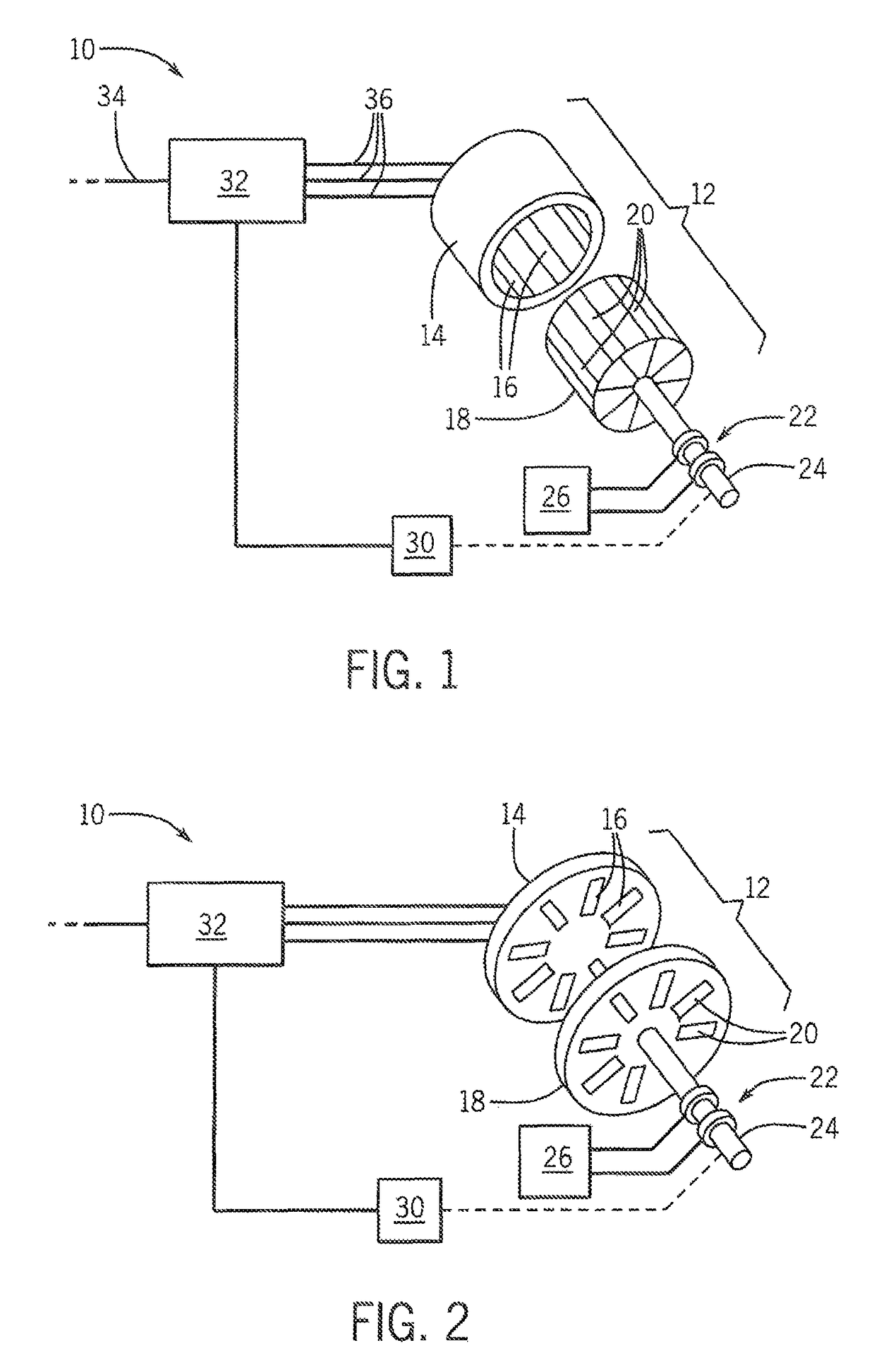
Figure 2 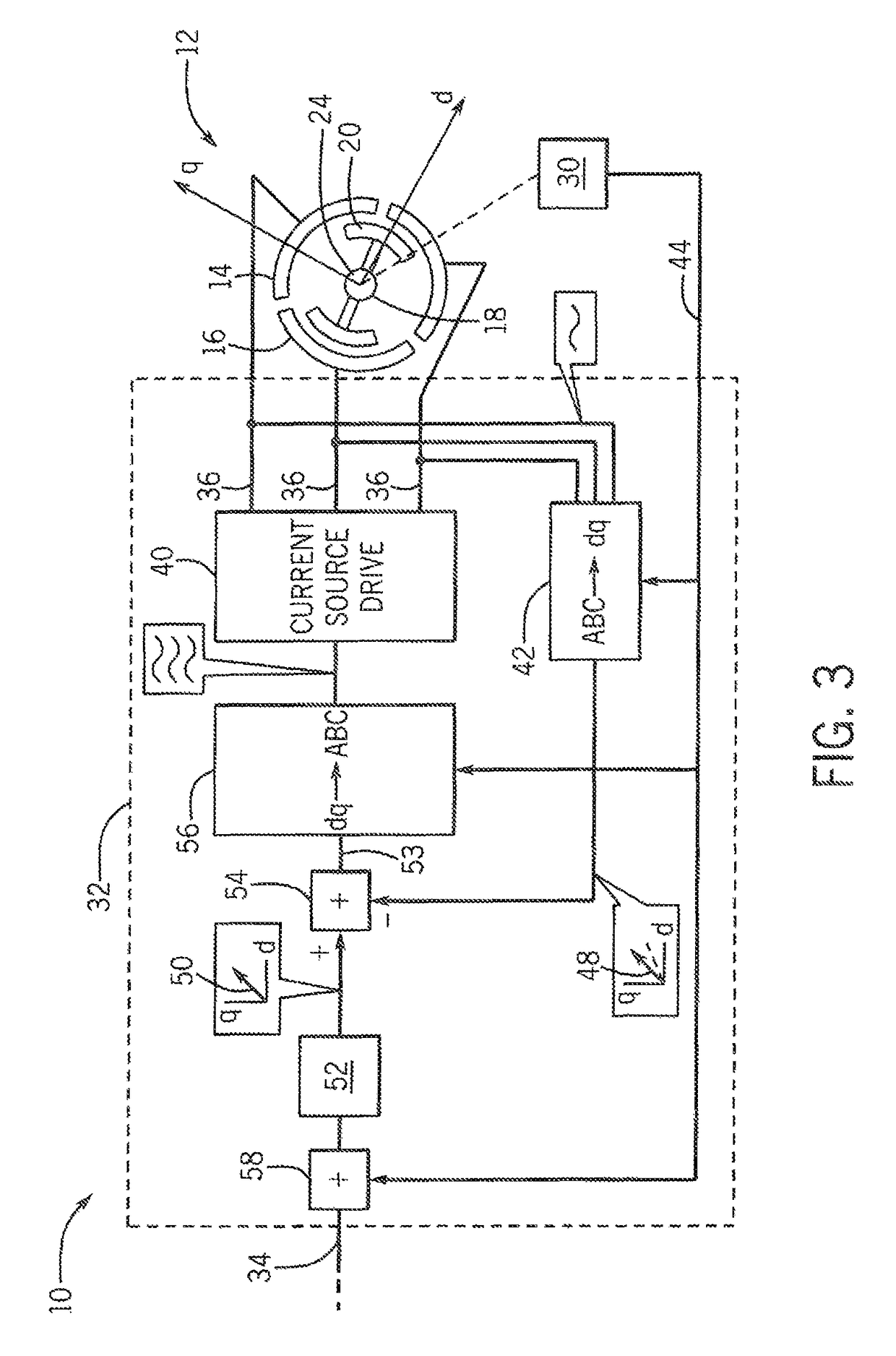
Figure 3
Abstract
Description
STATEMENT REGARDING FEDERALLY SPONSORED RESEARCH OR DEVELOPMENT
[0001] This invention was made with government support under 1452230 awarded by the National Science Foundation. The government has certain rights in the invention.CROSS-REFERENCE TO RELATED APPLICATIONS
[0002] --BACKGROUND OF THE INVENTION
[0003] The present invention relates to electrostatic motors and in particular to a drive providing electrical power to an electrostatic motor.
[0004] Electrostatic motors operate by exploiting forces generated by electrical fields on a respective stator and rotor, for example, as established on opposed plates on the stator and rotor. Electrostatic motors may be distinguished from conventional electromagnetic motors which exploit forces generated by interacting magnetic fields generated by the stator and rotor, for example, generated by current-carrying electrical coils or a permanent magnet.
[0005] Synchronous electrostatic motors are a class of electrostatic motors that provide a rotor prese...
Examples
Embodiment Construction
[0041]Referring now to FIG. 1, an electrostatic drive system 10 may include an electrostatic motor 12 having a generally cylindrical stator 14 supporting internal, longitudinally extending and circumferentially displaced stator electrodes 16. Fitting within the stator 14 is a rotor 18 having corresponding, outwardly exposed longitudinally extending and circumferentially displaced rotor electrodes 20 interacting with the stator electrodes 16 when the rotor 18 is positioned within the stator 14.
[0042]In an alternative design, shown in FIG. 2, the stator 14 may be one or more disk-shaped plates having radially extending, circumferentially displaced stator electrodes 16 interacting with corresponding radially extending, circumferentially displaced rotor electrodes 20 on a corresponding disk-shaped rotor 18 positioned adjacent to the disk-shaped stator 14 for interaction therewith.
[0043]Motors of this type are described in U.S. Pat. No. 9,184,676 as well as applications 2016 / 0211775 and ...