
Method for obtaining a thermoplastic biodegradable packaging material from plantain and / or banana peel and thermoplastic biodegradable packaging material obtained using same
A method for producing biodegradable thermoplastic packaging from banana or plantain peels, combined with starch and plasticizer, addresses the lack of precise processing in existing methods, resulting in a sustainable material with high antioxidant and mechanical properties for food preservation.
Patent Information
- Application Number
- PCT/ES2024/070764
- Authority / Receiving Office
- WO · WO
- Patent Type
- Applications
- Current Assignee / Owner
- Priority Date
- 2024-01-03
- Filing Date
- 2024-12-05
- Publication Date
- 2025-07-10
AI Technical Summary
Existing methods for producing thermoplastic packaging materials from plant-based waste, such as banana and plantain peels, lack precise specifications for processing parameters and do not adequately address the need for sustainable, antioxidant-rich materials that effectively preserve packaged products.
A method involving drying, grinding, sieving, and thermoforming of banana or plantain peels, optionally combined with starch and a plasticizer, to create a biodegradable thermoplastic material with specific antioxidant and mechanical properties, including a phenol content of at least 5 mg gallic acid equivalent/g dry film and an EC50 concentration of at least 0.025 mg DPPH/mg dry film.
The resulting biodegradable thermoplastic packaging material exhibits enhanced antioxidant capacity and mechanical properties, suitable for preserving food products, with a cost advantage over non-lignocellulosic residue materials, and can be adapted for both dry and wet products through optional hydrophobic coatings.
Smart Images

Figure IMGF000002_0001 
Figure IMGF000016_0001 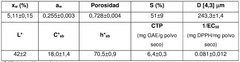
Figure IMGF000011_0001
Abstract
Description
[0001]
[0002] Procedure for obtaining a biodegradable thermoplastic packaging material from plantain and / or banana peel and biodegradable thermoplastic packaging material obtained from the same.
[0003] OBJECT OF THE INVENTION
[0004] The present invention relates to a process for obtaining a biodegradable thermoplastic packaging material using plantain and / or banana peel, such that a biodegradable material with notable bioactive and antioxidant properties is generated that enhance the preservation of the product to be packaged.
[0005] On the other hand, the object of the invention is also the thermoplastic biodegradable material obtained by the developed process, which has an antioxidant capacity (measured through the inverse of the EC5o concentration) of at least 0.025 mg DPPH / mg dry film and a phenol content of at least 5 mg gallic acid equivalent / g dry film.
[0006] BACKGROUND OF THE INVENTION
[0007] Composite materials made from plant-based waste are well-known. These materials often require the presence of an additional polymer to form a continuous matrix, and they also commonly require plasticizers and / or compatibilizers to achieve adequate adhesion between the polymer components and the lignocellulosic waste.
[0008] Among the waste of plant origin, it is worth highlighting the banana peel or skin, which has a high proportion of carbohydrates (59.5-76.5%), starch (3.5 - 6.3%), fiber (47- 53%), proteins (5.5-7.87%) and fat (2-11%) [data extracted from Banana peels as a bioactive ingredient and its potential application in the food industry. Journal of Functional Foods, 92, 105054. Mohd Zaini, H., Rosian, J., Saallah, S., Munsu, E., Sulaiman, NS, and Pindi, W. (2022)]. This composition is similar to other agro-food lignocellulosic waste, although its high proportion of starch and proteins stands out.
[0009] There are well-known bioplastics made from banana peel, such as the one published in the document “BIOPLASTIC MADE FROM BANANA PEEL, SUMMARY” by Ruth Castillo et al (published by Luis Eduardo Vega Ariza - Academia.edu), which does not specify the particle size in the sieving process and does not include thermoforming, cooling and balancing stages.
[0010] On the other hand, the document "Production of bioplastics based on plantain peel (Musa paradisiaca) and corn starch (Zea mays)" by Montoya Cedeño et al (published on researchgate.net) discloses a mixture of plantain / banana and corn starch with reagents different from those used in the present invention. This document does not specify pressing conditions or cooling, despite disclosing stages such as drying, grinding, and sieving. That is, said document does not precisely specify the parameters for the production of the biopolymer, nor does it disclose the phenol content or antioxidant activity of the material obtained, so it does not constitute a precedent that discloses advantageous properties of the thermoplastic packaging material obtained in the present invention.
[0011] Based on the above, it is concluded that in the field of thermoplastic packaging materials, there is a significant need stemming from society's demand for sustainable materials that are effective in preserving the product to be packaged and are made from plant-based waste, such as lignocellulosic waste.
[0012] Thus, the applicant for this patent identifies the need to provide a process that allows for obtaining this sustainable material and that offers performance that meets the requirements for its use in the packaging and preservation of food products.
[0013] DESCRIPTION OF THE INVENTION
[0014] The present invention proposes a method for obtaining a thermoplastic packaging material from banana or plantain peel. The invention also relates to the biodegradable thermoplastic packaging material obtained using the developed method.
[0015] The object of the present invention is to use plantain and / or banana residue, specifically its peel or skin, for its film-forming properties, so that it can be used to obtain a thermoplastic packaging material (for example, in film, tray, or tray format, etc.).
[0016] Specifically, the waste involved in the process of obtaining the biodegradable thermoplastic packaging material of the present invention is very specific, being essentially remains from plantain and / or banana peel.
[0017] That is, the proposed process allows the utilization of these residues that would otherwise end up in landfills. The process of the invention comprises the following operational steps:
[0018] - Drying of the plantain / banana peel to a humidity of between 4% and 5%, using a temperature less than or equal to 60 q C.
[0019] - Grinding and sieving to obtain a powder with a particle size of less than 250 microns.
[0020] - Conditioning of the powder obtained in the previous stage to humidity values between 12% and 14%.
[0021] - Thermoforming from the powder conditioned in the previous stage processed at a temperature of at least 110°C to obtain a thermoplastic material with a thickness between 100 microns and 2 mm and having an antioxidant capacity (measured through the inverse of the EC5o concentration) of at least 0.025 mg DPPH / mg dry film and a phenol content of at least 5 mg gallic acid equivalent / g dry film. Preferably, a hot plate press or an extruder is used in the thermoforming stage.
[0022] - Cooling of the thermoplastic packaging material to room temperature.
[0023] Optionally, prior to the thermoforming stage, the process of the invention includes a stage of melt mixing a starch (preferably cassava starch) and a polyol-type plasticizer (preferably glycerol) with the plantain and / or banana peel powder, which powder has been previously conditioned in its moisture content in the conditioning stage. Thus, the melt mixing of the plantain and / or banana peel powder and starch is carried out at a temperature of at least 110°C. In this sense, the percentage of plasticizer used in the stage of mixing and melting the plantain and / or banana peel powder with starch and polyol-type plasticizer preferably ranges between 20% and 30% with respect to the weight of the starch.
[0024] On the other hand, it should be noted that in the thermoforming stage, a hot plate press is preferably used that applies a temperature of at least 1 10 eC for 8 minutes (2 minutes at 50 bar pressure, followed by 6 minutes at 120 bar pressure) in the hot plate press.
[0025] Another optional step that the process of the invention may include consists of a step after the cooling step that corresponds to the incorporation of a coating of hydrophobic material, of biodegradable nature, on the thermoplastic biodegradable material.
[0026] Thus, the process of the invention allows obtaining a biodegradable thermoplastic packaging material that has been characterized to determine its barrier capacity to gases and water vapor, its mechanical properties, among others, as well as its antioxidant capacity and phenol content to determine its bioactive properties that enhance the conservation of the product to be packaged using the present developed material.
[0027] To carry out this characterization of the obtained material, it is necessary to include in the procedure a conditioning stage of the films or trays obtained at a temperature of 25 e C and 53% relative humidity to achieve a film or tray humidity of between 7% and 8%.
[0028] In this sense, the procedure described produces a biodegradable thermoplastic packaging material that exhibits very advantageous performance, as can be concluded from the tests shown in the preferred embodiment section.
[0029] Said thermoplastic packaging material preferably has a film or tray format formed by plantain and / or banana peel with an antioxidant capacity (measured through the inverse of the EC5o concentration) of at least 0.025 mg DPPH / mg dry film and a phenol content of at least 5 mg gallic acid equivalent / g dry film.
[0030] Optionally, the biodegradable thermoplastic packaging material also contains a starch, preferably cassava starch, and a polyol-type plasticizer, preferably glycerol.
[0031] Finally, it should be noted that the thermoplastic biodegradable material may contain a coating of hydrophobic material.
[0032] Therefore, the present invention provides a solution to the problems associated with the processing and production of sustainable thermoplastic materials by including plantain and / or banana peel in its composition.
[0033] In this way, the process and material object of the present invention lead to a biodegradable thermoplastic packaging material that has a lower cost compared to other materials without lignocellulosic residues.
[0034] It is worth noting that the developed thermoplastic material is intended for use in packaging food materials or products, especially those sensitive to oxidation (food, pharmaceuticals, etc.). Thus, the developed material is hydrophilic, making it suitable for direct application in low-moisture products such as nuts, seeds, coffee, solid fats like butter or margarine, single-dose oil pouches, etc., which are sensitive to oxidative processes but do not wet the packaging. It could also be used for whole fruits as trays for mechanical protection.
[0035] Notwithstanding the above, the developed thermoplastic packaging material optionally includes a coating with a hydrophobic material so that its use can be extended to wet products or where water transport must be limited. For example, trays for meat or fish, fresh cheese, or cut fruits and vegetables.
[0036] Preferably, the biodegradable thermoplastic packaging material obtained in film format formed by 100% plantain and / or banana peel has a tensile strength (TS) of at least 0.5 MPa, an extensibility (E) of at least 0.1% and a stiffness (ME) of at least 150 MPa. Thus, said material has a water vapor permeability without hydrophobing of at most 8*10 -9 (g / Pa sm).
[0037] On the other hand, the biodegradable material in tray format formed by 100% banana and / or plantain peel preferably presents a bending tension (a f ) of at least 3 MPa, a bending deformation (£ f ) of at least 1% and a flexural modulus (MF) of at least 1 MPa.
[0038] In the event that the biodegradable thermoplastic packaging material is obtained by the process of the invention in film format and formed by banana and / or plantain peel and starch, it preferably has a tensile strength (TS) of at least 2 MPa, and extensibility (E) of at least 1% and stiffness (ME) of at least 150 MPa.
[0039] Finally, the biodegradable thermoplastic packaging material of the present invention in film format and formed by a mixture of banana peel and cassava starch has a water vapor permeability of at most 8*10 -9 (g / Pa sm).
[0040] Ultimately, the invention is presented as a technological option with high added value in technical and environmental terms, since the packaging developed with plantain and / or banana peel is completely biodegradable, so it can be marketed as sustainable and environmentally friendly packaging.
[0041] PREFERRED EMBODIMENT OF THE INVENTION
[0042] A first preferred embodiment of the process for obtaining a biodegradable thermoplastic packaging material from plantain and / or banana peel is detailed below.
[0043] For the production of the thermoplastic packaging material of the invention, the plantain and / or banana peel, with a preferred ripening degree of 6-7, is dried at a temperature of 60 °C in a convective dryer with an air speed of 1 m / s.
[0044] It is then ground in a two-stage process: first using a Thermomix® TM5 (Vorwerk Group Corporate, Germany) at 10,700 rpm for 30 seconds, and secondly using an IKA mill (M20, Germany) for 60 seconds until a fine powder is obtained. The powder is sieved to obtain particles smaller than 250 microns.
[0045] Finally, this powder is conditioned to humidity values between 12% and 14%.
[0046] Once the powder has been conditioned, it is thermoformed in a hot plate press (Labtech Engineering, LP20, Thailand) at 150 °C for 8 min (2 min at 50 bars, followed by 6 min at 120 bars), and then cooled at 60 °C for 3 min to obtain the thermoplastic packaging material, either as sheets (films) of around 150 microns or as trays with a thickness of 2 mm.
[0047] Once obtained, the films or trays are equilibrated at 25°C and a relative humidity of 53% before being characterised.
[0048] In a second preferred embodiment of the invention, the films are obtained by mixing cassava starch and plantain and / or banana peel obtained by thermoforming. The steps in this process are as follows:
[0049] - Obtaining banana and / or plantain peel powder by drying and grinding, as described above.
[0050] - Melt mixing of plantain and / or banana peel powder with cassava starch and glycerol as plasticizer (30% with respect to the weight of the starch) in an internal mixer (Thermo Fisher Scientific, HAAKETM PolyLabTM QC, Germany), at a temperature between 130 e C and 180 °C for 8 min.
[0051] - Thermoforming of the mixture obtained at a constant temperature of 150 e C (with a first stage at 50 bars for 1 minute followed by a second at 110 bars for a further 5 minutes), and
[0052] - Cooling at 0°C for 3 min to obtain films of approximately 150 microns. Finally, the resulting film is cooled to room temperature.
[0053] The results obtained from the tests carried out using the method of the invention are shown below. In particular, Test 1 corresponds to the characterization of the plantain / banana peel powders obtained using part of the process steps of the first preferred embodiment (carried out only with plantain and / or banana peel). Test 2 corresponds to the values of the characterized parameters of the materials both in the first preferred embodiment (carried out only with plantain and / or banana peel) and for the second preferred embodiment (carried out with the mixture of cassava starch and plasticizer together with plantain and / or banana peel).
[0054] TEST 1: Characterization of plantain and / or banana peel powders. Water content (q / q) and water activity
[0055] Humidity (X w) of the plantain and / or banana peel powders (conditioned or not) was determined by gravimetry after subjecting the corresponding sample to vacuum drying at 60±1 e C to constant weight. Moisture analysis was performed in triplicate.
[0056] Water activity (a w ) was measured at 25±1 e C, in triplicate, using a dew point hygrometer (Aqua Lab, Dew point water activity meter 4Te, USA).
[0057] Porosity (p)
[0058] The porosity of the plantain and / or banana peel powders was calculated from the values obtained for the actual density (p r , g / cm 3 ) and the apparent density (p a , g / cm 3 ) (p=1 -[p a / p r]). The true density is determined from the mass and volume of a powder sample using a graduated cylinder. The apparent density was determined from the volume displaced by a sample of known weight using a gas pycnometer (Micromeritics®, AccuPyc 1330, USA) previously purged with helium to avoid impurities. The determinations were performed in quintuplicate.
[0059] Solubility in water (%)
[0060] The plantain and / or banana peel powders were immersed in distilled water (ratio 1:50 w / v) at 22±2 e C and continuous stirring at 400 rpm for 24 hours in sealed containers. The mixture was then vacuum filtered through Whatman® N filter paper. e 1 (Whatman International Ltd., Kent, UK). The undissolved residue was weighed after drying at 105 eC for 24 h. Solubility (S) in water was determined from a material balance between the initial and final weight of the dry residue. Measurements were performed in quintuplicate.
[0061] Color
[0062] The color coordinates of the plantain and / or banana peel powders were obtained from the reflectance spectrum using a spectrophotometer (Minolta, CM 3600D, Tokyo, Japan), a 60 mm diameter optical cell (CR-A502), an objective with 30 mm aperture, and considering the observer as 10 e and illuminant D65. From the color coordinates, the parameters of luminosity (L'), hue (h*) were calculated ab ) and chroma or color saturation (C* a b). Measurements were made in sextuplicate.
[0063] Particle size
[0064] The particle size distribution of plantain and / or banana peel powders was determined by the dry method using a Mastersizer® 2000 laser diffractometer (Malvern Instruments Ltd., Malvern, UK) equipped with a dispersion unit (Scirocco 2000), following ISO13320 (AENOR 2009) regulations. Measurements were performed in triplicate with a refractive index of 1.52 and an absorption index of 0.1, using air as dispersant at 2.5 bar and a feed rate of 60%, until a darkening rate of 1.26% was achieved. The average particle size of the powder residue was expressed in terms of the parameter D [4,3] (volume mean diameter of the distribution).
[0065] Total phenol content (TPC) and antioxidant capacity (EC5Q)
[0066] Liquid extracts for the analysis of total phenol content (TPC) were obtained by dispersing 0.3 g of plantain and / or banana peel powder in 50 ml of solvent (water) at 600 rpm and 22±1 e C for 1 h, followed by sonication in an ultrasonic bath (Sonics&Mateñal, Inc., Vibra CellTM VCX750, USA) on an ice bath to prevent temperature increases, at 750 W, 20 kHz and 40% amplitude. The mixture was then vacuum filtered using N filter paper. e 1 (Whatman International Ltd., Kent, UK).
[0067] The obtained supernatant was filtered again through a 0.45 pm nylon filter. The CTF was finally determined in the resulting supernatant using the Folin-Ciocalteu method, for which the extracts were mixed and incubated with 0.5 ml of Folin reagent (2N) and 1.5 ml of a Na2CO3 solution (20% w / v) for 2 h in darkness, before measuring the absorbance at 725 nm by spectrophotometry (Thermo Scientific, Evolution 201 UV-Vis Spectrophotometer, USA). The TPC was expressed as mg of gallic acid equivalent (GAE) per g of dry powder residue, using the gallic acid standard curve (Abs725nm=0.1041 [gallic acid] - 0.0038; R 2 =0.9999). The analysis was done in triplicate.
[0068] The antioxidant capacity was evaluated from the inverse of the EC5o parameter, a parameter that determines the amount of sample needed to reduce the initial concentration of 2,2-diphenyl-1-picrylhydrazyl (DPPH) to 50%, using the appropriate calibration curve (Abs515nm = 10.1568-[DPPH]-0.0022; R 2 = 0.9996). The extract was obtained in a similar manner to that described above, this time using 0.1 g of the powdered residue. Different concentrations were prepared from the extract and the resulting dilutions were mixed with the 6.9x10 solution. -2 mM in DPPH methanol (Abs515 nm=0.70±0.02) to a final volume of 3 ml.
[0069] Finally, its absorbance at 515 nm was measured in a spectrophotometer at different reaction times. The EC5o value (mg powder residue / mg DPPH) was obtained from the ratio of the % residual DPPH after 90 min of reaction to the mg residue / mg DPPH ratio. The analysis was performed in triplicate.
[0070] Table 1 specifies the technical characteristics of the powder obtained as detailed above.
[0071] Table 1. Humidity (x w ), water activity (a w ), porosity, solubility (S g soluble solids / 100), volume average size (D [4,3]), luminosity (L*), chroma (C* a t>) and tone (h* ab ), total phenol content (TPC) and antioxidant activity (measured from the inverse of the EC5o parameter) of banana peel powder.
[0072] *GAE: gallic acid equivalent
[0073] As shown in Table 1, the plantain and / or banana peel powder obtained presented a monomodal particle size distribution with a diameter of around 243 microns obtained by laser diffraction in dry mode.
[0074] It is worth highlighting the phenol content of plantain and / or banana peel powder compared to other residues: for example, rice straw extract has 2.5-4.8 mg GAE / g straw (Freitas et al., 2022); ethanolic extract of banana peel 3.48 mg GAE / ml (Zhang et al., 2020)), with a remarkable antioxidant activity, as deduced from the value of the parameter 1 / EC5o, which is of the order of that found in other plant extracts, such as rice straw (Freitas et al., 2022).
[0075] TEST 2: Characterization of films and trays with 100% banana peel powder and mixtures of starch and banana peel
[0076] Both the films and the trays obtained from the process detailed above where the banana and / or plantain peel powders were involved were conditioned at 25±1 e C, obtaining a moisture content of 7-8% for the films and trays before their characterization.
[0077] The water content once equilibrium was reached was determined as previously described for the powder residue.
[0078] Thickness measurement was another parameter to consider in the characterization of the films / trays, and its average value was considered in the mechanical and water vapor permeability analyses. For this measurement, a digital micrometer with a precision of 0.001 millimeters (Palmer, Comecta, Spain) was used, considering six different points on each film / tray.
[0079] Color
[0080] The color of the films and trays was measured, in triplicate, in a similar manner to that described for the powder residue, with some modifications. In this case, the Kubelka-Munk theory for translucent materials was applied, measuring on a white background and a black background, and determining the CIEL*a*b* parameters from the reflectance for an infinite film thickness. From these, the parameters luminosity (L'), hue (h*) and color density (d*) were determined. ab ) and chroma or color saturation (C* ab ). The internal transmittance between 550 and 700 nm was used to estimate the opacity.
[0081] Mechanical properties
[0082] The mechanical properties of the films and trays were determined using a TA.XT plus universal mechanical testing press (Stable Micro Systems, Haslemere, England) according to the ASTM D882 standard method (ASTM, 2001) for films (tensile strength test) and to ISO 178:2020 for trays (flexural test). For the tensile strength test of the films, 2.5 x 10 cm samples were placed in extension clamps (A / TG jaws) and stretched to break at 50 mm / min.
[0083] For the bending test on the trays, 40 x 25 x 2 mm samples were used, which were placed between two stops (three-point bending probe, HDP / 3PB) separated by 32 mm, and a bending test was programmed at a speed of 2 mm / min until the material broke. The analyses were evaluated in 10 replicates. In both cases, the stress-strain curves were obtained from the force-distance data, and from them the following were determined: (i) the tensile strength at the breaking point (TS), the modulus of elasticity (EM) and the percentage elongation at break (%E) of the films; (ii) bending stress (m) and the bending strain at the breaking point (£f) and the flexural modulus (FM).
[0084] Total phenol content (TPC) v Antioxidant capacity (EC5o)
[0085] The phenol content and antioxidant power of the films were obtained from the parameter 1 / EC5o, which was measured in a similar way to that described for the powder residue.
[0086] Water vapor permeability (WVP)
[0087] Water vapor permeability was measured gravimetrically using a modification of the ATSM E96-95 method (1995) at 25±1 eC and a RH gradient of 53–100±2%. To achieve this, 3.5 cm diameter Payne transfer permeation cups (Elcometer SPRL, Hermelle / s Argenteau, Belgium) were filled with 5 ml of distilled water (100% RH), filmed, and sealed. Each individual system was placed in desiccators containing a supersaturated (53±2% RH) magnesium nitrate 6-hydrate salt solution with a fan at the top to reduce the resistance to water vapor transfer and thus accelerate the transfer rate. From the graph of weight variation as a function of time, the value of the slope was obtained to obtain the water vapor transmission rate, a value necessary for the estimation of water vapor permeability (WVP), according to the equations proposed by Gennadios et al., (1994) [Gennadios, A., Curtis, CL, , Weller, Gooding, CH (1994). Measurement errors in water vapor permeability of highly permeable, hydrophilic edible films.Journal of Food Engineering, 21 (4), 395-409].
[0088] Table 2 specifies the mechanical properties of films and trays obtained from 100% plantain / banana peel, along with other properties, while Table 3 specifies the mechanical properties of films obtained from plantain and / or banana peel together with cassava starch and plasticizer.
[0089] Table 2. Mechanical properties (tensile strength (TS), % deformation or extensibility (E), modulus of elasticity or rigidity (ME), water vapor permeability (PVA), equilibrium humidity (x weq ), Total phenol content (TPC), EC50 value and color parameters (L*, C* a t>, h* ab ) of films and trays obtained from 100% banana peel balanced at 25 °C and 53% relative humidity.
[0090] 1The mechanical test of the trays is carried out following a different standard, being a bending test, with different parameters for this type of packaging: maximum bending deformation (Ef), maximum bending stress (Of) and flexural modulus (MF).
[0091] Table 3. Mechanical properties (tensile strength (TS), % deformation (E), modulus of elasticity or rigidity (ME), water vapor permeability (PVA), equilibrium humidity (Xweq) of the blend films with different ratios of plantain / banana peel: cassava starch, balanced at 25 °C and 53% relative humidity. banana peel: starch ratio
[0092] On the other hand, the total phenol content of the 100% plantain / banana peel films was 18.3±0.6 mg gallic acid equivalent / g dry film and its antioxidant activity, measured from the inverse of the EC5o parameter, was 0.237±0.012 mg dry film / mg DPPH. Therefore, this phenol content of the obtained films and their antioxidant activity means that they have bioactive properties that increase the added value of the product by enhancing the conservation of the product to be packaged. As can be seen, the 100% plantain and / or banana peel-based films obtained by thermoprocessing according to this invention have a mechanical strength similar to that of cassava starch films obtained by casting found by other authors, such as Cano et al., (2014) (strength value TS=1.7 MPa).
[0093] For its part, the mechanical resistance of all the mixed films obtained from plantain / banana peel powder and cassava starch was greater than those obtained with 100% plantain peel (Table 3), presenting values similar to those of pure corn starch films obtained by thermoforming obtained by other authors such as Talón et al., 2019b (TS=8.43 MPa).
[0094] All the films obtained present water vapor permeability (PVA) values comparable to those obtained in corn starch-based films by casting and thermoforming obtained by other authors such as Talón et al., 2019a and 2019b ((1,48-10 _ 9 g / Pa sm, and 2.75- 10 ®, respectively) and therefore have similar water barrier properties.
[0095] These properties can be improved by increasing the thickness and / or adding other, more hydrophobic compounds / polymers. In any case, the high antioxidant capacity and total phenol content observed in the packaging materials developed, according to the data shown in Table 2, suggest significant potential for protecting food against oxidation.
[0096] Furthermore, the incorporation of plantain / banana peel into cassava starch-based films resulted in mechanical and barrier properties comparable to those of pure starch films, with improved antioxidant functionality, a homogeneous appearance, and high barrier capacity to visible and UV light, which represents advantages for the protection of food against UV-catalyzed oxidative reactions.
Claims
1. Procedure for preparing a biodegradable thermoplastic packaging material from plantain and / or banana peel, characterized in that it comprises the following steps: - Drying of the plantain / banana peel to a humidity of between 4% and 5%, using a temperature less than or equal to 60 q C. - Grinding and sieving to obtain a powder with a particle size of less than 250 microns. - Conditioning of the powder obtained in the previous stage to humidity values between 12% and 14%. - Thermoformed from the powder conditioned in the previous stage processed at a temperature of at least 110°C to obtain a thermoplastic material with a thickness between 100 microns and 2 mm and which has an antioxidant capacity (measured through the inverse of the EC5o concentration) of at least 0.025 mg DPPH / mg dry film and a phenol content of at least 5 mg gallic acid equivalent / g dry film. - Cooling of the thermoplastic packaging material to room temperature.
2. Method for preparing a biodegradable thermoplastic packaging material from plantain and / or banana peel, according to claim 1 a, characterized in that it has a melt mixing stage, prior to the thermoforming stage, in which the mixing and melting of the banana and / or plantain peel powder, obtained in the conditioning stage, is carried out, together with a starch and a polyol type plasticizer at a temperature of at least 1 l O'C.
3. Method for preparing a biodegradable thermoplastic packaging material from plantain and / or banana peel, according to claim 2 a , characterized by the fact that the percentage of plasticizer is between 20% and 30% with respect to the weight of the starch.
4. Method for preparing a biodegradable thermoplastic packaging material from plantain and / or banana peel, according to claim 2 a or 3 a , characterized in that the starch is a cassava starch and the plasticizer is glycerol.
5. Method for preparing a biodegradable thermoplastic packaging material from plantain and / or banana peel, according to claim 1, characterized in that it includes a step after the cooling step consisting of the incorporation of a coating of hydrophobic material on the biodegradable thermoplastic material.
6. Method for preparing a biodegradable thermoplastic packaging material from plantain and / or banana peel, according to claim 1 a , characterized in that a hot plate press or an extruder is used in the thermoforming stage.
7. Method for preparing a biodegradable thermoplastic packaging material from plantain and / or banana peel, according to claim Q-, characterized in that in the thermoforming stage the temperature is applied in the hot plate press for 2 minutes at a pressure of 50 bars, followed by 6 minutes at a pressure of 120 bars.
8. Biodegradable thermoplastic packaging material obtained from the process of any of the preceding claims, characterized in that it has a film or tray format formed by plantain and / or banana peel with an antioxidant capacity (measured through the inverse of the EC5o concentration) of at least 0.025 mg DPPH / mg dry film and a phenol content of at least 5 mg gallic acid equivalent / g dry film.
9. Biodegradable thermoplastic packaging material, according to claim 8 a, characterized by the fact that it contains starch and a polyol-type plasticizer, along with plantain and / or banana peel.
10. Biodegradable thermoplastic packaging material, according to claim 9 a , characterized in that the starch is a cassava starch and the plasticizer is glycerol.
11. Biodegradable thermoplastic packaging material according to any of the claims of 8 a to 10 a , characterized by including a coating of biodegradable hydrophobic material.
12. Biodegradable thermoplastic packaging material, according to claim 8 a , characterized in that the film format formed by 100% plantain and / or banana peel has a tensile strength (TS) of at least 0.5 MPa, an extensibility (E) of at least 0.1% and stiffness (ME) of at least 150 MPa.
13. Biodegradable thermoplastic packaging material, according to claim 8 a , characterized in that the tray format formed by 100% plantain and / or banana peel has a bending stress (Of) of at least 3 MPa, a bending deformation (c f ) of at least 1% and a flexural modulus (MF) of at least 1 MPa.
14. Biodegradable thermoplastic packaging material, according to claim 9 a , characterized in that the film format formed by banana and / or plantain peel and starch has a tensile strength (TS) of at least 2 MPa, and extensibility (E) of at least 1% and stiffness (ME) of at least 150 MPa.
15. Biodegradable thermoplastic packaging material, according to claim 8 a , characterized in that the film format formed by 100% plantain and / or banana peel has a water vapor permeability without hydrophobing of, at most, 8*10 -9 (g / Pa sm).
16. Biodegradable thermoplastic packaging material, according to claim 10 a , characterized in that the film format formed by a mixture of banana peel and cassava starch has a water vapor permeability of at most 8*10 -9 (g / Pa sm).