
Active Alignment vs Digital Calibration: Effectiveness Study
APR 15, 20269 MIN READ
Generate Your Research Report Instantly with AI Agent
Patsnap Eureka helps you evaluate technical feasibility & market potential.
Active Alignment vs Digital Calibration Background and Objectives
The evolution of optical systems has consistently demanded higher precision and performance standards, particularly in applications requiring exceptional image quality and alignment accuracy. Traditional mechanical alignment methods, while effective, have reached practical limitations in terms of precision, manufacturing complexity, and cost-effectiveness. This technological landscape has given rise to two distinct paradigms: active alignment systems that provide real-time mechanical adjustments, and digital calibration approaches that leverage computational methods to correct optical imperfections post-capture.
Active alignment technology represents a sophisticated mechanical approach where optical components are dynamically positioned using precision actuators and feedback control systems. This methodology enables real-time correction of optical aberrations, misalignments, and environmental variations through physical repositioning of lenses, mirrors, or sensor elements. The technology has found widespread adoption in high-end camera modules, telescope systems, and precision optical instruments where maintaining optimal optical performance is critical.
Digital calibration, conversely, employs advanced computational algorithms and image processing techniques to correct optical distortions and alignment errors through software-based solutions. This approach captures optical imperfections as digital data and applies mathematical corrections to achieve desired image quality without physical component movement. The methodology has gained significant traction due to its cost-effectiveness, scalability, and integration capabilities with modern digital imaging systems.
The fundamental challenge lies in determining the optimal balance between these two approaches across different application scenarios. While active alignment offers superior optical performance through physical correction, it introduces mechanical complexity, power consumption, and potential reliability concerns. Digital calibration provides elegant software-based solutions with lower hardware costs but may face limitations in correction range and computational overhead.
The primary objective of this effectiveness study centers on establishing comprehensive performance benchmarks comparing active alignment and digital calibration methodologies across multiple evaluation criteria. This includes quantitative assessment of optical performance metrics such as resolution, distortion correction accuracy, response time, and system stability under various operating conditions.
Furthermore, the study aims to identify optimal application domains for each technology, considering factors such as performance requirements, cost constraints, power limitations, and manufacturing scalability. The research seeks to develop decision-making frameworks that enable engineers and product developers to select the most appropriate correction methodology based on specific system requirements and constraints.
Active alignment technology represents a sophisticated mechanical approach where optical components are dynamically positioned using precision actuators and feedback control systems. This methodology enables real-time correction of optical aberrations, misalignments, and environmental variations through physical repositioning of lenses, mirrors, or sensor elements. The technology has found widespread adoption in high-end camera modules, telescope systems, and precision optical instruments where maintaining optimal optical performance is critical.
Digital calibration, conversely, employs advanced computational algorithms and image processing techniques to correct optical distortions and alignment errors through software-based solutions. This approach captures optical imperfections as digital data and applies mathematical corrections to achieve desired image quality without physical component movement. The methodology has gained significant traction due to its cost-effectiveness, scalability, and integration capabilities with modern digital imaging systems.
The fundamental challenge lies in determining the optimal balance between these two approaches across different application scenarios. While active alignment offers superior optical performance through physical correction, it introduces mechanical complexity, power consumption, and potential reliability concerns. Digital calibration provides elegant software-based solutions with lower hardware costs but may face limitations in correction range and computational overhead.
The primary objective of this effectiveness study centers on establishing comprehensive performance benchmarks comparing active alignment and digital calibration methodologies across multiple evaluation criteria. This includes quantitative assessment of optical performance metrics such as resolution, distortion correction accuracy, response time, and system stability under various operating conditions.
Furthermore, the study aims to identify optimal application domains for each technology, considering factors such as performance requirements, cost constraints, power limitations, and manufacturing scalability. The research seeks to develop decision-making frameworks that enable engineers and product developers to select the most appropriate correction methodology based on specific system requirements and constraints.
Market Demand for Precision Optical System Alignment Solutions
The precision optical system alignment market has experienced substantial growth driven by increasing demands across multiple high-technology sectors. Telecommunications infrastructure expansion, particularly in fiber optic networks and 5G deployment, requires precise optical component alignment to maintain signal integrity and minimize transmission losses. The proliferation of data centers worldwide has created sustained demand for advanced optical alignment solutions to support high-speed interconnects and optical switching systems.
Automotive industry transformation toward autonomous vehicles has generated significant market opportunities for precision optical alignment technologies. LiDAR systems, camera modules, and advanced driver assistance systems require extremely accurate optical component positioning to ensure reliable performance and safety compliance. The growing adoption of electric vehicles with sophisticated sensor arrays further amplifies this demand.
Consumer electronics manufacturing continues to drive market expansion, particularly in smartphone camera modules, augmented reality devices, and virtual reality headsets. The trend toward multi-camera systems and computational photography has intensified requirements for precise optical alignment across multiple lens assemblies and sensor configurations.
Industrial automation and manufacturing sectors increasingly rely on precision optical systems for quality control, measurement, and process monitoring applications. Machine vision systems, laser processing equipment, and optical inspection tools require consistent alignment accuracy to maintain production efficiency and product quality standards.
Medical device manufacturing represents another significant market segment, with surgical instruments, diagnostic equipment, and optical imaging systems demanding exceptional alignment precision. Regulatory requirements in healthcare applications often necessitate more stringent alignment tolerances compared to other industries.
The semiconductor industry's continuous advancement toward smaller process nodes and more complex chip architectures has created substantial demand for precision optical alignment in lithography systems, inspection equipment, and metrology tools. Advanced packaging technologies and photonic integrated circuits further expand market opportunities.
Aerospace and defense applications require robust optical alignment solutions capable of maintaining precision under extreme environmental conditions. Satellite communication systems, surveillance equipment, and navigation instruments represent key market segments with specific performance and reliability requirements.
Market dynamics increasingly favor solutions that can balance alignment precision with manufacturing efficiency and cost-effectiveness, driving interest in comparative studies between active alignment and digital calibration approaches.
Automotive industry transformation toward autonomous vehicles has generated significant market opportunities for precision optical alignment technologies. LiDAR systems, camera modules, and advanced driver assistance systems require extremely accurate optical component positioning to ensure reliable performance and safety compliance. The growing adoption of electric vehicles with sophisticated sensor arrays further amplifies this demand.
Consumer electronics manufacturing continues to drive market expansion, particularly in smartphone camera modules, augmented reality devices, and virtual reality headsets. The trend toward multi-camera systems and computational photography has intensified requirements for precise optical alignment across multiple lens assemblies and sensor configurations.
Industrial automation and manufacturing sectors increasingly rely on precision optical systems for quality control, measurement, and process monitoring applications. Machine vision systems, laser processing equipment, and optical inspection tools require consistent alignment accuracy to maintain production efficiency and product quality standards.
Medical device manufacturing represents another significant market segment, with surgical instruments, diagnostic equipment, and optical imaging systems demanding exceptional alignment precision. Regulatory requirements in healthcare applications often necessitate more stringent alignment tolerances compared to other industries.
The semiconductor industry's continuous advancement toward smaller process nodes and more complex chip architectures has created substantial demand for precision optical alignment in lithography systems, inspection equipment, and metrology tools. Advanced packaging technologies and photonic integrated circuits further expand market opportunities.
Aerospace and defense applications require robust optical alignment solutions capable of maintaining precision under extreme environmental conditions. Satellite communication systems, surveillance equipment, and navigation instruments represent key market segments with specific performance and reliability requirements.
Market dynamics increasingly favor solutions that can balance alignment precision with manufacturing efficiency and cost-effectiveness, driving interest in comparative studies between active alignment and digital calibration approaches.
Current State and Challenges in Alignment Technologies
The alignment technology landscape currently presents a complex dichotomy between active alignment and digital calibration approaches, each addressing precision requirements through fundamentally different methodologies. Active alignment relies on real-time mechanical adjustments during assembly processes, utilizing sophisticated feedback systems to achieve optimal component positioning. This approach has dominated high-precision applications for decades, particularly in optical systems, semiconductor manufacturing, and advanced sensor assemblies.
Digital calibration represents a paradigmatic shift toward software-based correction mechanisms that compensate for mechanical tolerances post-assembly. This methodology leverages computational algorithms to mathematically correct for misalignments, offering potential cost advantages and manufacturing scalability. The technology has gained significant traction in consumer electronics, automotive sensors, and mass-production scenarios where traditional active alignment proves economically prohibitive.
Current implementation challenges vary significantly between these approaches. Active alignment systems face increasing complexity as precision requirements tighten, demanding more sophisticated actuators, sensors, and control algorithms. The technology struggles with throughput limitations, as each unit requires individual adjustment cycles that can extend manufacturing time substantially. Additionally, environmental factors during assembly can introduce variability that affects long-term stability.
Digital calibration confronts distinct technical hurdles, primarily centered on algorithm sophistication and computational resource requirements. The approach demands comprehensive characterization of system behavior across operational conditions, requiring extensive calibration datasets and robust mathematical models. Processing power limitations in embedded systems often constrain the complexity of correction algorithms that can be implemented in real-time applications.
Manufacturing scalability represents a critical differentiator between these technologies. Active alignment systems typically require specialized equipment and controlled environments, limiting their applicability in high-volume production scenarios. The capital investment for active alignment infrastructure often exceeds feasibility thresholds for cost-sensitive applications, creating market segmentation based on precision versus economic constraints.
Geographical distribution of expertise reveals concentrated development clusters, with active alignment technologies predominantly advancing in regions with established precision manufacturing capabilities. Digital calibration development shows broader geographic distribution, leveraging software development ecosystems that exist independently of specialized manufacturing infrastructure. This distribution pattern influences technology accessibility and implementation costs across different markets.
Integration complexity emerges as a significant constraint for both approaches. Active alignment systems require seamless coordination between mechanical, optical, and control subsystems, demanding specialized expertise across multiple engineering disciplines. Digital calibration faces integration challenges related to sensor fusion, real-time processing requirements, and validation across diverse operational scenarios.
Digital calibration represents a paradigmatic shift toward software-based correction mechanisms that compensate for mechanical tolerances post-assembly. This methodology leverages computational algorithms to mathematically correct for misalignments, offering potential cost advantages and manufacturing scalability. The technology has gained significant traction in consumer electronics, automotive sensors, and mass-production scenarios where traditional active alignment proves economically prohibitive.
Current implementation challenges vary significantly between these approaches. Active alignment systems face increasing complexity as precision requirements tighten, demanding more sophisticated actuators, sensors, and control algorithms. The technology struggles with throughput limitations, as each unit requires individual adjustment cycles that can extend manufacturing time substantially. Additionally, environmental factors during assembly can introduce variability that affects long-term stability.
Digital calibration confronts distinct technical hurdles, primarily centered on algorithm sophistication and computational resource requirements. The approach demands comprehensive characterization of system behavior across operational conditions, requiring extensive calibration datasets and robust mathematical models. Processing power limitations in embedded systems often constrain the complexity of correction algorithms that can be implemented in real-time applications.
Manufacturing scalability represents a critical differentiator between these technologies. Active alignment systems typically require specialized equipment and controlled environments, limiting their applicability in high-volume production scenarios. The capital investment for active alignment infrastructure often exceeds feasibility thresholds for cost-sensitive applications, creating market segmentation based on precision versus economic constraints.
Geographical distribution of expertise reveals concentrated development clusters, with active alignment technologies predominantly advancing in regions with established precision manufacturing capabilities. Digital calibration development shows broader geographic distribution, leveraging software development ecosystems that exist independently of specialized manufacturing infrastructure. This distribution pattern influences technology accessibility and implementation costs across different markets.
Integration complexity emerges as a significant constraint for both approaches. Active alignment systems require seamless coordination between mechanical, optical, and control subsystems, demanding specialized expertise across multiple engineering disciplines. Digital calibration faces integration challenges related to sensor fusion, real-time processing requirements, and validation across diverse operational scenarios.
Existing Active Alignment and Digital Calibration Solutions
01 Active alignment techniques for optical components
Active alignment methods involve real-time adjustment and positioning of optical components during assembly to achieve optimal performance. These techniques utilize feedback mechanisms to measure and correct misalignments dynamically, ensuring precise positioning of lenses, sensors, or other optical elements. The process typically involves iterative adjustments based on performance metrics such as image quality or signal strength, enabling high-precision assembly in optical systems.- Active alignment techniques for optical components: Active alignment methods involve real-time adjustment and positioning of optical components during assembly to achieve optimal performance. These techniques utilize feedback mechanisms to measure and correct misalignments dynamically, ensuring precise positioning of lenses, sensors, or other optical elements. The process typically involves iterative adjustments based on performance metrics such as image quality or signal strength, resulting in improved manufacturing yield and device performance.
- Digital calibration algorithms for sensor systems: Digital calibration employs computational methods to correct systematic errors and improve accuracy of sensor systems. These algorithms process raw sensor data to compensate for manufacturing variations, temperature effects, and aging-related drift. The calibration process may involve storing correction coefficients in memory and applying mathematical transformations to sensor outputs, enabling high-precision measurements without requiring perfect hardware alignment.
- Combined active alignment and calibration systems: Integrated approaches combine physical alignment procedures with digital calibration to maximize system performance. These hybrid methods leverage the strengths of both techniques, using active alignment to achieve coarse positioning followed by fine-tuning through digital calibration. This combination reduces manufacturing complexity while maintaining high performance standards, and allows for post-manufacturing adjustments to compensate for environmental changes or component aging.
- Calibration effectiveness measurement and validation: Methods for quantifying and validating the effectiveness of calibration procedures are essential for quality assurance. These approaches include statistical analysis of calibration results, comparison of pre- and post-calibration performance metrics, and long-term stability monitoring. Effectiveness metrics may include accuracy improvement, repeatability, and robustness under varying environmental conditions, providing objective measures of calibration quality.
- Automated alignment and calibration systems: Automated systems streamline the alignment and calibration process through machine vision, robotics, and artificial intelligence. These systems reduce human intervention, improve consistency, and increase throughput in manufacturing environments. Advanced implementations may include self-learning algorithms that optimize alignment parameters based on historical data, adaptive calibration routines that respond to real-time conditions, and integrated quality control mechanisms that ensure each unit meets specifications.
02 Digital calibration methods for sensor systems
Digital calibration techniques employ computational algorithms to correct systematic errors and improve accuracy in sensor systems. These methods involve storing calibration parameters in digital memory and applying correction factors during signal processing. The calibration process can compensate for manufacturing variations, temperature effects, and aging-related drift, enhancing overall system performance without requiring physical adjustments.Expand Specific Solutions03 Combined active alignment and calibration systems
Integrated approaches combine physical active alignment with digital calibration to achieve superior performance in precision systems. These hybrid methods leverage the strengths of both techniques, using active alignment for initial positioning and digital calibration for fine-tuning and compensation of residual errors. This combination enables cost-effective manufacturing while maintaining high performance standards across various operating conditions.Expand Specific Solutions04 Calibration effectiveness measurement and validation
Methods for evaluating and validating the effectiveness of calibration procedures involve quantitative metrics and testing protocols. These approaches assess calibration accuracy, stability over time, and robustness under varying environmental conditions. Validation techniques include comparison with reference standards, statistical analysis of measurement repeatability, and long-term performance monitoring to ensure calibration maintains system specifications.Expand Specific Solutions05 Automated alignment and calibration systems
Automated systems streamline the alignment and calibration process through machine vision, robotics, and intelligent algorithms. These systems reduce human intervention, improve throughput, and enhance consistency in manufacturing environments. Automation enables rapid iteration through alignment sequences, automatic detection of optimal positions, and storage of calibration data for quality control and traceability purposes.Expand Specific Solutions
Key Players in Optical Alignment and Calibration Industry
The active alignment versus digital calibration effectiveness study represents a mature technology domain within the optical and semiconductor industries, currently experiencing significant growth driven by increasing demand for high-precision imaging systems and automotive applications. The market demonstrates substantial scale with established players like Apple, Texas Instruments, and Huawei leading consumer electronics integration, while specialized companies such as Automation Engineering and Ningbo Sunny Opotech focus on dedicated alignment solutions. Technology maturity varies across segments, with companies like Analog Devices and TDK achieving advanced digital calibration capabilities, while firms like Omni Design Technologies and Realtek continue developing next-generation active alignment methodologies. The competitive landscape shows convergence between traditional semiconductor manufacturers and emerging precision optics specialists, indicating a transitioning industry where both approaches are being optimized for specific applications ranging from mobile devices to autonomous vehicle systems.
Texas Instruments Incorporated
Technical Solution: TI has developed comprehensive active alignment solutions for high-precision analog and mixed-signal applications, utilizing real-time feedback control systems to dynamically adjust component parameters during manufacturing. Their approach combines laser trimming with active monitoring circuits that continuously track performance metrics and make micro-adjustments to maintain optimal calibration. This technology is particularly effective in their precision amplifiers and data converters, where they achieve sub-ppm accuracy levels through closed-loop alignment processes that adapt to environmental variations and aging effects.
Strengths: Industry-leading precision and real-time adaptation capabilities. Weaknesses: Higher manufacturing complexity and cost compared to digital alternatives.
Apple, Inc.
Technical Solution: Apple utilizes active alignment technology primarily in their camera systems and display manufacturing processes. Their approach involves precision mechanical adjustment combined with optical feedback systems to achieve optimal component positioning during assembly. The active alignment process uses computer vision and machine learning algorithms to analyze image quality in real-time and make micro-adjustments to lens positioning and sensor alignment. This technology ensures consistent performance across millions of devices while maintaining the tight tolerances required for premium consumer electronics applications.
Strengths: Exceptional consistency in mass production and superior optical performance. Weaknesses: Requires sophisticated manufacturing equipment and increases assembly time.
Core Technologies in Precision Alignment Systems
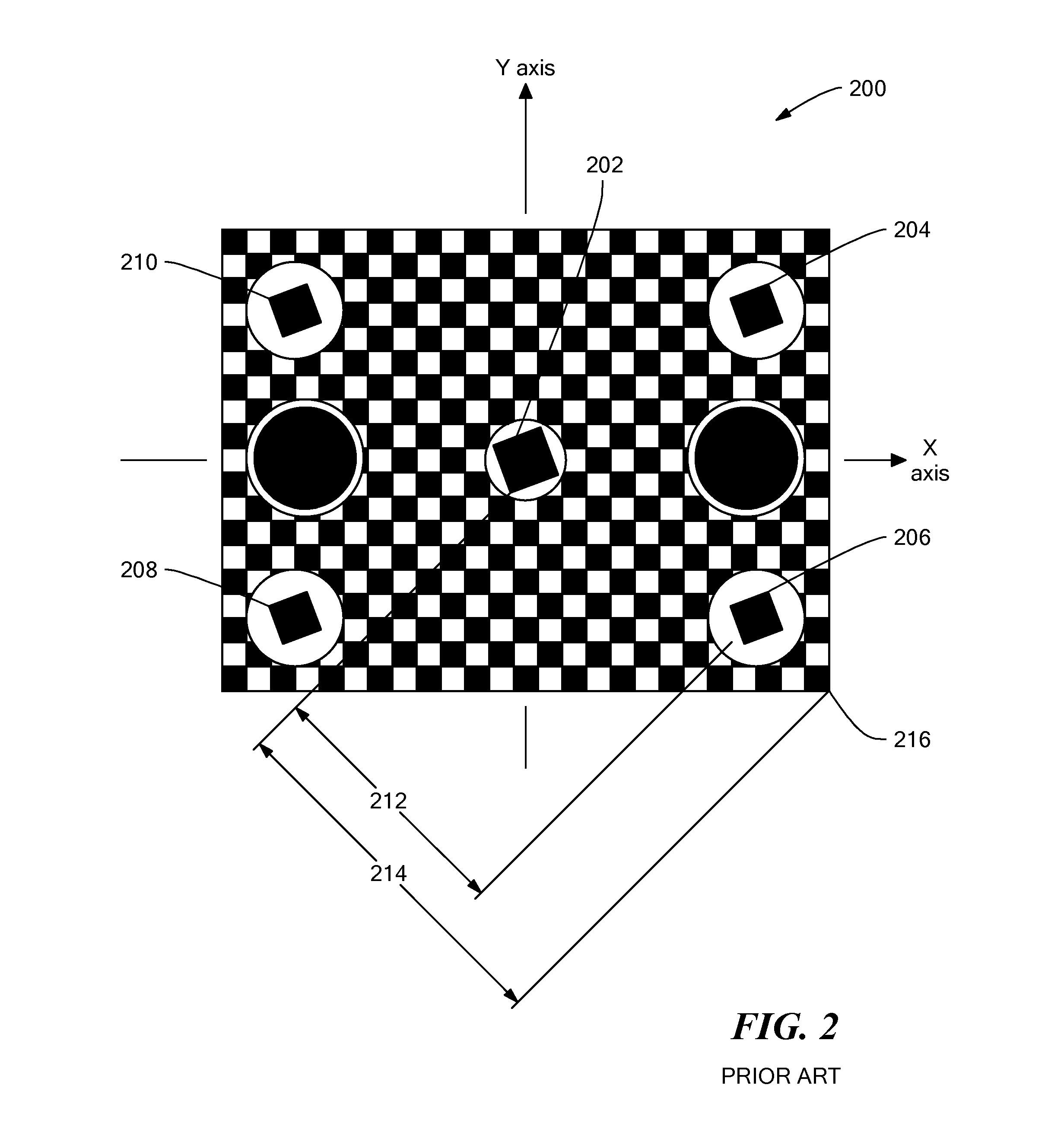
Active alignment of an optical assembly with intrinsic calibration
PatentActiveUS12288362B2
Innovation
- The implementation of a DOE-collimator intrinsic calibration module during active alignment, which allows for the measurement of the principal point and subsequent alignment of the image center with the principal point, thereby minimizing decentration.


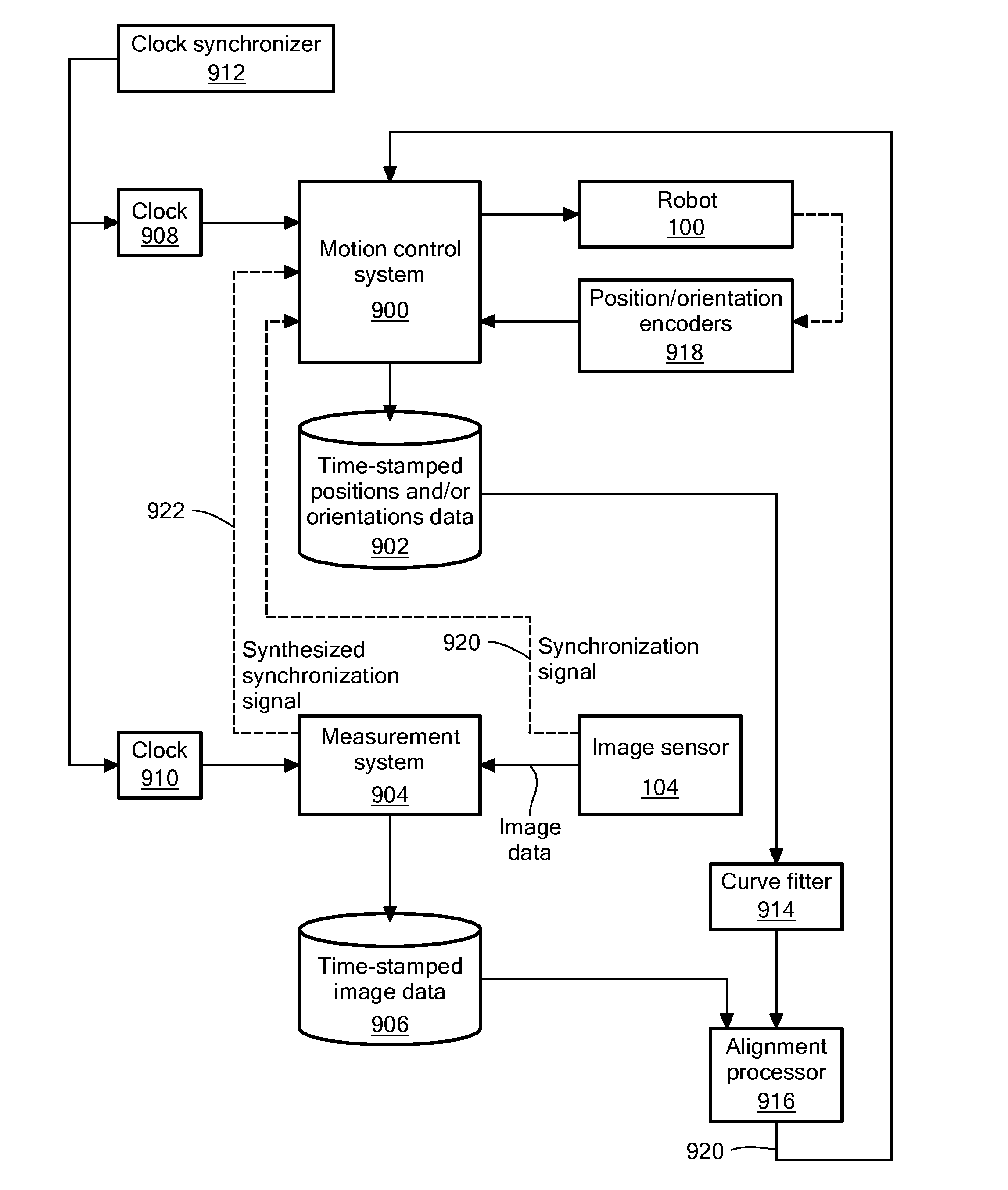
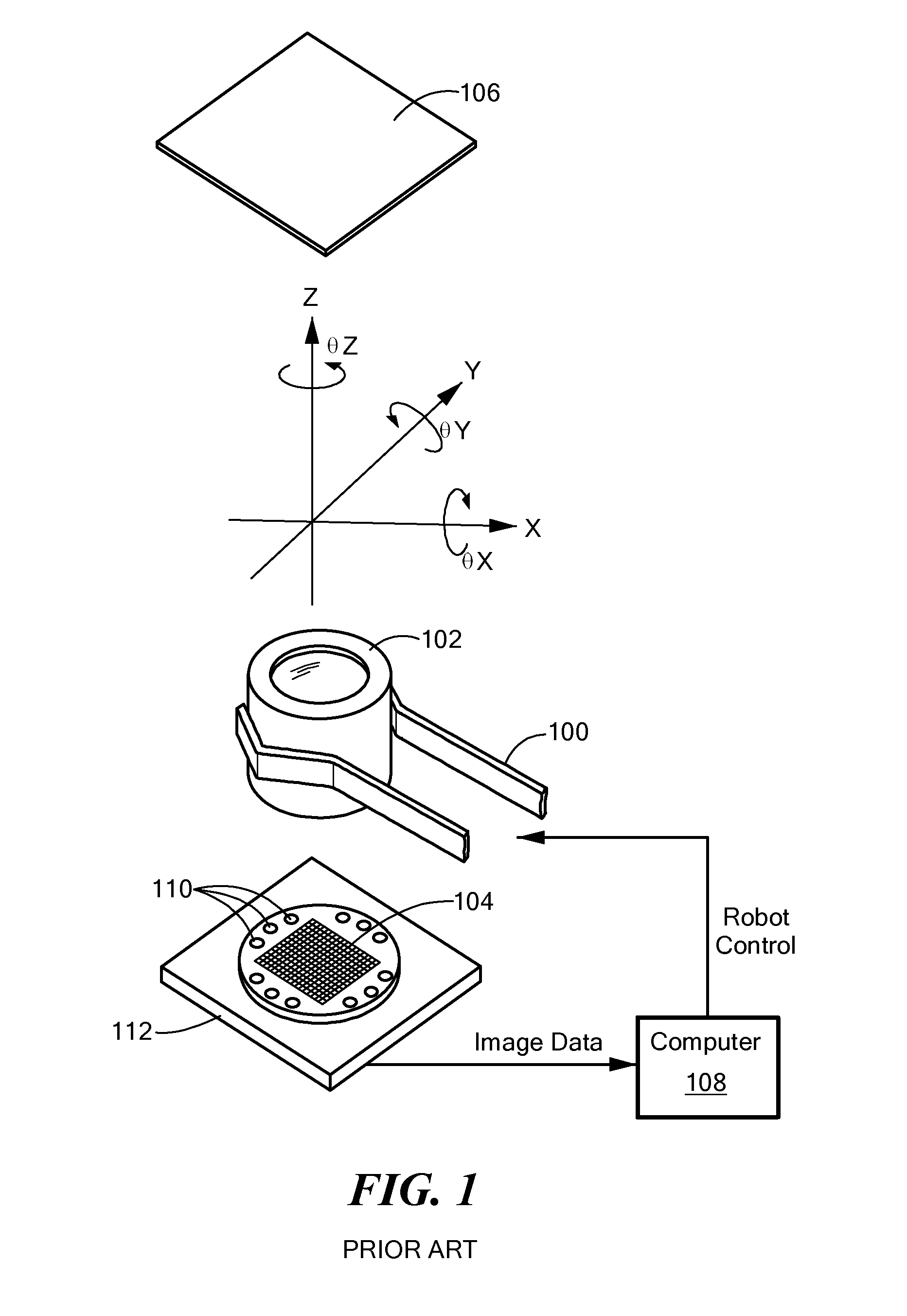
Active Alignment Using Continuous Motion Sweeps and Temporal Interpolation
PatentActiveUS20130274923A1
Innovation
- A computer-implemented method involving continuous motion sweeps of optical elements to collect and analyze alignment data, using a robot to estimate and adjust the position of optical elements based on optical signals and image data from a digital image sensor, allowing for precise alignment across multiple degrees of freedom.

Manufacturing Standards for Optical System Alignment
Manufacturing standards for optical system alignment have evolved significantly to address the growing complexity and precision requirements of modern optical devices. These standards establish comprehensive frameworks that govern both active alignment and digital calibration methodologies, ensuring consistent quality and performance across different manufacturing environments.
The International Organization for Standardization (ISO) has developed several key standards, including ISO 10110 series for optical elements and systems, which provides fundamental guidelines for alignment tolerances and measurement procedures. Additionally, the Institute of Electrical and Electronics Engineers (IEEE) has established standards specifically addressing precision alignment in photonic devices, particularly IEEE 802.3 series for fiber optic communications systems.
Industry-specific standards have emerged to address unique requirements across different sectors. The telecommunications industry follows ITU-T recommendations, particularly G.671 and G.681 series, which specify alignment accuracy requirements for wavelength division multiplexing systems. Automotive applications adhere to ISO 26262 functional safety standards, incorporating alignment verification protocols for LiDAR and camera systems used in autonomous vehicles.
Quality assurance protocols within these standards mandate specific measurement methodologies and documentation requirements. Manufacturers must implement statistical process control measures, including capability studies and measurement system analysis, to validate alignment processes. Traceability requirements ensure that alignment measurements can be referenced to national metrology standards, typically maintaining uncertainty levels below 0.1 micrometers for critical optical interfaces.
Certification and compliance frameworks require third-party validation of alignment processes, particularly for aerospace and medical device applications. These frameworks specify audit procedures, equipment calibration schedules, and personnel qualification requirements. Regular compliance assessments ensure that manufacturing processes continue to meet evolving precision requirements as optical system complexity increases.
The integration of digital calibration techniques into existing standards presents ongoing challenges, as traditional standards primarily address mechanical alignment methods. Emerging standards are beginning to incorporate hybrid approaches that combine physical alignment with software-based correction algorithms, establishing new benchmarks for system performance validation.
The International Organization for Standardization (ISO) has developed several key standards, including ISO 10110 series for optical elements and systems, which provides fundamental guidelines for alignment tolerances and measurement procedures. Additionally, the Institute of Electrical and Electronics Engineers (IEEE) has established standards specifically addressing precision alignment in photonic devices, particularly IEEE 802.3 series for fiber optic communications systems.
Industry-specific standards have emerged to address unique requirements across different sectors. The telecommunications industry follows ITU-T recommendations, particularly G.671 and G.681 series, which specify alignment accuracy requirements for wavelength division multiplexing systems. Automotive applications adhere to ISO 26262 functional safety standards, incorporating alignment verification protocols for LiDAR and camera systems used in autonomous vehicles.
Quality assurance protocols within these standards mandate specific measurement methodologies and documentation requirements. Manufacturers must implement statistical process control measures, including capability studies and measurement system analysis, to validate alignment processes. Traceability requirements ensure that alignment measurements can be referenced to national metrology standards, typically maintaining uncertainty levels below 0.1 micrometers for critical optical interfaces.
Certification and compliance frameworks require third-party validation of alignment processes, particularly for aerospace and medical device applications. These frameworks specify audit procedures, equipment calibration schedules, and personnel qualification requirements. Regular compliance assessments ensure that manufacturing processes continue to meet evolving precision requirements as optical system complexity increases.
The integration of digital calibration techniques into existing standards presents ongoing challenges, as traditional standards primarily address mechanical alignment methods. Emerging standards are beginning to incorporate hybrid approaches that combine physical alignment with software-based correction algorithms, establishing new benchmarks for system performance validation.
Cost-Effectiveness Analysis of Alignment Technologies
The cost-effectiveness analysis of active alignment versus digital calibration technologies reveals significant differences in both initial investment requirements and long-term operational economics. Active alignment systems typically demand higher upfront capital expenditure, with precision mechanical components, servo motors, and real-time control systems contributing to equipment costs ranging from $200,000 to $500,000 per production line. In contrast, digital calibration solutions require substantially lower initial hardware investments, primarily consisting of computational processing units and software licenses, with typical setup costs between $50,000 to $150,000 per line.
Operational cost structures demonstrate contrasting patterns between these technologies. Active alignment systems incur ongoing expenses through mechanical wear, regular maintenance schedules, and replacement of precision components. These systems typically require specialized technician training and periodic recalibration procedures, contributing to higher labor costs. However, they achieve superior yield rates, often exceeding 95% for high-precision applications, which translates to reduced material waste and rework expenses.
Digital calibration approaches exhibit lower operational overhead due to minimal mechanical components and reduced maintenance requirements. Software-based solutions can be updated remotely and require less specialized personnel for routine operations. However, computational processing demands may increase power consumption, and the technology's effectiveness is inherently limited by the initial mechanical precision of the assembly, potentially resulting in lower overall yield rates ranging from 85% to 92%.
Return on investment calculations reveal that active alignment systems typically achieve break-even points within 18 to 24 months for high-volume production environments, despite higher initial costs. The superior yield rates and reduced rework requirements contribute to faster payback periods. Digital calibration solutions demonstrate shorter initial payback periods of 12 to 18 months but may require additional investments in complementary technologies to achieve comparable performance levels.
Total cost of ownership analysis over a five-year operational period indicates that active alignment systems often provide better economic value for applications requiring exceptional precision and high production volumes. Digital calibration remains more cost-effective for moderate precision requirements and lower volume production scenarios, where the flexibility and lower maintenance overhead provide sustained economic advantages.
Operational cost structures demonstrate contrasting patterns between these technologies. Active alignment systems incur ongoing expenses through mechanical wear, regular maintenance schedules, and replacement of precision components. These systems typically require specialized technician training and periodic recalibration procedures, contributing to higher labor costs. However, they achieve superior yield rates, often exceeding 95% for high-precision applications, which translates to reduced material waste and rework expenses.
Digital calibration approaches exhibit lower operational overhead due to minimal mechanical components and reduced maintenance requirements. Software-based solutions can be updated remotely and require less specialized personnel for routine operations. However, computational processing demands may increase power consumption, and the technology's effectiveness is inherently limited by the initial mechanical precision of the assembly, potentially resulting in lower overall yield rates ranging from 85% to 92%.
Return on investment calculations reveal that active alignment systems typically achieve break-even points within 18 to 24 months for high-volume production environments, despite higher initial costs. The superior yield rates and reduced rework requirements contribute to faster payback periods. Digital calibration solutions demonstrate shorter initial payback periods of 12 to 18 months but may require additional investments in complementary technologies to achieve comparable performance levels.
Total cost of ownership analysis over a five-year operational period indicates that active alignment systems often provide better economic value for applications requiring exceptional precision and high production volumes. Digital calibration remains more cost-effective for moderate precision requirements and lower volume production scenarios, where the flexibility and lower maintenance overhead provide sustained economic advantages.
Unlock deeper insights with Patsnap Eureka Quick Research — get a full tech report to explore trends and direct your research. Try now!
Generate Your Research Report Instantly with AI Agent
Supercharge your innovation with Patsnap Eureka AI Agent Platform!